
How a European city was Islamized

The city financed its own self-conquest, or shall we say, the vote-hungry politicians of the city financed its Islamization.

“Woman’s month for the city of Nantes, a veiled woman on the streets of the city. Unacceptable complacency towards Islamism! This is the real threat that hangs over France! ”.

Thus Eric Ciotti, a senior leader of the Gaullist party, denounces the municipal billboards of a large city lost to Islamization.

We are in Nantes, the City of the Dukes of Brittany, steeped in history on the Loire estuary, the city of the great writer Jules Verne, the father of science fiction. His story is emblematic of how Europe is sinking.

Share

France and its Specter

“A specter is haunting France, the specter of Islam!”

This is the message that, with variations of intonation and nuance, comes from almost all of the dozen or so declared candidates in France’s forthcoming presidential election.

This reminds those of us who witnessed the 20-year-long Brexit saga of the ordeal that Britain went through to end up more divided than ever and less able to deal with the problems that the anti-immigration discourse occulted under a fog of pseudo-nationalism.

Share

Four go on trial in Paris over jihadist murder of French priest

Four alleged accomplices in the murder of an 85-year-old French priest go on trial in Paris on Monday after years of investigations into one of the most grisly jihadist attacks that have rocked France in recent years.

Father Jacques Hamel had his throat slit at the foot of the altar while celebrating mass on July 26, 2016, at his church in Saint-Etienne-du-Rouvray, a working-class suburb of Rouen in northwest France.

The two 19-year-old assailants, Adel Kermiche and Abdel-Malik Petitjean, also seriously injured one of the worshippers they took hostage before being shot and killed by police as they tried to leave the church.

Share

Paris attacks trial: ‘How I persuaded Salah Abdeslam to open up’

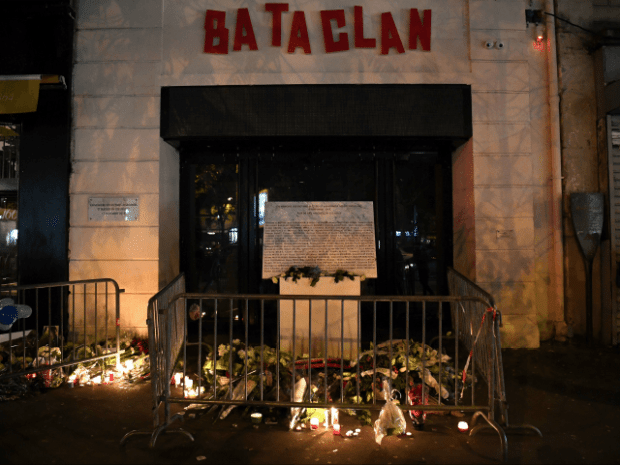
In a Paris courtroom this week, lawyer Claire Josserand-Schmidt stood face to face with Salah Abdeslam, the only surviving suspect from a gang of violent jihadists who killed 130 people in Paris six years ago.

As a lawyer for the victims and their families, her job was to cross-examine France’s most high-profile defendant.

“It would have been much easier for everyone to have to deal with a heartless monster,” she told the BBC. “The human being is more subtle. I didn’t want to have a confrontation with him. The point is to learn as much as possible.”

Share

Nearly half of French Jews hide religious symbols, finds AJC study on anti-Semitism


An increasing number of French Jews believe that anti-Semitism is widespread in their country, according to a new survey conducted by the American Jewish Committee.

According to the study, conducted in late 2021, 85 percent of Jews said that anti-Semitism is widespread. That number is up nearly 20 points from a similar survey conducted just two years earlier that found 67 percent of French Jews said Jew-hatred was widespread.

Further, 73 percent of Jews have been victims of anti-Semitism. While the vast majority of incidents were derogatory remarks, some 20 percent of the reported incidents were labeled as “physical violence.”

That’s how diversity and multicult work!

Share

I did not kill anyone, says main suspect in Paris attacks trial

Salah Abdeslam, giving evidence for first time, says he did not ‘inflict so much as a scratch on anyone’

The main surviving suspect on trial over the 2015 terrorist attacks in Paris took the stand for the first time on Wednesday, telling a court that he had never killed or wounded anyone and was not a danger to the public.

Salah Abdeslam is suspected of being a member of a group of jihadists who carried out a coordinated series of bombings and shootings across the French capital that left 130 people dead and hundreds of others injured.

Called to be cross-examined for the first time in the marathon trial, he said: “I did not kill anyone and I did not injure anyone. I didn’t inflict so much as a scratch on anyone. It’s important for me to say this.”

Share

Will France Wake Up and Defend Her Freedom – or Not?

“What else do you need to wake up and understand that we have to defend ourselves?”, asked the late Italian journalist Oriana Fallaci.

We should be worried about Europe. It is the cradle of European culture, especially France. Henry James, in The Ambassadors, writes about France as the epitome of civilization, as the “eldest daughter of the Church”. Now, however, France’s churches are being burned, demolished and abandoned, and its adherents sacrificed on the altar of political correctness. France’s Jews, “the canaries in the coalmine”, are being physically attacked and leaving their country. Since 2000, more than 60,000 have fled.

Share

‘It’s a rubbish bin’: Parisians fight for the soul of their blighted city

In the middle of Paris’s third Covid lockdown last March, a hashtag appeared on Twitter with a photo of a lock on the Canal Saint-Martin that runs through the north of the city clogged with litter, plastic bags and bottles.

Images of Paris looking worse for wear are nothing new but, within days, dozens of pictures of overflowing bins, broken pavements and graffiti-covered walls appeared with the same hashtag – #SaccageParis – which roughly translates as Trashed Paris.

… City Hall maintains that the movement can be traced back to supporters of the far right and is orchestrated by Hidalgo haters. Like the rubbish on the streets, it is easy to see why, when a social media post about the state of Paris often sparks virulent, sometimes defamatory, attacks on the mayor.

#Saccageparis

Share

French journalist given police guard over her report on Islam in town where restaurant has cubicles for women to eat, toyshop sells faceless dolls and Muslim who spoke out was threatened with beheading

A journalist has been given police protection after presenting a documentary on the impact of radical Islam on a French town.

Ophélie Meunier, 34, has received death threats for her part in Zone Interdite, a hard-hitting documentary which focused on the poor northern town of Roubaix.

The programme highlighted a restaurant with cubicles for women to eat in, without being seen by men, and a toy shop which sold faceless dolls for Muslims who follow the Islamic ruling which forbids the depiction of facial features of any kind.

Isn’t it great to have your country turned into a 3rd World shithole?

Share

Éric Zemmour: France’s Last Chance for Survival?

Paris, December 18, 2021. The Algerian national soccer team wins the Arab Cup in Qatar. Tens of thousands of Algerian supporters, waving Algerian flags, rush onto the Champs-Élysées in Paris. Shop windows are smashed. The unrest lasts until nightfall. Slogans are shouted: “Long live Algeria”, “By Allah, the Koran!” — and also “Fu*k France!” and “Fu*k Zemmour!” The police are ordered not to intervene. They are attacked anyway.

The next day, Jean Messiha, a former member of the National Rally Party, notes on television: “The great replacement and the ethnic hatred, we can see them”.

Éric Zemmour, a Jewish candidate for the French presidency, does not comment. He simply states in an interview: “sadly banal scenes”.

Share

New COVID-19 Variant Identified In France With 46 Mutations – 12 People Infected

Information on the new variant is extremely limited, but it is thought to have originated in Cameroon and carry multiple mutations in the spike protein. The area most affected, which is near Marseille, has shown a significant increase in hospitalizations, but it is possible that lower vaccination rates and an older population may be to blame and it remains far too early to draw conclusions on the new variant’s epidemiology.

Share

Can France resist tribalism?

Albert Camus agonised over his divided country

Algeria haunts France as Ireland haunts Britain. The spectres of its history have proved just as hard, or harder, to confront. Imagine, for example, that the Bloody Sunday killings of January 1972 had taken place not in Derry but around Parliament Square. Imagine that armed security forces had killed not 14 peaceful protestors but an estimated 200. Imagine that many bodies were then dumped into the Thames from Westminster Bridge. Imagine, too, that this state atrocity had been dropped into a pit of denial that lasted for half a century. And that a British leader’s eventual, modest admission that these events had been “inexcusable” still provoked howls of outrage.

Share