
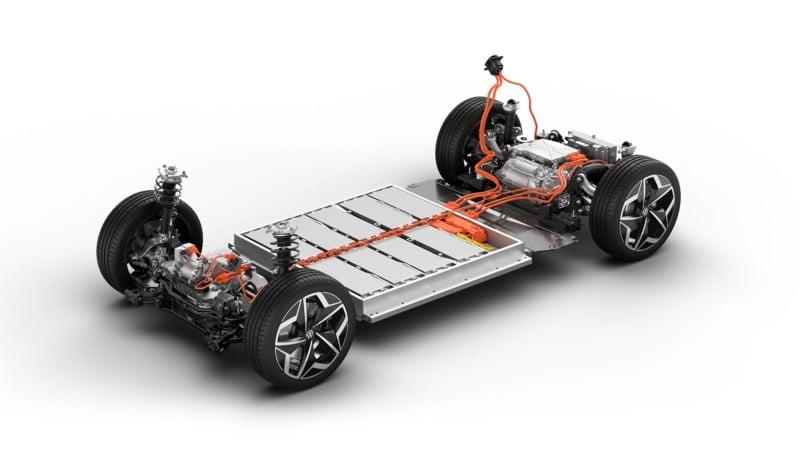
Grab your popcorn, because there’s a full-speed, head-on collision between the left’s competing interests coming, and it’s fixing to be gory. From an item that appeared in The Wall Street Journal at the end of September…
Grab your popcorn, because there’s a full-speed, head-on collision between the left’s competing interests coming, and it’s fixing to be gory. From an item that appeared in The Wall Street Journal at the end of September…
A couple said they are “in shock” after claiming Tesla handed them a £17,000 bill to fix their battery after it was “damaged by driving in the rain”.
Johnny Bacigalupo and Rob Hussey took their £60,000 electric car to Tesla when it stopped working following bad weather.
After “frustrating” back and forth with the company, the pair said the bill came out to £17,374 despite claiming no fault on their part.
h/t TB

Every week, it seems, we get another report revealing the deep thoughtlessness and fiscal recklessness of Ottawa’s electric car and electric-car battery fixation.
For example, the Parliamentary Budget Officer recently asked how long it will take for the federal government to see a return on the $28.2 billion of production subsidies to EV battery-makers Stellantis and Volkswagen. The answer — about four times longer than government originally claimed.

In the high Nevadan desert near the Oregon border lies an enormous deposit of lithium, a metal that is essential in the production of electric car batteries.
President Joe Biden wants to get it out of the ground. But its exploration is dividing communities which are usually on the same side of political arguments.
Environmentalists and native people cannot agree on whether a new rush for this “white gold” should be supported or fiercely opposed.
The Parliamentary Budget Officer (PBO) says the federal government’s estimate of five years for it to break even on subsidies to auto giants Volkswagen and Stellantis was “wildly optimistic,” citing the PBO’s recent report that found it would take more than 20 years.
The federal government relied on a report by the non-profit group The Trillium Network for their claim, but Yves Giroux told MPs on the Standing Committee on Industry and Technology Thursday that the Trillium report contained “a lot of assumptions.”
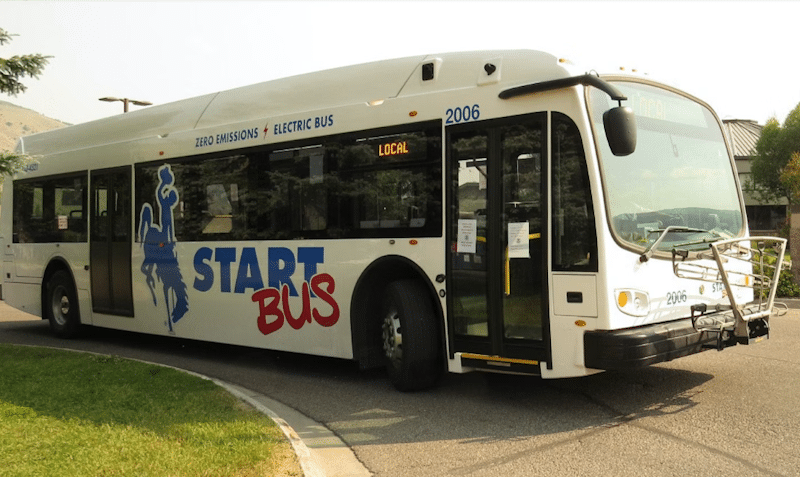
Underneath the foreseeable fiasco is a scandal that views like a Solyndra rerun, and a grotesquely wasteful government—and as if Solyndra-esque plotlines and a federal government taking our hard earned money to prop up both parties on either end of a business deal from which a vast majority of the country does not benefit weren’t realities obscene and condemning enough, the latest act in the unfolding rechargeable vehicle drama of Jackson’s START system now can add a 100% failure rate of the product to the list. Cowboy State Daily’s Kevin Killough penned an article last week covering the news
The UAW should be going on strike against Biden, not Ford and GM.
Biden spent 12 minutes on the UAW picket line. “You guys, the UAW, you saved the automobile industry back in 2008 and before,” he told the striking automotive workers.
“Wall Street didn’t build the country. The middle class built the country.”
h/t Kiki9
Standing before a backdrop that declared Quebec’s commitment to a clean economy, Prime Minister Justin Trudeau and Premier François Legault outlined the details of what they both described as a “historic” project.
The numbers are eye popping. A new manufacturing facility to be built by Northvolt, a Swedish battery giant, will occupy 170 hectares — an area the size of more than 300 football fields — on Montreal’s South Shore, in a parcel of land spanning two communities.
Will it pay off? Not likely but the CBC says it will.

As Toronto ponders EV mandate for rideshare drivers, experts say they can’t lead the charge without chargers
As Toronto is considering a proposal to mandate that all rideshare drivers use electric vehicles — the city urgently needs to prioritize upgrading its charging infrastructure specifically in high-rise, multi-unit buildings, where many drivers live, an environmental agency and academics say.
According to Ian Klesmer, the director of strategy and grants with The Atmospheric Fund (TAF), a climate agency and non-profit funded by government endowments, their research has shown that many rideshare drivers are low-income earners or new immigrants who live in apartments that need to be upgraded with electric chargers.
This commie assclown has to go.
Insurance companies will enjoy a bonanza of juicy rate hikes insuring buildings forced to have EV chargers installed.
That assumes we ever have the hydro infrastructure to support even that level of charger intsallation.
Auto workers are on strike nationally, hoping to wrest more pay for the work they do. These workers might want to focus on the pay they’re going to lose when their work disappears, courtesy of “electrification” — the making of electric vehicles that will require fewer workers and lead to fewer buyers.
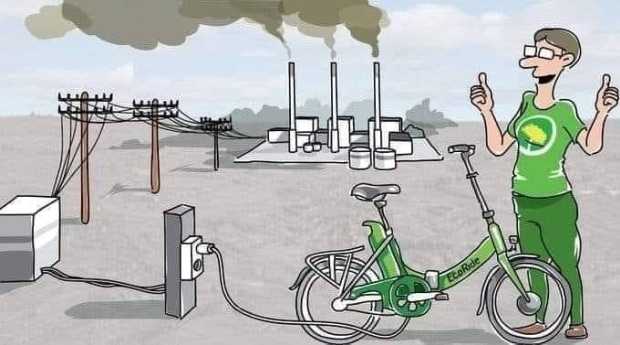
A $4 billion Panasonic electric vehicle battery factory in De Soto, Kansas, will help satisfy the Biden administration’s efforts to get everyone into an EV.
It also will help extend the life of a coal-fired power plant.
h/t Mauser
Toxic plumes and neon orange bodies of water are quite an ironic legacy for “clean” and “green” energy—how anyone can miss a paradox that in-your-face is beyond me (but that’s beside the point).
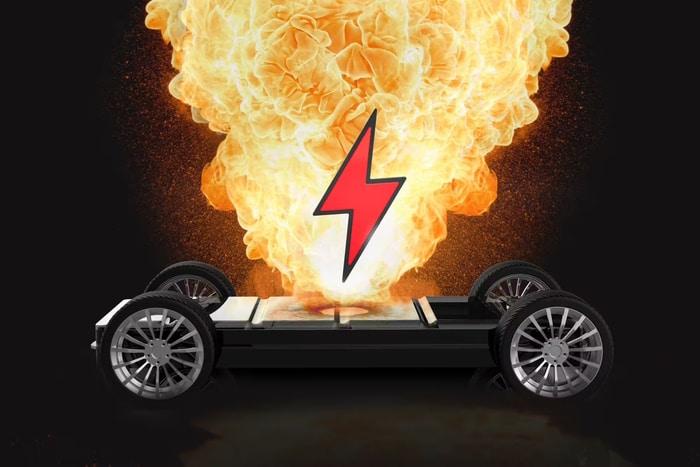
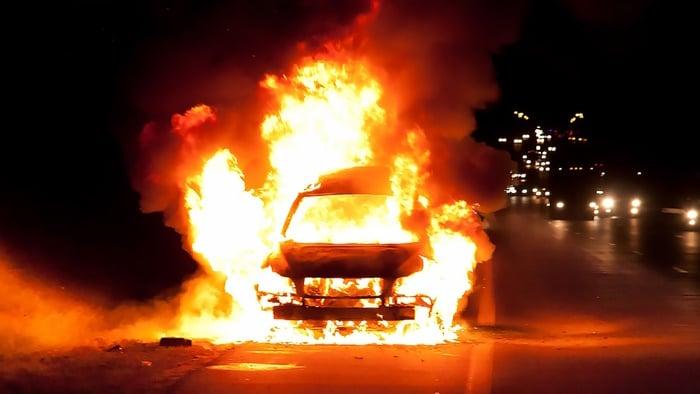
Two stories out this week highlighted the growing concern over the “reckless” transition to the globalists’ vision of the energy industry: the first questioned whether or not public services were “equipped” to handle the unique “challenges and risks” posed when electric vehicle batteries catch fire, while the second covered a brand-new study published yesterday by Science Magazine, one of the world’s most prestigious, longstanding, and recognized academic journals (it first entered circulation almost 150 years ago).
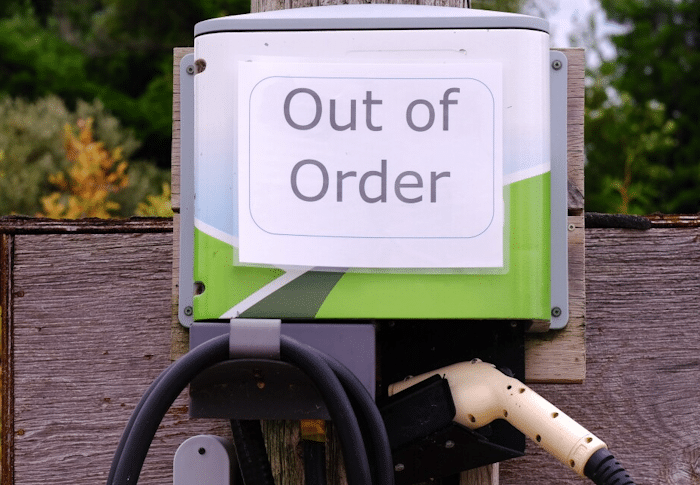
A Toronto man hoping to make the switch to an electric vehicle was left frustrated after consulting and working with the city for more than a year and a half, only to have his request to build a parking pad to support a charging station denied.
Mark Bishop said he’s been wanting to do his part to be more climate-friendly and is actively shopping to trade in his gas guzzler for an electric vehicle.
They don’t want you to own any kind of vehicle.
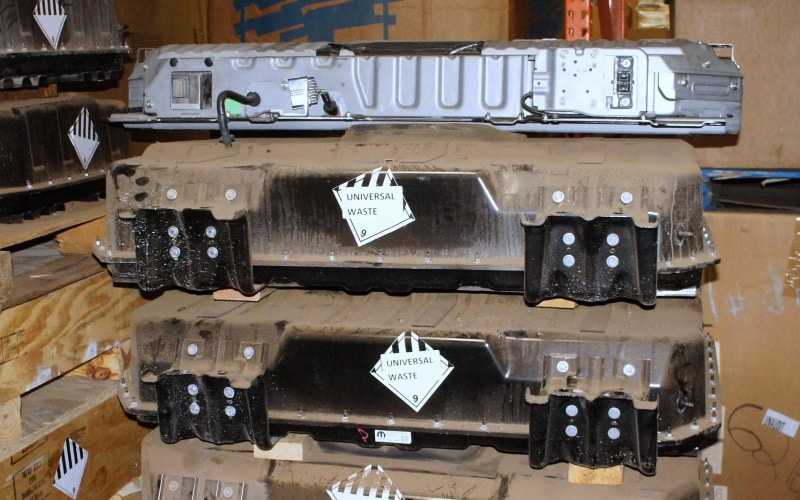
A transition to an all-electric-car future won’t mean less labor but more—much of it overseas.
Many claim that the United Auto Workers strike is, at core, a reaction to an “inevitable” transition to an all-electric-car future. They say that this future involves fewer jobs because electric vehicles (EVs) are supposedly simpler machines that therefore require far less labor to build. None of this is true.
But before we puncture this myth, let’s first note that the strike, like so much in life and politics, is about money. The UAW wants a 40 percent pay hike—and you can see why, given the staggering amounts of money sloshing around the auto industry. Automakers are enjoying record profits, much of which, rather than going toward wage increases, is being used to offset the billions of dollars in losses from building EVs. And that’s the least of it—the really big money gusher is coming from the government in the form of direct and indirect subsidies for EVs and the associated infrastructures.
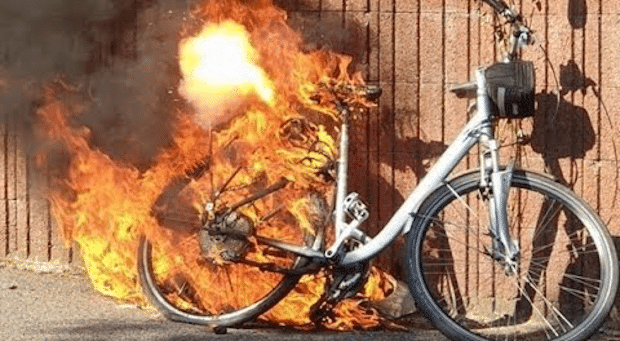
Tenants’ rights advocates are raising legal concerns about a Toronto building complex that’s banning electric transportation vehicles from the property, including in units, the garage, parking spaces and lockers.
Notices were posted this week at 110 and 120 Jameson Avenue in Parkdale, owned by Oberon Development Corporation, to alert tenants to the ban.
According to the notice, electric vehicles are not permitted anywhere on the property. Electric bikes and motorbikes, hoverboards, mopeds, segways and skateboard scooters are also part of the ban.
They are a fire hazard.
