How Many Trillions Will You Pay for Electric Vehicles?

Political fantasies keep crashing into automotive reality.

It’s become common for some politicians to present a transition away from fossil fuels as similar to other historical transitions in which societies abandoned old energy sources in favor of new ones. But this time really is different. Consumers in previous societies embraced new technologies because they afforded easier and cheaper ways to sustain and enhance life. The contemporary mania is to abandon consumer preference and instead enforce a trade-down to uneconomical but politically favored methods of powering our lives. So it’s important to understand just how far the new government mandate and subsidy systems will travel away from economic sense.

This should be read by Frankie Bubbles and Junior but it won’t.

Share

McTEAGUE: Current EV strategy charging ahead to failure

For years now I’ve been saying that electric vehicles, and EV mandates, are bad for Canada.

Back in 2020, when the then-CEO of Toyota, Akio Toyoda, voiced his concerns that governments were moving too fast in their push for an all-electric car market when there were other good options available which didn’t require the same multi-billion dollar infrastructure overhaul or increase in electricity generation, I asked why we weren’t listening to a man who knows his own business.

Share

Americans remain sour on electric vehicles

On June 4, the Energy Policy Institute at the University of Chicago and the Associated Press-NORC Center for Public Affairs Research released their second annual survey on Americans’ attitudes toward electric vehicles, which showed yet again that most Americans do not intend on buying electric vehicles in the near future.
In 2023, 47 percent of Americans said they are “not too likely/not at all likely” to purchase an electric vehicle (EV) the next time they buy a car while 19 percent answered “extremely likely/very likely.” One year later, those numbers have barely budged. In 2024, 46 percent of Americans remain in the “not too likely/not at all likely” camp, whereas 21 percent responded that they are “extremely likely/very likely” to purchase an EV the next time they buy a car.

Share

Gwyn Morgan: Ottawa’s EV mandate is in trouble and that’s a good thing

All the new electrical generation and metal mining required means EVs don’t have a hope of getting up to speed in the 11 years left


The federal government has mandated that all new light duty vehicles be electric by 2035. Achieving that goal would require vastly more electrical generation capacity and an enormous expansion of charging stations.

A Fraser Institute study published in March found that handling the higher load would require either 13 large new gas plants or the equivalent of 10 new mega-dams the size of B.C.’s $16-billion hydro Site C. Just one problem: almost all viable hydro sites have already been dammed. Plus: it took 10 years to get environmental approval for Site C and another 10 to build it. That leaves the natural gas plants. But powering EV’s with natural gas puts the kibosh on zero emissions.

Share

Ontario expects to land another Monorail plant

via GIPHY

Ontario expects to land another EV battery plant

Ontario expects to land another major electric vehicle battery plant, its economy minister said, as Canada’s most populous province tries to capitalize on what it views as a short-lived opportunity to secure the future of its auto sector.

It has already lured commitments for major plants from Stellantis NV, Volkswagen AG and Honda Motor Co., with the help of promises of billions of dollars from government. Ontario has its eyes on three more prospects and is confident it will land at least one, said Vic Fedeli, its minister of economic development and trade.

h/t Mauser

Share

New study: Infrastructure needed to support a ‘zero emissions’ electric trucking fleet comes with a $1 trillion price tag

“We’re facing an unfunded, $1 trillion mandate that carries enormous consequences for the American consumer.” At least that’s what Chris Spear, American Trucking Associations President and CEO has to say about one D.C. diktat coming down from on high in particular, and that is the one mandating that the American trucking industry bend to EPA rules requiring all electric fleets and production lines.

Share

New study: Copper mines can’t extract enough material needed for EVs

A team of University of Michigan researchers recently discovered that the amount of copper needed to keep up with the manufactured demand created by the globalist E.V. agenda is “essentially impossible” to generate. On May 16th, Engineering and Technology published an article by Tanya Weaver which covered the results of the new study…

Share

Electric cars are about to get a lot more expensive

In California, you may soon have to pay for every mile you drive. Texas has already brought in an extra registration fee. New South Wales is planning a form of road pricing, while tariffs imposed in the US and soon the EU as well are expected to massively increase the sticker price of every car.

Add it all up, and one point is clear. Electric vehicles are about to get a lot more expensive. But hold on. Even by the standards of industrial policy, this is taking things too far.

The same governments which have been heavily subsidising battery-powered cars as part of the drive towards a net zero economy are now imposing punitive taxes on them. Surely it is time they made their minds up – or just left it to the market to decide.


Toyota shuns electric cars with new generation of combustion engines

Toyota is to develop a new generation of petrol-fuelled internal combustion engines, in the carmaker’s latest bet against electric vehicles.

In a joint press conference with Mazda and Subaru, the Japanese company on Tuesday unveiled prototype engines that it said would be smaller, more efficient and capable of burning eco-friendly fuels such as hydrogen.

It said the engine is designed to be used in tandem with a battery-powered electric motor and is expected to be deployed in future hybrid and plug-in cars.

Share

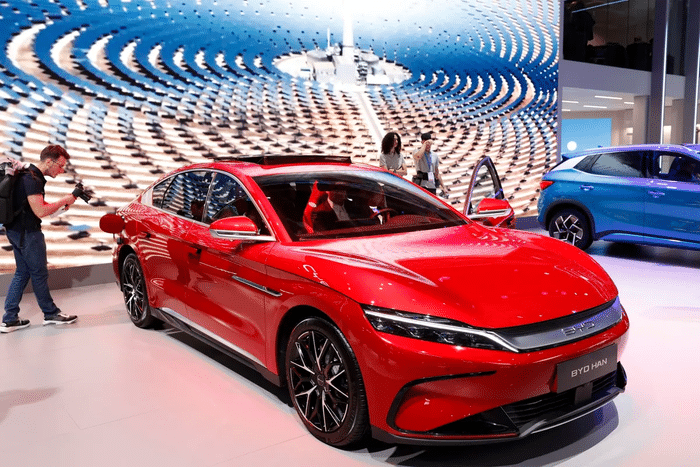
Canada mulls Chinese EV tariff following U.S. move but is not committing to it

OTTAWA – Canada is looking at the massive new U.S. import tariffs on Chinese-made electric vehicles imposed by President Joe Biden earlier this month, but is not making any commitment to following suit north of the border.

Chinese brands are not a major player in Canada’s EV market at the moment but imports from China have exploded in the last year as Tesla switched from U.S. factories for its Canadian sales to it’s manufacturing plant in Shanghai.

Share

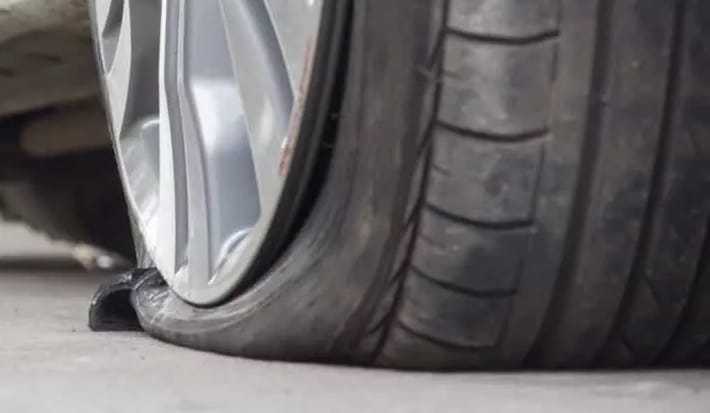
My EV’s tires collapsed because the battery is so heavy

‘My electric hatchback is as heavy as a Jeep – I needed new tyres after 7,500 miles’

Electric car buyers should be aware of the “astronomical” costs required to regularly replace short-lived tyres, owners have warned.

Car lover Jim Bassett managed just 7,500 miles in his brand new Volkswagen ID.3 before being quoted more than £300 to replace the rear rubber.

The 80-year-old stumped up the cash after being told it was common practice for tyres on his rear-wheel model to degrade rapidly due to the weight of the vehicle .

Share

Those ‘All Electric’ Fire Trucks are a Sad Joke

New Mexico Democratic Governor Michelle Grisham was recently excited to announce that the state’s Environment Department was awarding a nearly half-million dollar grant to Bernalillo County to partially finance the purchase of a new “all-electric” fire truck for their fire department. It was only a “partial” reimbursement because the projected cost to the county to replace its 1991 diesel fire engine with a Pierce Volterra battery electric fire engine was more than $1.8 million. The local fire chief was quoted as proudly saying, “There’s no cancer coming out of the tailpipe” of the new truck. So that’s a win for all concerned, right?


Vancouver bought one of these beauties and it sucks Big Time!

Share

RCMP warns push to switch to electric vehicles faces ‘significant challenges’

Can the RCMP turn North America’s largest law enforcement vehicle fleet green? They’re about to find out.

As Canada’s national police service, the RCMP falls under Ottawa’s Greening Government Strategy — a commitment to lower the environmental footprint of the federal government and get it to net‑zero emissions by 2050.

The strategy calls on the RCMP to replace as many of their approximately 12,000 cars and trucks with zero-emission vehicles as operationally possible by 2035.

Another huge waste of tax dollars coming up …

Share

Spontaneous (re)combustion: Fire breaks out at a lithium battery storage facility, firefighters contain the blaze, then it sparks itself again

As long as lithium ion battery plants spontaneously combust and spew clouds of poisonous chemicals into the air, I don’t ever want to hear a progressive Democrat—voter, pundit, or politician—lecture me on the wildfires and “climate change” crises they swear are caused by my use of modest personal amenities.

Share