Munich Security Conference finds Europe in a dismal state

Europe’s political and security elites are flocking to the Munich Security Conference to witness their American security umbrella being folded up and packed away. On Thursday morning, a car reportedly driven by an Afghan asylum seeker rammed into a group of trade union protestors injuring almost 30 people. This apparent terrorist attack underlines the continent’s existential problem: it is ruled by people who cannot ensure its safety, within or without its borders.

Share

JD Vance is right: the anti-democratic West is no longer worth defending

Yesterday a car was deliberately driven into a crowd of bystanders, injuring 30. Attacks of this nature – violent, random, nihilistic – have become commonplace, even mundane, in Europe; the identity of the alleged perpetrator (reported as a Afghan failed asylum seeker) grimly predictable even as the motive remains obscure.

That this particular attack received so much coverage reflected less the scale of the violence and more the location and timing: in the centre of Munich, a day before the Security Conference.

Perhaps it may have given some pause to the delegates of the liberal Western order, travelling to the city to discuss Europe’s external security threats, to be reminded in such a brutal fashion that the greatest danger to our civilisation operates within our borders. Or perhaps not: much easier to offer thoughts and prayers, and turn our eyes to the undoubtedly urgent questions of the future of Ukraine and Nato.

Share

JD Vance attacks Europe over migration, free speech says formerly USAID funded leftist propaganda rag

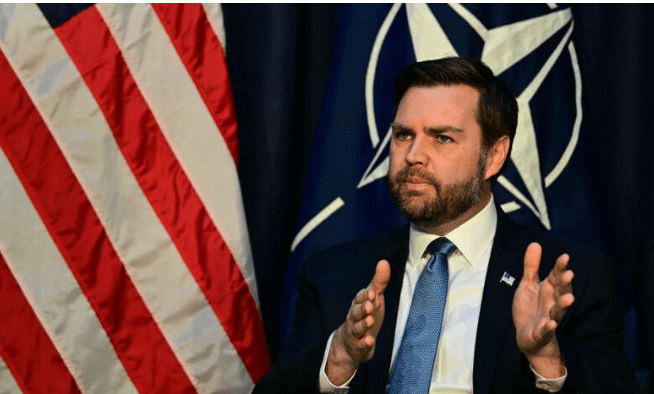
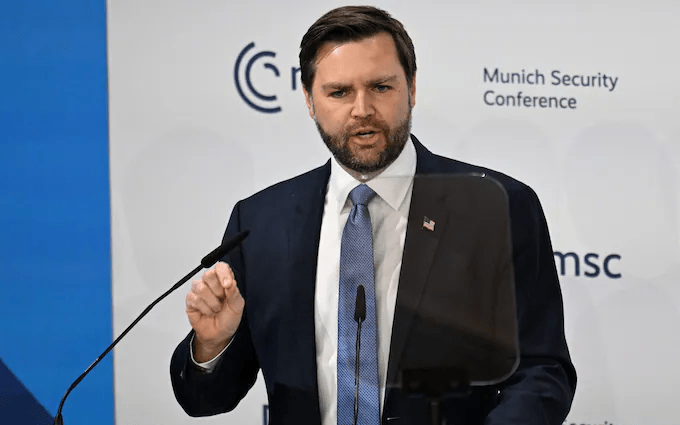
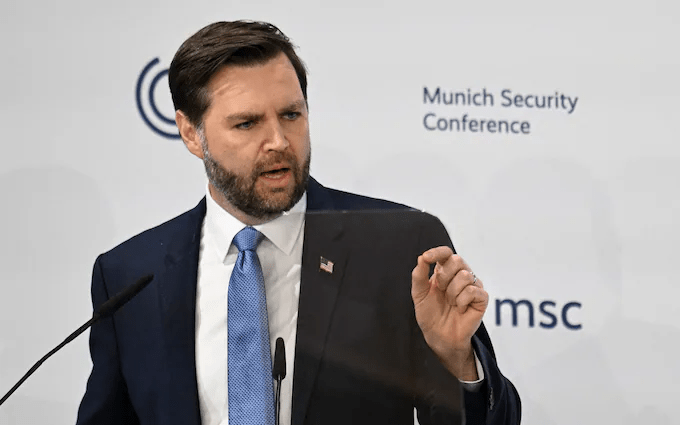
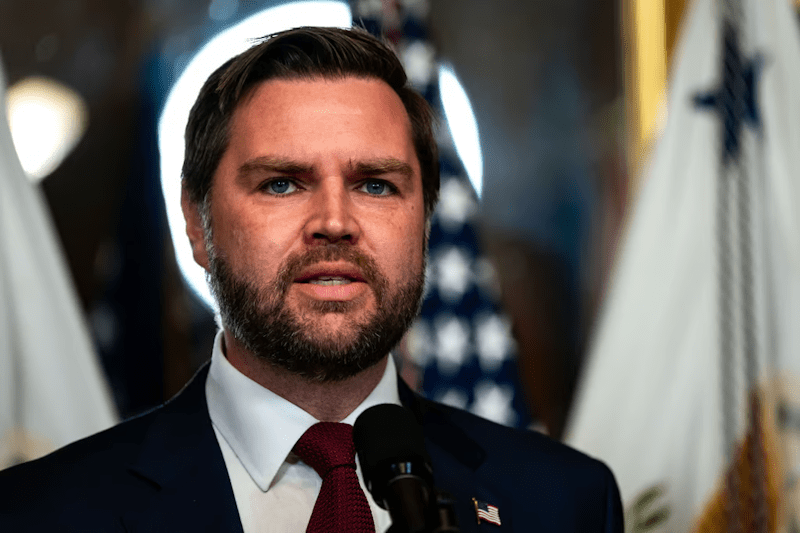
MUNICH — United States Vice President JD Vance launched a blistering attack on European governments on Friday, chastising them for ignoring the will of their people, overturning elections, ignoring religious freedoms and not acting to halt illegal migration.

It was a U.S.-style MAGA, red meat speech that eschewed detailed discussion of defense and security — the topic of the Munich Security Conference. Vance instead hit on some recent hot button cultural issues, from abortion laws in Britain to the recent election in Romania.

Share

US cannot protect Europe, Pentagon chief tells Nato allies

Pete Hegseth says America will focus on domestic concerns and the threat of China over sending peace-keeping troops to Ukraine

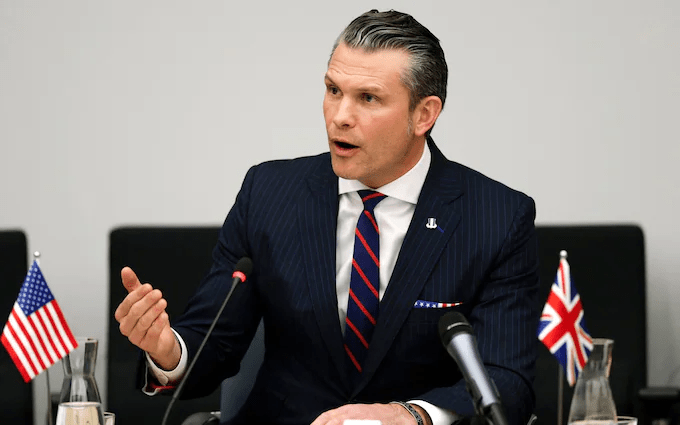
Europe can no longer count on the United States to come to its defence if Russia attacks, Pete Hegseth warned Nato allies on Wednesday.

The firebrand US secretary of defence said the Continent would have to step up to support Ukraine and confront the threat of Russia as his country shifts its focus to tackling China and securing its domestic borders.

He also ruled out sending US troops to help keep the peace in Ukraine in the event of a ceasefire.

Share

A ‘Trump tornado’ is about to hit Europe

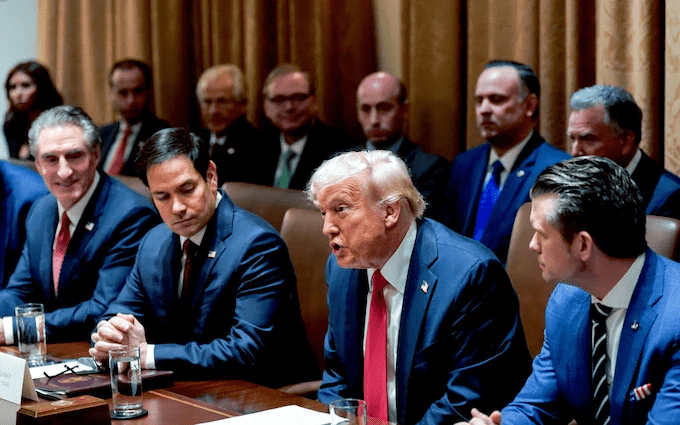
There is a wind of change blowing through the West. It emanates from Washington DC, where President Donald Trump continues to dash off executive orders; more than fifty by the end of last week, the highest number in a president’s first 100 days in four decades.

The liberal mainstream media is rattled. The New York Times magazine ran a piece at the weekend in which it described Trump as “the leading light of a spate of illiberal leaders and parties flourishing in democracies around the world.” The paper namechecked some of them: Poland, Holland, India, France, Germany, Italy, Brazil, Hungary and Russia.

Share

America and Europe, Facing Similar Threats, Can Hang Together — or Hang Separately

Both face shrinking and aging populations. Both either cannot or will not control their borders, despite popular protests. Both suffer from woke political correctness and are pushing back

Consider these European and American binaries.

On December 20, 2024, a terrorist, Taleb Al-Abdul Mohsen, rammed his SUV into a Christmas crowd at Magdeburg, Germany. He killed six pedestrians and injured 299 others.

Eleven days later, on New Year’s Eve at New Orleans, Louisiana, Shamsud-Din Bahar Jabbar smashed his pickup into a festive crowd. He murdered 15 and hurt over 35.

Share

European Countries Will Pay Syrian Migrants Cash to Go Home

Europe has millions of Syrians who claimed refugee status on the basis of the Assad family, now some are making the calculation it is cheaper in the long run to make a a single cash payment to go home than keep the guests on social welfare programmes indefinitely.

Austria will offer Syrians a €1,000 ($1,000) cash payment “return bonus” to go home, Chancellor Karl Nehammer has said, stating the clearest reason they had for claiming asylum in the first place has now gone. Kronen Zeitung cites Nehammer as having said in a podcast this week: “We are now helping everyone who wants to return voluntarily. There is up to 1,000 euros for this.”

Share

Don’t dare to criticize Islam in Europe or the police will come

In 1984, Soviet dissident Gunnars Astra was sentenced to twelve years in prison in the USSR for possessing a copy of George Orwell’s “1984” and for secretly translating it. In our 2024, it is difficult to grasp the paradoxes of a new 1984. A clear mind and intellectual courage are needed.

We long for the days when the expression “politically correct police” was just an ironic quip by Philip Roth, not a literal description of what is happening in the West.


WTF?

Share

France and England are the European countries with the highest number of anti-Christian crimes

Church Arson France – Parish of St. Paul in Corbeil-Essonnes

The Observatory on Intolerance and Discrimination against Christians in Europe (OIDAC) has published its annual report 2024 (referring to 2023). According to the organization, during that year more than 2,400 attacks against Christians took place in Europa.

Share

Trump’s Triumph—a Turning Point for Europe?

We are witnessing a sea change of political currents both in America and in Europe. Donald Trump’s sweeping election victory has sent shock waves through the liberal establishment on both sides of the Atlantic. But it is a salutary shock.

It forces the European political class , and the German in particular, to abandon some of their illusions and forces us to become more grown up and self-reliant in matters of economic and security policy. Trump’s brutal way of formulating American national interests is refreshing. It tears away the veil of fake moralising and ideological kitsch that have obscured our perception of realities and actual global power issues.

Share

The Usefulness of Haunting

Halloween may be a bulwark of tradition in the fight for Europe’s future.

Although the end of October is a long way away, the first Halloween items have crept into retail stores here in Southern California. Of course, what most Europeans see in Halloween is yet another American importation—and one of ghoulish or even Satanic orientation at that. One could hardly blame such a reaction, especially as this observance is preceded by a long list of other such, including (but not confined to) Black Friday, Santa Claus, KFC, McDonald’s, and on and on. Not being aware of either the slightly-terror-tinged-but-wholesome thing that Halloween was in my childhood, or of its Christian and Celtic roots, one can easily forgive the devout European for this conclusion. But the whole thing is rather more complex. It is not merely a question of Halloween, but of the whole body of weird lore that underlies Europe’s cultures—and in a sense may be a bulwark of tradition in the fight for her future. There is also the question of whether that lore is strictly fictional, or if it contains some unpleasant realities that are ignored only at one’s peril—even if one wields political power.

Share

Alarmist Headlines About Europe’s ‘Far Right’ Ignore Failures of the Continent’s Liberal Elite To Heed Voter Concerns

“The far right made big gains in European elections,” reads the Associated Press headline on last week’s European Parliament elections. Lest you wonder why you should dread gains by the “far right,” the lead sentence of the article notes that the European Union has “roots in the defeat of Nazi Germany and fascist Italy.”

For many readers, that juxtaposition is a reminder of the sharp rise in Nazi party percentages in Weimar Republic elections to 43 percent in 1933, 33 and 37 percent in 1932, and 18 percent in 1930, from 3 percent in 1928.

Share

Time to retire the ‘far right’ slur

Millions of Europeans have not suddenly turned into fascists. We need a new political language.

As the EU establishment struggles to make sense of last week’s revolt in the European elections, one thing is clear: our outdated vocabulary is not up to the task of describing today’s political landscape.

Gains for France’s National Rally, Giorgia Meloni’s Brothers of Italy and the Alternative for Germany (AfD) have been described as a ‘far-right surge’ in newspapers and TV reports, not just across Europe but around the world. Even before the election results came in, labels like far right and extreme right were bouncing off commentators’ keyboards. All agree that the far right is on the rise and ordinary people need to worry. This is Europe’s ‘Trump moment’, explained Politico. Some go further. Marine Le Pen’s National Rally is described as ‘neo-fascist’, while academics calmly ask if the AfD is the new Nazi Party. ‘Fascism has arrived’, declared French author Emilia Roig when the election results became clear. Yet with almost a quarter of Europe’s voters having backed a party branded ‘far right’, it is worth asking how accurate this label is and what purpose it now serves.

Share

Europe’s Establishment Press Rattled by Successes of the Right

Mainstream newspapers are doing all they can today, on June 10th, to echo Ursula von der Leyen’s triumphant message that “the centre is holding.” But reporters and pundits are unable to hide their concerns surrounding the shift to the Right which, however much they try to downplay it, they accept will raise serious difficulties for the establishment parties.

Coverage of Viktor Orbán’s performance in the European Parliament (EP) elections is indicative of this, with his 44% share of the Hungarian vote—a proportion that most other European political leaders can only dream of—dismissed as a “stumble” or a loss because it is lower than that achieved in previous polls. Reuters in particular framed Orbán’s smaller-than-expected lead as an example of “strong performances by centrist parties” in eastern Europe.

Share