
 The call to South Simcoe Police Service came from a grandmother who was asking her grandson be removed from her home after causing a disturbance.
Originally, this was not a gun call. But there are no routine police calls.
The call to South Simcoe Police Service came from a grandmother who was asking her grandson be removed from her home after causing a disturbance.
Originally, this was not a gun call. But there are no routine police calls.
A 23-year-old man who died following an exchange of gunfire with police inside an Innisfil, Ont. home has been identified.
Chris Doncaster was pronounced dead on scene following a shooting inside a home near 25th Sideroad and 9th Line on Tuesday night.

South Simcoe Police say two of their officers have died in the line of duty following a shooting in Innisfil, Ont. on Tuesday night.
The force said officers had responded to a report of a disturbance at a home in the area of 25th Sideroad and 9th Line at around 7:55 p.m.
They said the two responding officers were shot inside the home.
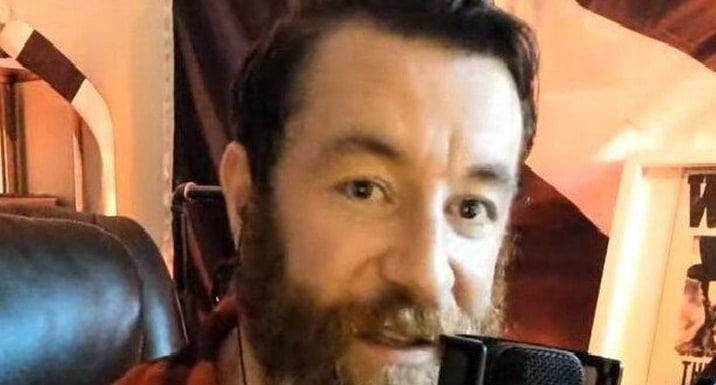
The founder of the online group “Diagolon” remains in custody after being denied release following a bail hearing in Saskatchewan.
Jeremy MacKenzie was arrested on September 29 in Cole Harbour, N.S., on a Canada-wide warrant related to charges laid by the Mounties in Saskatchewan in July.
 According to the latest data, black Americans, who make up 13 percent of the population, comprised 60.4 percent of known murder offenders in 2021—a new record!

Violent crime remains intolerably high, but the left wants you to think that perception is just a concoction of right-wing media.
After more than a decade of violent crime decreases with just a few interludes, crime has shot back up to levels not seen since the early 1990s.
When the left acknowledges this fact, it often does so by tying the violent crime increase to the sale of guns. However, there’s no evidence that the additional crimes are being committed by law-abiding gun owners.
h/t HN

The Ontario Court of Appeal ruled late September that the criminal records of Indigenous persons can be excluded from their trials to preserve fairness. Trial fairness, to Ontario’s top court, means creating race-based procedural rules to supposedly make up for the effects of systemic racism. In other words, these rules aren’t fair at all.
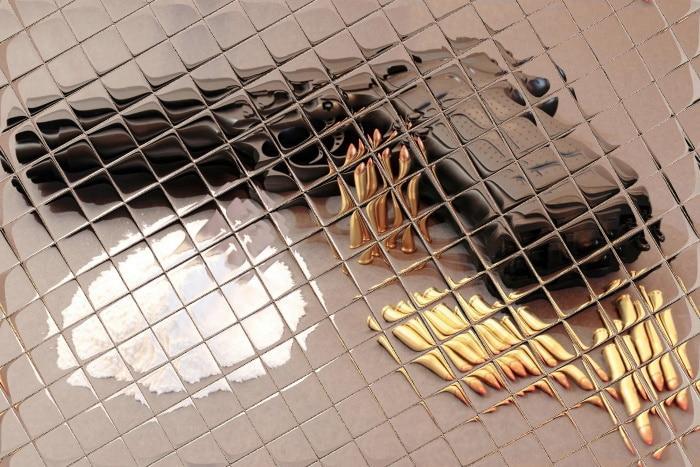
The war on drugs conspires with the war on guns to make a mockery of justice.
Weldon Angelos grew up in a musical family. His father, a Greek immigrant, aspired to be a country singer, while relatives on his mother’s side were jazz and country musicians. Angelos’ tastes were somewhat different: By his early 20s, he had gotten a start as a rap producer.
Angelos had collaborated with well-known hip-hop artists, including Snoop Dogg. He had his own label in Salt Lake City, Extravagant Records. To supplement his income and support his two young children, Angelos also sold marijuana, which is how he ended up with a 55-year federal prison sentence.
 The suspect accused of killing two people and injuring six others during a stabbing rampage on the Las Vegas Strip is in the U.S. illegally, sources told Fox News.
Yoni Barrios, 32, is a Guatemalan national in the U.S. illegally with a criminal record in California, a source with U.S. Immigration and Customs Enforcement said.

A violent stabbing attack left two peole dead and at least eight others injured in Las Vegas Thursday.
Some of the victims were showgirls taking pictures with tourists, bystanders told Fox 5.
Sheriff Joseph Lombardo told reporters on the scene there had been eight victims; two who had died and three who were in critical condition in hospital.

Newly released numbers from the National Crime Victimization Survey confirm that violent crime in urban areas is rising dramatically.
Confirming widespread perceptions, the nation’s largest crime survey finds that violent crime in urban areas rose dramatically from 2020 to 2021. The Bureau of Justice Statistics (BJS), the statistical arm of the Department of Justice, recently released findings from the 2021 National Crime Victimization Survey. According to the NCVS, which dates to the Nixon administration, the rate of violent crime rose only in urban areas. It did not change to a statistically significant degree in suburban or rural areas.

More arrests are “futile,” British Columbia’s attorney general says as he rebuffed criticism of government policies on repeat offenders and violent crime across the province.
Murray Rankin told the legislature on Tuesday that increasing arrests is not the answer to battle crime.
His statement comes despite a recent government-commissioned report citing police and probation officers saying repeat offenders “are emboldened to continue offending, deteriorating community confidence in the justice system.”

Toronto police have made a series of arrests in connection with the “troubling” rise in carjackings, Insp. Richard Harris of the hold-up squad said Tuesday.
The arrests of several teenagers — including an 18-year-old woman — come as Toronto has 182 reported carjackings so far this year compared to 102 in all of 2021. Fifty-six of the vehicles stolen this year have been recovered.
Time to start shutting down basketball courts.

Considering the unprecedented murder surge in America’s cities over the last two years, one might expect progressive district attorneys to reconsider the policies that have kept criminals out of jails and on the streets.

The disparity between whites and blacks has shrunk.
William J. Sabol and Thaddeus L. Johnson of the Council on Criminal Justice have released a new report breaking down the black–white gap in incarceration since 2000—focusing on state prisons, which house the vast majority of prisoners in the U.S., and excluding Hispanics from both the black and white populations.
They find that the disparity has markedly decreased, a little-noticed trend. In 2000, fewer than 300 of every 100,000 white adults were in state prisons. For blacks, the number was about eight times higher—nearly 2,500. Over the next two decades, the black rate fell by nearly half, while the white rate first edged up and then dipped somewhat, bringing the disparity under five-to-one in 2020.
