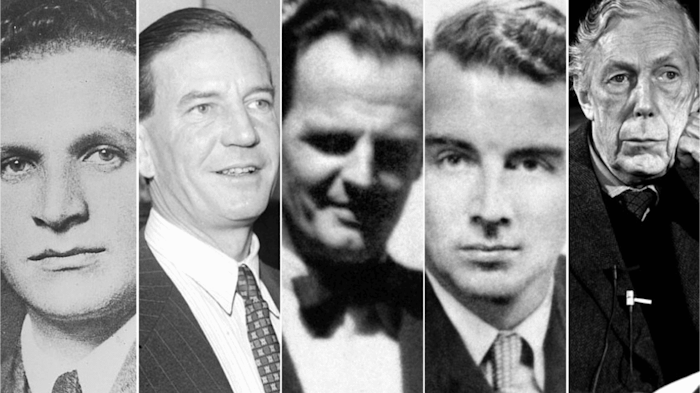
Who would have thought that Friedrich Nietzsche’s concept of the Übermensch would find one of its most remarkable manifestations not among the “blond beasts” of Adolf Hitler’s Aryan fantasies, but in a handful of effete yet determined young British men, all of whom were educated at the University of Cambridge in the late Twenties and early Thirties. What marked them out, and still marks them out, is their repudiation of the pieties of their time and place in favour of a harsh and uncompromising creed, spawned in the East, the aim of which was to destroy the society of the West into which they were born.
Cold War
RCMP feared traitor Kim Philby knew ‘most interesting’ Canadian secrets: documents

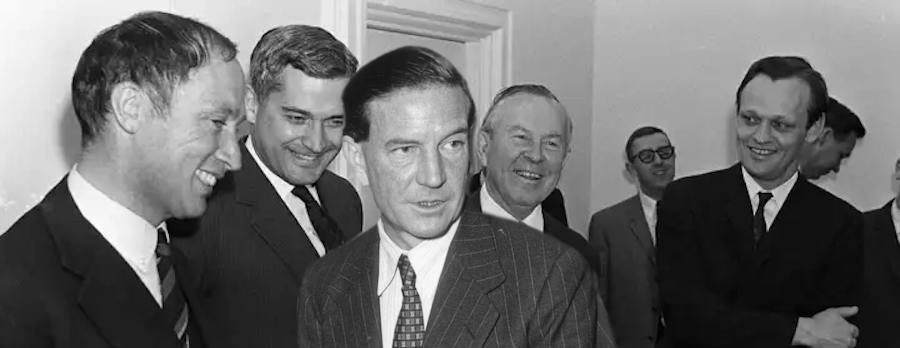
OTTAWA – The early-1960s revelation that British spy Kim Philby had worked for Moscow alarmed Canadian intelligence officials who feared that he had betrayed confidences gleaned from Soviet defector Igor Gouzenko, once-secret archival records show.
Harold Adrian Russell “Kim” Philby was recruited by Russian intelligence in the 1930s. He joined Britain’s Secret Intelligence Service, known as MI-6, during the Second World War, rising through the ranks to become a senior liaison officer in Washington from 1949 to 1951.
British intelligence eventually learned of Philby’s treachery and confronted him in Beirut in late 1962. Early the next year, Philby slipped aboard a freighter to the Soviet Union, where he was granted asylum and lived until his death in 1988.
In Canada’s Northern Outposts, Rusting Relics Once Guarded Against Nuclear War

Strings of radars stretching across Canada were built to give early warnings of Soviet bombers coming over the Arctic. The region now faces a new era of militarization.
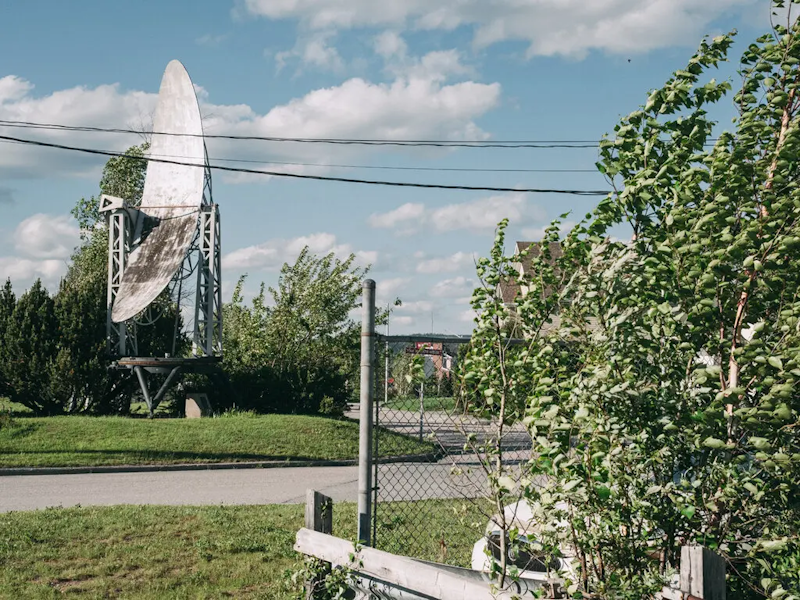
At the crossroads of Golf Street and Armed Forces Street, a large banana-shaped metal memorial on a pedestal gazes at the open sky in northern Canada. All but forgotten, its lower half blackened with time, it now stands forever still — or in repose, one might say.
In its glory days during the Cold War, the artifact — a radar — spun and bobbed with balletic grace, spat out bursts of waves and listened for echoes, as it continuously scanned the skies for Soviet bombers sneaking over the Arctic.
“It’s really crazy when you think about it, that this radar was the raison d’être of our whole town,” said Frédéric Maltais, who grew up in Chibougamau, a city in northern Quebec, on a military base that was shuttered at the end of the Cold War and became a golf course. “Imagine all the resources that went into managing one radar like that.”
‘A clever agent’: notes from ‘watchers’ of spy Kim Philby made public for first time

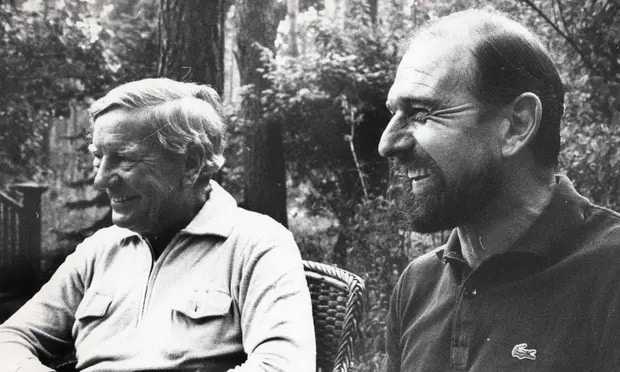
Secret surveillance of Britain’s notorious double agent, Kim Philby, made public for the first time in archived documents, reveals how keenly the Security Service wanted to confirm or disprove early suspicions of his high-level treachery.
In daily bulletins submitted to MI5 in November 1951, undercover operatives describe how Philby, codenamed Peach, moved about London.
They said he gave “no outward sign of being either nervous or on the alert, but your well trained man should not do so; every movement is natural – again as it should be”.
Russian double agent Oleg Gordievsky dies at Surrey home

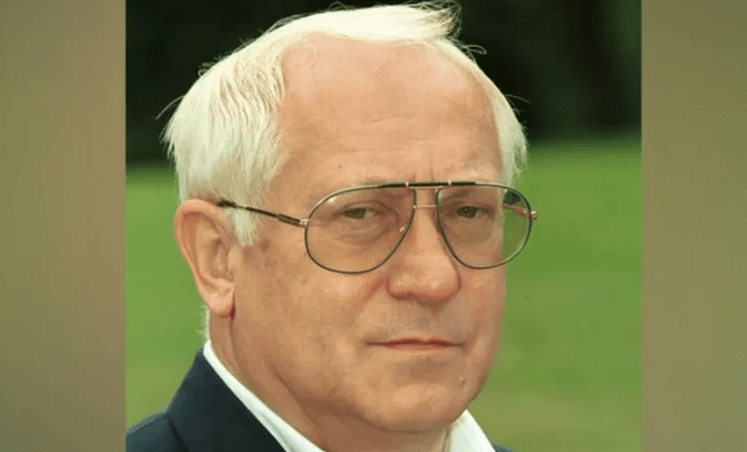
Oleg Gordievsky, the long-standing KGB double agent who defected to Britain, has died aged 86.
Gordievsky was said to be Britain’s most valuable spy in living memory inside Russia’s intelligence agencies.
Counter-terrorism police are assisting the coroner, but his death is not being treated as suspicious.
Who won the Cold War, anyway?

Conservatism may have won the Cold War, but conservatives lost the peace in the West
Thirty years ago this December 26, the impossible happened. One of the bloodiest states of the twentieth century (a horrific and highly competitive category) dissolved without violence. The Union of Soviet Socialist Republics had all but ended months earlier, when Russians took to the streets to defy the communist hardliners who had seized the government from an impotent Mikhail Gorbachev. That popular countercoup was itself largely bloodless: the soldiers called upon to enforce the hardliners’ rule refused to shoot their own countrymen.
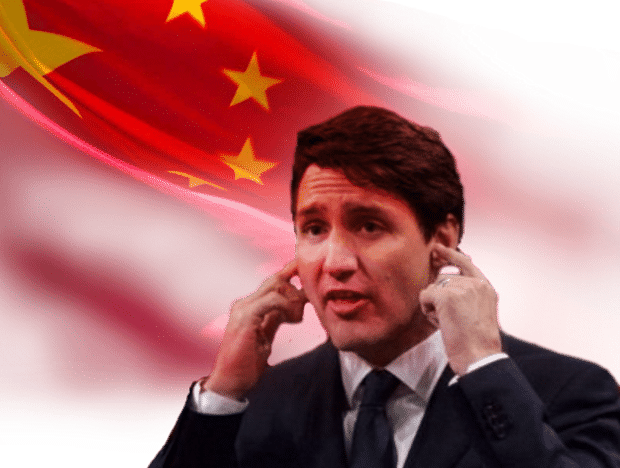
As threats of ‘new Cold War’ between U.S. and China intensify, Canada needs firm strategy to adapt

Back in April, prominent U.S. senator Chuck Schumer tabled a sweeping 1,445-page bill that would lay the groundwork for America’s broad strategy to blunt China’s global rise.
The legislation, called the Innovation and Competition Act, identifies strategic industries like quantum computing, advanced semiconductors and pharmaceuticals, where it recommends the U.S. should ramp up public support. It proposes deeper protections for critical minerals, expands research spending, and aims to strengthen cyber defence capabilities, among other things.
Tucked away in three brief sections of the legislation, U.S. officials detail a role for Canada in their China policy. Despite receiving little attention in Canada, the plans are deeply consequential, providing a rough sketch of the shape of Canadian foreign policy for the coming decades.