

Ontario parents will only be notified of a potential COVID-19 outbreak at their child’s school when around 30 per cent of the students and staff are absent, the provincial government says.
Ontario parents will only be notified of a potential COVID-19 outbreak at their child’s school when around 30 per cent of the students and staff are absent, the provincial government says.
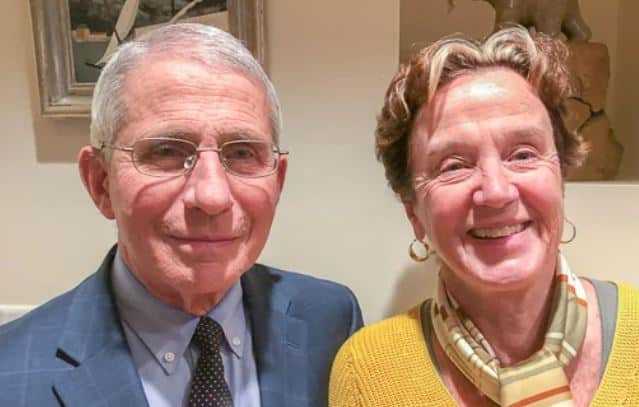
The NIH bioethics boss, a specialist in “human subjects” research, explains it all for you.
“This book was written by the author in her private capacity. Opinions expressed are her own. No official support or endorsement by the NINR [National Institute of Nursing Research] the NIH [National Institutes of Health] or other agencies is intended or should be inferred regarding the views presented here.”
Those are the first words a reader encounters in The Search for an AIDS Vaccine: Ethical Issues in the Development and Testing of a Preventative HIV Vaccine, by Christine Grady, from Indiana University Press back in 1995. In the acknowledgments, doubts begin to rise.

In private, they said it was plausible. In public, they called it a conspiracy theory.
In August 2007 there was an outbreak of foot-and-mouth virus on a farm in Surrey. It was a few miles from the world’s leading reference laboratory for identifying outbreaks of foot and mouth. Nobody thought this was a coincidence and sure enough a leaking pipe at the laboratory was soon found to be the source: a drainage contractor had worked at the lab and then at the farm.

MONTREAL – The federal government says the vaccine mandate for truckers crossing into Canada from the United States will come into effect this Saturday as planned, despite a previous statement from the Canada Border Services Agency that said Canadian truck drivers would be exempt.
In a release Thursday, Health Minister Jean-Yves Duclos along with the transport and public safety ministers said the CBSA statement from Wednesday evening was “provided in error,” and that Canadian truckers must be vaccinated if they want to avoid quarantine and a pre-arrival molecular test, starting this weekend.
h/t DS

Canada’s urban exodus picked up steam into the second year of the COVID-19 pandemic, with tens of thousands of people leaving Toronto and Montreal for smaller cities or rural areas, official data showed on Thursday.
More than 64,000 people left Toronto for other parts of Ontario from mid-2020 to mid-2021, up 14 per cent from the previous 12-month period, according to Statistics Canada population estimates, with another 6,600 moving out of province.
Montreal, Canada’s second-largest city, lost nearly 40,000 residents to other areas of Quebec, up 60 per cent on the year, with another 3,600 moving out of province.
Good timing! Toronto’s proposed budget for 2022 includes largest property tax hike of Tory’s tenure
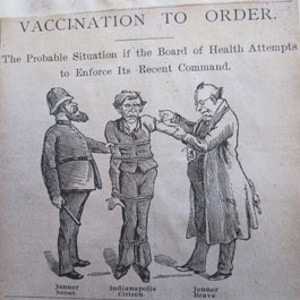 Governments are stepping up their efforts to convince people to get inoculated against COVID-19, with Quebec becoming the first province to announce a special tax on the unvaccinated.
The move, announced by Premier François Legault on Tuesday, mirrors that of European nations that have forged ahead with a form of mandatory vaccination.
 Ekstra Bledet, a major newspaper in Denmark, apologized for publicizing government-issued COVID-19 information unquestioningly rather than conducting independent investigations in an article titled “We Failed.”

Roberts voted with 6-3 majority on OSHA rule and voted with 5-4 majority on healthcare rule.
Kavanaugh voted with 5-4 majority on healthcare rule.
Alito, Thomas, Gorsuch and Barrett voted no on both rules.
What about all the people who were fired for not being vaxed?

The pandemic is now in its 23rd month and a highly contagious new variant is running rampant. Safe and effective vaccines are readily available and unvaccinated citizens are contributing disproportionately to a medical crisis that makes life harder and more dangerous for everyone.
So there are surely some — perhaps many — among the vaccinated who would like to see the unvaccinated suffer significant consequences for their intransigence, up to and including financial penalties. Ideally, such consequences also would minimize the number of people who remain unwilling to get the shot.

Ontario reports 35 new COVID-19 deaths; hospitals caring for record number of patients
Ontario reported 35 new COVID-19 deaths on Thursday, with hospitals reporting a new all-time high for combined acute and ICU admissions in the province.
The Ministry of Health said that there 3,630 people admitted to hospital with COVID-19 on Thursday, up from 2,472 one week ago.
Of those, there were 500 adults in intensive care, up 162 from one week ago.
Individuals who are fully vaccinated represent 78.1% of Ontario’s total population and account for 181 of Ontario's 500 ICU admissions.
There are 9,909 new cases of #COVID19.
— Christine Elliott (@celliottability) January 13, 2022
Canadian truckers crossing U.S. border now exempt from new COVID-19 rules, feds say
The federal government is backing down from mandating COVID-19 vaccinations for cross-border Canadian truckers just days before the new rule was set to take effect.
A spokesperson for the Canadian Border Services Agency told Global News Wednesday that unvaccinated Canadian truckers crossing from the United States will remain exempt from testing and quarantine requirements after arriving in the country.

We look at a COVID-19 remedy called monoclonal antibodies—or MAB for short. They are basically antibodies made in a lab and they can potentially be life-saving. But this treatment is in short supply in many areas in the U.S. including but not limited to Connecticut, Nevada, and Ohio. NTD spoke with CEO Michael Einhorn who runs Dealmed. He says there are a lot of reasons for the shortage of MABs, but he says government intervention is a main driver.

Following Quebec’s decision to impose a tax on the unvaccinated simply for remaining unvaccinated, Federal Health Minister Jean-Yves Duclos says they have no intention of “forcibly, physically vaccinating” Canadians.
They also had no intention of vaccine mandates.

The study, which was conducted by Kaiser Permanente Southern California but has not yet been peer-reviewed, also showed that people with Omicron infections are 74% less likely to need to be placed in the intensive care unit (ICU). And the study found a 53% reduction in risk of being hospitalized, said Rochelle Walensky, director of the Centers for Disease Control and Prevention (CDC).
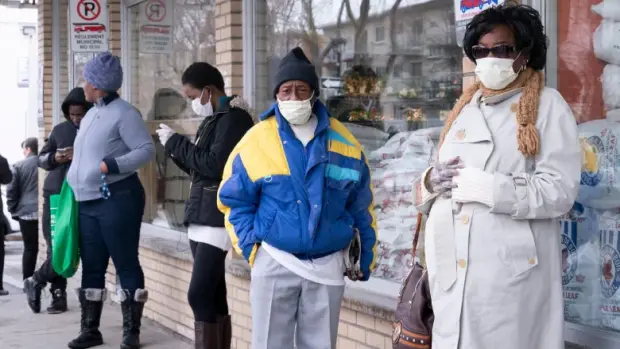
Legault’s proposal could further erode trust in government, Black Health Alliance executive director says.
The billionaire gave a weirdly content-free statement to Devi Sridhar
 Very few private individuals have had a bigger impact on the global fight against the Covid pandemic than Bill Gates. Through the work of his foundation, the tech billionaire is a major player. What he has to say on the issue is worth our attention.
