
“China – Communist Slave State”

Foreign Agents Can Easily Impact PM Selection via Unvetted Canadian Party Memberships: Study
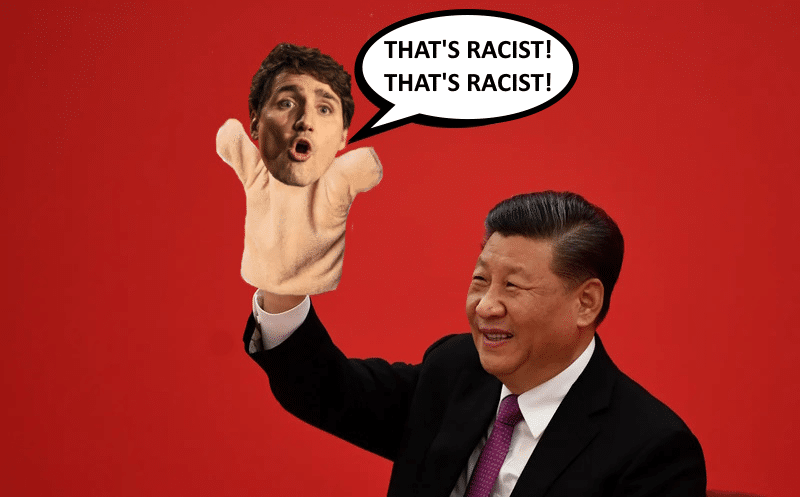 Lax membership criteria in major political parties, such as allowing international students and foreign nationals to join, leave Canada vulnerable to foreign interference and could potentially impact the selection of prime ministers, a recent study says.
“Foreign actors could also influence the selection process of party leadership, and hence the prime ministership, simply by purchasing party memberships that hand out ballots in leadership races without verifying the identities of new members,” said the study “Beyond General Elections“ published by Sage Journals on March 18.
Ban TikTok, half of Canadians say in new poll as U.S. fears spread

A new poll indicates 51 per cent of Canadians support banning the social media app TikTok, after a U.S. bill aiming to do just that passed in the House of Representatives.
Canada has ordered its own national security review of TikTok, something the Liberal government revealed following passage of the U.S. bill earlier this month.
Canada’s China class will ensure that TikTok is not banned.
Chief Electoral Officer acknowledges he lacks authority to properly investigate foreign interference allegations
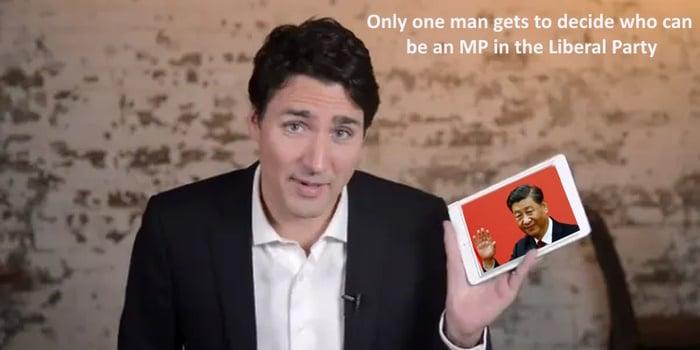
Canada’s Chief Electoral Officer Stéphane Perrault says he doesn’t have the authority to investigate whether some donors were encouraged to provide campaign contributions in the 2021 election to candidates favoured by China – donations for which they allegedly received a tax credit from the federal government.
Lawyers for the public inquiry into foreign interference pressed Mr. Perrault Thursday on a report by The Globe and Mail in February, 2023 that outlined a funding scheme to help elect politicians who would be uncritical of China.
Interference inquiry must walk very fine line on secrecy to avoid revealing traitorous actions by Liberal party
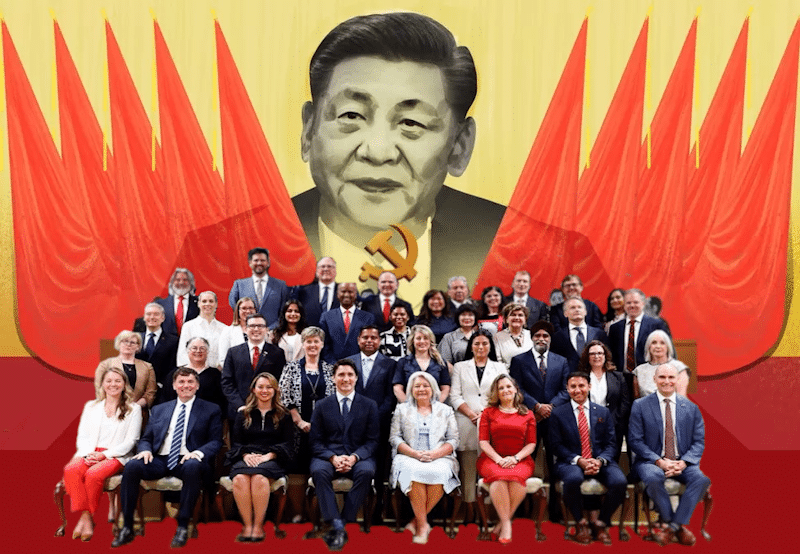
Interference inquiry must walk very fine line on secrecy, transparency: commissioner
OTTAWA – The head of an inquiry into foreign interference emphasized Wednesday that the need for secrecy about the sensitive subject has not hindered her work to date.
Commissioner Marie-Josée Hogue cautioned, however, that the inquiry must walk a very fine line in balancing confidentiality and the desire for transparency.
Hogue’s remarks came as the commission began two weeks of hearings into foreign meddling allegations and how the federal government responded to them.
China’s ‘Unrestricted Warfare’: Is It Here Already?
 If there is one thing FBI Director Christopher Wray has been consistent on, it is the threat of Communist China across a wide range of fronts. At an unprecedented event on July 6, 2022, Wray and his British counterpart, MI5 Director General Ken McCallum, held a joint public appearance – the first ever — to discuss the growing security challenge posed by China. Evidently, they saw the matter as urgent.
Parliamentary committee agrees to take on probe of Winnipeg lab scandal

A parliamentary committee has agreed to question key witnesses about how two scientists studying deadly viruses at a special lab in Winnipeg were able to work closely and covertly with China.
Conservative MP Michael Chong brought forward a motion to the Canada-China committee Tuesday morning to study the recent release of federal documents related to the dismissal of two scientists — Dr. Xiangguo Qiu and her husband Keding Cheng — from the National Microbiology Lab.
The ChiComs had the run of the joint.
The faces behind China’s online onslaught against the UK and US
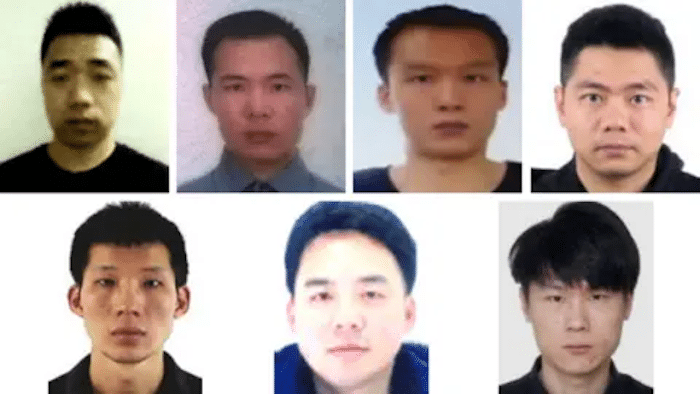
The US government has released images of seven alleged Chinese hackers wanted on charges of infiltrating the communications of targets in Britain and America over a 14-year period.
In a newly unsealed indictment, the Department of Justice (DoJ) accused the men of taking part in a state-sponsored hacking ring, known to US authorities as APT 31 or by the codename “Violet Typhoon”.
The documents lay bare the scale of China’s illicit incursion into Western public life, through the use of malicious emails designed to harvest data on their targets.
Winnipeg man was member of Chinese military branch behind cyber attacks on Canada, officials allege
A military veteran who spent 20 years in uniform, Lieutenant Colonel Huajie Xu now lives on a quiet street in Winnipeg.
 But he did not serve in Canada’s armed forces.
Instead, he was a member of China’s People’s Liberation Army, according to records obtained by Global News.
Before arriving in Canada in 2021, Xu worked at the military academy of the Chinese cyber warfare department that hacks Canadians and steals their secrets.
Intelligence watchdog completes report on Chinese interference allegations, sends it to PM
One of Canada’s intelligence watchdogs has finished its investigation into allegations of foreign electoral interference and has sent its findings to the prime minister and members of his cabinet.
It will still be a while before the public can read it, however — and it remains to be seen how much of the report will be redacted.
Just over a year ago, when the Liberal government was under constant fire over claims that China meddled in the 2019 and 2021 elections, Prime Minister Justin Trudeau asked the country’s two intelligence review bodies — the National Security and Intelligence Committee of Parliamentarians (NSICOP) and the National Security and Intelligence Review Agency (NSIRA) — to investigate the issue.
Trudeau to lie before foreign interference inquiry

Prime Minister Justin Trudeau will be one of 40 witnesses to testify before the commission probing allegations of foreign electoral interference over the next few weeks, as Commissioner Marie-Josée Hogue and her team sort through what the government knew, or didn’t, about claims that China meddled in the past two federal campaigns.
The Public Inquiry into Foreign Interference in Federal Electoral Processes and Democratic Institutions (PIFI) resumes next Wednesday and will run until April 10. The inquiry was triggered by media reports last year which, citing unnamed security sources and classified documents, accused China of interfering in the 2019 and 2021 federal elections.
Filing Patents for Wuhan Lab and Using Aliases: What the Fired Winnipeg Lab Scientists Are up to in China
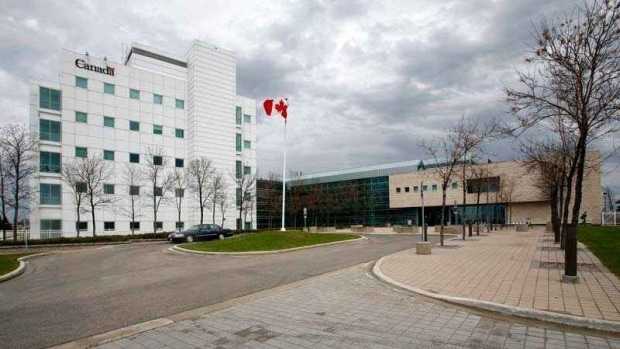
Fired Winnipeg lab scientists and married couple Xiangguo Qiu and Keding Cheng are actively engaged in research work in China with various organizations, some of which have close links to the Chinese military, an investigation by The Epoch Times shows.
The two are also using aliases in some instances, while Ms. Qiu has been filing patents related to her area of research in Canada.
Justin Trudeau isn’t meeting China’s threat to our democracy. Here’s one thing he could do right now

As U.S. legislators race to disconnect the world’s most downloaded app and prevent TikTok’s massive American data from potentially feeding Chinese security agencies, Ottawa should demonstrate equal resolve.
Canada’s Bill C-34 — proposed legislation to prevent foreign investors from harbouring foreign intelligence services — is in its home stretch of Senate review, before going to the House of Commons for final discussions.
China’s Sinochem buys first oil cargo from Trans Mountain Expansion
China’s Sinochem Group has purchased one of the first crude cargoes shipped through a new pipeline in Canada, which is designed to move oil from landlocked Alberta to the Pacific Coast for export.
h/t Mauser
Infectious-disease scientist fired from Winnipeg laboratory surfaces in China
One of two fired scientists at the centre of an RCMP investigation into a massive security breach at Canada’s top infectious-disease laboratory in Winnipeg is working in China and collaborating with researchers from the People’s Liberation Army.
The Globe and Mail has learned that Xiangguo Qiu has been conducting research with Chinese military scientists and other virology researchers, including at the Wuhan Institute of Virology, on antibodies for coronavirus and the deadly Ebola and Nipah viruses.