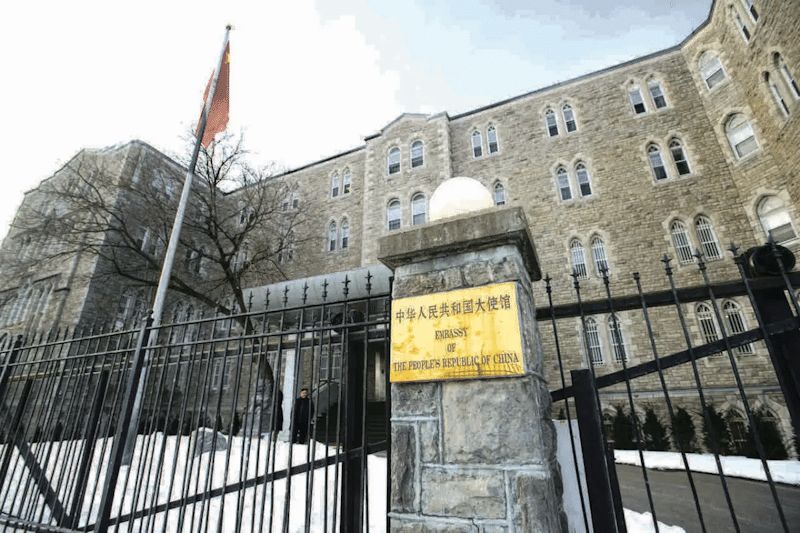
Ottawa, Saskatchewan step in to prevent sale of Canadian rare earth metals to Chinese buyer

The federal and Saskatchewan governments are stepping in to prevent Canadian rare earth metals from falling into the hands of a Chinese buyer after facing backlash from critics who alleged that allowing the transaction to proceed was anathema to Canada’s critical minerals policy.

Australia-based Vital Metals Ltd. in December announced it was selling its stockpile of rare earths that were mined at the Nechalacho Project in the Northwest Territories to China’s Shenghe Resources Holding Co.,Ltd.

Share

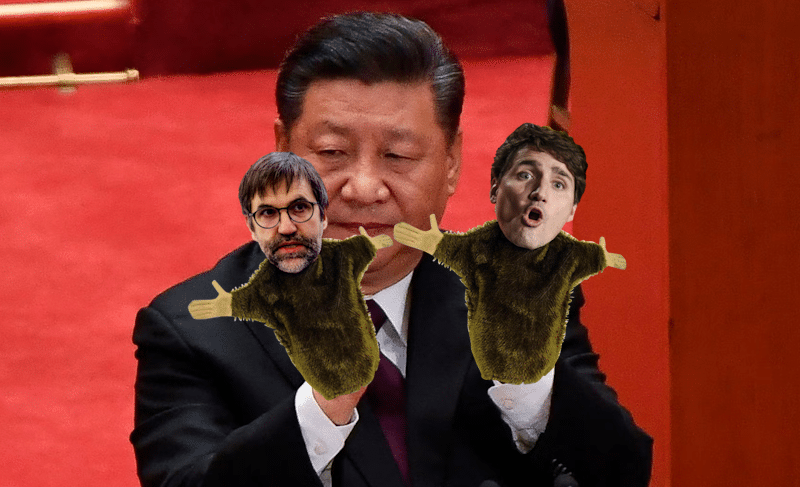
As Dictated To The Star By Katie Telford On Behalf Of Xi Jinping …

In Justin Trudeau’s paranoid Ottawa, insiders say treason allegations are being carelessly tossed around

By Justin Ling Contributor

Eighty years ago, cipher clerk Igor Gouzenko walked out of the Soviet embassy in Ottawa with a briefcase full of documents and a plan to defect. When he finally got an audience with the RCMP, he revealed the most extensive espionage and influence campaign Canada had ever seen.

Gouzenko’s defection spurred a series of investigations, a public inquiry, and a media frenzy. Revelations of how Moscow sought to steal secrets and infiltrate Ottawa gripped the nation and woke Ottawa up to new realities of the Cold War.

The gall.

Share

Suck-Up Singh says Han Dong shouldn’t be allowed back into Liberal caucus

After reading an unredacted report from one of Canada’s intelligence oversight bodies, NDP Leader Jagmeet Singh says he now thinks that Independent MP Han Dong shouldn’t be allowed back into the Liberal caucus.

Last week, the National Security and Intelligence Committee of Parliamentarians (NSICOP), a cross-party committee of MPs and senators with top security clearances, released a heavily blacked-out document alleging, based on intelligence, that some parliamentarians have been “semi-witting or witting” participants in the efforts of foreign states to interfere in Canadian politics.

Share

TAYLOR: The truth at last… CSIS reveals story of Chinese spies who got away with it

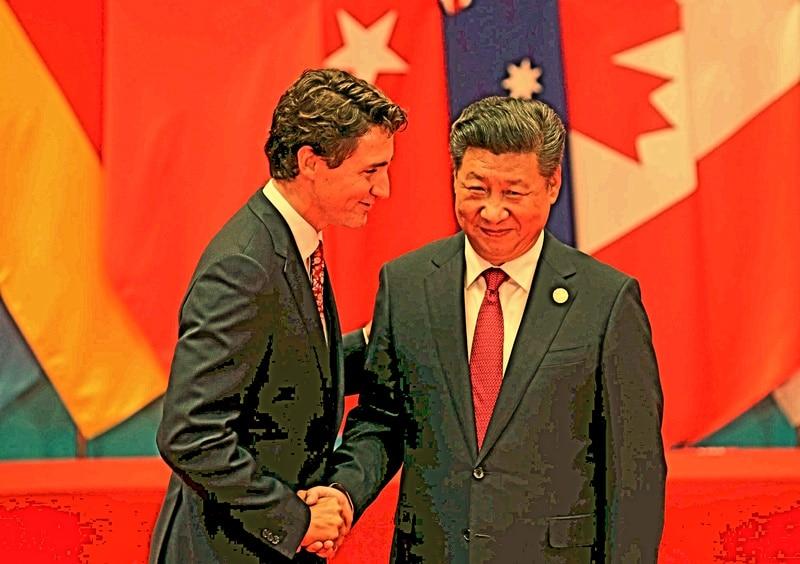
Justin Trudeau Xiangguo Qiu Keding Cheng – Everybody say Xi

Spy novelist John Le Carré established his reputation with 1963’s The Spy Who Came in From the Cold. Set at the height of the Cold War, it describes washed-up British spy Alec Leamas’ attempt to infiltrate East German intelligence as a double agent. It’s a grim tale of hidden identities, uncertain alliances and spymasters prepared to sacrifice their own men in pursuit of bigger game. According to Le Carré — who worked for Britain’s MI6 in Germany while writing the book — the modern world of espionage is unpleasant, unglamourous and devoid of loyalty. Unhappy endings are inevitable.

Share

Terry Glavin: Trudeau’s Chinese collaboration has been in broad daylight all along

It’s been quite the melodrama.

For two weeks, the inferred conclusions of “treason” on Parliament Hill derived from an 84-page-report that none of us is allowed to read have only heaped fuel on a garbage fire that began with the leaked revelations of intelligence agency whistleblowers going back to November 2022.

The stinking reek of it all should not be expected to subside any time soon. All the parties in the House now seem content with having the matter kicked over to Justice Marie-Josée Hogue’s Foreign Interference Commission. In the short term, if any legislative good comes of the international spectacle Canada’s political class has been making of itself, it will be in the outcome of Bill C-70, the Countering Foreign Interference Act, which completed third reading in the House of Commons on Thursday.

Trudeau is a witting accomplice.

Share

Ignoring Chinese spying has made Canada the weak link among Western allies

US v Canada

… This cross-border discrepancy is partly explained by serious flaws in Canada’s legal system. As an intelligence-gathering service, CSIS is best placed to identify crimes of espionage. But it has no actual law enforcement powers. It can share its findings with the RCMP, but this relationship is complicated by the fact CSIS intel is not admissible in court since the agency refuses to disclose its sources and methods.

“If defence lawyers ever get a whiff of the fact the RCMP has relied on CSIS information, they will demand to test that information in court,” warns Phil Gurski, a former strategic analyst at CSIS. For this reason, cases built on CSIS evidence are often not prosecuted. It is possible Qiu and Cheng were allowed to leave the country because the mountain of proof incriminating them was inadmissible in court.

Share

A cartoon cat has been vexing China’s censors – now he says they are on his tail

As anti-lockdown protests flared across China’s cities in November 2022, hundreds of thousands around the world were glued to an unlikely source: a mysterious X account, fronted by a cartoon cat.

Protest footage, details about police movements, news of arrests – Teacher Li Is Not Your Teacher posted a torrent of real-time updates sourced from ordinary citizens.

Little of it could be found on China’s tightly-controlled state media or internet. All of it was curated by one person, sitting in a bedroom in Italy – an art school student named Li Ying.

Share

Canada’s democracy ‘under attack,’ ex-China envoy warns after NSICOP report

Canada’s former ambassador to China, Guy Saint-Jacques, says Beijing’s meddling in Canada’s democracy is worse than it has ever been.

Earlier this week, a report from the National Security and Intelligence Committee of Parliamentarians (NSICOP) alleged that sitting federal politicians are “witting” participants in foreign interference schemes.

The report did not name names, and the Liberal government is resisting revealing their identities, citing concerns about sharing intelligence information.

Share

Conservative leader calls on Liberal government to release names of MPs accused of helping foreign states

Conservative Leader Pierre Poilievre says that Canadians have a right to know the names of the MPs accused in an explosive new intelligence report of “wittingly” working on behalf of foreign state actors.

On Monday, the National Security and Intelligence Committee of Parliamentarians (NSICOP), a cross-party committee of MPs and senators with top security clearances, released a heavily redacted document alleging some parliamentarians have actively helped foreign governments like China and India meddle in Canadian politics.

Share

Canada’s Universities Are a Pipeline for Chinese Military Technology

How hundreds of Chinese researchers across the country were identified as undercover scientists

THROUGH NAÏVETÉ and mindless belief in the universal benefits of academic exchange, some of Canada’s leading universities have contributed to the militarization of the Far East.

From the start of academic exchanges with the People’s Republic of China (PRC) in the early 1970s, the government of Canada has watched and largely approved of Chinese students focusing almost exclusively on science and technology faculties at Canadian universities. Meanwhile, Canadians going to study in China have engrossed themselves in Chinese language and culture and Maoism. For most of the past fifty years, Canadian universities and authorities were satisfied with this exchange. They saw giving Chinese students the benefits of Canadian knowledge and experience in science and technology as a gift toward the economic and industrial development of China.

Share

‘Witting’ involvement changes the nature of foreign interference

Witting. That’s the word in the latest report on foreign interference that changes things.

In the latest review, we don’t just see cases of messing with political messages in a local election or allegations of interference in a nomination race, such as that of then-Liberal, now-independent MP Han Dong.

Now, a committee of MPs has reported that some of their colleagues in politics have known they were helping a foreign state or being helped by one. It suggests that foreign interference sometimes takes two to tango, through a co-opting of Canadian parliamentarians who might get a political benefit from it.

Share

Trudeau’s government slow response to foreign interference ‘a serious failure’: intelligence watchdog

The Liberal government has known since 2018 that it needed to take foreign interference more seriously but failed to recognize the gravity of the threat, says a damning new report from one of the country’s intelligence oversight bodies.

“The slow response to a known threat was a serious failure and one from which Canada may feel the consequences for years to come,” says a report from the National Security and Intelligence Committee of Parliamentarians (NSICOP), tabled Monday in the House of Commons.

“The implications of this inaction include the undermining of the democratic rights and fundamental freedoms of Canadians, the integrity and credibility of Canada’s parliamentary process, and public trust in the policy decisions made by the government.”

Share

Canadian scientist explains how COVID likely escaped from a Chinese lab in ‘five key points’

As the U.S. Congress continues its investigation into the COVID-19 pandemic, with Dr. Anthony Fauci testifying on Monday, a Canadian scientist has taken to the New York Times to outline her contention that the virus probably escaped from a laboratory.

Alina Chan is a molecular biologist specializing in gene therapy and cell engineering at the Broad Institute of MIT and Harvard, where she is a post-doctoral fellow. She’s also co-author with science writer Matt Ridley of the 2021 book Viral: The Search for the Origin of COVID-19

Share

Canada raised foreign interference concerns with China, defence minister says

SINGAPORE, June 1 (Reuters) – Canada warned China against meddling in its elections during a rare meeting of the countries’ defence chiefs, its defence minister said on Saturday.

“I raised the concern of foreign interference in all the manifestations that it might take, including interference in our institutions, including our elections, but also actions of collusion against the Chinese diaspora in Canada, our citizens,” Defence Minister Bill Blair told Reuters, referring to his conversation with Chinese counterpart Dong Jun.

I bet he did.

Share

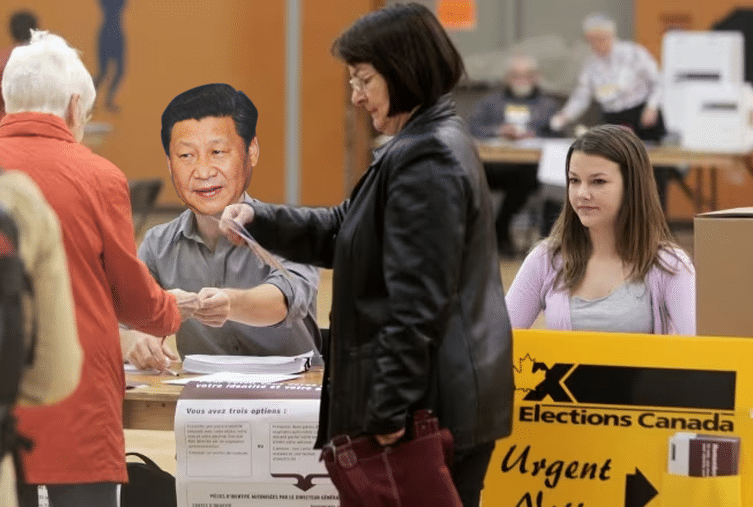
Warnings of Election Meddling by China Never Reached the Prime Minister

It can be a bit difficult to keep tabs on the various inquiries and examinations into foreign interference in Canadian elections, particularly by China.

Ottawa’s latest growth industry was largely created by a series of leaks of highly classified intelligence that first appeared in The Globe and Mail, and then Global News, that described attempts by the Chinese government to meddle in the last two elections with the goal of returning the Liberals to power, if again with a minority government.

Share