
The purpose of news ought to be to ensure that Canadians have a shared set of facts around which they can form their opinions and organize their lives.
The purpose of news ought to be to ensure that Canadians have a shared set of facts around which they can form their opinions and organize their lives.
In the middle of the election campaign, Prime Minister Mark Carney vowed to pay the CBC more money, waving around about $150 million in fresh taxpayer cash.
CBC covered that big scoop, with a headline calling the CBC “underfunded.”
Think about that scene.
Canada’s government news organization is set to get fatter and more powerful.
In the middle of the election campaign, Prime Minister Mark Carney vowed to pay the CBC more money, waving around about $150 million in fresh taxpayer cash.
CBC covered that big scoop with a headline calling the CBC “underfunded.”

If not for independent media, Canadians would have no insight whatsoever into the increasing codependence between the nation’s news organizations and the Liberal Party of Canada.
What began as what was billed as a harmless and temporary little tax credit to help major publishers through a period of digital transition has grown so minaciously that major titles are now openly displaying concern for their financial sustainability should the Liberals lose an election.

Manitoba Daily, a newspaper that led the national campaign for a $595 million government media bailout, claimed the “uncertainty of the political landscape” is impacting subsidized outlets.
The publisher of the Winnipeg Free Press did not identify any political party by name but noted the loss of taxpayers’ aid would hurt the business, according to Blacklock’s Reporter.
Administrators of a $500,000 election journalism fund are refusing to release details on how much each media outlet received or the reasoning behind funding decisions, despite public financing and growing scrutiny of press subsidies.
Blacklock’s Reporter says the fund, created to “support election focused journalism,” was distributed through the Michener Foundation with backing from the Rideau Hall Foundation and other federally supported groups.
 Just two days following the federal election, the Canadian Journalism Collective (CJC), which oversees the distribution of government-mandated media funding from Google, released a list of outlets that received millions of dollars.
The decision to wait until after the election has raised concerns about transparency, given that the funds were distributed to media outlets during a campaign where recipient media organizations had a major financial stake in the election due to a reliance on subsidies distributed or mandated by the Liberal government.
This is Banana Republic stuff.
Canadian Journalism Collective Issues First Public Disclosure of Funding Recipients
The Canadian Journalism Collective-Collectif Canadien de Journalisme (CJC-CCJ), the independent administrator of funds under the Online News Act, is pleased to issue its first public disclosure of fund recipients today, reaffirming its commitment to transparency.
Today’s disclosure includes 108 news businesses that have received funding up until April 23, 2025, totalling $22,193,608.09, as part of CJC-CCJ’s mandate to support a vibrant, innovative and independent news ecosystem for all Canadians.
NOT ONE THIN DIME TO BCF! h/t Mauser
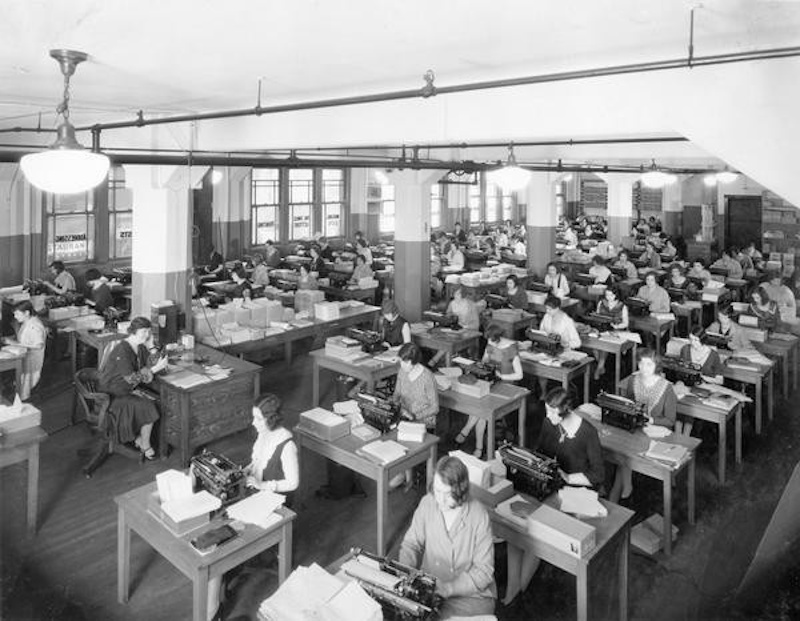
Only a few years ago, it was impossible to imagine that Canada would become a country within which the overwhelming majority of journalists are paying their mortgages and feeding their kids thanks to the government.
Way back in the 2010s, a scenario such as that would have been considered so morally repugnant, so ethically objectionable and embroiled with conflicts of interest, that it would have been dismissed with a wave of the hand as not just unlikely but impossible.

The Independent Press Gallery has sounded the alarm as Canada continues its slide down the Reporters Without Borders’ World Press Freedom Index.
After falling seven spots in just one year, Canada now sits in 21st place.
Carney is an evil being.
CARNEY THREATENS U.S. FREE SPEECH
Canada’s new PM Mark Carney just declared war on American social media platforms for having “too much free speech.”He wants U.S.-based platforms regulated from Ottawa.
️ Censorship isn’t enough — he wants control.WHAT THIS MEANS:… pic.twitter.com/3LDhJA2OV8
— Jim Ferguson (@JimFergusonUK) May 5, 2025
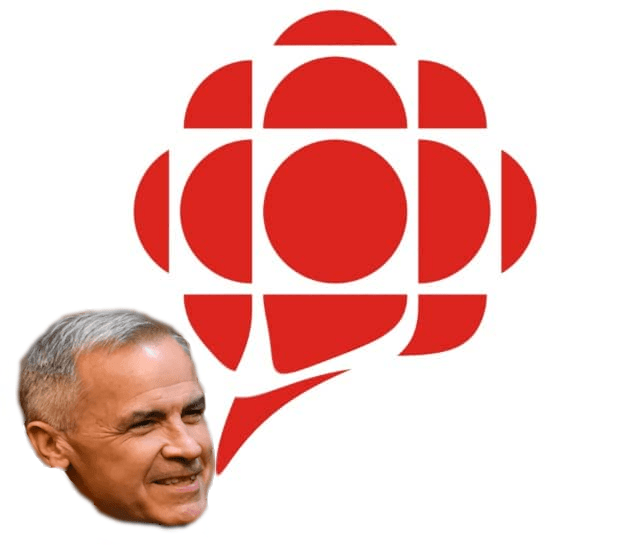
It’s far too early to be singing the praises of Mark Carney, but that isn’t stopping the CBC from becoming his loudest cheerleader. While the public sector is being decimated, the public broadcaster continues to receive government support.
You can see it in their eyes and hear it in their uneasy laughter.
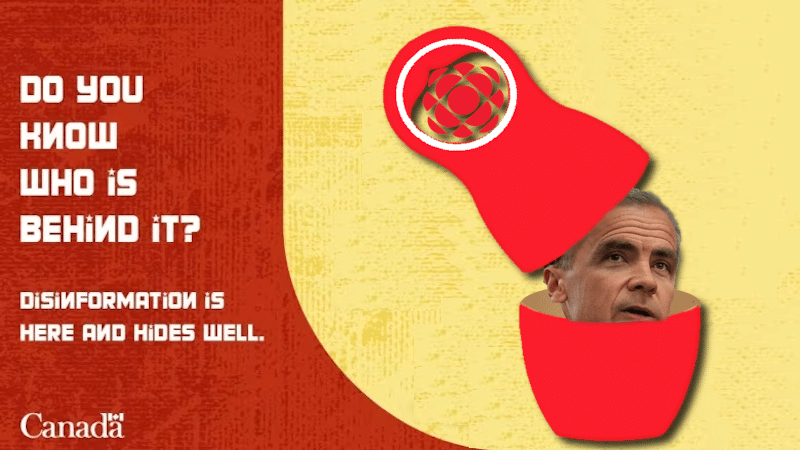
OTTAWA – More than three quarters of Canadians believe misinformation had an impact on the outcome of the federal election, a new poll suggests.
The Leger poll, which sampled more than 1,500 Canadian adults from April 29 to May 1, suggests that 19 per cent of people think false information or misinformation had a major impact on the election.
Almost a third (32 per cent) said it had a moderate impact, while 26 per cent said it had a minor impact on the election’s outcome.
Our gov’t bought media wants to talk to us about disinformation. Sounds legit.

Canada’s Liberal Party of Canada (LPC) is commonly referred to as the Natural Governing Party of Canada. It has governed Canada for 70% of the 20th century.
After John A. and confederation, the Conservatives had a good run, but once the smooth, Carney-like Wilfred Laurier, and his Liberals eased their way into power, the LPC never really never looked back. In fact, Canada came close to being a one party state.
During election night coverage, some CBC pundits dropped much of the pretense of impartiality as soon as an “at least Liberal minority” was predicted shortly after 10 p.m. ET. At this point, the national broadcaster’s hosts and commentators could breathe a sigh of relief that they wouldn’t be delivering their own eulogy.
Rebel News and other right-wing media outlets dominated the question-and-answer sessions with federal party leaders after Wednesday’s French-language leaders’ debate — though not all of them got answers to their questions.
Liberal Leader Mark Carney was the first leader to take 10 minutes of questions from the media after the debate, which took place at CBC/Radio-Canada in Montreal.
The news conference is overseen by the Leaders’ Debate Commission, an independent debate-planning body that sets out the criteria parties must meet for their leaders to participate in the event. The organization is also responsible for accrediting journalists who participate in the Q&A session after the debates.
“Rebel News and other right-wing media outlets” – That statement is a confession that the CBC is by default a “left-wing media outlet.”

If you want to catch Pierre Poilievre in any detail, you have to do it early — in his morning media scrums on 24-hour news channels — before the ‘cycle’ takes over, and his points and his audience have been clipped, cropped, and culled.
For years, pundits have paraphrased his words, scarcely showing him actually speak (even while occasionally praising his political prowess.) To get around the media, Poilievre has had to post videos on social. Now, he’s accused of avoiding the media and not properly getting his message out (et tu, Kory Teneycke?)
