The four candidates vying to replace Prime Minister Justin Trudeau took the debate stage for the final time as the Liberal leadership contest enters the home stretch.
Former deputy prime minister Chrystia Freeland, former Bank of Canada governor Mark Carney, former government House leader Karina Gould and former MP and businessman Frank Baylis squared off in an English debate Tuesday night.
OTTAWA — The three top contenders to replace Justin Trudeau as leader of the Liberal party say they’ll honour the departing prime minister’s pledge to help bankroll a multibillion-dollar high-speed rail project between Toronto and Quebec City.
It finally ended, that was not a debate but two hours of trying to avoid mentioning anything that might bring attention to the horrific Liberal Party record.
Nothing to commend.
The four candidates campaigning to become the next Liberal leader and prime minister will square off on a Montreal stage again tonight for the last time before members cast their ballots.
Poll shows Freeland a close second on first ballot in Liberal leadership race
MONTREAL — A new poll suggests that while former central banker Mark Carney is still the odds-on favourite to win the Liberal leadership, he isn’t likely to win on the first ballot.
A Mainstreet Research survey shows Carney with a solid lead among registered Liberals — and former finance minister Chrystia Freeland coming in second.
The poll suggests 43 per cent of Liberal supporters would vote for Carney on the first ballot, while 31 per cent would choose Freeland.
Why does it take a tariff threat from the president of the United States to force Canada to stop the trafficking of illegal migrants and drugs across our borders? Why does it take a tariff threat to force Canada to get serious about eliminating inter-provincial trade barriers and building pipelines? Why does it take prodding from the U.S. to get Canada to think more seriously about strengthening its military and addressing the urgent need for Arctic security? And most importantly, why on earth should Canadians allow the policies of a U.S. president to define who should be their next prime minster?
Canada’s Liberal government could save $10.7 billion this fiscal year alone by eliminating eight ineffective federal spending programs, says a new report by the fiscally conservative Fraser Institute.
The study, “Identifying Potential Savings from Specific Reductions to Federal Government Spending,” by Jake Fuss and Grady Munro, cites eight federal programs where it says “government spending does not appear to be accomplishing its stated goals, or where government spending is unnecessary.”
LILLEY: Peruvian mayor issues warning about making Carney Canada’s PM
The mayor of Lima, Peru, has a message to Canadians: Think twice before making Mark Carney your prime minister.
Mayor Lopez Aliaga says based on Carney’s actions when he was chairman of Brookfield Asset Management, there should be serious questions asked about Carney’s character. In an interview from Lima, Aliaga said Brookfield, chaired by Carney, was “making massive profits off a toxic contract” plagued by bribes.
For three years, Canadian officials used Inuit children as guinea pigs for an experimental RSV vaccination program – without parental consent and without the knowledge or involvement of the Inuit population. This shocking revelation, buried in newly uncovered Freedom of Information (FOI) emails, is completely unrelated to COVID-19 – yet it raises damning questions about the government’s approach to public health experiments on Indigenous communities and all Canadians.
THREAD: Bombshell FOI Emails Expose Secret Vaccine Experiments on Inuit Children
MONTREAL — The federal government must not deal with Donald Trump the way it did before, agreed Liberal candidates vying to replace Justin Trudeau, as they sparred over who is best suited to deal with the biggest threat to Canada’s economic security.
The U.S. president was not on stage, but he was front and centre throughout the two-hour, French-language confrontation between the four remaining Liberal candidates, as they took occasional aim at the Conservative Leader Pierre Poilievre but directed most of their barbs at Trump and his aggression towards Canada.
Organized burglary gangs blending sophistication with brute force are wintering in Canada from Latin America and Eastern Europe as “crime tourists,” coming to take advantage of early seasonal darkness and Canadian habits to ransack and loot homes.
Recently, Mark Carney sat back and failed to negate the claim that he deserved credit for having saved Canadian banks from the misadventures of our American neighbours during the 2008 financial crisis. Carney can claim no such credit. In actuality, there are historical reasons for Canada’s lack of vulnerability to such financial upsets, including a divergent institutional pathway and regulatory changes recommended by Canadian Supreme Court Judge Willard Estey that safeguarded Canada’s banking system from the financial crisis.
Members of six of Canada’s billionaire families have donated the legal maximum to Mark Carney’s Liberal leadership campaign, according to an Investigative Journalism Foundation analysis of the first interim financial disclosures published by Elections Canada.
Carney raised $1.9 million overall, far more than any other leadership candidate. He is also dominating the polls and has 83 MPs supporting him compared to former finance minister Chrystia Freeland’s 26.
Candidates vying to be the next leader of the federal Liberals and Canada’s prime minister will square off in a French-language debate in Montreal tonight.
Four contenders cleared their final financial hurdle last week and will be on the ballot to replace the outgoing leader, Prime Minister Justin Trudeau.
I don’t want to hear their BS in English let alone French.
Despite a spate of new polls showing the Liberals as contenders in the next federal election, the party continues to flunk one of the more reliable Ottawa indicators of looming defeat: Their MPs are all leaving.
As of press time, 35 of the Liberals’ 153 MPs have announced their intention not to run for re-election.
That’s nearly a quarter of the caucus who have already thrown in the towel on their parliamentary career — and the list includes many of the most influential names of the Trudeau government.
Mark Carney’s investment company has bought National Grid’s renewables business as the former Bank of England governor runs for political high office.
The Canadian asset manager Brookfield, which is chaired by Mr Carney, is expected to complete the $1.7bn (£1.3bn) takeover of the National Grid operation by the end of September.
The deal comes as Mr Carney, who last year raised $10bn for the group’s eco-friendly investment fund, battles to succeed Justin Trudeau as the leader of Canada’s Liberal Party in a contest on March 9.
Cartel activity in Canada ‘very prevalent now,’ former Trudeau advisor says
Organized crime cartel activity is “very prevalent now” compared to at least a decade ago, says a former national security advisor to Prime Minister Justin Trudeau, and listing those groups as terrorist organizations may help prevent a “national crisis.”
Jody Thomas says the government’s move to list seven transnational criminal organizations, including multiple drug cartels, as terrorist entities under the Criminal Code will give law enforcement more tools to go after cartel-affiliated criminal groups in Canada — particularly their finances — that will be “enormously helpful.”

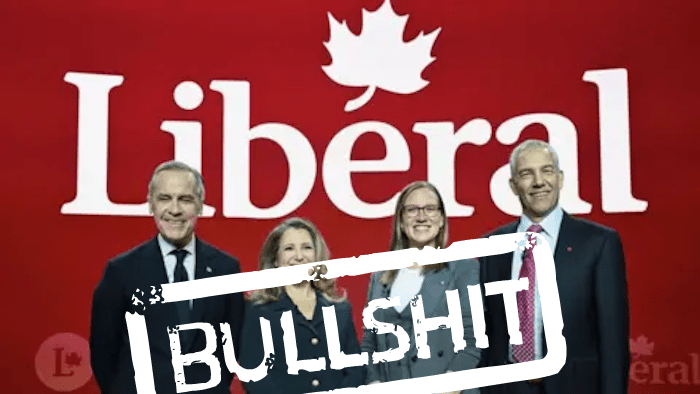




 Candidates vying to be the next leader of the federal Liberals and Canada’s prime minister will square off in a French-language debate in Montreal tonight.