Canada to ban funding for research linked to foreign universities, labs that pose risk to national security

OTTAWA — Canada will ban federal funding for research in “sensitive areas” done in affiliation with more than 100 entities the government deems pose a risk to national security, including foreign universities and institutions.

Canadian researchers will no longer be eligible to receive federal funding for technological research that is done in affiliation with, or with funding from, any of the newly listed entities.

I feel Justin will allow the China class to strip mine Canadian research.

Share

Path to better relations involves Canada taking blame for rift, Chinese foreign minister tells Joly

OTTAWA — Foreign Affairs Minister Melanie Joly and her Chinese counterpart Wang Yi say they want to find common ground and maintain communication, despite tensions across the Pacific.

But a senior analyst says Beijing’s preferred path to better relations might be impossible for Canadians to follow.

Share

Who benefits most from Canada’s ambitious EV targets? Maybe China

Flavio Volpe, head of the Automotive Parts Manufacturers’ Association, believes the recent electric vehicle targets set out by Canada’s environment minister also carried this pointed message to Canada’s domestic auto industry: “Let them eat cake.”

Volpe says he has come to this conclusion because he believes those goals, which include a national target of 100 per cent zero-emission vehicle sales by 2035, cannot be met.

Share

Federal Court expands definition of espionage in decision to bar Chinese student from Canada

A Federal Court judge has concluded that a Chinese engineering student is a potential spy and cannot enter Canada in a ruling that broadens the definition of espionage and has potentially wide consequences for foreign researchers.

The student, Yuekang Li, proposed to study under a leading researcher at the University of Waterloo and take what he learns back to China to improve its public-health system.

Share

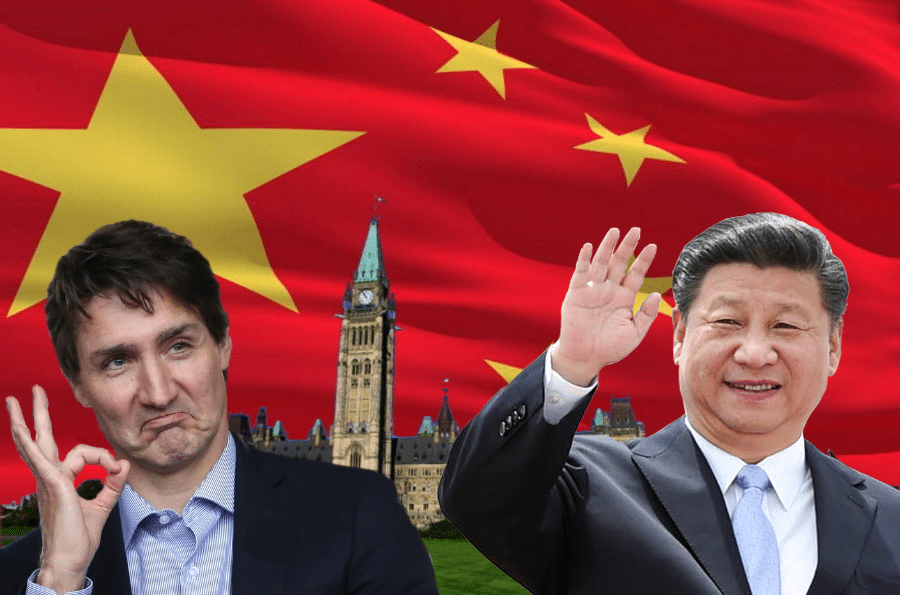
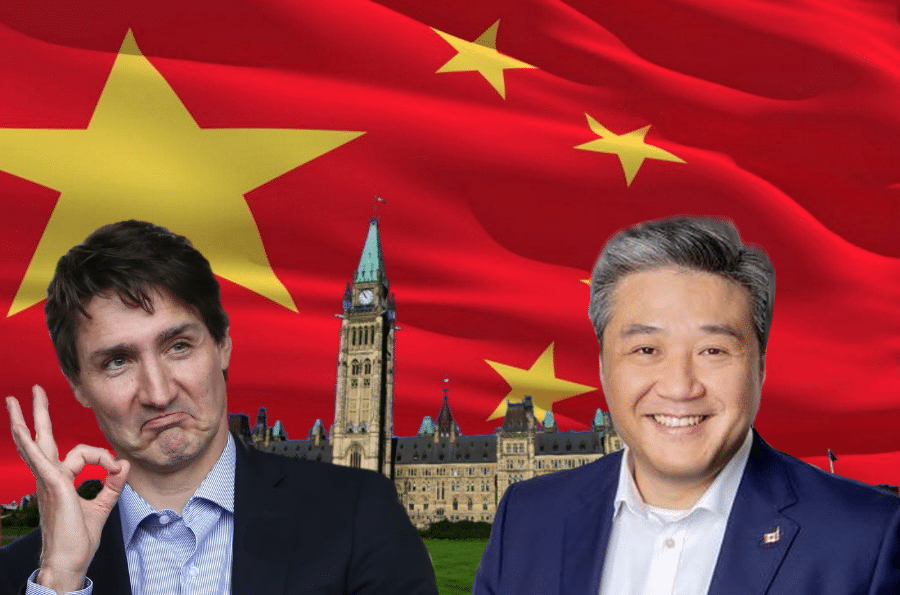
He Won Election to Canada’s Parliament. Did China Help?

The newcomer landed in a district of northern Toronto and announced his bid for Canada’s Parliament. Though few knew him, an important factor helped offset his lack of name recognition — the backing of prominent local Chinese-Canadians.

“I’m very happy that I feel very well supported, surrounded by friends,” the candidate, Han Dong, said at a news conference.

Share

MP Han Dong Wore Chinese Communist Red Scarf During China Trip

During a 2015 visit to China, MP Han Dong was photographed wearing a red scarf, which is a symbol of the Young Pioneers, a youth organization under the Chinese Communist Party (CCP).

The photo, released by the Chinese Consulate in Toronto, also featured former Ontario Premier Kathleen Wynne. Both were photographed wearing the scarves alongside children at a Shanghai public school as part of an Ontario business delegation. At the time, Mr. Dong was a member of provincial parliament in Ms. Wynne’s Liberal government.

Share

Commissioner in foreign interference inquiry playing politics

Justice Marie-Josee Corrupt

It’s hard to have faith in the public inquiry into foreign election interference when the judge in charge is acting the way she is.

Commissioner Marie-Josée Hogue has denied the Conservative Party full standing at the inquiry twice now and warned them against complaining too much.

Share

Foreign Interference Inquiry Officially A Farce After “Justice” Rejects Full Standing For Conservatives

Commissioner rejects Conservatives’ appeal for full standing at foreign interference inquiry

Justice Marie-Josée Hogue, who heads Canada’s public inquiry into foreign interference by China and other states, on Friday rejected an appeal by the Conservative Party for full standing during the fact-finding phase of the probe.

Hearings will begin Jan. 29, the commission announced Friday.

The Conservative Party was only granted intervenor standing during the first phase looking into foreign interference in the 2019 and 2021 elections, meaning it can present evidence and suggest witnesses but will not have the power to cross-examine witnesses or gain access to evidence presented outside of the hearings.

The Liberals need to lose every seat they hold and then we kick Quebec out of Canada.

Share

Ottawa’s EV Mandate Results in Grants to China at Cost of Domestic Producers: Auto Association Head

Ottawa’s $5,000 EV consumer incentive is fuelling the import of Chinese-made Teslas to Canada and lining the pockets of a firm with no manufacturing presence in the country at the expense of companies that invest domestically, says a proponent of Canada’s automotive industry.

“The federal government is about to launch an EV market scheme that grants companies making cars in China and Vietnam with millions of dollars in credits,” said Automotive Parts Manufacturers’ Association president Flavio Volpe in a social media post.

Share

Canadian Senator promised to support members in CCP’s United Front: Audio Tapes

In a private briefing in May 2020, Senator Yuen Pau Woo promised to shield members of Beijing’s “United Front” from critical scrutiny in Canada for taking pro-China stances on controversial issues such as the treatment of Uyghurs.

Woo’s pledges of support for United Front organizations are captured in recordings of his meeting with Canada Committee 100 Society, a Vancouver group with ties to the Chinese People’s Political Consultative Conference (CPPCC).

Read the thread.

Share

Tasha Kheiriddin: Another sham inquiry into foreign interference

Is Judge Marie-Josée Hogue the new David Johnston? The Quebec Court of Appeals judge was appointed in early September to head the Public Inquiry into Foreign Interference in Federal Electoral Processes and Democratic Institutions, months after “special rapporteur” Johnston had concluded that an inquiry wasn’t necessary.

Share

Conservatives say credibility of foreign interference probe undermined by denying them full standing in first phase

The Official Opposition is criticizing the judge running the public inquiry into foreign interference for not granting the Conservative Party full standing in the first phase of this probe, a decision that means they cannot ask questions of witnesses or gain access to any secret evidence gathered.

The first part of the foreign interference inquiry will examine foreign interference by states such as China in the 2019 and 2021 federal elections. The second phase will examine what reforms are necessary to fight foreign interference.

Share

He Won Election to Canada’s Parliament. Did China Help?

A Canadian rapporteur said there was “well-grounded suspicion” that Han Dong, a member of Parliament from Toronto, may have benefited from support from the Chinese Consulate.

The newcomer landed in a district of northern Toronto and announced his bid for Canada’s Parliament. Though few knew him, an important factor helped offset his lack of name recognition — the backing of prominent local Chinese-Canadians.

“I’m very happy that I feel very well supported, surrounded by friends,” the candidate, Han Dong, said at a news conference.

But a government-appointed special rapporteur said there was “well-grounded suspicion” Mr. Dong also had help from a hidden source as he vied for the Liberal Party’s nomination: the Chinese Consulate.

Share

Montreal-area ‘Chinese police stations’ threaten to sue RCMP for $2.5 million

Two Chinese community centres in the Montreal area are threatening to launch a $2.5 million lawsuit against the RCMP after being accused by the police force of hosting “alleged Chinese police stations.”

The RCMP confirmed in March(opens in a new tab) it had opened an investigation into the Service à la Famille Chinoise du Grand Montréal, in Montreal’s Chinatown, and the Centre Sino-Québec de la Rive-Sud, in Brossard, on the South Shore of Montreal.

Share

CSIS report says China infiltrated Provincial and Federal Party leadership races in 2022

A senior Canadian politician running to lead a provincial political party clandestinely met officials inside a Chinese Consulate in 2022, subsequently becoming China’s preferred candidate, and winning campaign support from Consulate proxies, a Top Secret CSIS document alleges.

Details of the Consulate meeting are contained in a sweeping CSIS “Intelligence Assessment” dated October 31, 2022.

Share