What Trump’s ‘most favoured nation’ drug pricing policy might mean for Canadians

What Trump’s ‘most favoured nation’ drug pricing policy might mean for Canadians

U.S. President Donald Trump’s announcement that all 50 states will join his proposed drug-price lowering policy is leading Canadian pharmaceutical experts and international researchers to warn how prices could rise around the world.

On Sept. 18, Trump announced in the Oval Office that all state Medicaid programs for Americans with low incomes will benefit from lower prescription drug prices under agreements with pharmaceutical manufacturers to match the lowest prices paid by other developed nations.

“We went from paying the highest drug prices in the world to paying the lowest drug prices in the world,” Trump said about the intention of the new policy.

Share

New U.S. bans to take effect Tuesday: Here’s what’s affected

New U.S. bans to take effect Tuesday: Here’s what’s affected

U.S. import bans on select Canadian items are set to take effect this week, the latest salvo between the two countries in an ongoing trade war.

The ban is set to come into effect on Tuesday at 12:01 a.m., and will see a full import ban on Canadian-made cheese and other dairy products, as well as alcoholic beverages and Canadian-made motorcycles.

Share

GOLDSTEIN: OECD downgrades Canada’s economic growth as Carney moves away from U.S.

GOLDSTEIN: OECD downgrades Canada’s economic growth as Carney moves away from U.S.

Prime Minister Mark Carney warned that pivoting our economy away from the U.S. would come at a cost to Canadians and the latest numbers show that’s true.

An Organization for Economic Co-operation and Development (OECD) report released last week downgraded Canada’s expected economic growth by 25% for this year and by almost the same amount in 2027 – 23.53% – compared to its last report in June.


Anand’s UN speech worked like a charm!

Share

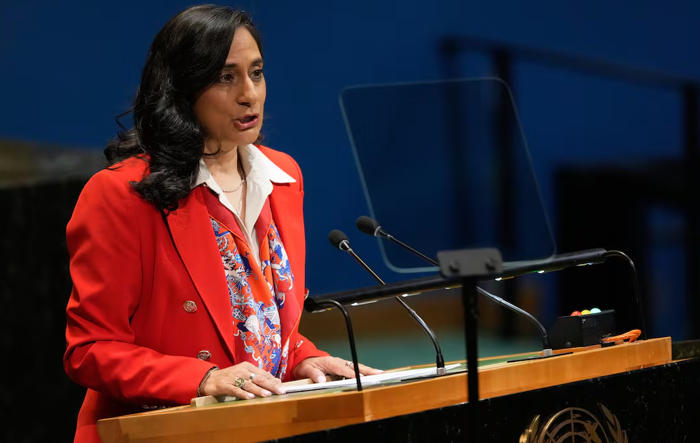
Anand tells UN Canada is courting more partners as ‘great powers’ retreat from economic co-operation

Anand tells UN Canada is courting more partners as ‘great powers’ retreat from economic co-operation

Canada is reducing its economic reliance on the United States by diversifying its ties, including renewed partnerships with China and India, under a policy of “values-based realism,” because

Ottawa “can no longer afford to be overly reliant on any one partner,” Foreign Affairs Minister Anita Anand told the United Nations on Saturday.
The Foreign Minister’s speech to the UN General Assembly reflects Prime Minister Mark Carney’s government’s efforts over the past 18 months to rebuild ties with Beijing and New Delhi after years of diplomatic disputes.


Anand works for India and China not Canada.

I bet no more than 5 people were in the audience.

Share

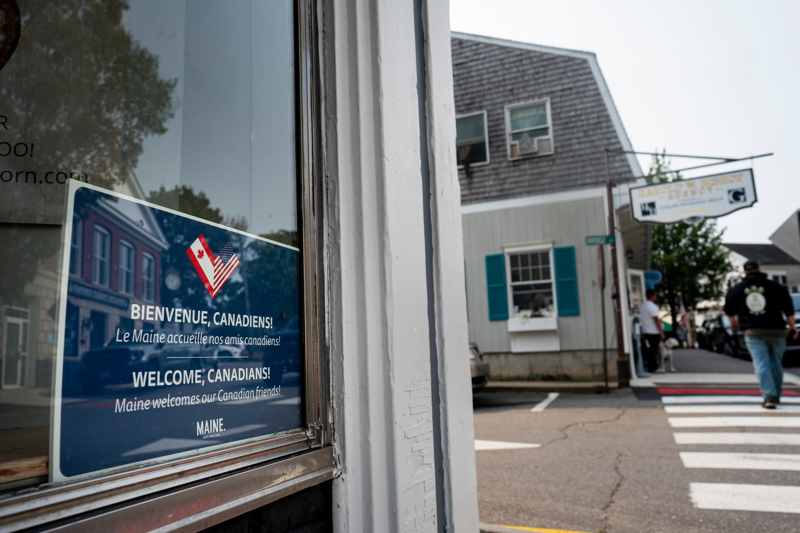
‘It’s just getting worse’: anger in Maine over Trump’s trade war with close neighbor Canada

‘It’s just getting worse’: anger in Maine over Trump’s trade war with close neighbor Canada

It was an ideal summer to cut trees.

The weather in Maine’s Penobscot county – one of the most heavily forested counties in a state dense with trees – was warm and dry. Yet even as the county’s wood had grown to an ideal size to harvest, the machines Molly London typically uses sat idle.

London and her husband, Alex, who started a logging business nearly 10 years ago, had been waiting weeks for replacement machine parts that were no longer stocked locally because tariffs had made them too expensive.

By August, she and her husband decided to shut down their business, WW London Woodlot Management Company, exhausted after years of fighting ever-climbing costs.

Share

Trump has done ‘more than anyone’ to protect Canada, White House says

Trump has done ‘more than anyone’ to protect Canada, White House says

The White House says U.S. President Donald Trump has done “more than anyone” to protect Canada from threats, after Prime Minister Mark Carney’s recent comments that he has prepared for the unlikely risk of U.S. military action against Canada.

When asked by The Globe and Mail on Thursday about Mr. Carney’s comments, Anna Kelly, principal deputy press secretary at the White House, said he should be grateful for Mr. Trump’s assistance in defending Canada.

Share

LILLEY: Carney puts politics over paycheques in trade war

LILLEY: Carney puts politics over paycheques in trade war

There’s no rush for the Trump administration to get back to the negotiating table with Canada and, given how fighting with Donald Trump is helping Mark Carney politically, there may be little urgency in Ottawa either.

With a number of media appearances this week, Trump’s chief trade negotiator, Jamieson Greer, has given the public some insight into how he and Trump’s team are thinking about Canada.

Share

Conrad Black Says Carney’s War Talk Is All About Whipping Up Faux Outrage Among His TDS Afflicted Base

Conrad Black Says Carney’s War Talk Is All About Whipping Up Faux Outrage Among His TDS Afflicted Base

It is with great concern for some of my fellow countrymen, inching precariously toward the edge of utter lunacy, that I write this post.

Prime Minister Mark Carney this week, in an interview with the New York Times, went on record saying it would be “irresponsible” not to plan for the possible contingency of a military invasion of Canada by the United States. Unfortunately, Mr. Carney didn’t misspeak or fall victim to a cherry-picked quote taken out of context. His concern was later reiterated by Defence Minister David McGuinty and Artificial Intelligence Minister Evan Solomon.

Share

Trump’s top trade envoy says U.S. ‘comfortable’ with state of relationship with Canada

Trump’s top trade envoy says U.S. ‘comfortable’ with state of relationship with Canada

U.S. President Donald Trump is “comfortable” with where things stand with Canada — his country’s once closest ally — and is in no rush to reach a new trade deal, according to his top trade envoy.

“The reality is President Trump is comfortable where we are on Canada,” United States Trade Representative Jamieson Greer said in a Friday morning interview with the American network CNBC.

“They call us now and then and we have good conversations about potential deals. But there’s no urgency on our side.”


I think the US just told Carney to go soak his head.

Share

‘We’re still getting what we need’ from Canada, Trump’s trade lead tells U.S. media

‘We’re still getting what we need’ from Canada, Trump’s trade lead tells U.S. media

There’s “no urgency” to strike a trade deal with Canada, according to Washington’s trade representative, as Canada continues to supply a variety of key exports to the U.S.

U.S. Trade Representative Jamieson Greer made the comments to American network CNBC Friday morning when asked about progress toward a deal with Canada. He said U.S. President Donald Trump is “comfortable” with the present situation as the two countries scrap through a protracted trade war.

“Our trade policy is a global policy,” he said. “It applies to Canada, China, the U.K., Brazil, all kinds of countries,” he said.

Share

Carney’s call for alternatives to the U.S. dollar will get backs up in Washington

Carney’s call for alternatives to the U.S. dollar will get backs up in Washington

What does Prime Minister Mark Carney have against the U.S. dollar?

Plenty, it turns out. And his recent calls for an alternative to the U.S. greenback as a global reserve currency will not go over well in Washington, where the dollar’s dominance is seen as an indispensable tool in the conduct of U.S. economic and foreign policy.


Carney knows the war is lost so he’s riling up the Elbow people to avoid having to admit he’s been a failure.

h/t Mauser

Share

The U.S.-Canada trade war is really about what alignment means – and about China, too

The U.S.-Canada trade war is really about what alignment means – and about China, too

When explaining why trade talks between Canada and the United States collapsed in late August, Prime Minister Mark Carney often cites the U.S. team’s shifting and last-minute demands. Those mattered, to be sure. But what he doesn’t mention is equally important.
In a 2,700-word address on Aug. 22 explaining why we’re in a trade war, Mr. Carney never said the word “China.” In his Sept. 8 Forward Guidance video, he mentioned it once, observing that an Alberta farm can now get better prices for its canola “because our trade diversification opens opportunities with China.” That was the deal he negotiated in January in Beijing, with the benefit emphasized and the price tag removed.

Share

As Canada deepens ties with Europe, could it leave U.S. banks and dollars behind?

As Canada deepens ties with Europe, could it leave U.S. banks and dollars behind?

Canadians know how it feels to be hit by U.S. tariffs. But Canada hasn’t been subjected to Washington’s more aggressive tactics such as trade sanctions and asset freezes.

Or rather, most Canadians haven’t.

Judge Kimberly Prost, a Canadian jurist who serves on the International Criminal Court, is the exception. She found her credit cards cancelled, her Google accounts closed and was effectively “de-banked” after U.S. Secretary of State Marco Rubio declared the court “an instrument for lawfare against the United States and our close ally Israel.”


I bet Carney holds greenbacks. h/t Mauser

Share

Toronto Business Group With United Front Ties Reportedly Sought Chinese EV Tariff Cut Before Carney’s Beijing Deal

Toronto Business Group With United Front Ties Reportedly Sought Chinese EV Tariff Cut Before Carney’s Beijing Deal

OTTAWA — Days before Prime Minister Mark Carney traded lower tariffs on Chinese electric vehicles for relief on Canadian canola, a Toronto-area Chinese business association reportedly urged his office to remove Canada’s 100 percent surtax on those vehicles, citing support for Canadian farm exports.

Share

Mark Carney’s Balancing Act

Mark Carney’s Balancing Act

Prime Minister Mark Carney of Canada said that he had prepared over the past year for the “extreme tail risk” that President Trump might order military action against Canada, but disclosed that the two men have spoken “frequently,” even since trade talks collapsed last month, describing a tense, evolving relationship.

In a wide-ranging interview with The New York Times at its headquarters in Midtown Manhattan on Wednesday, Mr. Carney described in meticulous detail how he was systematically reducing Canada’s reliance on the United States for key technology — from space satellites to fighter jets — in an effort to make his country far less vulnerable to American threats. He outlined a plan to diversify Canada’s relationships and suppliers, and said that even with a different future president “we will be a better partner for the U.S. because of what we are doing.”

Share