Canada pledged to spend 2% of GDP on its military. Would that transform it? Is it affordable?

For years, Canada and other NATO member countries have faced criticism for falling short of allocating two per cent of their GDP on military spending, a target set in 2014 by the military alliance.

Canada was among the allies who signed on in 2014 to aspire toward that target but has consistently failed to reach it.

However, earlier this month, NATO member leaders pledged to boost spending on national defence, agreeing to make the existing target of two per cent of GDP the minimum spent each year, with one-fifth of that going toward major equipment and research and development.


The Liberals have no intention of being a good ally – Trudeau told NATO that Canada will never meet spending goal, Discord leak shows

Share

Carson Jerema: Trudeau only the latest PM who couldn’t care less about national defence

Canada isn’t back, but don’t worry, it was never here to begin with. A Wall Street Journal editorial that mocked Ottawa for being a NATO free rider by contributing only 1.38 per cent of GDP to defence spending was entertaining, suggesting as it did that Prime Minister Justin Trudeau’s view is that the “military is more of a social project than fighting force.” Some modest social media excitement notwithstanding, the editorial didn’t tell us much new, though it did highlight that the lofty way in which Canada views itself does not match how it is seen outside the country.

Share

Canadians’ Trust in Military Preparedness Declining, Federal Study Shows

As the military endeavours to boost its recruitment and retention numbers, Canadians say their overall trust in the armed forces’ preparedness is declining, with fewer than 40 percent of respondents saying they have a “high level of trust” in the military, according to internal Department of National Defence (DND) research.

“More than one in three respondents, 37 percent, trust the Canadian Armed Forces while an additional 40 percent were ‘somewhat’ trustful,” reads a report summarizing in-house research contracted by the DND, according to Blacklock’s Reporter on July 14.

Share

Canada has promised more than $1.5B in military aid to Ukraine.

Canada has committed more than $8 billion to Ukraine since Russia’s February 2022 invasion, including over $1.5 billion in military aid.

That imprecise number — trumpeted in Department of National Defence news releases with each promise of weapons, vehicles or ammo — ticked upward in June after months at “over $1 billion.” (As a point of reference, Canada’s defence budget in 2022-23 is roughly $36 billion a year, the department says.)

Share

As NATO firms up military spending target, Canada is trying to broaden what counts: sources


Canada has quietly and consistently lobbied major NATO allies for months to expand the definition of what it can include under the military alliance’s defence spending benchmark, defence and government sources have told CBC News.

The notion of being able to include what the country spends on space, cyber and artificial intelligence (AI) research has been an important topic of conversation, particularly with the United States, said two sources with knowledge of the discussions.

CBC News is not identifying the sources because they were not authorized to speak publicly.


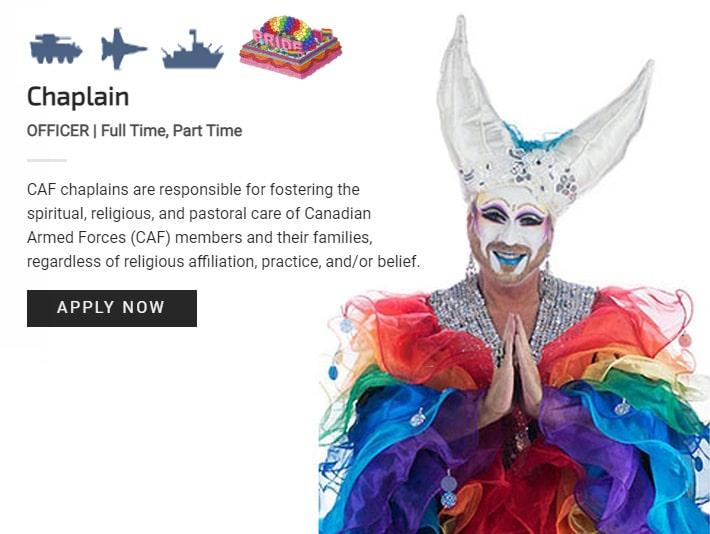
Trudeau’s Newly announced plan to add 1,200 troops in Latvia could take 3 years to complete – not enough Trannies to go round?

h/t Canucklehead

Share

Greg Taylor: Can the army stand on guard in the arctic?

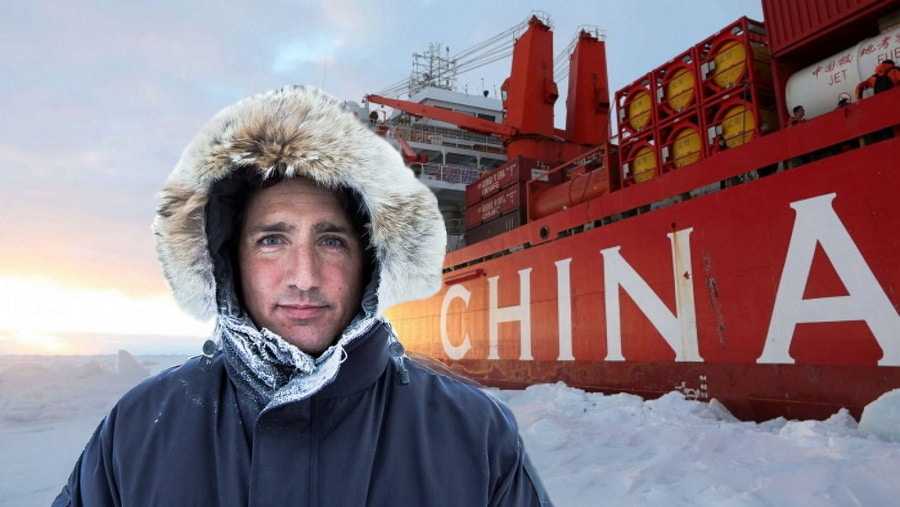
Almost a year ago NATO Secretary General Jens Stoltenberg capped a visit to the air force base at Cold Lake, Alberta, by emphasizing Russian and Chinese military challenges to our Arctic. Russia for example has established a new Arctic command, which includes significant naval, air, army and special operations forces.It has also built new infrastructure such as Nagurskoye airbase, 500 kilometres closer to Canada’s strategic listening post at Alert than a less-capable Canadian base at Iqaluit. As for China, its 2018 Arctic policy paper declared it a “Near Arctic State,” and they will complete one of the world’s largest icebreakers in 2025, part of the Belt and Road Initiative to expand China’s reach world-wide.

Share

Canadian Military’s Readiness, International Relevance Tested by Current Shortcomings: Internal Report

Canada’s military is facing “significant challenges” on a number of fronts which threaten its ability to fulfill its mission, an internal report by the Department of National Defence has concluded.

While those findings are not new and have been previously voiced by various stakeholders and observers, they summarize a strategic view held by the Assistant Deputy Minister (Review Services), the department’s branch in charge of providing independent reviews of the military’s policies and activities.

Share

Canadian Military Recruitment Fell by 35% in 2022: Document

Canada’s armed forces are ready for emergency pronoun deployment under battlefield conditions.

Military recruitment in the Canadian Armed Forces dropped by 35 percent in 2022, with only 5,242 volunteers signing up compared to 8,069 in 2021, according to a federal briefing note by the Department of National Defence.

“The Canadian Armed Forces serves Canada by defending our values, interests and sovereignty at home and abroad. However, the Canadian Armed Forces (CAF) is experiencing a shortfall in personnel that has been exacerbated by the Covid-19 pandemic and Canada-wide labour shortages,” said the briefing note titled “Recruitment And Retention.”

Somebody needs to inform the brass that there’s only so many transvestites to go round.

Share

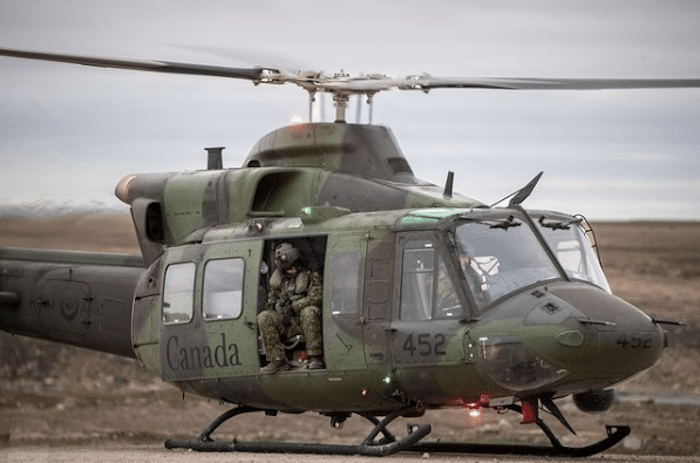
Canadian special forces pilots warn they are being held back by inferior equipment and the obsolete Griffon helicopter

Pilots flying for Canada’s special forces say they are being held back by inferior equipment and operating a helicopter that is obsolete for today’s threats.

The grim assessment is contained in a series of reports produced last year for the senior leadership of the Canadian Special Operations Forces Command (CANSOFCOM) and obtained by this newspaper through the Access to Information law.

Share

Sanctions Against Naval Officer Who Refused COVID Vaccine Were ‘Unjustified,’ Grievance Committee Finds

The warning and probation measures previously levied by the Canadian Armed Forces (CAF) against a military member for her refusal of the COVID-19 vaccine in 2021 were “unreasonable and unjustified,” an independent military administrative tribunal has ruled.

“The CAF vaccination policy was unreasonable because it was overly broad and disproportionate in its application,” wrote Nina Frid of the Military Grievances External Review Committee (MGERC) in a May 30 ruling.

Share

Service member in suit against Canadian military describes devastating impact of COVID jab mandates

A plaintiff in the massive lawsuit against the Canadian military over its imposition of COVID jab mandates condemned the requirements in comments to LifeSiteNews this week, arguing the rules that have forced out many otherwise battle-ready soldiers is an example of “friendly fire through policy.”

Share

Canadian Soldier’s Refusal of COVID Vaccination Not a ‘Conduct Deficiency,’ Grievance Committee Rules

An independent military administrative tribunal has determined that a Canadian Armed Forces (CAF) veteran had not shown a “conduct deficiency” in refusing COVID-19 vaccination and was therefore wrongfully expelled from the organization.

“I find that refusing vaccination should not have been considered a conduct deficiency since it was an exercise of a right protected by the Charter and recognized by existing laws and regulations,” wrote Nina Frid of the Military Grievances External Review Committee (MGERC) in a June 20 decision.

Share

Over 300 CAF Members Launch $500 Million Lawsuit Against Military for COVID Vaccine Mandates

Around 330 active or former members of the Canadian Armed Forces (CAF) who say they were harmed by COVID-19 vaccine mandates have filed a class-action lawsuit against high-ranking members of the Canadian military, asking for some $500 million in damages.

“The CAF shirked its own purpose and rushed an untested product onto its members, mislabeled this experimental gene therapy a ‘vaccine,’ knowingly made false statements of safety and efficacy, and facilitated its mandate with no option to refuse except for mandatory permanent removal from service,” reads the statement of claim filed with the Federal Court on June 21.

Share

Canadian Military’s COVID Vaccine Mandate Violated Charter Rights, Grievance Review Committee Finds

A military administrative tribunal has found the Canadian Armed Forces’ (CAF) COVID-19 vaccine mandate violated the charter rights of members who refused vaccination and said the policy was “arbitrary” in some aspects and “overly broad.”

“I conclude that the limitation of the grievors’ right to liberty and security of the person by the CAF vaccination policy is not in accordance with the principles of fundamental justice because the policy, in some aspects, is arbitrary, overly broad and disproportionate,” wrote Nina Frid of the Military Grievances External Review Committee (MGERC) in a May 30 decision.

Share