Canada needs to double its annual military spending in order to meet its NATO requirements, new Parliamentary Budget Officer (PBO) projections show.
After facing months of pressure from allies, the prime minister announced at the NATO Summit that Canada will meet its commitment of two per cent of its GDP by 2032.
We are living in one of the most complex, dangerous, and unpredictable times in human history. We are witnessing increasing global instability and a broader range of threats, now state-on-state as well as from non-state actors. The world will not become less complex or more predictable. Only a few years ago, no one could have predicted the COVID-19 pandemic, a war in Europe, or the bloody attack by Hamas on Israel and its justified response. The only way for Canada to manage these new complexities, each seemingly more challenging than the preceding one, is to be better prepared to meet them. Unfortunately, our military is woefully unprepared, even though national security and the defence of democratic values are more important than ever.
Management of the Canadian Forces Morale and Welfare Services declined to apologize to an employee who was sexually assaulted in Latvia because they didn’t want the mea culpa reported on by the Ottawa Citizen, newly released documents reveal.
Kristen Adams, a civilian who worked for the welfare services group, was sexually assaulted by a NATO soldier during her shift at the canteen operated by Canada for troops in Latvia, according to military police records.
A former special forces soldier is suing the federal government, alleging he was blacklisted by his unit and pushed out of the military after he denounced Canadian troops’ alleged involvement in the killing of unarmed people in Afghanistan.
The soldier is also naming one current and two former top Canadian generals who he says minimized or failed to adequately investigate Canadian Armed Forces (CAF) involvement in the alleged killings.
“We need warriors. We seem to be hell-bent on destroying the warrior culture but if there’s one organization where you want to have warriors, would that not be your military?”
And by the way, sexual predation is nowhere near as common in the armed services, as the attention given to it by the Liberal government, would lead one to believe.
In 2015, Prime Minister Justin Trudeau declared that Canada was “back” on the international stage; not long after, his government promised to “renew Canada’s commitment to United Nations peace operations,” and pledged to send significantly more personnel. That’s important for UN peacekeeping, because it is only effective when countries from around the world contribute skilled military and police officers as part of broader political efforts to resolve the underlying causes of conflicts. And of course, many conflicts cry out for military observers and peace implementation forces around the world right now.
Our armed forces are no longer fit for purpose, lets look after Canada.
Canada ponders ‘top secret’ data cloud as allies push ahead with intelligence-sharing plans
Australia is joining the United States and the United Kingdom in developing top-secret cloud networks to exchange highly classified defence, national security and intelligence data with each other — a concept Canada has just begun to think about.
Experts say that, unless the gap is closed quickly, Canada’s lack of such digital infrastructure will have a profound impact on new military hardware the federal government has committed to purchasing, such as F-35 stealth fighters, MQ-9 Reaper drones and long-range P-8 surveillance planes.
I don’t think Canada is dithering so much as not being invited to participate.
I suspect we are considered both a piker and a genuine security risk.
We know where this is going. Should work out well with the Muslims they recruit.
Canada’s new military chief says she aims to fill all the vacancies in her organization within five years, as she prioritizes retention and changing recruitment methods to diversify the ranks.
NATO says it wants its members to develop national plans to bolster the capacity of their individual defence industry sectors, a concept Canada has struggled with — or avoided outright — for decades.
At the NATO leaders summit in Washington in July, alliance members agreed to come up with strategies to boost their domestic defence materiel sectors, and to share those strategies with each other. Almost entirely overshadowed at the time by debates about members’ defence spending and support for Ukraine, the new policy got little attention.
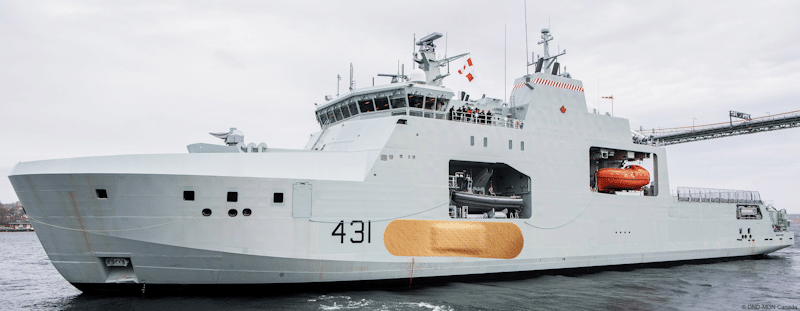
Leaks, ineffective anchors, mechanical breakdowns among problems facing new Arctic patrol ships
As southern Ontario’s hot, sticky summer starts to wind down, the last thing on most people’s minds is the vast, frozen tundra of Canada’s Far North. But on Sept. 18, a group gathered in downtown Toronto to hear a broad range of experts discuss Arctic sovereignty and security.
Granted, the Far North has always been a very niche area of interest in Canada, which is curious for a country that prides itself on being a northern nation. But perhaps that’s to be expected when 90 per cent of our population lives within 160 kilometres of the U.S. border, many in cities such as Vancouver and Toronto that have relatively temperate climates.
Ice Breakers, Submarines, Frigates, Supply vessels, Arctic patrol vessels, Fighter Jets, Armored vehicles, Sleeping Bags, Recruiting crisis – is there anything Canada’s armed forces aren’t lacking beyond ludicrous DEI policies?
Freedom isn’t free, and right now, a significant portion of the cost is being paid by the families of Canadian military personnel. These parents, children and spouses have been willing and proud to shoulder this burden, but it is becoming too heavy, and they’ve had enough.
Are heterosexuals still allowed to join the forces?
Decades ago, British Prime Minister John Major announced a revolutionary approach to budgeting. Alas, he didn’t implement it and became a footnote to history. But the idea, sound in principle, was that instead of duct-taping this year’s budget together from the wreckage of last year’s while cramming in some unaffordable voter-bait baubles, they would start from scratch by deciding what they needed and what they could afford, then work out the details within those firm big limits. Which brings me to Canadian defence.
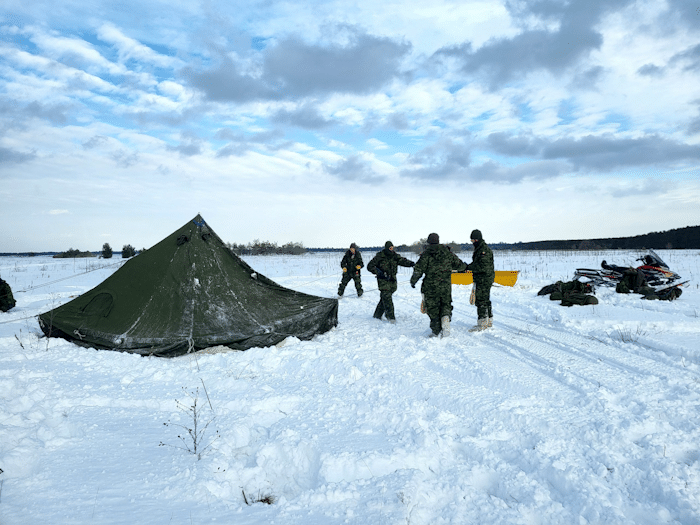
Despite the defence department spending more than $34.8 million on new sleeping bags, the Canadian Army asked late last year that hundreds of soldiers headed to a joint northern exercise in Alaska with the Americans be issued with old, 1960s-vintage bedrolls.
Troops who had used the recently issued General Purpose Sleeping Bag System (GPSBS) late last fall in a preparatory exercise found “several critical issues,” according to an internal briefing note obtained by CBC News.
WTF? Made by Liberals?
Meanwhile Queen Justin stays at 5 Star Hotels
During our caucus retreat in Nanaimo, I actually stayed in Vancouver and flew back and forth every day.
That’s because I only stay in five-star hotels.
While my colleagues stayed at a Courtyard Marriot, I stayed at the Fairmont Pacific Rim because I am the King of Canada. pic.twitter.com/LTSyT5s5o4
IMT Group was founded as Ingersoll Machine and Tool in Ingersoll, Ont., in 1914 in a factory designed for soap production.
The engineering firm remains headquartered in southwestern Ontario but now has six integrated businesses supplying the automotive, rail and defence industries.
One of its specialties is the production of metal casings used for 155-millimetre artillery shells. Since the Russian invasion of Ukraine, it has found its services in high demand — so much so, that it will cut the ribbon on a new multi-million-dollar facility next month.
The light utility vehicle program, first pitched in 2017, could end up taking 13 years to complete
Despite facing heavy pressure to ramp up military spending, the Department of National Defence (DND) has slow-rolled one of the least complex of its vehicle replacement programs.
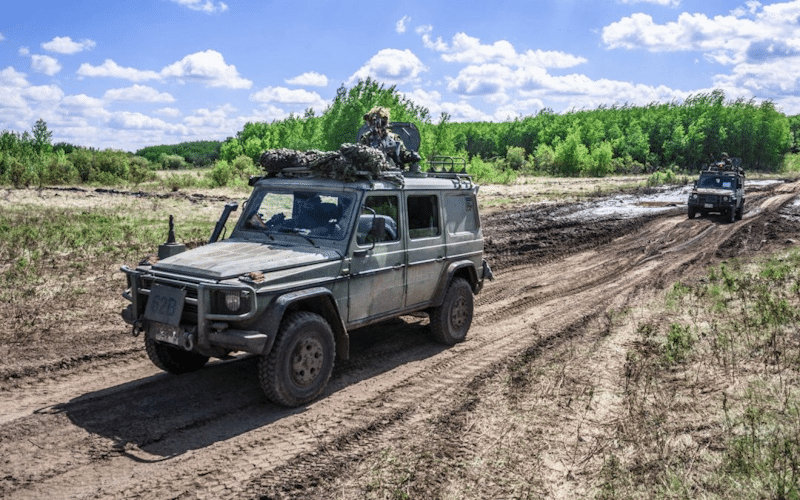
The light utility vehicle program has been on the books for several years. Its purpose is to update the military’s fleet of two-decade-old Afghan war-era Mercedes G-Wagons and civilian-grade utility vehicles, such as pickups and SUVs.
Under the original plan, the terms for the purchase of more than 1,600 vehicles were supposed to be set by this year, putting the program on the road toward a signed contract.