Michael Taube: Carney goes about meeting our NATO target in the most Liberal way possible

Prime Minister Mark Carney recently announced that Canada will finally meet NATO’s defence-spending target of two per cent of GDP. But, as the man wouldn’t know austerity if it hit him over the head, it will come at a significant cost to Canadian taxpayers.

The defence spending target has been a long-standing bone of contention between Canada and NATO. “Allies currently meeting the NATO guideline to spend a minimum of two per cent of their (GDP) on defence will aim to continue to do so,” the members agreed in a declaration following a meeting of the North Atlantic Council in 2014. Any allies below this level would “aim to move towards the two per cent guideline within a decade with a view to meeting their NATO capability targets and filling NATO’s capability shortfalls.”


The 5% of GDP spending target is just a sham, NATO countries have until 2035 to reach the “goal” giving loads of time for freeloaders like Canada to promise the sun, moon and the stars while contributing little.

Once adopted, all member nations except Spain will have until 2035 to reach the goal of 5%.

The agreement calls for at least 3.5% of national GDP to be spent on core military needs, while an additional 1.5% can be allocated for related expenditures.

Maybe it’s all an EU plot to rid themselves of NATO and US dominance. Carney would go big on that grift.

I advise against ever taking Carney at his word. He wants us out of NATO and with the EU yoke round our neck.


NATO’s 5% benchmark would cost Canada $150B a year, Carney says

Signing on to NATO’s new defence spending target could cost the federal treasury up to $150 billion a year, Prime Minister Mark Carney said Tuesday in advance of the Western military alliance’s annual summit.

The prime minister made the comments in an interview with CNN International.

“It is a lot of money,” Carney said.

Share

Rick Seymour: If we want strong national defence, we must support military families

As global instability grows and international threats evolve, Canada can no longer afford to underinvest in its national defence. The government’s renewed commitment to strengthening the Canadian Armed Forces is timely — and long overdue. But as we debate where to allocate dollars, we must remember one fundamental truth: national defence isn’t just about equipment or infrastructure. It’s about people.

Share

Canada’s top soldier says we should buy additional U.S. F-35 fighter jets and stick with America

OTTAWA—Canada’s top soldier says the military should keep buying at least some additional F-35 fighter jets from the United States, which she said will remain a key partner as Prime Minister Mark Carney pursues deeper defence ties with the European Union.

Gen. Jennie Carignan, the chief of the defence staff, said Monday that the F-35 jet comes with many advantages, from the capacity to cover Canada’s immense territory, to the ability for regular upgrades to keep up with rapidly advancing technology. Canada has already signed off on buying 16 of the jets through the American government, but the Liberal government put the rest of the purchase under review in March, amid tensions with the U.S. over President Donald Trump’s tariffs and talk of making Canada the 51st American state.

Carney and his pals get a piece of the action by choosing a Euro fighter.

Share

Canada signs landmark EU defence pact, joins $237B arms procurement fund

Lotsa Blow

Prime Minister Mark Carney on Monday at an EU-Canada summit in Brussels formally signed a historic security and defence pact between Canada and the European Union.

In signing the agreement, Carney cemented Canada’s participation in the EU’s €150 billion (C$237 billion) joint arms procurement fund (SAFE), a five-year loan facility that allows participating countries to borrow funds to jointly purchase military equipment.

Share

More Canadians want to join the military, but enlisted members keep leaving

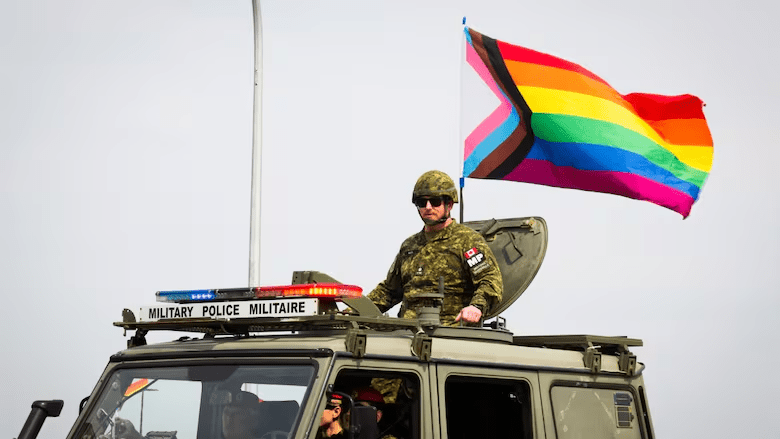
CAF Transgender Tank

Interest has spiked in the Canadian military, with recruitment levels hitting their highest point in a decade. But as more people walk in the door, thousands of enlisted members are deciding to walk out.

Numbers obtained by Global News show the retention crisis worsened year over year, as Prime Minister Mark Carney who is attending the NATO summit in Brussels, vows to rebuild the Armed Forces and reduce Canada’s dependence on the U.S.


My guess is that the CAF are simply not Transgender friendly enough. They should just outright ban heterosexuals.

Share

BARBER: PM Carney tells a tale or two to justify his pro-European leaning

In a foreign and defence policy speech on June 9, 2025, Prime Minister Mark Carney declared that U.S. predominance in global security is a “thing of the past.”

That is factually incorrect.

Carney wants to hitch our wagon to Eurowagons whose people won’t fight to defend themselves.

Share

Potential Canada-EU defence deal short on details as questions loom over feasibility of displacing U.S. links

‘Geography, cultural similarities, tight defence linkages—all of those things have gone hand in glove with the defence industrial links,’ says procurement expert David Perry.

With Canada heading towards joining Europe’s defence rearmament plan, much remains up in the air about how fully it would reorient Canada’s defence co-operation away from its current reliance on the United States.

The May 27 Throne Speech noted that Ottawa would “boost Canada’s defence industry by joining ReArm Europe, to invest in transatlantic security with Canada’s European partners.”

ReArm Europe is a European Commission project to have the bloc spend $1.25-trillion on defence over the next five years.

Share

Carney promises Ukraine another $2B in military aid

BANFF — Prime Minister Mark Carney, in an attempt to “use maximum pressure against Russia,” has pledged $2 billion in spending, and an additional $2 billion in frozen Russian assets.

Carney also promised President Volodymyr Zelensky sanctions “against a number of individuals in Russia,” sanctions against over 40 entities “in Russia and beyond that are trying to contribute to the evasion of these sanctions,” and “the sanctioning of over 200 vessels in the shadow fleet that Russia is using to evade these sanctions.

He’s as bad as Junior.

h/t XC

Share

Wars in Ukraine and the Middle East reveal how unready Canada is

To watch the war between Ukraine and Russia, and the wars between Israel and Hamas/Hezbollah/the Houthis/Iran, is to be reminded of how unprepared Canada is. After decades of neglect, the Canadian Armed Forces are poorly armed, and in some important respects, they are not armed at all.

For example, when the Russian military invaded Ukraine in early 2022, two weapons were key to Ukraine’s ability to resist: anti-tank missiles and anti-aircraft missiles.

The Canadian Army used to have several different weapons systems to defend soldiers on the ground against air attack. These were all retired by 2012, and nothing replaced them. Ottawa purchased an advanced air-defence missile battery last year, known as a NASAMS, but only for the purpose of donating it to Ukraine. The Canadian Forces don’t have this kit.

Share

After Decades of Atrophy, Canada Vows to Beef Up Its Military. Can It Deliver?

To help shift the country away from its dependence on the United States, Canada’s prime minister plans to spend billions to revitalize its military and meet a NATO spending goal.

At the end of World War II, Canada boasted one of the world’s largest navies, with 95,000 uniformed members and 434 ships.

The current Royal Canadian Navy is far less impressive — about 11,500 members and 40 vessels.

Only one of its four diesel submarines, which were bought secondhand from Britain in the 1990s, is operational. And Canada’s armed forces as a whole are about 16,000 people short of an approved head count of 101,500, including reserves.

Nope.

Share

European Union Leaders Say Canada Will Sign a Defence Procurement Pact This Month

Answers to Mrs. Hitler

European Union officials say Canada is likely to sign a defence procurement agreement with the continent when Prime Minister Mark Carney goes to Brussels later this month.

Carney is set to visit the administrative capital of the European Union on June 23 for the Canada-EU summit, where he will meet with European Commission President Ursula von der Leyen and European Council President António Costa.

At the G7 summit in Alberta on Sunday, both EU leaders said Canada’s involvement in Europe’s defence architecture is set to deepen.


I doubt Canada is able to contribute much if anything to the defense of Europe, even if we were so inclined which is very doubtful.

How many Muslims will rally to Finland’s defence? There is no Canada anymore.

Share

Two-thirds of Canadians support 2% defence spending pledge as nearly half say 5% is too much

Prime Minister Mark Carney announced this week Canada will reach the NATO defence spending target of 2% of GDP this fiscal year, marking the first time since 1990 the country has hit this milestone. The move will cost roughly $20 billion more.

New data from the Angus Reid Institute shows Canadians largely back the plan to spend 2% of GDP on defence. About half (51%) say Canada should spend to this level, while 17% support spending even more — a figure that has doubled since March 2024 amid rising concerns over U.S. reliability.

Share

Canada to join major European rearmament deal as early as June 23: sources

Prime Minister Mark Carney plans on joining a sweeping European plan in Belgium this month to rearm the continent and provide more military aid to Ukraine, CBC News has learned.

Last month, Carney signalled to CBC’s Power & Politics that he hopes to sign on to the new defence initiative by Canada Day as he tries to move away from relying on the United States for weapons and munitions.

Now sources with knowledge of the matter say Carney is expected to join the rearmament deal as early as June 23, when he meets with European leaders in Brussels at the EU-Canada summit.


I guess this will grant all the NATO deadbeats a new forum in which to make grandiose defence promises that will never be kept. Medals for everyone!

Share

As it hosts G7, Canada under pressure to further boost military spending by tens of billions

Canada is facing hard budget choices as it plays host to the Group of Seven summit starting Sunday and prepares for a looming NATO meeting where Western allies will be asked to commit to further defence spending hikes in the face of rising threats from Russia and other rivals.

Defence and security will be an underlying theme at the G7 forum in Kananaskis, Alta., where all but one of the member countries also belong to the NATO military alliance, which is poised to cement a new defence spending pact at The Hague one week later.

History tells us not to believe any of Carney’s promises.

Share

Canadian Military Surpassed 2025 Recruitment Goal, 55 Percent Increase Over Year Prior

Canada’s armed forces are ready for emergency pronoun deployment under battlefield conditions.

The number of regular force members grew by approximately 2,000 members from April 1 last year to March 31 this year when accounting for attrition, the department said. The CAF had 65,154 regular force members and 23,561 primary reserve members on April 30, and it anticipates reaching 71,500 regular force members and 30,000 primary reserve members by 2032.

… While intake has increased, the CAF has faced issues retaining the new members, according to a leaked military report obtained by CBC News and covered in May. The attrition rate of new members is double that of the rest of the force, with recruits expressing frustration about the lengthy wait prior to receiving training.

One the biggest complaints among departing recruits is the perceived misalignment of the organization’s focus on cultural change rather than on operational requirements, the report noted. It also said an office to focus on retention had been defunded.

Share