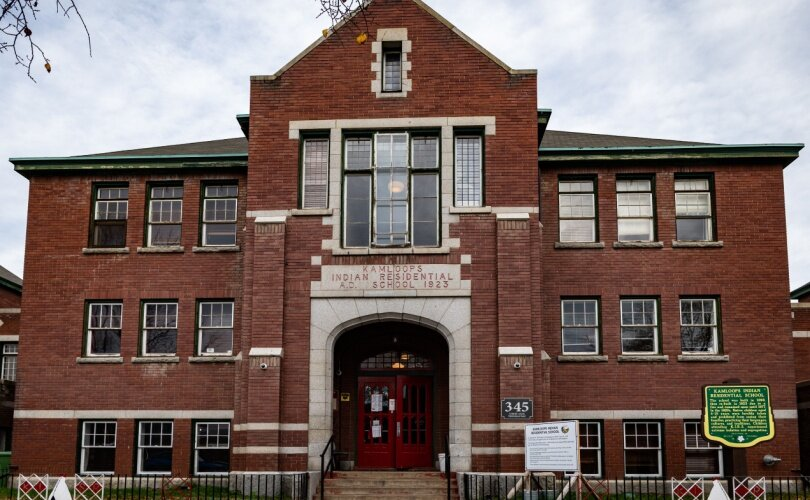
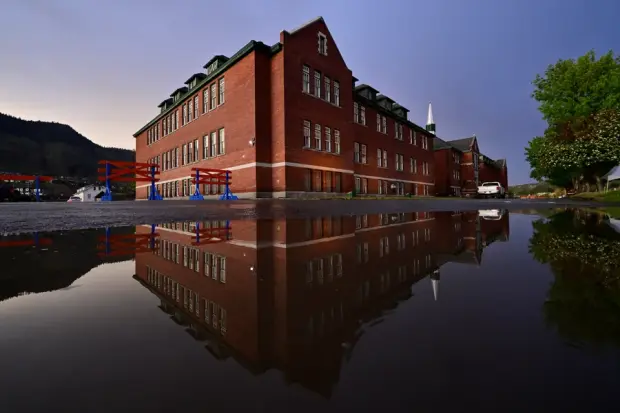
The federal Department of Crown-Indigenous Relations has redacted nearly all details from internal reports describing how a B.C. First Nation spent millions in taxpayer funding intended to locate alleged graves of children at the former Kamloops Indian Residential School.
Blacklock’s Reporter says documents released under the Access to Information Act show the department labelled the reports “confidential,” concealing details about work undertaken by the Tk’emlups te Secwepemc First Nation after Ottawa provided $12.1 million to support searches tied to claims that 215 children were buried on the site.
Last weekend it became known that the Federal Government had signed an aboriginal rights agreement with the Musqueam First Nation, which acknowledged rights and title “within” a large area encompassing most of Metro Vancouver. This bilateral agreement between the Carney government and the Musqueam sets out their shared intention to “negotiate” Aboriginal title for the Musqueam within their vast claimed territory using the principles of UNDRIP as their lodestar.
But the private lands claim is again denied in this article…
What we know about Ottawa’s land rights deal with the Musqueam First Nation
What does this mean for B.C. property owners?
Based on the information in the press release, the new arrangement between Ottawa and the Musqueam does not impede on private property ownership in the region.
Again the feds deny that private property will be affected.
Feds release Musqueam title agreements covering much of greater Vancouver
OTTAWA – The federal government has released details of recent agreements with the Musqueam First Nation recognizing Aboriginal title over an area potentially covering much of Greater Vancouver, but it says the agreements do not have any effect on privately owned land.
An Indigenous man who bragged to an undercover cop about the Gladue “discount” that would cut his penalty in half for helping to clean up after a Calgary murder has been sentenced to 6.5 years in prison, even though the Crown was looking for as much as 10.
A jury convicted Jason Leo Tait of being an accessory after the fact to murder in the death of Keenan Crane. He was acquitted of manslaughter.
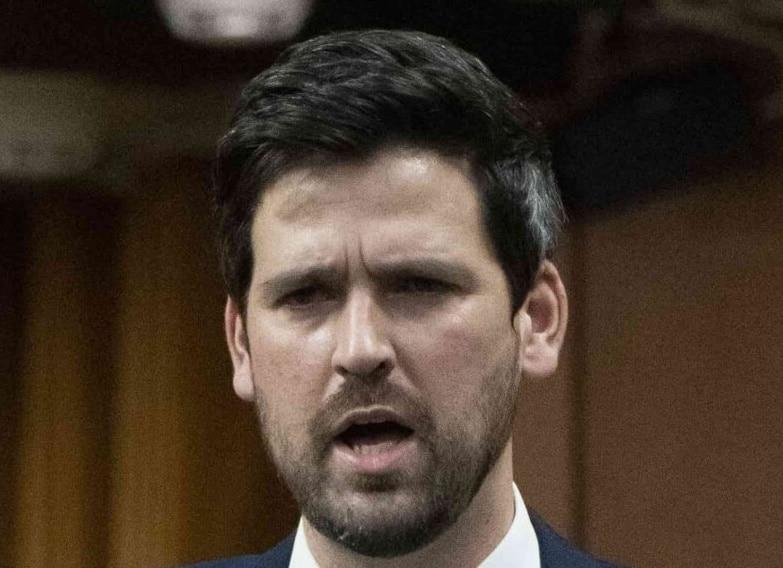
Sean Fraser – almost certainly lying if his mouth is open.
A federal hate crimes bill would extend criminal penalties to anyone accused of obstructing indigenous sacred sites — including areas identified as unmarked graves — according to an internal Department of Justice memo that was not highlighted when the legislation was introduced.
A press release from the office of the Chief of the Tk̓emlúps te Secwépemc First Nation in Kamloops, B.C., has stated that the most recent investigation at the Kamloops Residential School site shows “signatures that resemble burials” but no confirmed graves.
The investigation, which the B.C. government pledged $12 million to in 2021, has yet to produce any concrete evidence of burials or gravesites.
The Tk̓emlúps te Secwépemc investigation at the former Kamloops Indian Residential School has ruled out some areas on the grounds as areas where potential unmarked graves may be, while data from multiple surveys has identified other areas that “should now be the primary focus” of the search.
It’s been almost five years since the First Nation shared that preliminary findings from a ground-penetrating radar survey found some 200 potential unmarked graves on the grounds of the former residential school.
An Indigenous group on British Columbia’s central coast is claiming ownership of private lands in a case that relies on a groundbreaking court decision from last summer that opened the door to Aboriginal claims on private property.
The Dzawada’enuxw First Nation is seeking a court declaration that almost 650 hectares of fee simple lands around Kingcome Inlet are rather “Indian settlement lands” that should never have been pre-empted by settlers more than a century ago. (Fee simple lands have long been known in Canadian law as the highest form of private land ownership.)
In his widely-praised Davos speech, Mark Carney paid homage to a renowned 1978 essay by Czech dissident Václav Havel, “The Power of the Powerless.” In it, Havel tells the parable of a greengrocer who refuses to place a “Workers of the World unite!” poster in his window, symbolizing his personal dissent from a totalitarian regime’s extortion of rote public mantras nobody believes as a tool for mind control.
Why do governments exist? There must be a better reason than simply providing well-paid jobs for people who enjoy bossing others around.
Philosopher John Locke offered one of the clearest answers when he wrote in 1690 that the “great and chief end” of government is “the preservation of … property.”
Over $285 million in federal government contracts for Indigenous businesses were awarded over a five-year period to companies that have since been removed from its Indigenous Business Directory, according to a response to a written question in the House of Commons.
The public directory was created to help Indigenous-owned businesses pursue opportunities, including federal contracts.
Companies must be at least 51 per cent owned and controlled by First Nations, Métis or Inuit to be eligible.
In 2023, we published Grave Error, a book of essays that candidly discusses the “unmarked-graves” social panic that swept Canada four and a half years ago. In May 2021, it was announced that ground-penetrating radar (GPR) had identified the formerly unknown resting places of 215 Indigenous children who’d attended the Kamloops Indian Residential School in British Columbia. The announcement sent shock waves through Canadian society, and led to months of self-lacerating commentary about our country’s colonial sins. Journalists and politicians alike acted as though these 215 victims—children who’d presumably been dispatched by murderous Residential School staff—had been identified and unearthed. It was only once this initial period of national hysteria ended that observers noted that, outside of the GPR reports, there existed no proof of graves, bodies, or human remains. And since GPR technology cannot detect bodies, but only soil dislocations that may equally indicate tree roots, drainage ditches, rocks, or other artefacts that have nothing to do with graves, the claim that these GPR-identified soil anomalies corresponded to graves remained unproven.
“We’ll triple the amount of money spent on the Indigenous people of Alberta, through a constitutionalized revenue-sharing program,” Rath said at the Stay Free Alberta event. “We’ll lift them out of the abject poverty that Ottawa has left them in, in an embarrassing fashion, for 100 and some odd years.”
The Chiefs know which side their grift is buttered on.


 In 2023, we published