
Author: Blazingcatfur


‘They were furious’: the Russian soldiers refusing to fight in Ukraine
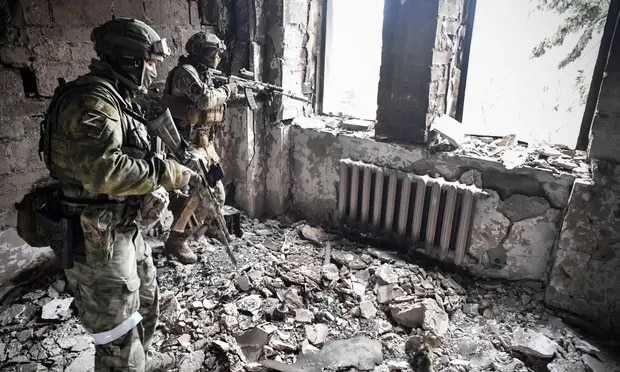
When the soldiers of an elite Russian army brigade were told in early April to prepare for a second deployment to Ukraine, fear broke out among the ranks.
The unit, stationed in Russia’s far east during peacetime, first entered Ukraine from Belarus when the war started at the end of February and saw bitter combat with Ukrainian forces.
“It soon became clear that not everyone was onboard with it. Many of us simply did not want to go back,” said Dmitri, a member of the unit who asked not to be identified with his real name. “I want to return to my family – and not in a casket.”
Nina Jankowicz says verified Twitter users should ‘edit’ others’ tweets

The “disinformation expert” tapped by President Biden to head a new US agency division that critics have likened to an Orwellian “Ministry of Truth” says that “verified” Twitter users should be able to edit other users’ tweets if they believe they are misleading.
All Wars Are Endless Wars
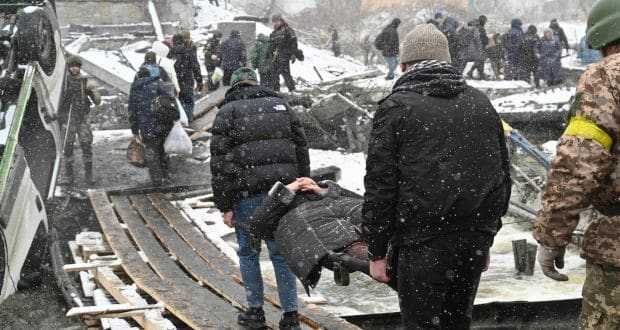
The future is going to be a lot like the past.
Over 70 days into the Ukraine war, no one knows how it’s going to end. But the one thing that we can be sure of is that it’s going to pick up again where it ends this time around.
The war is the latest episode of a nationalist territorial conflict going back centuries. And those don’t go away until the people fighting them do. Progressive theories of history spent the last century predicting that wars were on the way out in a more enlightened age. Then two world wars shattered the civilized world and nearly led to a third even more devastating conflict.
Why can’t the ACLU say the word ‘woman’?
Trans ideology is undermining the fight for women’s rights.
 Why can’t the American Civil Liberties Union (ACLU) bring itself to use the word ‘woman’?
In the wake of the leaked Supreme Court opinion, suggesting that Roe v Wade could soon be overturned, the ACLU has stepped up its campaigning. Roe v Wade has guaranteed the legality of abortion across the United States for the past 50 years. Its demise would give a green light to the many red-state legislators who are chomping at the bit to introduce new bans and restrictions on abortion.
Ukraine’s ‘wounded, crippled’ Azovstal plant soldiers make last-ditch plea for rescue

Amid horrors of amputation and dwindling medical supplies, Azov battalion reject their portrayal as far-Right radicals and demand urgent aid
It is a scene reminiscent of the horrors of the First World War – unshaven soldiers in filthy uniforms, their arms and legs ending in bandaged stumps.
The images, though, are not from the trenches of Ypres or Flanders, but from Ukraine a century later, showing wounded fighters trapped in Mariupol’s Azovstal steel plant.
I Criticized BLM. Then I Was Fired.

The data about police shootings just didn’t add up, but no one at Thomson Reuters wanted to hear it.
Until recently, I was a director of data science at Thomson Reuters, one of the biggest news organizations in the world. It was my job, among other things, to sift through reams of numbers and figure out what they meant.
About a year ago, I stumbled on a really big story. It was about black Americans being gunned down across the country and the ways in which we report on that violence. We had been talking nonstop about race and police brutality, and I thought: This is a story that could save lives. This is a story that has to be told.
But when I shared the story with my coworkers, my boss chastised me, telling me expressing this opinion could limit my ability to take on leadership roles within the company. Then I was maligned by my colleagues. And then I was fired.
This is the story Reuters didn’t want to tell.
Kelly McParland: Pierre Poilievre is too big a risk to lead the Conservatives
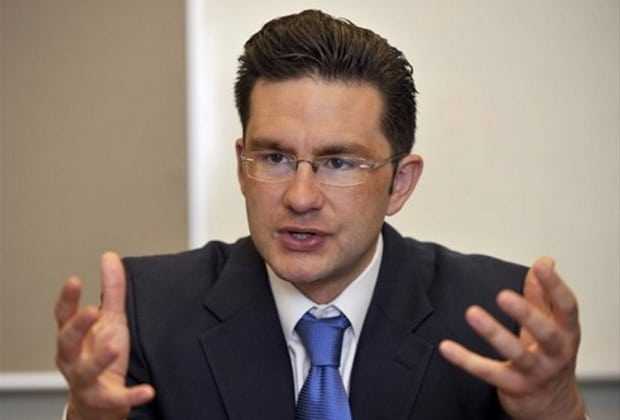
Pierre Poilievre’s performance in the first two Conservative leadership debates is a strong argument against his suitability for the job of prime minister. Whether Conservatives nonetheless decide to put him in charge of the party will say a lot about their credibility as a potential alternative to the Liberal government.
He’s making lots of people mad.
BC Kindergartners sent home with masturbation assignment

Four-year-olds at an Alert Bay, British Columbia school were reportedly given this homework assignment on touching their private body parts. The worksheet asks students to draw pictures of places in their home where they can masturbate privately.
BONOKOSKI: The foolhardiness of Trudeau’s ‘surprise’ visit to Ukraine
 The Prime Minister’s “surprise” visit to Ukraine on Sunday — in which he dragged along Deputy PM Chrystia Freeland and Foreign Affairs Minster Melanie Joly — gave the impression the war is less fierce than its reality.
WTF?
Teacher claims she has 3 students who identify as trans only while in her classroom (because she had a pronoun mug) and she doesn’t tell parents or anyone else. pic.twitter.com/xfKkwzrdrJ
— Libs of TikTok (@libsoftiktok) May 12, 2022
A Summer of Blackouts?

Thanks to hasty closures of fossil-fuel and nuclear plants, coupled with shortfalls in renewable-energy production, Americans will face increasing power outages.
Soaring gasoline and electricity prices may turn out to be only part of Americans’ energy woes this summer. In recent months, a host of power suppliers have issued warnings that millions of residents could endure rolling blackouts because of the growing inability of America’s evolving energy infrastructure to meet power needs. From western states like Utah, Colorado, and California to midwestern states like Illinois, energy providers have cautioned that rising prices, shortages due to the closure of some coal and nuclear plants, and the unreliability of renewables like wind and solar have reduced energy surpluses. That’s left some places with little margin for error during peak usage times in mid-summer—potentially prompting the kind of blackouts California saw last year. The warnings have spurred calls to slow down climate-change-driven efforts to retire nuclear and fossil-fuel generating plants. They have also emerged as an issue in local elections this November.
Germany’s arrogant pacifism

They cannot accept that war in Europe is now a reality
In Germany, this was a Victory in Europe Day like no other. Since Russia invaded Ukraine, Berlin’s entire postwar consensus has crumbled. Previously settled policies and cherished beliefs have dissolved in this new reality: the brutal return of war to Europe. All these confusions were displayed for the world to see on Sunday.
Ukraine war: Don’t underestimate Russia cyber-threat, warns US

There has been a sustained cyber-conflict over Ukraine which could still escalate, a senior US intelligence official has told the BBC.
Despite warnings, major cyber-attacks on the West have so far not materialised.
But Russia shouldn’t be underestimated, Rob Joyce, director of cyber-security at the National Security Agency said.
Meanwhile independent hackers targeting Russia in support of Ukraine could also spark escalation, he warned.
The Badly Needed EastMed Pipeline Awaits Approval

Russia is expected to make almost $321 billion from its energy exports this year — over a third more, according to Bloomberg, than last year.
Twenty-seven European Union member states, despite adopting five packages of sanctions since Russia invaded Ukraine on February 24, have nevertheless spent at least around 35 billion euros — around $38 billion — in payments to Russia for its oil and gas since the invasion, according to the EU’s foreign-policy chief, Josep Borrell.
Ukraine – the next Afghanistan.