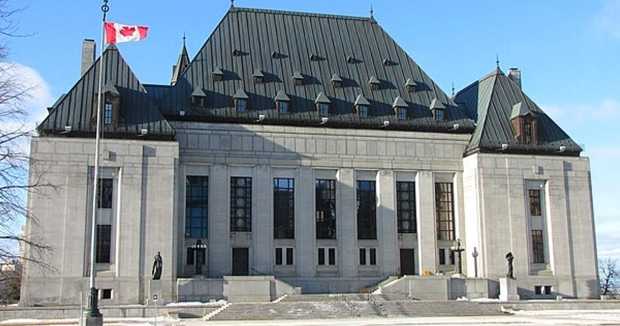
Creating Online harms regulators expected to cost Canada $200 million: PBO

OTTAWA – The parliamentary budget officer estimates that staffing up the new regulators in the Liberals’ Online Harms Act will cost around $200 million over five years.

The federal government wants to establish a Digital Safety Commission to regulate social-media companies and force them to limit harmful content online.

Share

As police increasingly use facial recognition technology, calls grow for regulations

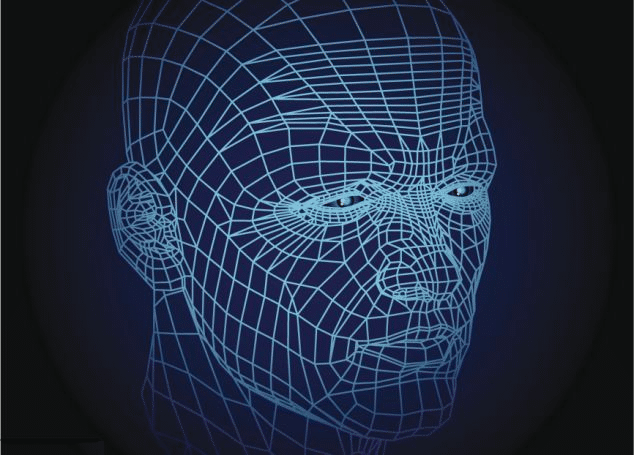
MONTREAL – Some police services in Canada are using facial recognition technology to help solve crimes, while other police forces say human rights and privacy concerns are holding them back from employing the powerful digital tools.

It’s this uneven application of the technology — and the loose rules governing its use — that has legal and AI experts calling on the federal government to set national standards.

“Until there’s a better handle on the risks involved with the use of this technology, there ought to be a moratorium or a range of prohibitions on how and where it can be used,” says Kristen Thomasen, law professor at the University of British Columbia.

Share

Canada ‘sleepwalking’ into cashless society, consumer advocates warn

A consumer group is urgently calling on the federal government to follow other jurisdictions in the U.S and Europe and bring in legislation to stem the slide toward a cashless society.

Only 10 per cent of transactions in Canada today are done using cash, according to Carlos Castiblanco, an economist with the group Option Consommateurs.

“There is a need to protect cash right now before more merchants start refusing [it],” Castiblanco recently told CBC Radio’s Ontario Today.

Share

Majority of millennials, Gen Z don’t support Trudeau’s internet regulation plans: poll

A new Postmedia-Leger poll contains a stark warning for any political party gunning for Gen Z and millennial voters in the next federal election: be wary of a heavy hand in trying to regulate the internet.

The poll, released Monday, finds that less than half of Canadians aged 18 to 39 say they “support the government’s new rules to regulate the web, podcasts, streaming and social media to restrict offensive speech and online harms.” Only 44 per cent say they support the initiatives. The majority either disagree with the policies (39 per cent) or don’t know (16 per cent).

Share

Law enforcement is spying on thousands of Americans’ mail, records show

The Postal Service approves thousands of requests every year from police officers and federal agents seeking information from Americans’ letters and packages.

The U.S. Postal Service has shared information from thousands of Americans’ letters and packages with law enforcement every year for the past decade, conveying the names, addresses and other details from the outside of boxes and envelopes without requiring a court order.

Postal inspectors say they fulfill such requests only when mail monitoring can help find a fugitive or investigate a crime. But a decade’s worth of records, provided exclusively to The Washington Post in response to a congressional probe, show Postal Service officials have received more than 60,000 requests from federal agents and police officers since 2015, and that they rarely say no.

Share

Report: DHS Group Called Being ‘Religious’ An ‘Indicator’ Of Domestic Terrorism

President Joe Biden’s Department of Homeland Security (DHS) brainstormed about infiltrating local communities to spy on Americans, and suggested being “religious” or “in the military” was an “indicator of extremists and terrorism,” excerpts of documents obtained by America First Legal (AFL) purportedly show.

Share

Canadian gov’t lawyers admit online content law will affect all user-generated content

A federal law passed by the Liberal government of Prime Minister Justin Trudeau last year mandating regulation of online platforms such as YouTube and Netflix to ensure they meet government requirements will indeed affect content uploaded by ordinary users, admitted federal lawyers.

Despite successive Heritage Ministers stating that any user-generated content would not be affected by Bill C-11, known as the Online Streaming Act, that was passed into law in April 2023, a recent legal battle with Google regarding revenue compensation has exposed that this might not be the case.

Lawyers for Canada’s Justice Department admitted that Bill C-11 “does allow for regulation of user-uploaded programs on social media services.”

Share

2 Ontario Police Forces Roll Out Facial Recognition Tech, Sparking Privacy Concerns

Two police services in the Greater Toronto Area are now using facial recognition technology as part of their investigations, sparking concerns from legal observers who say the investigative tool could come at the expense of privacy rights.

Peel Regional Police Service and York Regional Police Service announced the adoption of the software late last month, saying the move comes after consultations with the province’s information and privacy commissioner. The police services also held public consultations in March and April.

Share

Peterson calls for Canadians to oppose Online Harms Act

Prominent Canadian psychologist and author Dr. Jordan Peterson says people need to wake up to the Online Harms Act (OHA).

Peterson called this “not only the most authoritarian law ever contemplated in a Western democracy, but truly the most authoritarian law conceivable.”

“Not just the Orwellian ‘Thought Crime,” tweeted Peterson on Thursday.

“But the mere possibility of a thought crime.”

Share

Police to trial portable knife scanners that detect weapons in clothes at a distance

Portable knife scanners enabling police to detect weapons hidden on people at a distance are to be trialled on British streets.

Chris Philp, the policing minister, has said the Home Office is looking at versions of the technology developed by five different companies with a view to police officers trying it at knife crime hot spots by the end of 2024.

Share

Evolving police tech or ‘slippery slope’? Facial recognition partnership in Peel and York has critics concerned

Experts say a partnership between Peel and York police to use facial recognition to search mug shots for matches with crime scene photos contributes to over-policing minority groups, violates privacy and poses a risk of misidentification.

While not the first GTA police service to use facial recognition technology for investigations, this move by York and Peel police, launched Monday, is part of a growing effort by police services across North America to use AI and facial recognition technology to investigate and prevent crime.

Share

Ottawa wants the power to create secret backdoors in our networks to allow for surveillance

A federal cybersecurity bill, slated to advance through Parliament soon, contains secretive, encryption-breaking powers that the government has been loath to talk about. And they threaten the online security of everyone in Canada.

Bill C-26 empowers government officials to secretly order telecommunications companies to install backdoors inside encrypted elements in Canada’s networks. This could include requiring telcos to alter the 5G encryption standards that protect mobile communications to facilitate government surveillance.

h/t Mauser

Share

German Spy Agency Being Misused for Political Purposes

An employee of the domestic intelligence service says real threats are ignored while ordinary citizens are harassed for their political opinions.

Germany’s domestic intelligence agency, the Bundesamt für Verfassungsschutz (BfV) is being used for political purposes and is protecting the interests of the Berlin Government’s three coalition parties, the Social Democrats, the Greens, and the liberal FDP, according to a BfV official who spoke anonymously about his concerns to the Schwäbische Zeitung.

The man, referred to as Gregor S. in the article, said the agency is not competent enough to investigate serious enemies of the state, genuinely violent left-wing and right-wing terrorists or radical Islamists, and instead goes after people who should not be of interest to the BfV: people who don’t like the Greens, hang up posters or submit posts on social media that are critical of the state. “What used to be considered legally acceptable criticism can now be a reason for the BfV to target someone,” he explained. The agency is devoting a lot of time to investigate not only these targets but their whole environment, their employers, their friends, their lovers.

Share

Blame Canada? Justin Trudeau Creates Blueprint For Dystopia In Horrific Speech Bill

On February 21st, Canadian Prime Minister Justin Trudeau gave a press conference in Edmonton, announcing his government’s decision to introduce the Online Harms Act, or Bill C-63. It was described in Canadian media as a “bill to protect kids” that would stop the “exploitation of children,” and Trudeau’s curt speech focused solely on minors. The scarf-clad PM angrily dismissed criticisms the bill might have a broader focus.

Share