
 Prime Minister Justin Trudeau’s immigration ministry has been secretly asking Canadians via surveys if they would accept a mandatory national identification program that likely would require each citizen to always have a type of “digital” passport on them.
“Surveillance Society”

It’s not just Tesla. Vehicles amass huge troves of possibly sensitive data.

Elon Musk’s willingness to share information about the Cybertruck explosion has highlighted how much data cars collect — and left some drivers uneasy.
Video footage and other data collected by Tesla helped law enforcement quickly piece together how a Cybertruck came to explode outside the Trump International Hotel in Las Vegas on New Year’s Day.
The trove of digital evidence also served as a high-profile demonstration of how much data modern cars collect about their drivers and those around them.
Data privacy experts say the investigation — which has determined that the driver, active-duty U.S. Army soldier Matthew Livelsberger, died by suicide before the blast — highlights how car companies vacuum up reams of data that can clear up mysteries but also be stolen or given to third parties without drivers’ knowledge. There are few regulations controlling how and when law enforcement authorities can access data in cars, and drivers are often unaware of the vast digital trail they leave behind.
The Paper Passport Is Dying

… The push to remove paper passports is happening worldwide. So far, airports in Finland, Canada, the Netherlands, the United Arab Emirates, the United Kingdom, Italy, the United States, India, and elsewhere have been trialing various levels of passport-free travel or the technology needed to make it happen. In October, officials in Singapore announced that its residents can fly to and from the country without using their documentation, and foreign visitors can “enjoy the convenience of passport-less clearance when they depart Singapore.” More than 1.5 million people have used the systems, officials claim.
Canada Launches Facial Recognition App to Keep Tabs on Individuals Awaiting Deportation

The Canada Border Services Agency (CBSA) has developed a mobile application with facial recognition capabilities to keep track of those who are required to report to border agents, including those awaiting deportation.
Along with facial recognition, the app also provides GPS locations of users to the CBSA, according to the agency’s website. The app, dubbed ReportIn, is part of the CBSA’s Alternatives to Detention program, which allows individuals to be released from detention under certain conditions.
This will be abused count on it. Assuming it works.
RCMP Responds After Montana AG Says He Received Gun Show Surveillance Request
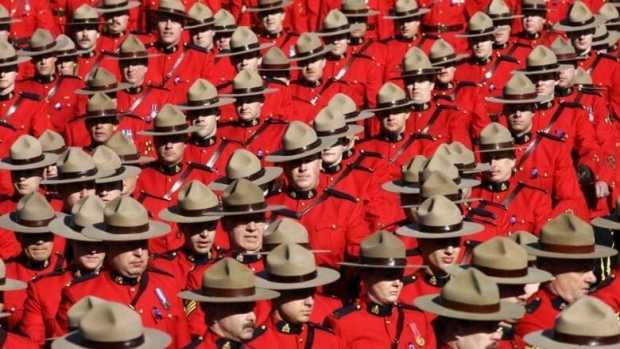
After Montana’s attorney general said he received a request from the RCMP to conduct surveillance at several upcoming gun shows in his state, the Mounties would not confirm any plans to attend, but said they’re often involved in cross-border efforts to stem firearms trafficking that are not aimed at lawful gun owners.
Montana’s Attorney General Austin Knudsen said last week the Montana Department of Justice and Division of Criminal Investigations had received a request from the RCMP to conduct surveillance at gun shows in Bozeman and Kalispell—a request he strongly opposes.
You too can be a CSIS informant …
BREAKING: Well known Canadian podcaster Lauren Southern testified today that CSIS came to her home and threatened her and her child when she said NO to becoming an Informant/Asset due to a scandal in the US with Tenet Media. A scandal that Ms.Southern had no knowledge of nor… pic.twitter.com/mdHEGIFBKe
— Odessa Orlewicz (@OdessaOrlewicz) November 22, 2024
h/t Patti Jo
Mad Britain: Nine-Year-Olds Being Investigated by Police for Non-Crime Hate Incidents

Mainstream Britain might finally be waking up to the fact that it elected a totalitarian government that increasingly seems to behave like the Chinese Communist Party.
The horror of turning children into thoughtcriminals
 I wasn’t surprised to read The Times’s story about schoolchildren being investigated for possible ‘hate crimes’. These included a nine-year-old who’d called a classmate a ‘retard’ and two girls at a secondary school who’d told another pupil she smelt ‘like fish’. The police, having decided that these episodes did not meet the threshold for criminal prosecution, dutifully recorded them as ‘non-crime hate incidents’ (NCHIs).
Biden-Harris Administration Secretly Signs Up for UN World Governance, Internet Censorship

On September 22, unnoticed by most Americans, the Biden-Harris administration adopted the United Nations Pact for the Future to transform global governance, which introduces the foundations of a world government. There was no debate, no media coverage, no press releases, and no interviews about the Biden-Harris administration’s surrender of United States sovereignty to the UN.
Americans were apparently not supposed to find out.
RCMP plans to go undercover online to trap violent extremists

The RCMP is planning to conduct undercover surveillance online using fake personas to investigate ideological extremists in Canada, says an internal strategy document.
Experts in ideologically motivated violent extremism (IMVE) in Canada say the strategy is overdue at a time when online extremism threatens to spill over into real world violence. They warn that extremist activity in Canada could increase in the wake of the U.S. election, regardless of who becomes the next president.
Civil liberties advocates say they fear that having officers carry out undercover investigations online using fake personas could violate charter rights or lead people to take actions they otherwise might not take.
You can bet Trudeau and all the usual suspects are hyperventilating in anticipation.
‘Silent prayer’ breaches of abortion clinic ‘buffer zones’ will land offenders unlimited fines
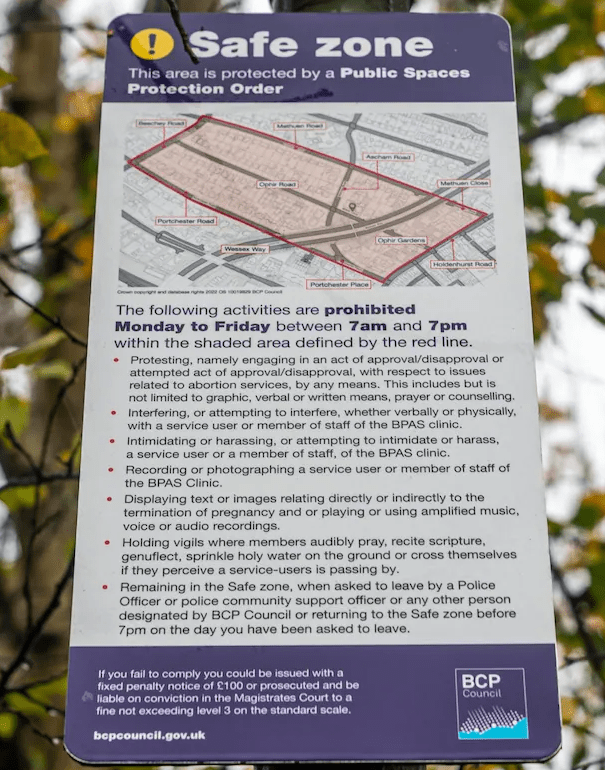
People who engage in silent prayer in protest at abortion face unlimited fines if they breach buffer zones around clinics that come into force.
The new legislation will bar protests including silent prayer within a buffer zone of 150 metres of a clinic or hospital providing abortion services.
Federal agency ‘working to establish’ digital ID without parliamentary approval

The federal IT department on Monday said they are “working to establish digital credentials” for Canadians without parliamentary go-ahead.
MPs have repeatedly rejected introduction of any electronic national ID system as expensive and risky, per Blacklock’s Reporter.
Who will guard the guardians?
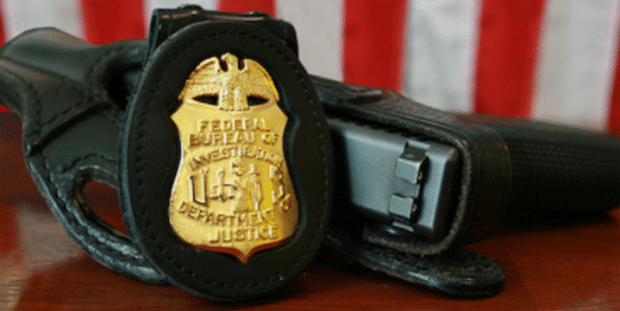
Americans paying attention have been horrified to learn just how inept and malicious our federal law enforcement agencies have become under the Harris/Biden cabal. Institutions necessary for the preservation of our representative republic have not only failed us but have been turned against us. As Juvenal wrote: Quis custodiet ipsos custodes? Who will guard the guardians? The answer, increasingly, is certainly not the Harris/Biden Administration.
Meta smart glasses can reveal personal details about strangers on the street — even home addresses

This pernicious program is every stalker’s dream.
Two Harvard students developed a program for Ray-Ban’s Meta smart glasses that can be used to identify an individual and obtain access to their personal information, including a home address.
AnhPhu Nguyen and Caine Ardayfio, who are engineering students at the Ivy League school, posted a chilling demonstration of what their program, dubbed I-Xray, can do.
Want your DNA profile from the RCMP’s DNA bank? You can’t have it, a new ruling finds

OTTAWA – A person’s DNA profile may dictate who they are but, if it’s in the RCMP’s DNA bank, they aren’t allowed to have it.
That’s according to a first-of-its-kind decision published this summer by Information Commissioner Caroline Maynard. The ruling is an example of how the government can sometimes legally withhold even extremely personal data like one’s DNA profile in certain cases.