Why Europeans are rising up against Net Zero

In many ways, it is incredible they got away with it for so long. For the past decade or so, mainstream politicians across Europe have stopped promising to improve their voters’ living standards. Instead, they have boasted about their plans to limit them. They have extolled the virtues of a higher cost of living, deindustrialisation and restrictions on personal freedoms. And they expected most people wouldn’t mind or perhaps even notice – because all this was to be done in the name of ‘saving the planet’ from climate change. But in 2023, that elite green consensus came crashing down to Earth.


Share

Saskatchewan to stop collecting hated Trudeau carbon levy from natural gas and electrical heat

REGINA – The Saskatchewan government says its natural gas utility is to stop collecting the carbon levy as of Monday from residential customers.

The move comes after Prime Minister Justin Trudeau exempted those who use home heating oil from paying the levy, mostly benefiting residents in Atlantic Canada.

Saskatchewan asked for the exemption to cover all other forms of heating, but Ottawa denied the request. In response, the province said it would stop collecting the charge at the start of 2024.

Share

Canada’s heated political conflict over carbon pricing to continue into 2024

Canada’s price on pollution is supposed to help battle global warming, but as it nears its fifth anniversary, nothing in Canadian politics is hotter.

Conservative Leader Pierre Poilievre has so successfully convinced Canadians the carbon price is to blame for inflation that he even earned begrudging respect for his “axe the tax” campaign from Prime Minister Justin Trudeau.

Of course, Trudeau doesn’t agree with Poilievre’s sentiment.

Share

Study forecasts challenges of electric vehicle chargers on northern power grids

A study is revealing some of the challenges that electric vehicles will pose to northern power grids — and it’ll likely be revised now that Canada has a plan for phasing out the sale of gas-powered cars and trucks.

“At no point in our studies did we consider 100 per cent electric vehicle adoption,” said Michael Ross, a researcher at Yukon University who is leading the study.

Ross, an industrial chair in northern energy innovation, said his research is looking at slow to high adoption rates of electric vehicles in Dawson City and parts of Whitehorse and Yellowknife. So far, it’s showing some of the ways residential power grids will be strained if people in those neighbourhoods add Level 2 electric vehicle charging stations to their homes, he said.

Share

Kelly McParland: Justin Trudeau’s naive EV plan hands the keys to China

First off, let’s be clear that I have nothing against electric vehicles. Never mind saving the planet, who wants to pull up to a grimy gas pump on a howling winter day and risk hypothermia for the privilege of paying whatever ransom oil companies are demanding for another tankful of “dirty” fuel?

So fine, electricity is good. But let’s be serious. Canada is just the latest country to set a firm date for the future to arrive. In our case it’s 2035, when gas guzzlers are out. No high-test for you! It will be a new dawn, an electric vehicle (EV) world. Ready or not, here we come.

We are governed by the stupid high school students.

Share

INFOGRAPHIC: Climate Scientists’ Credibility Hurt

Humanity has only a few years to act before the world may irreversibly plunge into an environmental catastrophe of global proportions, climate experts warned in a recent report. Their calls are muffled, however, by dozens of past dramatic predictions that have failed to pan out.

Environmental experts have been predicting doom for many decades. Most, though not all, of the prognostications involve climatic cataclysm that appears to be just around the corner, only to fizzle out as the deadline approaches.

Share

A year of green gaslighting

It is hardly a state secret that our eco-obsessed elites want us to consume less, travel less and emit less carbon. At the centre of this miserable project has been the drive to tear people away from their cars.

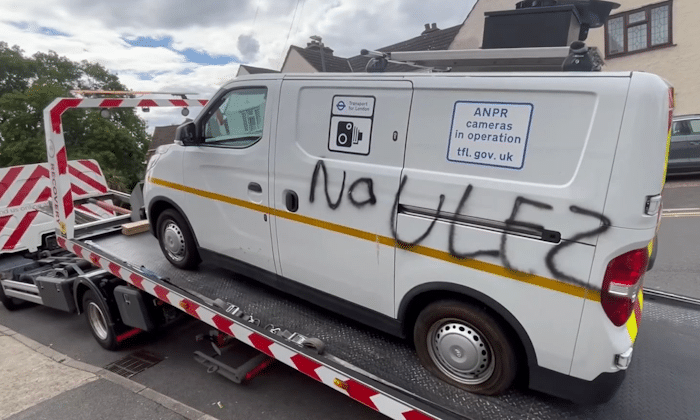
Over the past few years, greens in government have launched all manner of anti-motorist schemes. There have been Low Traffic Neighbourhoods (LTNs), so-called 15-minute cities and congestion charges like London’s Ultra-Low Emission Zone (ULEZ). Yet whenever anyone pushes back against these schemes, our green elites claim that none of it is really happening.

Share

The federal government wants Canadians to switch to electric vehicles. Are they interested?

EV Kommissar

With electric vehicle sales in Canada breaking records every year, the demand is clear, say advocates of EVs.

“There is currently very high interest, and that interest is growing,” said Louise Lévesque, director of policy at Electric Mobility Canada, a national industry association that works to advance electric transportation.

Environment Minister Steven Guilbeault last week unveiled the federal government’s electric vehicle sales mandate regulations, which include a national target of 100 per cent zero-emission vehicle sales by 2035. In making his announcement, Guilbeault also noted how the Canadian marketplace is already experiencing “a rapid shift toward zero-emission vehicles.”

Share

Ottawa looking at including used cars in federal electric vehicle incentive, report says

A government report suggests federal incentives for used electric vehicles could be in the works as Ottawa pushes to phase out gas-powered cars.

Canada’s latest emissions reduction progress report says the federal government will “explore the potential to expand the Incentives for Zero Emission Vehicles (iZEV) program to include used vehicles.” But the three lines in the report don’t offer much detail.

Neither Transport Minister Pablo Rodriguez’s office nor the office of Environment Minister Steven Guilbeault would say whether discussions are underway to expand the incentive program.

Share

Guilbeault wants to ban gas-powered car sales by 2035. Is that even possible?

Right now, roughly one-in-10 new cars driving off the lot are electric or plug-in hybrid. By 2035, the government has declared that number needs to be … all of them.

As far as goals go, you can’t fault the ambition, but is it even feasible?

Article content
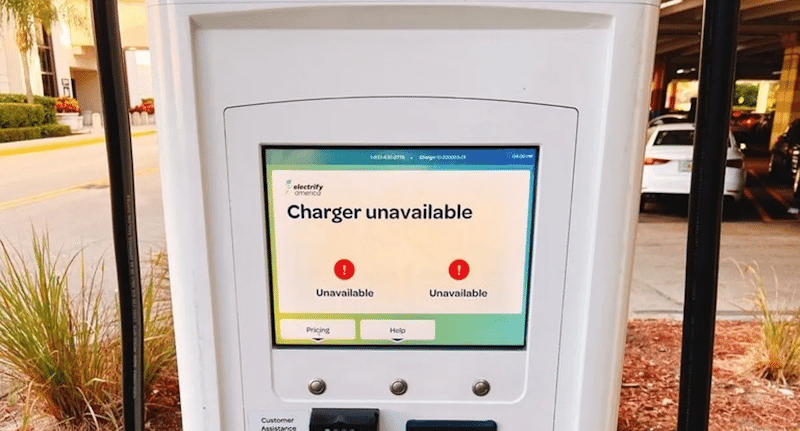
And, if there are enough cars to go around, will Canadians be able to charge this massive new convoy of electric vehicles?

It depends on who you ask, but skeptics abound in both the automotive and energy sectors.

Share

Adam Pankratz: Steven Guilbeault ignores reality with impossible electric vehicle mandate

The Canadian government announced earlier this week that capitalism was no longer of any interest to it. Steven Guilbeault, the enlightened Minister of Environment has decreed that by 2035 internal combustion engine (ICE) vehicles must be phased out in favour of electric vehicles (EVs). This dirigiste move flies straight in the face of the principles of a market economy that enable the technology required for the energy transition and will no doubt be rife with unforeseen consequences.

Share

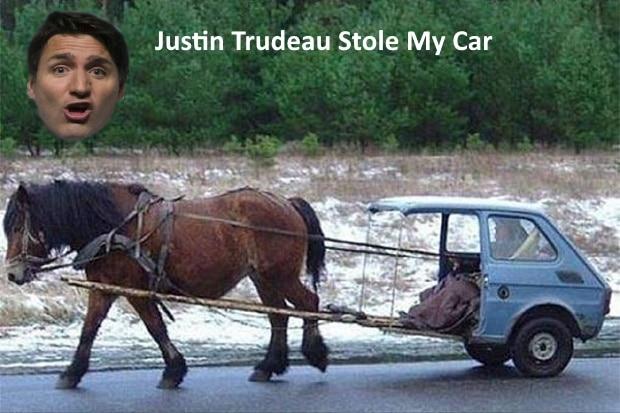
Gas-powered vehicles have become like horses and buggies, says Guilbeault

If you think car theft is bad now wait till Trudeau’s Green-Scam gets rolling.

It’s been a year full of announcements for Environment Minister Steven Guilbeault, who has introduced a range of new climate policies and regulations over the last 12 months. Having recently returned from the COP28 global climate conference in Dubai, Guilbeault caught up with iPolitics to reflect on his year and outline his priorities moving forward.

He also chats about what’s next for impact assessment in Canada, why he thinks gas-powered vehicles are the new horse and buggies, as well as what he believes is the high point of his career.


Guilbeault means he sees cars being pulled by horses because electric vehicles are not practical as a replacement for ICE vehicles which will be few and only for the rich in his Brave New World.

Share