The federal government promised to plant two billion trees. How’s that going?

Just off a country road in rural Ontario, a short drive from Barrie, Kerry McLaven’s decades-old machinery is revving up for the summer.

The “machines” are trees — rows of white pines, cut and grafted from the best trees McLaven and her predecessors could find, now put to work in this eight hectare plot near Lisle, Ont.

“They are beautiful and they provide a habitat … but their real role is to produce seed and so they are seed machines,” said McLaven, CEO of Forest Gene Conservation Association of Ontario, which manages this seed orchard.

Trudeau lies to everyone, friend or foe.

Share

Poilievre supports Manitoba’s attempt to get exemption from federal carbon tax

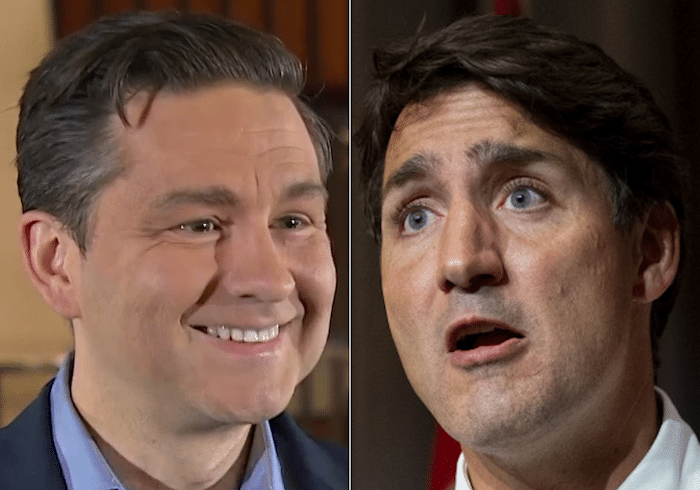
WINNIPEG — Federal Conservative Leader Pierre Poilievre said Thursday he supports Manitoba’s request for an exemption from the federally imposed carbon tax.

“The fact is that Manitoba produces a phenomenal amount of green energy through its hydroelectricity, and a carbon tax will come nowhere near the environmental benefit of expanding that energy,” Poilievre told reporters following a meeting with Premier Wab Kinew at the legislature.

Share

David Staples: Ouch! Carbon tax on natural gas now more than double the cost of gas itself

Hardly any of the facts and figures in the debate over the carbon tax and its April 1 increase are going to stick with Albertans. Folks are too busy working, raising kids, and trying to figure out how to pay all their bills to dig in deeply and memorize most arguments for and against the tax.

But one new fact just got my attention. This particular fact is going to be plenty sticky, I suspect.

Share

Allies distance themselves from Justin Trudeau over climate plan

After a year of declining poll numbers, failed resets and embarrassing scandals, Justin Trudeau’s government is now experiencing a slow-motion collapse, a kind of political “slow heat death”.

Usually, leaders who have stayed in power for nearly a decade, as Trudeau has, can look forward to leaving behind a legacy in the form of a signature policy that will endure beyond their own political lives. But the Canadian PM may not even have that, because on 1 April Canada’s federal carbon tax is set to increase, and what had been a relatively uncontroversial measure when it was introduced nearly five years ago has become nothing short of a political firestorm.

Share

Small Businesses Say They’re ‘Crushed’ by Rising Costs, Call for Halt to Carbon Tax Increase

Canadian small businesses say they are suffering under the federal carbon tax program and are calling on the government to stop the tax hike planned for April 1.

“Small businesses are being crushed by rising costs on all fronts, and the upcoming April 1 carbon tax increase will only add salt to the wound,” said an email statement to The Epoch Times from Jasmin Guenette, vice president of national affairs for the Canadian Federation of Independent Business (CFIB).

Share

Carbon price increase is ‘inhumane,’ Alberta premier tells committee

Alberta Premier Danielle Smith says the upcoming federal carbon price increase is “inhumane.”

“The carbon tax increase on natural gas is going up $4.09, which is more than double the base price of natural gas, which I believe is $1.72 a gigajoule. The so-called solution of the federal government is to increase the carbon tax on something that is life or death for Albertans in the extreme cold of winter,” Smith told the House of Commons operations committee.

Share

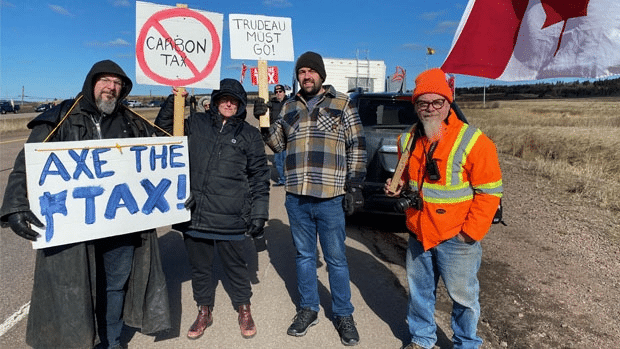
‘He understands Canadians’: Inside what ‘axe the tax’ means to Poilievre’s supporters

When Sarah Morin hears the phrase “axe the tax,” what enters her mind is “freedom.”

The 41-year-old is a stay-at-home mother of two who has been using a food bank amid cost-of-living pressures.

She was among those who packed into a crammed room at a convention centre near Ottawa’s airport on Sunday to listen to Conservative Leader Pierre Poilievre speak.

Share

Conservatives blast pro-carbon price economists as ‘so-called experts’

OTTAWA — The federal Conservatives say they won’t be taking advice from “so-called experts” when it comes to carbon pricing, after more than 200 economists signed an open letter challenging Pierre Poilievre’s stance.

Instead, the party is pledging to listen to the “common sense of the common people.”

The comments come after economists associated with universities across Canada took aim at common claims in the heated debate over the policy.

Economists are pushing back on assertions the carbon price has driven up the cost of living, and calling out opponents for failing to pitch a less costly alternative to reduce emissions.

Share

Trudeau challenges premiers opposed to carbon tax hike to suggest alternatives to his stupid idea

Prime Minister Justin Trudeau is calling on premiers opposed to increasing the carbon tax to propose credible alternatives to the federal measure.

On Tuesday, Trudeau wrote to seven premiers who have been calling on Ottawa to pause an imminent hike to the federal levy or scrap the program altogether.

In his letter, the prime minister suggested that the governments of New Brunswick, Prince Edward Island, Saskatchewan, Alberta, Ontario, Nova Scotia and Newfoundland and Labrador haven’t put forward suitable replacements to the federal backstop.

Share

Biden’s EV Mandate Is an Affront to Car Lovers

The leading advocates of mandatory electrification evince a profound hostility toward cars and the people who like them.

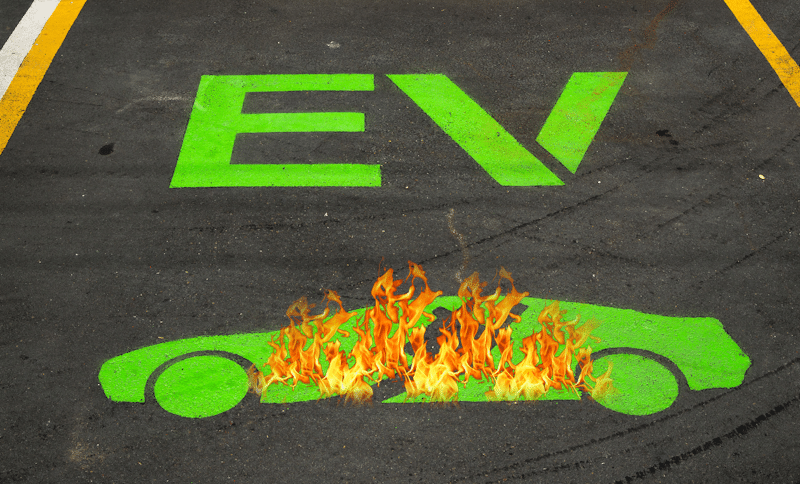
Like many Americans, I have all manner of problems with the Biden administration’s ongoing attempt to coerce us into electric vehicles over the next decade. I object to the federal government presuming that its role in our lives includes telling us what we may drive; I am unpersuaded that the law the White House is using accords Washington, D.C., the power to remake the car industry; and I am bothered by the false assumption that, because upper-middle-class people seem to like Teslas, the average citizen is yearning for his Ford Explorer or Toyota Corolla to be converted into a glorified golf cart. But, in addition to all of these more reasoned explanations for my opposition, I have another: I like cars.

Share

Majority Say Saskatchewan Is Right to Not Collect Hated Carbon Tax on Home Heating

More than half of Canadians say Saskatchewan is doing the “right thing” by refusing to collect the carbon tax on home heating, a new survey has found.

Fifty-four percent of those polled by Angus Reid say they support the actions of Premier Scott Moe and his Saskatchewan Party, with the majority of Canadians in every province except Quebec on board.

Share

Joe Biden’s climate plan is a threat to democracy

For a policy that requires sacrifice, at least for the masses, the climate agenda lacks one critical element: public support. Even in ultra-green Europe, there is a growing resistance among politicians and the public towards extreme climate policies. In America, too, climate scepticism is growing. Given that Joe Biden rolled out new pollution standards for non-electric cars last week, this public shift should provide discomfort among the Democratic establishment.

Share

Anti-Ulez protesters hang ‘protected’ bat boxes on camera poles

Bat boxes have been attached to Ultra Low Emission Zone (Ulez) camera poles in what appears to be an attempt to frustrate efforts to enforce Sadiq Khan, the London Mayor’s clean air scheme.

The £10 animal boxes have been installed underneath number plate recognition cameras in Chessington and North Cheam, in south London.

Laminated signs underneath the boxes read: “Stop! This is a bat box. Bats have been observed to be using this bat box as a resting place.”

Share

Andrew Evans: Canada’s electrical grid cannot handle the coming demands

In 1905, Sir Adam Beck, (who created the precursor to Ontario Hydro), spoke in the Ontario Legislature about the “very great influence upon the commercial development of the Province [that] will be exercised by the furnishing of cheap power.”

In the time since, cheap power has been the backbone of the prosperity Canada achieved. Fed mostly from large hydroelectric dams, this cut-rate, abundant supply of electricity enabled mass electrification and quality of life soared. Today, we continue to reap the benefits and have a reliable, largely non-emitting grid that is the envy of the world.

Share