The political consensus on taxing Chinese imports is now complete — your move, Minister Freeland

Now that Conservative Leader Pierre Poilievre and his party have joined the chorus calling for more action against Chinese imports, a key decision facing Finance Minister Chrystia Freeland this month just got a little easier.

Cross-party consensus on the wisdom of lining up with the Biden administration’s incoming tariffs on made-in-China electric vehicles provides the government with more political cover. But there’s still a risk of incoming flak.

To understand how complicated this gets, consider how then-president Donald Trump’s earlier campaign against Chinese state-sponsored overproduction played out for the United States and its trading partners in what was then NAFTA, now the Canada-United States-Mexico Agreement (CUSMA). That policy debate got very confusing for voters who like to slot politicians on a predictable left-right axis.

Share

GUNTER: ‘Green’ energy transition proving to be costly disaster

The past 14 days have been a tough fortnight for those who, like our federal Liberal government, have a cultish obsession with saving the planet through a transition to “green” energy.

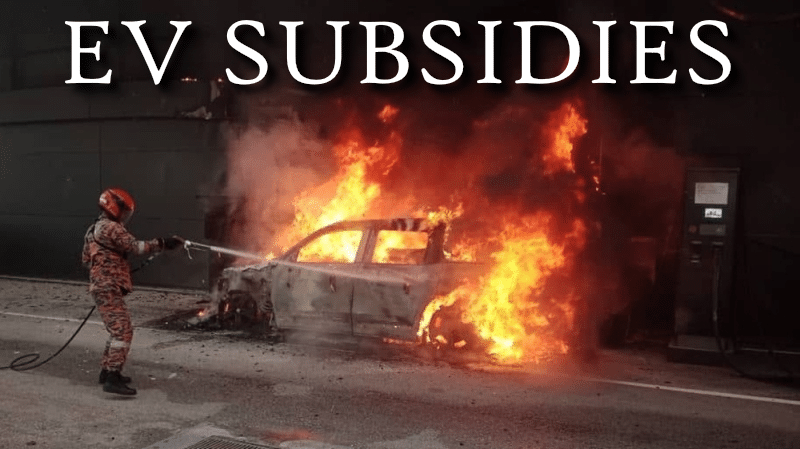
The news since the beginning of the month is that electric vehicle sales continue to soften, the cost of the global transition to alternate energy will be many trillions (yes, trillions) more than anyone has admitted and the measures implemented thus far, at great expense already, have had little impact on emissions or fossil fuel use, both of which are up in the past decade.

Share

Tasha Kheiriddin: On EVs, Trudeau puts politics ahead of national security

Prime Minister Justin Trudeau is on a tear. This week he trotted out the b-word — “baloney” — to describe Conservative Leader Pierre Poilievre’s call for tariffs on cheap Chinese-made EVs threatening to flood the Canadian market and demolish domestic manufacturing. In May, the U.S. hiked its tariffs to 100 per cent from 25 per cent, while the EU has set tariffs north of 38 per cent. The Canadian government just wrapped a 30-day consultation on the issue, with a decision expected soon.

Share

‘Wake-up call:’ Government’s own research suggests Canadians are worried about cost of clean energy transition

OTTAWA – As Prime Minister Justin Trudeau tries to make his case that fighting climate change and tackling affordability go hand in hand, the government’s own public opinion research suggests Canadians are worried about how much the transition away from fossil fuels will cost them.

Two recently published reports commissioned by Natural Resources Canada earlier this year explore how Canadians feel about the clean energy shift, as well as their attitudes towards zero-emission vehicles.

Share

Trudeau upset Poilievre casts doubt on Liberal’s dubious EV gamble

Trudeau calls Poilievre’s stance on Chinese EV tariffs ‘baloney’

Prime Minster Justin Trudeau took aim at federal Conservatives on Monday, accusing leader Pierre Poilievre of not supporting investments in the electric vehicle sector.

Trudeau was attending a funding announcement at Goodyear’s tire plant in Napanee, Ont. Goodyear Canada announced it is investing $575 million to expand and modernize the plant with the goal of making it net-zero in less than two decades. The federal government is contributing $44.3 million, while Ontario’s government is kicking in another $20 million.

Trudeau said the plant’s increased capacity will include tires made specifically for electric vehicles.

Share

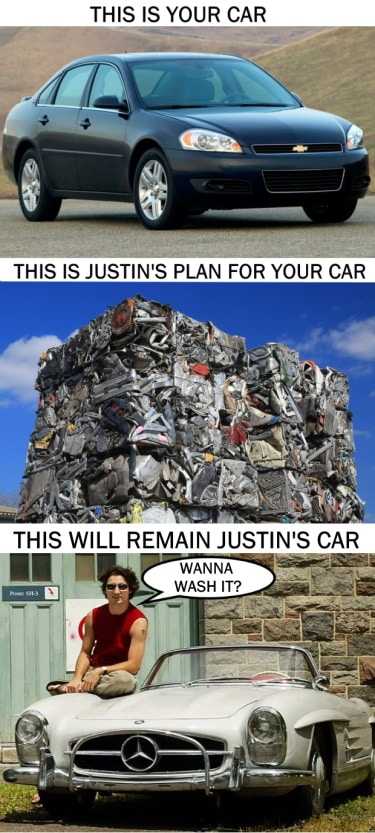
Trudeau defends billions spent attracting electric vehicle industry to Canada

OTTAWA – Prime Minister Justin Trudeau defended his government’s decision to spend billions attracting electric vehicle manufacturing, arguing some recent slowdowns in the market are just bumps along the road.

“Canada has positioned itself to be a leader in the EV industry and we will continue to be because those are where the jobs are going to be, not just a couple of years from now, but a decade from now, a generation from now,” he said Monday.

Trudeau is a genius ya know.

Share

Are Canadians willing to help the transition to a greener, cleaner world?

Zap. You’re electrified!

Welcome to the mantra of major economies around the world. The fight against climate change demands action. That means more electric vehicles, more carbon capture and global initiatives such as the Green Climate Fund, launched to help developing countries accelerate their energy transition. Here at home, Canada’s action on climate change has focused on carbon pricing, clean electricity, public transportation, energy-efficient buildings and innovation. The Liberal government has also committed billions of dollars to electric-vehicle (EV) projects.

Share

A Lot Was Riding on This Wind Farm. Then Giant Shards Washed Up in Nantucket.

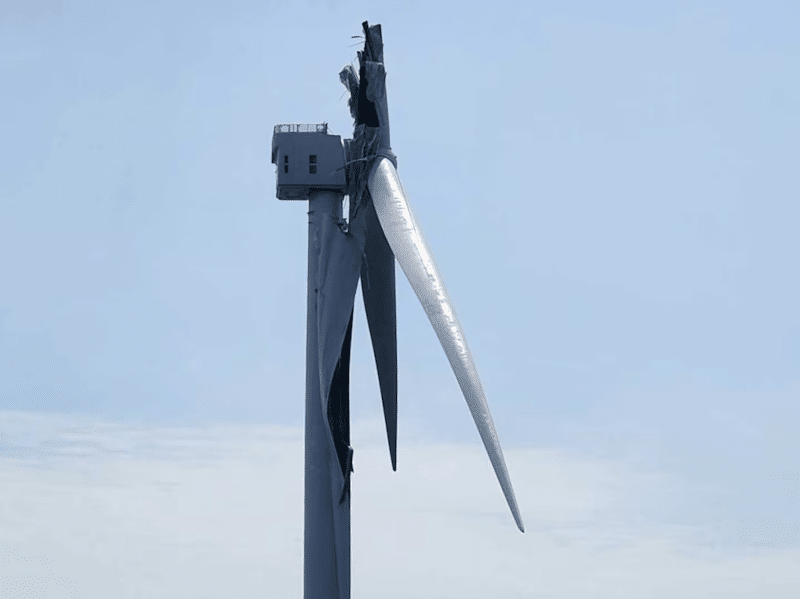
This summer was supposed to be a breakout season for the faltering offshore wind business in the U.S. Instead it may be defined by an ill-timed break.

A large project off the coast of Massachusetts, called Vineyard Wind, remains at a standstill following an accident that dropped a massive turbine blade into the ocean last month and washed chunks of debris onto Nantucket beaches.

The blade broke at the height of summer and at a pivotal moment for the U.S. offshore wind industry, which has struggled with rising costs, political opposition and a wave of canceled and renegotiated contracts. Efforts to launch the sector in the U.S. are considered key to President Biden’s climate aspirations but would be especially vulnerable if former President Donald Trump returns to office.

Share

Trudeau’s EV mandate will break the bank

We don’t know all the inevitable costs for Trudeau’s EV mandate, but everything we do know shows we can’t afford it

Alberta’s energy regulator recently warned people to stop using kitchen appliances because the electricity grid was at risk of blacking out.

Albertans were told to stop cooking on stoves and washing clothes in warm water.

You know, modern life, circa 1955.

The government also told us to not charge electric cars.

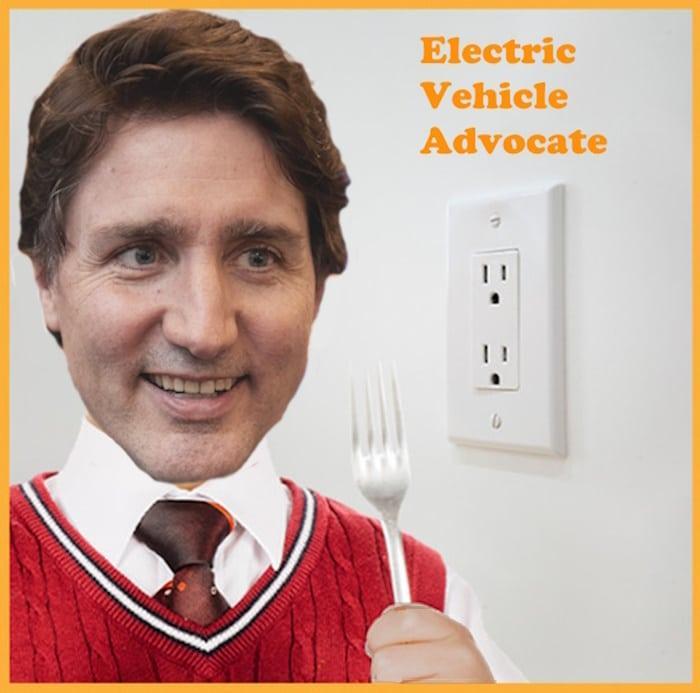
If we’re being told to stop using toasters, how are we going to charge our government-mandated EVs?

Share

GM Canada supports potential tariffs on Chinese EV imports amid market concerns

The potential of tariffs on Chinese electric vehicle imports is being welcomed by the Canadian head of General Motors as major producer BYD looks to enter the market.

“We’re encouraged by the government’s examination of these issues,” said Kristian Aquilina, president of GM Canada.

“Because on the basis of strong competition, a fair playing field, it encourages us to invest heavily, employ deeply.”


Who can blame a carpetbagger for wanting free money?

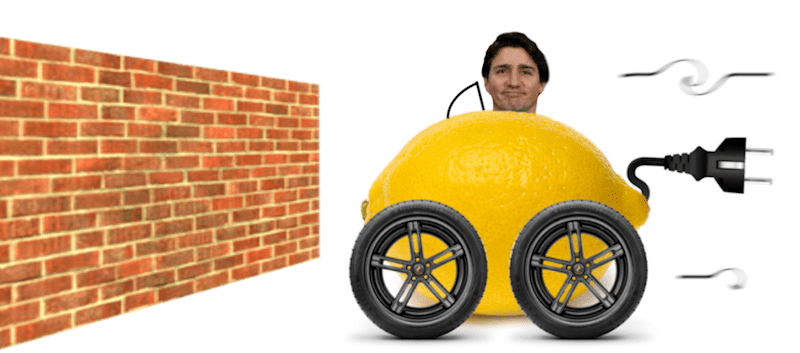
Junior can let his Chinese pals flood Canada with cheap vehicles undermining the investment of our money in EV tech manufacturing or he can impose tariffs that will likely only delay the inevitable collapse of the EV fad.

Share

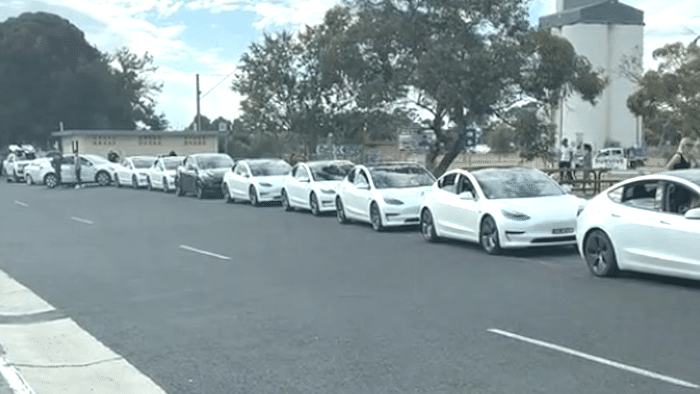
Introducing the Latest EV Headache: ‘Charger Hogs‘

To attempt to address the growing issue of ill-mannered electric vehicle owners hogging fast chargers, Electrify America is experimenting with a strict limit at 10 of its busiest charging stations in California.

CNN reports that the growing popularity of electric vehicles has led to a significant increase in demand for public fast charging. However, this demand has also brought to light a frustrating issue for many EV owners: “charger hogs.” These inconsiderate drivers linger at fast chargers, even when their batteries are nearly full, causing long wait times for others in need of a charge.

Share

Jamie Sarkonak: Green-obsessed Liberals want to come for your clothes

They’ve gone after single-use plastics, they’ve made a lunge at agricultural fertilizer — and now, the Liberals might be going after clothes.

In July, Environment and Climate Change Canada announced its intent to address “plastic waste and pollution from the textile and apparel sector.” In short, there’s a plan in the works to reduce clothing waste. It’s far too early to know what it will entail, but the consultation documents raise a key concern: will clothes become more expensive?

Share

Fewer Canadians Willing to Buy Electric Vehicles: Federal Research

Fewer than four in 10 Canadians now say they would consider buying an electric vehicle, marking a decline in interest since 2022, according to in-house research conducted by the department of natural resources.

“Canadians hold mixed views on zero-emission vehicles and continue to have a general lack of knowledge about these vehicles,” the report said. When asked, “Have you considered purchasing or leasing a zero-emission vehicle?” only 36 percent of respondents said ‘yes.’

Share