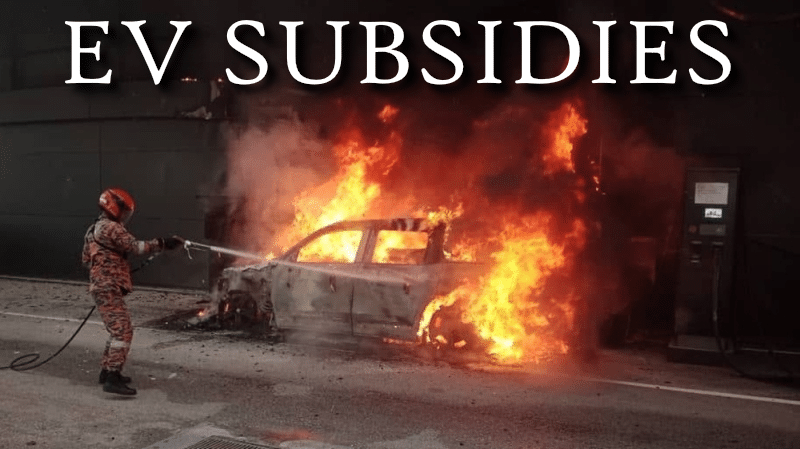
GOLDSTEIN: EV subsidies albatross around necks of Canadian taxpayers

With Canada’s auto sector already under assault from U.S. President Donald Trump’s tariffs, the $52.5 billion the federal and provincial governments have earmarked to create a domestic electric vehicle supply chain industry in Canada have become an albatross around taxpayers’ necks.

Share

Ontario hit NextStar EV battery plant in Windsor with 10 stop work orders over hazards, documents show

Nexstar was found to be employing foreigners

Workers at a massive, publicly subsidized electric vehicle (EV) battery plant project in southwestern Ontario have faced repeated health and safety hazards, including high levels of carbon monoxide, electrical risks and flooded parking lots, according to government records obtained by CBC News.

The documents show provincial inspectors have visited the site dozens of times since construction broke ground in 2022 and have issued over 100 orders to NextStar Energy, the company behind the project, that were related to health and safety issues.

Share

Poilievre demands federal government release its contracts with Stellantis

The Conservative Party of Canada is calling on the federal government to publicly release its contracts with Stellantis following the company’s announcement Tuesday that it is scrapping plans to produce the Jeep Compass in Brampton, Ont., and going with a U.S. plant instead.

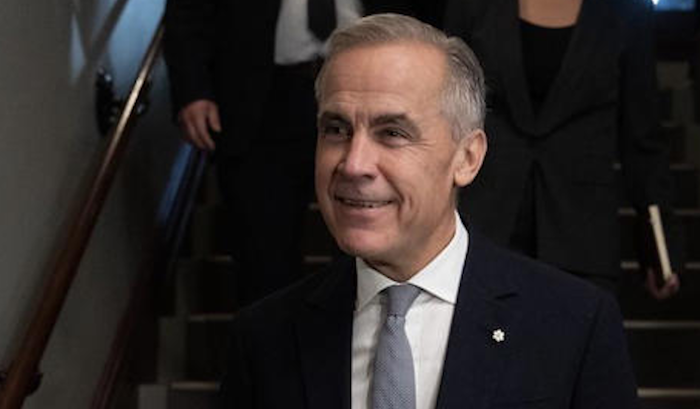
The demand was made in a letter sent on Friday to Prime Minister Mark Carney by the leader of the official opposition, Pierre Poilievre.

“You claimed yesterday that Stellantis is obligated to keep jobs in Brampton, yet auto workers have been left in the dark about what Canadians got for the $10 billion your government promised to that company,” Poilievre wrote in the letter.

Share

Canada’s costly EV scheme stalls out again

On Wednesday, laid-off employees at the Stellantis plant in Brampton, Ont., received a robocall delivering bad news: they had no jobs to go back to.

It was another stall on the road for Canada’s automotive strategy, which has seen federal and provincial governments dole out mounds of cash and add regulations and protective tariffs in a floundering attempt to create more jobs and build a state-of-the-art electric vehicle industry.

Share

Stellantis announcement only looks like bad news

This week’s announcement by automaker Stellantis that it’s moving Jeep Compass production from its Brampton, Ont., plant, to Illinois, highlights the folly of Ottawa’s policy of competing with Washington. But it also provides Canada an opportunity to reduce taxpayers’ exposure to the sagging electric vehicle battery market.


This could be a very lucky break for tax payers.

Share

Two Quebec battery supply chain projects hit the brakes

The expansion of a battery project planned for Bécancour, Que., has been put on hold, and the plant that was supposed to feed it has been cancelled.

Quebec Economy Minister Christine Fréchette says Ultium Cam — a partnership of General Motors and South Korean manufacturer POSCO — has paused the second phase of a project to produce cathode active materials for electric-vehicle batteries.

Share

Regulator warns Canada’s green power push could strain electricity grid

Canada may face major electricity reliability challenges as utilities work to meet federal climate targets, the Canada Energy Regulator warned Wednesday.

Blacklock’s Reporter says in its report Ensuring Future Power Grid Reliability, the agency said rising demand from electric vehicles, heat pumps, and other electrified technologies could stretch the country’s power system to its limits.

(Incognito)

Share

GOLDSTEIN: Is Canada’s $52.5-billion bet on EVs going bust?

The Canadian government is waving around Canada’s “public” health-care system like they are handing out free candy trying to entice people from around the world to come here to take advantage of it and the taxpayers who pay for it.

Carney: Policy for profit regardless if the policy is junk science

h/t XC

Share

Electric-vehicle companies urge Ottawa to stay on the communist path and keep sales mandate

Electric-vehicle companies urge Ottawa to maintain EV sales mandate

The electric-vehicle industry says the federal government’s move away from EV sales targets undermines the Canadian sector while threatening investment and job creation.

The government said in September it was dropping the requirement that 20 per cent of car sales be EVs in 2026, and launching a review of the entire program, which raised the requirement to 100 per cent by 2035.


I wonder who has lined up dealership rights for ChiCom EV’s?

h/t Mauser

Share

STIRLING: ‘Climate Barbie’ and the cost of virtue-signalling

In 2019, Catherine McKenna declared a climate emergency. In a recent Nate Erskine-Smith interview with McKenna, about her new book “Run Like a Girl,” he has a telling sentence that certainly most Western Canadians will “get it in their guts.” At about 30 minutes into the interview, Erskine-Smith recounts several of McKenna’s initiatives, noting that the carbon tax gets the most attention, but she is also responsible for imposing stringent methane rules on agriculture and industry, the Clean Electricity Standard, and the industrial carbon price. BTW, she also introduced the “no more pipelines” Bill C-69 in 2018.

(Incognito)

Share

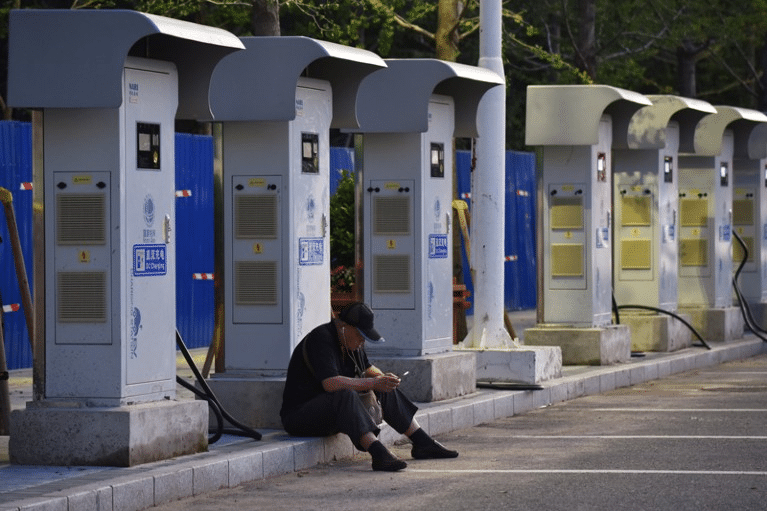
Ottawa admits EV charging plan is falling far short despite billions spent

Ottawa’s billion-dollar push to build electric vehicle chargers has sputtered, with only a fraction of promised stations built and no proof the project will actually cut emissions, according to a new federal audit.

Blacklock’s Reporter says the Department of Natural Resources admitted its Zero Emission Vehicle Infrastructure Program, launched in 2019, is far behind schedule and may not deliver meaningful results even if completed.


Yours truly predicted the EV Charger scam would be the next Green-Scam scandal.

Share

Canada’s former minister of climate grifting on making a change, ‘aloof’ Trudeau and sexism

Canada’s former climate minister on making a change, ‘aloof’ Trudeau and sexism

Imagine there was a truck heading directly for your children. What would you do? Surely everything in your power to save them, including jumping in its way? Catherine McKenna, formerly the Canadian minister for environment and climate change, borrows this analogy for the climate crisis from a colleague to argue that we need to use “all the tools at our disposal” to tackle devastating danger that is already with us.

McKenna has recently published Run Like a Girl, which documents her time in government, among other things. Peppered with inspirational quotes, personal photos and campaign memorabilia, Run Like a Girl isn’t a straightforward memoir. She wrote it for “women and young people who want to make change”.

Share