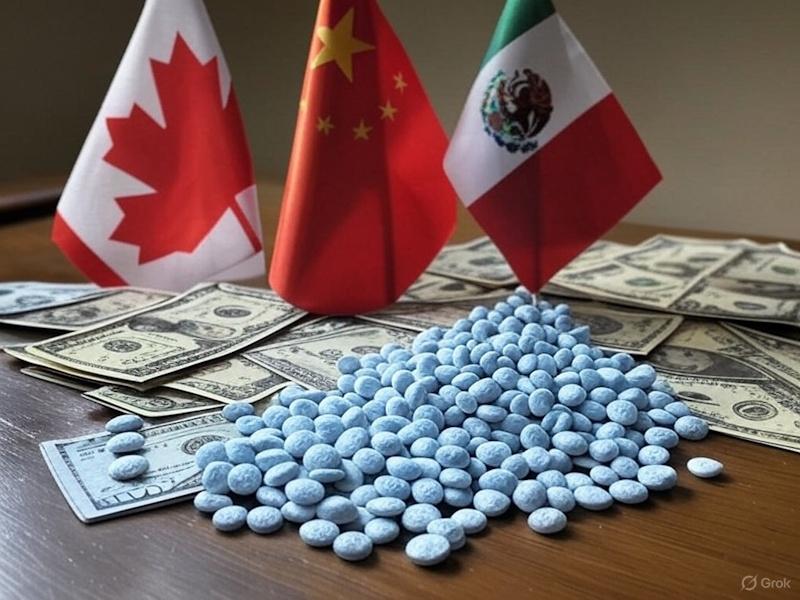
Mexican Cartels Expanding Operations in Canada, Using Indigenous Reserves as Factory Hubs

With Factories on Six Nations Land, Mexican Cartels Are Using Canada to Smuggle Counterfeit Goods Into the U.S. and Mexico

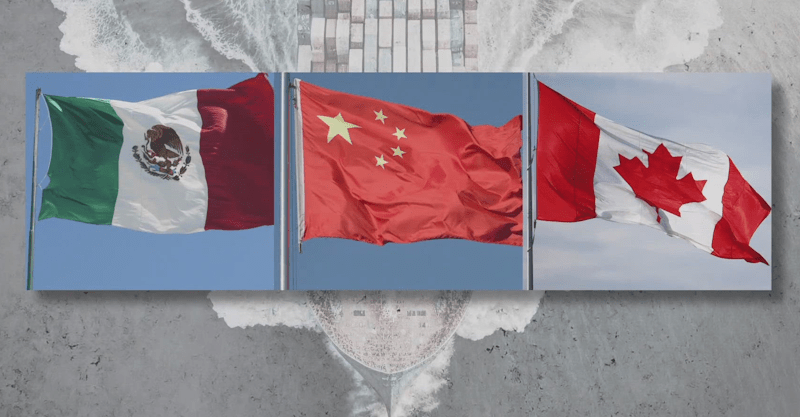
OTTAWA — “Project Panda,” a major Ontario gang taskforce takedown in May targeting a counterfeit tobacco factory on the Six Nations Reserve near Hamilton and Buffalo, exposes a long-ignored reality: Mexican cartel networks have deeply embedded themselves in Canadian territory near the U.S. border—and are expanding in tandem with Chinese state-linked crime partners, using Indigenous land for counterfeit production and cross-border smuggling.

This is no longer just a policing matter. It is a national security crisis—one that exploits Indigenous communities, land, and jurisdictional protections that have inadvertently shielded criminal networks now designated as terrorist threats. Worse still, the threat has long been known to Canadian, American, and Mexican authorities. Yet Ottawa has failed to act.

h/t handy n handsome

Share

The mysterious drop in fentanyl seizures on the U.S.-Mexico border

These guys had nothin to do with it according to WAPO.

MEXICO CITY — After years of confiscating rising amounts of fentanyl, the opioid that has fueled the most lethal drug epidemic in American history, U.S. officials are confronting a new and puzzling reality at the Mexican border.

Fentanyl seizures are plummeting.

The phenomenon has received little notice in Washington, where the Trump administration has made fentanyl-trafficking cartels a national-security priority. “Narcotics of all kinds are pouring across our borders,” said a White House statement in March, announcing stiff tariffs on Mexico and Canada.

Share

Mark Carney is ignoring the cartels – and Donald Trump

The cartels have switched from the Mexican border to the Canadian border

Donald Trump has declared war on the cartels. The southern border is now patrolled by the military, the wall is rapidly expanding and US intelligence is helping to target crime bosses on Mexican soil. Illegal crossings and drug seizures at key points have dropped by more than 70 percent in the last year.

But, contrary to appearances, the cartels have not surrendered – instead, they have pivoted, applying Sun Tzu’s principle: attack your enemy’s weaknesses, not his strengths.

Led by the blood-soaked and ultra violent Sinaloa and Jalisco New Generation Cartel they are exploiting the soft 5,525-mile long northern border with Canada and its sparse surveillance, dense forests, inadequately staffed crossings and neglected checkpoints.


The usual suspects will be making profit from policy no doubt.

Share

FBI boss Kash Patel launches scathing accusation at ’51st state’ Canada after alarming terrorism finding

FBI Director Kash Patel dropped a major bombshell on Sunday by accusing Canada of allowing drugs and terrorists to flow over the northern border into the U.S.

Patel is turning his attention to Canada and demanding the country do more to stop illegal activity at the border.

He said that Mexico has done more to partner with Washington, D.C. to stop those on the terrorist watch list and other bad actors from getting over the border, and he told Canada to ‘step up’ to the plate.

Share

FBI Warning—CCP, Iran, and Mex-Cartels Partnering in Canada to Move Fentanyl and Terrorists Into U.S.

WASHINGTON — In an explosive Sunday interview that will place tremendous pressure on Prime Minister Mark Carney’s new Liberal government, FBI Director Kash Patel alleged that Mexican cartels, Chinese Communist Party operatives, and Iranian threat actors have forged a new axis of criminal cooperation, using Canada’s porous northern border and the Port of Vancouver—not the southern Mexican border—as their preferred entry point to flood fentanyl and terror suspects into the United States.

Share

DEA assessment fingers Canada as major fentanyl source as guns flow freely across Northern border

Blame Canada.

In its latest National Drug Threat Assessment, the US Drug Enforcement Agency is blaming Canada for a blizzard of illicit fentanyl from so-called ‘super labs’ located on this side of the border.

In its latest assesment, Canada was mentioned seven times as a source of drugs and precursor chemicals despite the DEA not mentioning Canada once in its 2024 report.

Share

Bags of Cash From Drug Cartels Flood Teller Windows at U.S. Banks

Chinese money-launderers allegedly made six-figure deposits at Chase, Bank of America and Citibank branches across Los Angeles County

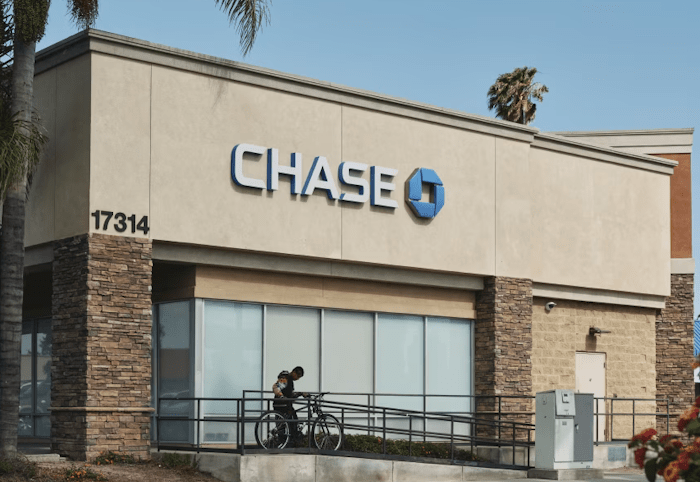
On a hazy Southern California morning, undercover police officers watched Jiayong Yu step out of a Range Rover in a strip-mall parking lot and walk into a Chase bank with a black-leather backpack full of cash.

At the teller window, Yu pulled out stacks of bills and waited while a woman fed them into a cash-counting machine. After Yu left, an officer asked the teller if he had deposited more than $10,000, the threshold requiring banks to flag transactions to federal regulators.

More like $100,000, the teller said. By then, Yu was already on his way to Chase and Bank of America branches in Claremont, Calif., about 35 miles away.

Federal authorities allege that Yu worked for an underground banking network that bought dollars at a discount from Mexico’s Sinaloa drug cartel and sold them at a premium, largely to Chinese nationals in the U.S.

Share

Media Focused on South While Cartels Move to the Northern Border

The southern border breakdown was permitted. Will we allow the same forces to break through from the north?

Borders are not abstractions. They are security infrastructure. They are economic lifelines. And when left unguarded, they become the entry points for chaos. While America’s political establishment clings to the southern border narrative, a quieter, more calculated breach is advancing from the north. The U.S.–Canada line — long mythologized as polite and uneventful — is now a preferred corridor for the same criminal cartels that have turned Mexico into a narco-state.

Share

Trump’s Strong-Arm Tactics Convince Mexico to Take Action Against Cartels

When President Donald Trump demanded the “eradication” of the cartels, Americans rallied behind him.

Franklin Roosevelt described cartels more than eighty years ago as “weapons of economic warfare” and defined “cartel practices” as those that “restrict the free flow of goods in foreign commerce.” In parts of Europe, particularly Nazi Germany, a guild, anti-laissez-faire mindset prevailed in coal, petroleum, steel, and other industries. Roosevelt regarded this economic protectionism as engendering hostility between nations. He instructed Secretary of State Cordell Hull to make the elimination of cartels a priority for the postwar world.

Share

Trump administration weighs drone strikes on Mexican cartels

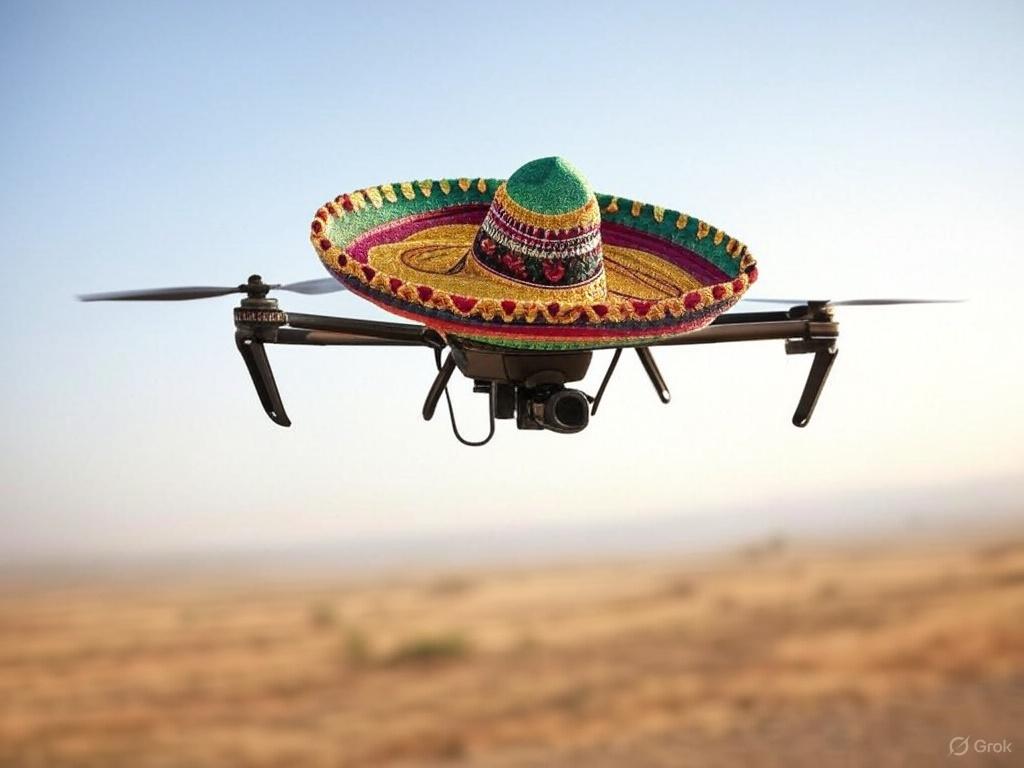
The Trump administration is considering launching drone strikes on drug cartels in Mexico as part of an ambitious effort to combat criminal gangs trafficking narcotics across the southern border, according to six current and former U.S. military, law enforcement and intelligence officials with knowledge of the matter.

Discussions among White House, Defense Department and intelligence officials, which are still at an early stage, have included possible drone strikes against cartel figures and their logistical networks in Mexico with the cooperation of Mexico’s government, the sources said.

Share

Mexico’s Descent Into Cartel Hell

Did the government turn a blind eye to a gangster training-camp in Jalisco?

On a sunny Saturday afternoon last week, the cafes here were crowded and the Jose Cuervo distillery bustled with visitors. As evening fell, the sidewalks and the main cobblestone thoroughfare filled with young people in cowboy hats mingling to strains of ranchera music. A full moon rose over red rooftops. Mexico was living up to its folkloric image.

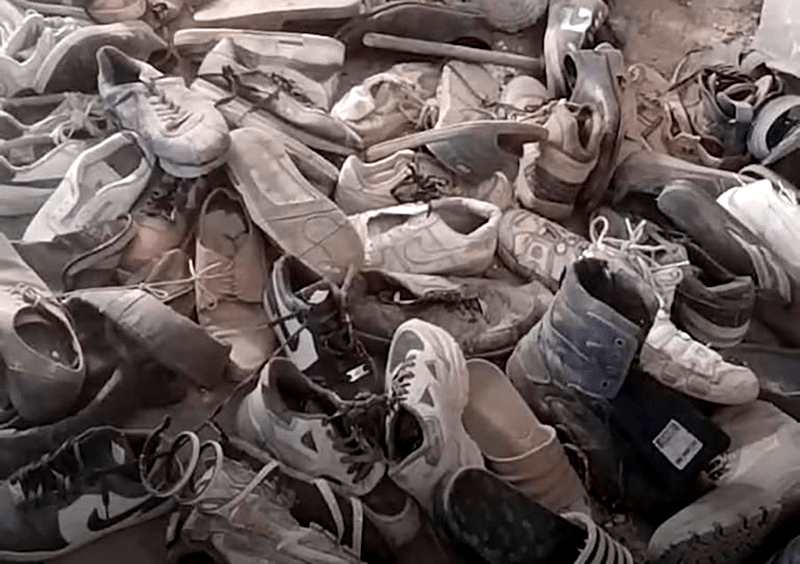
But some 12 miles away, the other Mexico had raised its ugly head again. On March 5, in the municipality of Teuchitlán, burned human remains and piles of personal items belonging to perhaps hundreds of missing persons were discovered on an abandoned ranch. The find was made not by local officials or the National Guard but by a nongovernmental organization known as the Warrior Searchers of Jalisco.

Share

Ovens and bone fragments – BBC visits Mexican cartel ‘extermination’ site

The gates to the Izaguirre Ranch look much like any others you might find in the state of Jalisco. Two prancing horses on the front perhaps a nod to the surrounding cattle-grazing and sugarcane fields.

Yet what lies behind the black iron doors is allegedly evidence of some of Mexico’s worst drug cartel violence of recent times.

Following a tip-off about the possible location of a mass grave, an activist group of relatives of some of Mexico’s thousands of disappeared people went to the ranch, hoping to find some sign of their missing loved ones.

Share

Trump’s Crackdown on Mexican Cartels Finds a Partner in President Sheinbaum

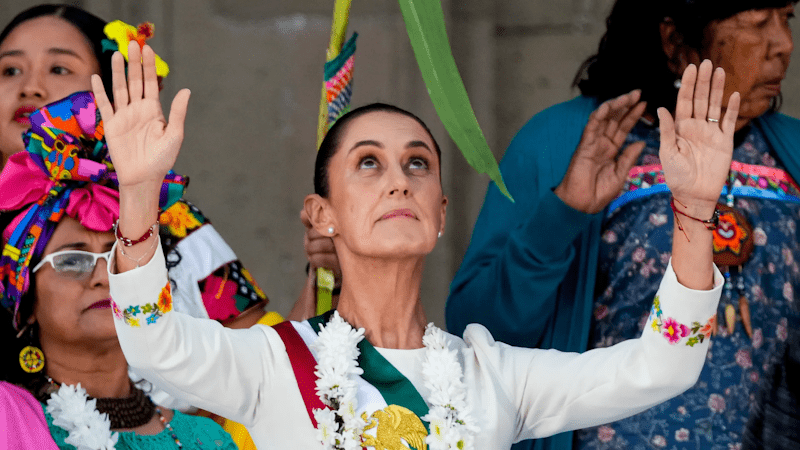
MEXICO CITY — President Sheinbaum led a mass gathering of jubilation on Sunday, days after the United States postponed for a second month 25 percent tariffs on Mexican imports, citing progress on drug smuggling and illegal immigration. Crowds waved Mexican flags as Ms. Sheinbaum praised the decision, saying, “Dialogue and respect have prevailed.”

How long Mexico can stave off President Trump’s wrath, though, is uncertain. United States 25 percent tariffs on steel and aluminum imports are at the moment set to take hold on Wednesday as planned, while the tariff pause on other Mexican goods is scheduled to expire on April 2.

Share

Do not believe a word the Liberal gov’t or its media says about the scope of Canada’s role in the fentanyl trade

“Trade-Based Money Laundering is the Fentanyl Crisis”: Sources expose Chinese-Mexican-Canadian Crime Convergence

‘That famous picture of Trudeau at a Vancouver dinner with all those Chinese guys—They’re all in there’: Source on United Front money laundering suspects surveilled by US Agency

VANCOUVER and TORONTO — As debate rages over President Donald Trump’s disruptive tariffs on Canada, Mexico, and China—whether they represent a genuine war on fentanyl deaths tied to each nation’s role in the deadly supply chain, or merely a pretext for U.S. trade dominance—multiple Canadian and U.S. government sources have stepped forward to highlight a factor they believe North American citizens aren’t grasping amid Trump’s political rhetoric.

They point to the staggering scale and sophistication of trade-based money laundering orchestrated by Chinese Triads in Canada and Mexican cartels. This is a predominant concern in Canada, alongside revelations of so-called fentanyl superlabs hidden in rural areas, yet easily supplied by Canadian transportation hubs—shipping, rail, and trucking networks saturated with organized crime. These sources insist this little-understood form of criminal money laundering not only fuels fentanyl trafficking—ultimately linked to a complicit Beijing—but directly finances drug shipments initiated by Chinese networks in Toronto and Vancouver, sending fentanyl, methamphetamine, and cocaine across the Mexican border into California, specifically to trucking hubs around Los Angeles.

Share