Toronto to stop cracking down on illegal cannabis dispensaries

Toronto’s bylaw officers will no longer crack down on cannabis stores that are operating illegally.

The head of Toronto’s licensing department, Carleton Grant, made it clear during Wednesday’s budget committee meeting that due to the lack of funding and dangers of dealing with criminal activity surrounding these storefronts, bylaw officers are “no longer effective” in stifling these shops from running.

In 2018, the city received just shy of $9 million in provincial funding, through the Ontario Cannabis Legalization implementation Fund (OCLIF), to crack down on dispensaries selling products to customers without a licence. In 2024, that funding ran out.


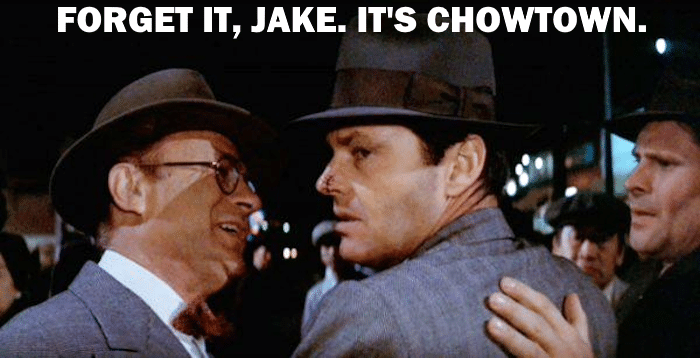
Welcome to Chowtown where criminals rule.

Share

New York Could Soon Regret Legalizing Marijuana

Linking any specific crime to pot use is difficult, but there certainly seem to be enough weed-related incidents to question whether legalization was wise.

New York City ended 2024 with a series of horrific subway incidents. Just days before Christmas, Debrina Kawam, a troubled New Jersey woman, was set on fire and burned to death by Sebastian Zapeta-Calil, an illegal immigrant from Guatemala. Kawam had apparently been sleeping on an F train at the Stillwell Avenue station in Coney Island—a common gathering place for the homeless—when Zapeta-Calil used a lighter to ignite her clothing. Afterward, he reportedly sat on a bench to watch the flames.

Share

An Ontario Teen’s Cannabis-Induced Psychosis Led to Suicide—Mother Raises Alarm

The risk of psychosis for teens using cannabis has become increasingly clear to researchers in Canada and abroad in recent years—and it’s tragically clear to Troy and Tara Neufeld of Westport, Ontario.

Their daughter, Mila, died by suicide in 2021 at the age of 18. What drove her to that point became evident little by little in the following weeks as the Neufelds spoke to Mila’s friends and read through her diary.

Share

Government overkill is why illegal cannabis still accounts for 30% of the market

Legalizing cannabis was supposed to spark a revolution — a bold new era of progress, opportunity and transformation. Instead, it began a complicated journey marked by significant achievements but also frustrating setbacks. Canada’s legalization has shifted both the culture and the industry, paving the way for innovative products, strict quality standards and a burgeoning community of consumers. But several remaining hurdles make it hard for the legal industry to realize its full potential and, as legalization was supposed to do, eliminate the illegal cannabis industry.

Share

As America’s Marijuana Use Grows, So Do the Harms

In midcoast Maine, a pediatrician sees teenagers so dependent on cannabis that they consume it practically all day, every day — “a remarkably scary amount,” she said.

From Washington State to West Virginia, psychiatrists treat rising numbers of people whose use of the drug has brought on delusions, paranoia and other symptoms of psychosis.

And in the emergency departments of small community hospitals and large academic medical centers alike, physicians encounter patients with severe vomiting induced by the drug — a potentially devastating condition that once was rare but now, they say, is common. “Those patients look so sick,” said a doctor in Ohio, who described them “writhing around in pain.”

Share

Is America turning its back on the great legal weed experiment?

Supporters of the ‘green rush’, when Colorado and Washington became the first states to legalise, lament the industry’s decline — and wonder if it was a mistake

As Sean Azzariti tells it, queueing in the snow outside a cannabis dispensary in Denver was the end of a long road from Iraq.
The former marine had been in charge of base security at al-Qa’im and al-Asad — “constantly mortared, constantly being shot at” — causing post-traumatic stress disorder that a 13-pill cocktail of stimulants, tranquillisers and antidepressants had done little to assuage.

Share

As another cannabis retailer tries to save itself, is the industry going up in smoke?

Tokyo Smoke is the latest Canadian cannabis retailer to close some of its locations and seek creditor protection in an unpredictable industry grappling with too many stores, high overhead costs and ultra-low retail prices.

One of the earliest brands to form in Ontario after the federal legalization of pot in 2018, Tokyo Smoke is shuttering 29 stores and restructuring its business under the Companies’ Creditors Arrangement Act, it announced Thursday. It will still have 167 locations open across four provinces.

Share

John Ivison: Trudeau’s signature pot legalization is failing on all fronts

Isaac Newton said he lost money on the South Sea Bubble financial collapse because, although he could track the movement of stars, he could not calculate the madness of men.

In Canada, the legalization of cannabis in October 2018, unleashed a mania that has seen nearly 1,000 companies receive federal production licences and retailers open nearly 3,500 stores selling cannabis products across the country. It is a short street indeed that doesn’t have a pot shop on it.

The Cannabis Act was a cornerstone piece of legislation for the Trudeau government — a welcome end to 94 years of failed prohibition and an attempt to make Canada safer by closing down the black market in unregulated pot.

Share

I know cannabis isn’t safe: it made me stab my date to death

A woman in California who became a killer while gripped by psychosis says companies selling the drug legally are hiding the truth about its effects

When Bryn Spejcher watched the police bodycam footage, she did not recognise the woman she saw.
The 33-year-old saw herself, deranged and frenzied, stabbing her body and then her service dog, Arya, the police having to taser her four times and beating her nine times with a baton — breaking her arm — to make her stop. Then she saw the man with whom she had been on a date, Chad O’Melia, stabbed 108 times in his home in Thousand Oaks, northwest of Los Angeles, where the two had been hanging out and smoking weed. She had killed him.

Share

How red tape sent California’s cannabis industry up in smoke

The ‘green rush’ expected after legalisation in 2018 has failed to materialise because of chaotic regulations, while a black market thrives

A stretch of shops and a gas station lie empty on the main street in Garberville, a town in the heart of northern California’s cannabis country.

In the Woodrose Café, eggs with fried potatoes are served to a handful of diners. A sign above the bar shouts “JOY” to a row of empty stools.

“Our more remote parts of the county are being vacated,” said Natalynne DeLapp, executive director of the Humboldt County Growers Alliance. “Five years ago, Garberville was bustling. Restaurants, boutiques, lots of people walking around. Now, you know, it’s summer time. When you drove through there, it was probably pretty quiet.”

Share

Driving While High More ‘Common’ Following Cannabis Legalization, Federal Research Finds

Driving while high on marijuana has become more “common” among Canadians since the substance became legal in 2018, according to recent in-house federal research.

“There was widespread agreement that cannabis-impaired driving is common among those in their social networks,” said the report prepared for Health Canada, which was first covered by Blacklock’s Reporter.

Share

ANALYSIS: The Flaws Flagged by Canada’s Cannabis Legalization Review

In October 2018, Canada became the first G7 nation to legalize recreational cannabis, and a federal review of how it’s gone so far shows what other countries may encounter if they do the same.

The push for legalization of other substances, such as psychedelics, has also begun in Canada—the pros and cons of which are likely to be viewed in light of our experience with cannabis, says addictions expert Michael DeVillaer.

“We failed to heed the lessons from alcohol [and] tobacco. … There is a very real danger that we will also fail to learn the lessons from cannabis,” Mr. DeVillaer, a health sciences professor at McMaster University, told The Epoch Times.

Share

Autobahn + Pot = ???

Germans allowed to smoke cannabis before driving under new law

Germany is already a nation where drivers know they can experience motoring with no restrictions.

Now, in a nod to the growing use of cannabis across the country, motorists will not only be able to drive as fast as they like in certain places, they will be able to get behind the wheel, legally, after a few puffs on a joint.

After it partially legalised the consumption and cultivation of the drug from April 1, the Bundestag has backed an amendment to the law that allows road users to consume limited amounts of cannabis.

Share

What America’s weed habit says about the fall of Protestantism

You can tell a lot about a civilisation by its drugs of choice. So we should treat as significant a new study that suggests the USA’s erstwhile preferences for coffee and alcohol may be giving way to the United Stoners of America. According to the study, the number of Americans using marijuana daily has now outstripped the number drinking daily. Nearly half the USA has now at least decriminalised cannabis; in some states, Americans can even buy their weed at a drive-thru dispensary.

I have a drive-thru pot outlet just down the street from me.

Share