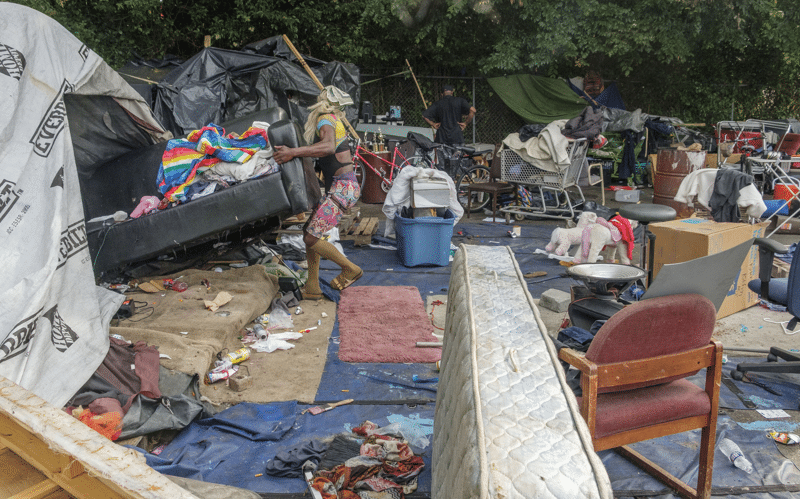
How the Democrats ruined Washington DC

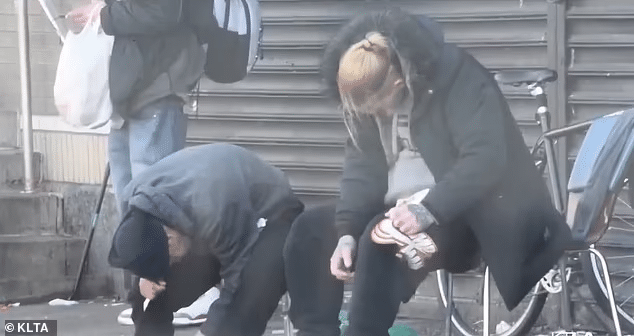
Like San Francisco and many other US cities, Washington DC has experienced sharp increases in crime and homelessness

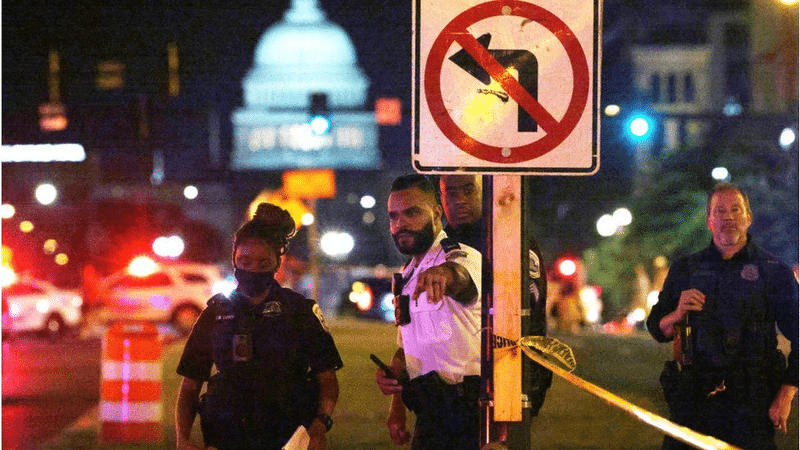
When thinking of Washington DC, grand monuments and museums might come to mind, however, in recent years, America’s capital has become more renowned for its growing homeless population and rising crime.

“Crime here has exploded, people do not feel safe,” Isaac Smith, an Emergency Medical Technician in DC, told The Telegraph for a documentary film about the capital.

“I have a bullet hole through my living room,” Mr Smith continued.

Get ready Toronto. This is your future.

Share

These are the homeless residents of Highway 101

John Sherry saved all his life, owned his home outright, and ran a business with 15 workers. Then his wife got cancer.

Now the couple live in a trailer and take grocery handouts from shelter volunteers. Their prospects of ever getting back into a home in tony Marin County, California, are swiftly dwindling.

‘I’m not the guy that’s down there and has zero. I saved real well. I owned my home outright. But circumstances happen,’ Sherry, 69, told DailyMail.com.

Share

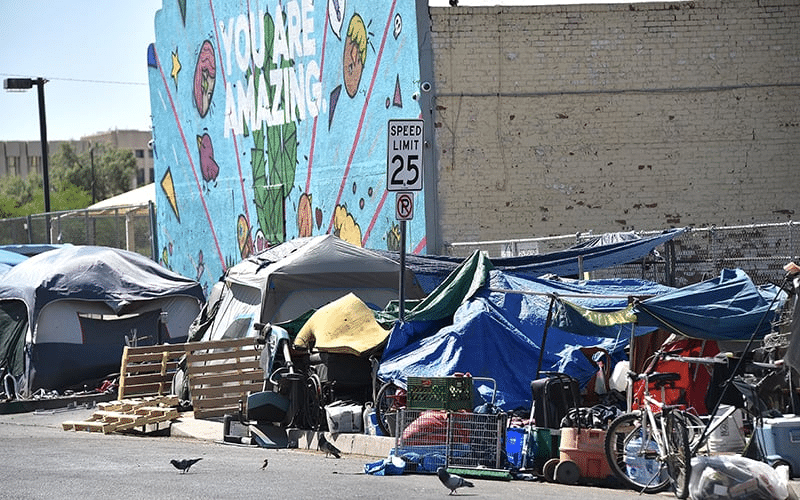
Phoenix to Begin Clearing Massive Downtown Homeless Camp after Court Order

The city of Phoenix is slated to begin work this week clearing out and cleaning up “the Zone,” a massive downtown homeless camp that a state judge recently deemed a public nuisance.

City workers on Wednesday are slated to begin removing tents, block by block, from a portion of the unstructured homeless camp, one of the nation’s largest, according to media reports.

Share

Georgia Takes a Stand on Homeless Policy

Legislators in the Peach State have joined a growing movement rejecting the failed approaches that have fostered urban anarchy elsewhere.

The United States has a homelessness problem, but we have an even bigger homelessness-policy problem. It is an issue at the federal level—HUD spends nearly $10 billion annually to create bad incentives that reward destitution—and at the state and local level. This week, two widely divergent state approaches to homelessness were on display.

…. In San Francisco, “permanent supportive housing” is one such failed program. In one instance, the city found that a quarter of those given a free apartment were dead in just a few years, many from overdoses. The federal government and states like California embrace this boondoggle, but other states should make other choices. They can dedicate funding to treatment and emergency shelter, for example.

We can hope Toronto takes note … but I fear city hall is in love with all the worst policy.

Share

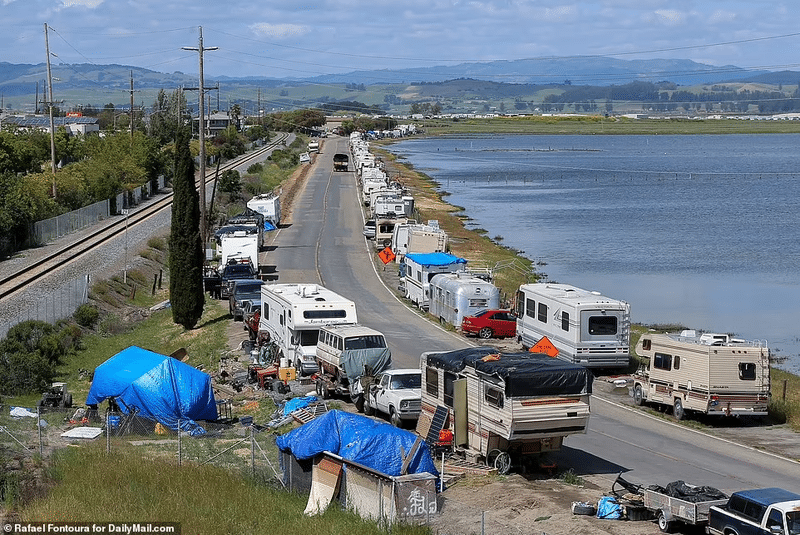
The TWO-MILE long homeless vehicle encampment north of San Francisco as low income people are pushed out of the housing market

Hundreds of locals in one of San Francisco’s wealthiest counties have been forced to pack up their lives into RVs and trailers after being pushed out of the housing market.

Shocking photos show the ever-growing line of trucks and other vehicles along 101 Highway – which now stretches over two miles in one of the largest encampments in the country.

Cities in Marin County, where on average homes cost $1.4million, are pushing for the line along the highway to end after the number of residents living in their cars ballooned during the pandemic.

Share

Homeless in Oregon given right to sue anyone for $1k who tell them to move

State dubbed America’s wokest says people should be allowed to stay in tent city without ‘time limitations’

Homeless people in Oregon could be given the right to sue anybody who tries to move them for $1,000 (£796) under legislation being considered in the state.

Democrats, who hold the majority in the state’s House of Representatives, have drawn up a bill which would decriminalise the tent cities which have been pitched on public spaces.

The bill would allow unhoused people to stay “without discrimination and time limitations”.

Share

Involuntary treatment of drug addicts the Alberta election issue the rest of Canada is watching

Alberta is entering election season, and an unlikely issue could prove crucial: The United Conservative Party’s plan to force chronic drug addicts into treatment, a bold but controversial measure that could have resonance for provinces across the country struggling with street violence and disorder.

The Compassionate Intervention Act — whose existence was first revealed earlier this month through an access to information request — would be Canada’s first legislation laying out a path to push an addict into treatment against their will. Although coerced treatment currently exists for criminal offenders or the severely mentally ill, this would apply specifically to chronic addicts believed to be at immediate risk to themselves or others.

Share

Would forcing drug users into treatment help ease the toxic drug crisis?

As the poison drug crisis grows more lethal and visible, hence becoming more politically and socially untenable, politicians and policy-makers are grasping for new solutions.

Both B.C. and Alberta, for example, are promising to expand involuntary treatment – essentially forcing some drug users into treatment, whether they want it or not.

This get-tough approach has obvious appeal.

Share

Why is there an increase of violence in Canadian public libraries?

The random acts of violence that are happening on our streets and in our transit systems in cities across Canada are also making their way into public libraries.

Local branches of all sizes are reporting an increase in verbal and physical violence. And for some, the pandemic made it even worse.

Over the past two years, one person died and six others were injured in a mass stabbing in a public library in North Vancouver. Last December, 28-year-old Tyree Cayer was killed during a visit to Winnipeg’s Millennium Library. Four teenagers were charged in his death. And two branches of the Saskatoon library were closed temporarily because of concerns about staff safety.

Shocking revelation – Libraries are now ad hoc homeless shelters!

Share

Welcome to Sacramento, homelessness capital of California

Wander around the downtown streets near the state capital buildings, and you marvel at how pristine they are. No homelessness problem here, you think.

But venture a little further afield, closer to the borders of the downtown core, in the parks and overpasses that ring California’s sixth-largest metropolitan area (population: 525,041) and that image changes. You begin to see in jarring detail just how pervasive homelessness is in Sacramento, Calif., ranking it among the worst in the state.

The numbers are staggering.

Share

Alberta eyes legislation on involuntary treatment for some drug users

The Alberta government is considering introducing a law that would broaden the circumstances under which people with severe drug addictions could be placed into treatment without their consent.

The legislation would be the first involuntary treatment law in Canada to target addiction specifically. Some jurisdictions, including Alberta, already use mental-health law to push people into drug treatment without court orders in exceptionally severe situations. But otherwise adult drug users can refuse help.


We make it very easy for people to slowly kill themselves on our streets while they in turn wreak havoc on our quality of life.

The arguments that emptied the asylums onto our streets are made in the Globe article. Why they are seen as humane is beyond me.

WARMINGTON: Used syringes in east-end Toronto park just waiting to jab somebody

Is the story that Toronto’s so-called safe injection of hard drugs policy means addicts leave behind used syringes in city parks or is it that no one from the city seems to come to take them away?

Share

A shocking video of a baby born on a San Francisco street highlights the city’s collapse.

Apparently, San Francisco mayor London Breed has been feeling downright smug about the fact that Cash App founder Bob Lee did not die at the hands of a random homeless person but, instead, was allegedly murdered by someone he knew. That would be a decent boast if San Francisco were an otherwise clean and well-run city…but it’s not. It’s still a decayed basket case, as is vividly illustrated by a widely circulated video showing a homeless woman and her baby moments after she gave birth on the street.

Share

As mental health, addiction crises surge in cities, B.C. looks to involuntary treatment for aid

The patients at the Red Fish Healing Centre for Mental Health and Addiction are here after failing all treatment options at B.C. hospitals, with more than two thirds also having become violent either with health care staff or while committing a crime on the street. All of them are battling severe addictions to drugs.

And more than half of the 100 or so patients are here against their will after being certified under British Columbia’s civil Mental Health Act.

It is the best option available to solve the “homeless crisis.”

Share