
Eric Lombardi: Our politicians want you to forget about Canada’s biggest socioeconomic challenge. Yes, it’s still housing

Canada’s politicians are quietly relieved the headlines have moved on from housing. It was never an easy problem to solve—doing so would mean confronting municipal obstruction, reforming provincial systems, and holding governments, including their own, to account. Today, with public concerns shifting towards international trade wars and big-ticket national energy projects, housing—the issue that dominated the national conversation just months ago—is being carefully, silently deprioritized. Our leaders are thrilled.

Share

60 per cent of Canadians could face higher mortgage payments by 2026: Bank of Canada

Roughly 60 per cent of Canadian mortgage holders will face higher monthly payments when their loans come up for renewal in 2025 and 2026, according to a new Bank of Canada report.

In the latest staff analytical note, the bank says that although mortgage interest rates are expected to gradually decline, most borrowers will still see payment increases relative to their current contracts — many of which were signed during periods of lower interest rates.

The report estimates that in 2025, homeowners renewing their mortgages will see an average increase of 10 per cent in their monthly payments compared to December 2024 levels.

Share

‘It feels like there’s no hope’: Many homeless don’t want a home. What now?

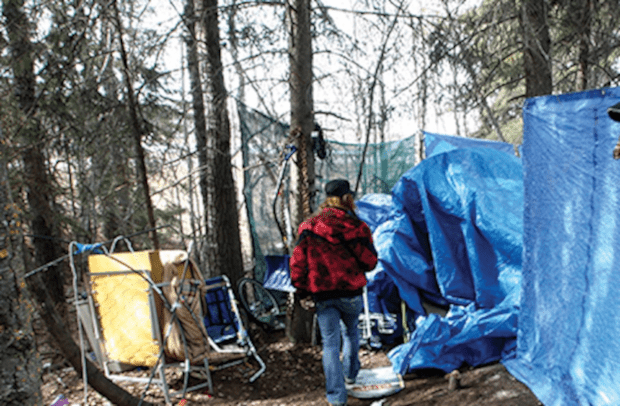
Brent Secondiak served as a front-line cop in the southern Alberta city of Medicine Hat for 25 years, and understands the futility of dismantling homeless encampments and otherwise dislodging itinerants who decide to bunk down in public spaces.

“We used to call it leaf-blowing … you just scatter the leaves, and the leaves end up somewhere else,” he says.

Share

Chowtown considers micro-shelters as homelessness soars

With Toronto’s homeless population doubling in the last three years and shelters overflowing, city councillors have voted to explore whether Toronto could operate micro shelters in underutilized Toronto Transit Commission parking lots.

At a meeting of the city’s economic and community development committee this week, Coun. Chris Moise put forward a successful motion, asking city staff to report back early next year on the feasibility of such a plan.

The idea came about after a TTC report found seven of its commuter parking lots were being underutilized, meaning they were on average less than half full during peak hours.

Share

Toronto Mortgage Delinquencies Have Tripled, Highest In Over A Decade

Toronto real estate is finding out it’s not invincible, after all. New Equifax data reveals Toronto CMA’s mortgage delinquency rate surged in Q1 2025. While rising delinquencies are a national story, this is very different from the normalization seen in other Canadian markets. Over the past few years, Toronto’s delinquency rate has more than tripled and reached a multi-decade high.


But Toronto’s a 3rd World Dumpster surely that counts for something!

Share

Number of Torontonians experiencing homelessness rises dramatically: new survey finds more than 15,000 without housing

Toronto has seen a dramatic increase in the number of people experiencing homelessness, according to a new city survey that recorded more than 15,000 residents without housing.

The point-in-time review, called the street needs assessment, looks to capture the scope of homelessness across shelters, encampments, hotel programs, respites, health-care and correctional facilities.

Share

Upcoming Census Asks Canadians for First Time If They Have Been Homeless

The next federal census will ask Canadians for the first time if they have experienced homelessness, which Statistics Canada says will “shed light on people who may face significant social and housing challenges.”

Statistics Canada will conduct the next Census of Population in May 2026, and has released its questionnaire ahead of time. The new questions contained in the census will “provide important data to measure Canada’s diversity and support communities across the country,” according to the agency, which was first covered by Blacklock’s Reporter.

Share

Cut housing prices? It will be all we can do just to slow their increase

Across Canada, you could hear the eyes of Gen Zers rolling. The headline in The Globe said it all: “CMHC gives up on comparing housing affordability to 2004 levels.”

Where a previous headline-making report by the Canada Mortgage and Housing Corporation, the federal agency whose stated purpose is to make housing affordable, had set out a series of policies aimed at returning housing costs, relative to income, to 2004 levels – by 2030 – the new report dismisses this as “no longer realistic.”

Share

Canada’s population standstill rattling Vancouver’s housing industry

For the first time in 74 years, the population of both B.C. and Ontario dropped by a few thousand people in the first months of 2025.

Sounds dramatic. And in some ways it is.

That’s even though the dip in the total number of people doesn’t make a statistical difference for either province. In the first quarter of this year, B.C. had 2,357 fewer residents than at the end of 2024; Ontario lost 5,644.


Don’t trust developers to act in anyone’s but their own best interests.

Share

Olivia Chow was never going to solve the housing crisis

The idea that Olivia Chow was going to be Toronto’s housing champion was always a fantasy. Many voters, especially younger ones, pinned their hopes on her after years of inaction by John Tory, which they wrongly ascribed to his more conservative ethos. In a quick election, Chow’s long-standing brand as a “progressive” helped carry her to victory.

When it comes to housing, however, it appears Chow is anything but.

Share

New Federal Report Links Immigration to Rising Housing Costs

So it turns out the government of Canada just released a report — and it’s not from some conspiracy blog or partisan think tank. No, this is from the Trudeau government’s own bureaucrats at Statistics Canada and Immigration, Refugees and Citizenship Canada. What does it say? Well, it quietly admits that something many of us have known for years and were called racists, bigots, and extremists for saying out loud is actually true: mass immigration has directly caused housing prices to skyrocket in Canada.

Share

‘Every year is worse’: Housing crisis reaches boiling point ahead of Quebec’s moving day

As Montreal prepares for its traditional moving day, the housing crunch reached alarming new heights — with hundreds of households still searching for a roof over their heads and advocates calling for urgent action.

“We see a lot of people who are low income and very vulnerable tenants struggling to figure out how to pay rents,” said Gary Saxe, executive director of Project Genesis, a housing rights organization based in Côte-des-Neiges. “And every year is getting worse as rents go higher and higher.”

Saxe said rents have gone up “astronomically” over the last few years — and it’s not just a problem on July 1, but all year round.

Share

How many homeless shelters in Forest Hill? The Kingsway?

Toronto wants to put homeless shelters in its suburbs. Neighbours say not so fast

On a Tuesday evening in April, south Etobicoke residents gathered around their laptops to spar over the issue that had been roiling their community for months — a city plan to build a homeless shelter at the end of a residential street.

Even through the sterile format of an online town hall, the intensity of each speaker was palpable. One man warned a shelter at 66 Third St., currently a parking lot at the end of a row of modest homes and a few newer builds, would bring homeless people into their New Toronto neighbourhood from elsewhere in the city. He feared occupants using street substances in public areas, such as the nearby lakeside park.


I’m going full communist on this issue, make the rich enjoy the vibrancy that homeless shelters bring!

There is no point giving a substance abusing addict shelter unless they have first received treatment for their addiction and proven themselves capable of supervised reintegration with society. Housing First as a strategy is the expressway to failure. Mandatory treatment is the solution.

Share

Failed New Zealand scheme is cautionary tale for Carney’s homebuilding agency: report

OTTAWA — Researchers with the Montreal Economic Institute say Canada’s new federal homebuilding agency is likely to overpromise and underdeliver, drawing a cautionary tale from down under.

The free-market think tank argues in a new study that New Zealand’s now-defunct homebuilding scheme KiwiBuild, a signature policy of Jacinda Ardern’s Labour government, shows why government bureaucrats shouldn’t try to play real estate developer.

Ardern is a ChiCom stooge so Ottawa will love her scheme.

Share

Young Canadians struggling to meet mortgage payments about seven times more than rest of population

Young Canadians aged 30 and under are failing to make payments on their mortgages at a rate seven times higher than the rest of the population, according to the latest data from the credit agency TransUnion.

The report, which analyzed credit trends for young consumers in the first quarter of 2025, found 29-year-olds and 30-year-olds had the worst mortgage delinquency rates at 1 per cent and 1.1 per cent, respectively -nearly 10 times the average national rate of 0.12 per cent. The average delinquency rate of mortgage holders between 18 and 30 was 0.84 per cent.

Share