
Trump is Right About the Link Between Sex Offenders and Homelessness

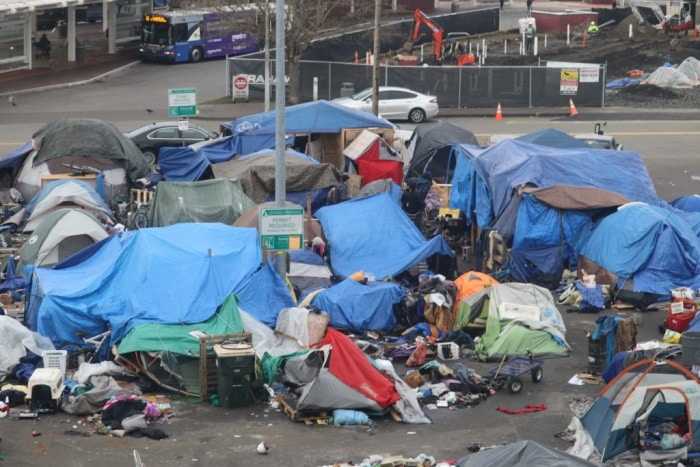
A recently announced funding opportunity for homelessness programs from the U.S. Department of Housing and Urban Development would reward communities that commit to public safety—including those that comply with the Sex Offender Registry and Notification Act. At first glance, this may seem like an unusual concern for homelessness policy. But it relates directly to a growing concern among policymakers about a strong link between sex offenses and homelessness—one that activists have attempted to obscure.

Share

We have normalized delinquent, disorderly behaviour in our cities for too long

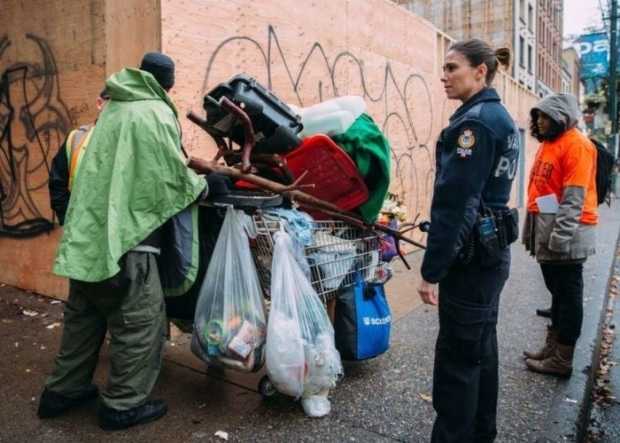
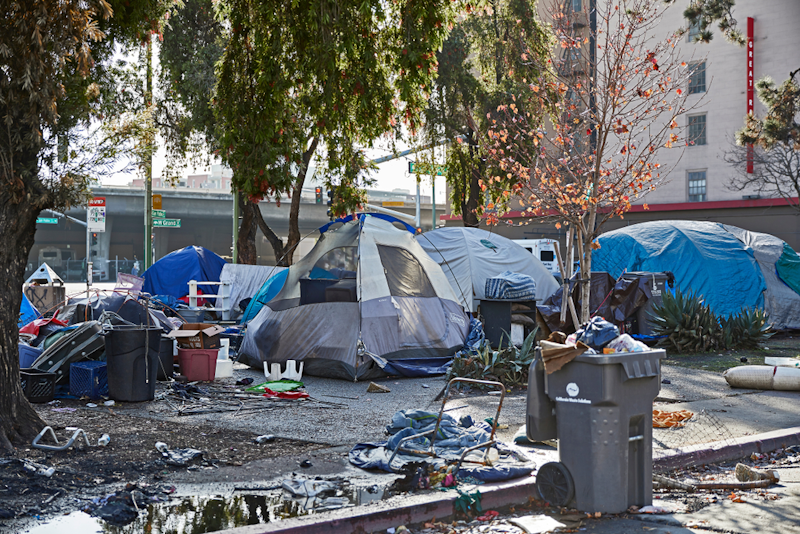
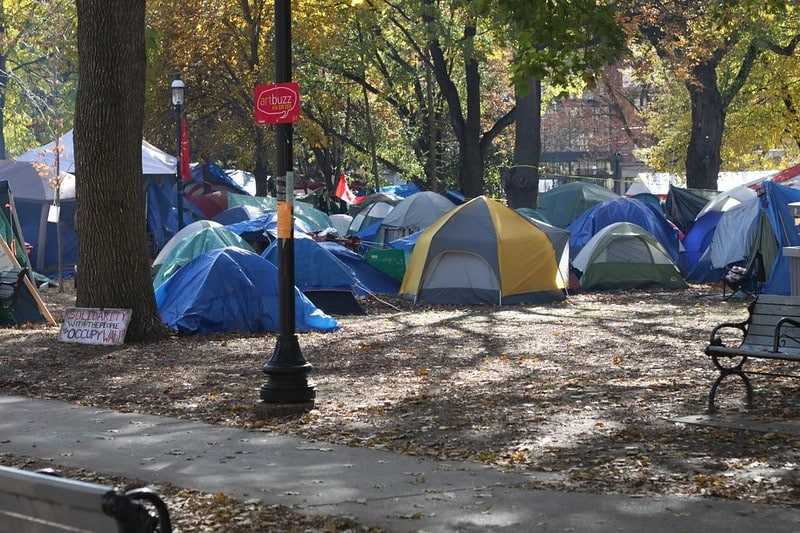
For years, a vocal minority of social activists have effectively dictated public policy in Canadian cities. Homeless encampments in parks and beside playgrounds have not simply been tolerated, but recharacterized as legitimate neighbourhoods to be protected. Indeed, drive around Toronto and you’ll see signs that read “I support my neighbours in tents” outside million-dollar homes, where the families who sleep inside ostensibly have private backyards to enjoy. (Lower-income families without backyards, by contrast, actually have to share public outdoor spaces with those “neighbours in tents.”)

Share

Trump Sets a New Direction on Homelessness Policy

Late last week, the Trump administration released revised scoring criteria for homelessness organizations seeking grant funding from the Department of Housing and Urban Development’s Continuum of Care program.

The move signals a new direction in federal homelessness policy. For more than a decade, HUD had supported “Housing First,” an approach that calls for permanent rental subsidies without behavioral expectations. Now, the agency will favor transitional work- and sobriety-oriented homelessness programs, in keeping with the administration’s July executive order.

Share

Affordability has become the only issue — everything else is just noise

Nothing corrodes political credibility faster than pretending a problem doesn’t exist. Especially when that problem is one that voters feel in their bones. And nothing angers voters more — or accelerates their distrust — than denying the reality that life is getting more expensive.

You can stall, spin, or distract from this fact. But eventually, the bills come due.

Last week offered two striking examples of just that.

Share

Surprise! Here’s Where Your Taxes to Help ‘Homeless People’ Actually

All over the country, big-hearted Americans have generously given their tax dollars to ostensibly “help the homeless.” California, swimming in tax dollars, lost track of more than $24 billion of homeless spending. Spending on homelessness is being plundered. A new study confirms that at least some of those tax dollars are being hijacked and delivered to extremist political groups.

Share

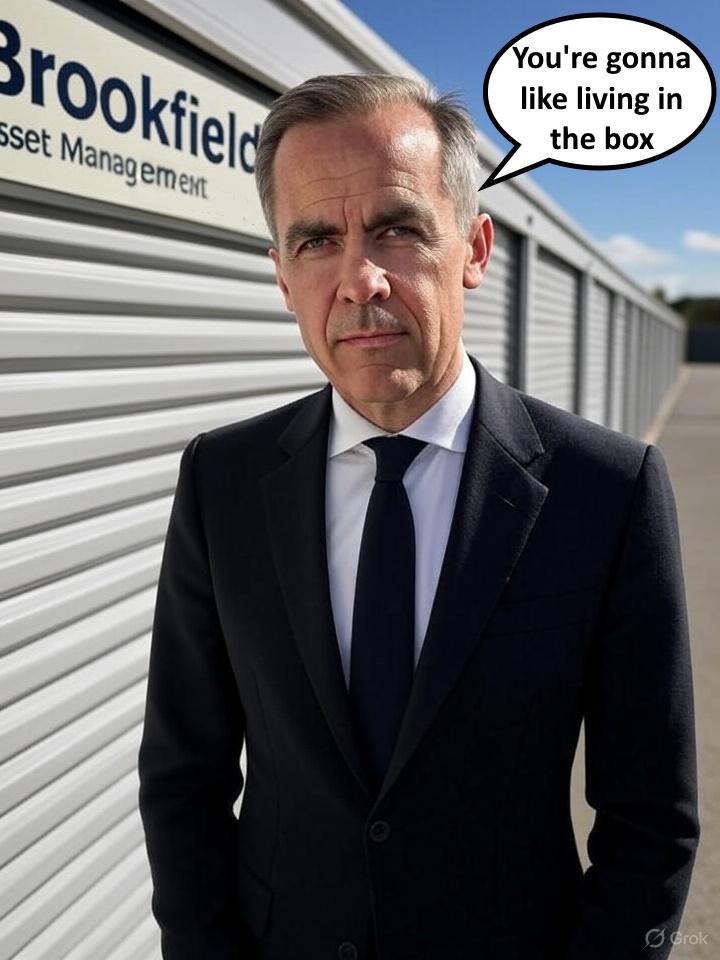
Mark Carney’s promise on housing was to build build build. What happened?

This week’s federal Budget sends a signal to Canadians that the government’s thinking on housing has evolved. Instead of trying to increase housing supply, it is placing greater emphasis on reducing housing demand.

The promises made in the Liberal platform to build more have been watered down: housing targets are being softened, and the government has adopted a hard line on immigration, making a direct linkage between population growth and housing shortages.


Immigration remains unsustainably high and while a downturn in housing demand is occurring a pronounced shortage is expected in 2 years or so.

Share

‘A literal shoe box’: Why some Toronto renters are avoiding new builds

267 square foot condo Toronto

Delphine Winton just recently moved into an apartment by Casa Loma built in 1936 — and she’s not looking back.

During her hunt for a new space, the 22-year-old student was strictly looking for older buildings, choosing to stay away from the sliding glass doors, lack of “character” and odd floor plans she’s seen in newer condos.

“God forbid you have enough room to put a dining table in,” she told CBC Toronto.

Share

Adam Zivo: Carney’s budget falls short on housing

The new federal budget makes it clear that Prime Minister Mark Carney is unprepared to tackle the national housing crisis. His proposed measures are half-hearted at best and fail to adequately address the overregulation throttling construction of new supply.

Canada has chronically built too little housing to meet burgeoning demand, which, according to the Canada Mortgage and Housing Corporation (CMHC), has led to a national shortage of approximately 2.6 million units. This is the primary reason why the inflation-adjusted price of an average Canadian home has doubled since the early 2000s — there are simply too many people bidding on scarce inventory.

Share

Newsflash to Mark Carney’s housing minister: house prices do in fact have to come down

For a faint second, it seemed as though federal Housing Minister Gregor Robertson had finally seen the light. During a House of Commons finance committee appearance recently, headlines reported that Robertson acknowledged what should be an obvious truth — that “the average home price must fall” to make housing affordable again.

This was welcome news for both the generations of Canadians locked out of home ownership and housing advocates, many of whom roundly lambasted the minister earlier this year when he insisted, multiple times, that housing prices don’t need to fall.

Share

Say goodbye to rent control, indefinite leases if Ontario passes housing proposal: advocates

Ontario’s planned new housing legislation could open the door to ending rent control and indefinite leases across the province, advocates warn after a recent proposal by Premier Doug Ford’s government.

The Ford government introduced a new housing bill on Thursday that it says would streamline approvals and let developers build homes more quickly.

But buried in the legislation is a proposal for “alternative options to lease expiry rules that could allow landlords to control who occupies their units and for how long,” including through adjustments to rental arrangements based on “market conditions, personal needs or business strategies,” according to the province’s briefing slides Thursday.

Share

Nearly 60% of Canadians support declaring states of emergency to clear homeless encampments: poll

Majority of Canadians (nearly 60 per cent) say they support communities declaring states of emergency in order to clear homeless encampments in parks and public spaces, according to a new poll.

Thirty two per cent of Canadians said they supported the tactic and 25 per cent said they somewhat supported it. “Men are more likely to support or somewhat support these initiatives than women,” according to the Nanos poll, published on Oct. 18. Three out of 10 Canadians opposed or somewhat opposed using a state of emergency to clear homeless encampments. Six per cent said they were unsure.

Share

Downtown Oshawa property manager struggling to stay afloat amid open drug use, vandalism

A downtown Oshawa property manager says she risks losing her family business, located opposite a non-profit agency that helps people who are homeless, amid ongoing issues on her property — including drug use, vandalism and public urination.

Lord Simcoe Place on Simcoe Street S. has been in Cindy Malachowski’s family for generations. But she says the building is bleeding tenants and has its highest vacancy rate in some 55 years.

“We had one paralegal service leave, saying, ‘We love the building, you’re a great landlord, but we watch people urinate outside our window and watch people shoot up,’” she said.


Mandatory treatment.

Share

Toronto renters should make about $44 hourly to comfortably afford a one-bedroom apartment: report

If a renter in Toronto wants to dedicate about a third of their paycheque to a one-bedroom apartment each month, they should be making roughly $44 an hour.

That’s according to Zoocasa, a real estate website, which crunched the numbers after several provinces recently raised their minimum wages to keep pace with the rising cost of living.

As of Oct. 1, Ontario raised that wage to $17.60 per hour, reflecting a $0.40 increase from the previous rate.

Share

9 in 10 Canadians Say They’re Worried About Housing in Canada: Poll

Nearly 90 percent of Canadians across generational, geographic, and political lines are concerned about the state of housing in the country, a new survey suggests.

Eighty-seven percent of the 3,900 adults polled last month say they are worried about affordability and availability of housing in Canada.

The survey conducted by Abacus Data in collaboration with the Canadian Real Estate Association (CREA) between Sept. 5 and 16, paints a picture of widespread concern across political affiliations with 87 percent of Conservative supporters, 86 percent of Liberal supporters, and 93 percent of NDP supporters expressing apprehension about the state of the market.

Share

Modular housing was a hit in Sweden but a bust in the U.S. How will Canada do?

Like Sweden, Japan and the U.S. before it, Canada will start experimenting with scaled-up factory-built housing next year — and it has plenty of lessons to learn from countries where the industry has already matured.

Build Canada Homes, the federal government’s newly launched homebuilding agency, aims to fund the construction of 4,000 modular homes on federal land across the country starting next year. The public-private project — currently limited to six cities — could eventually scale to build 45,000 homes, according to Ottawa’s announcement.

Share