There’s no end in sight for Canada’s housing crisis

Even if we double home building, buying a house is expected to become less affordable for nearly half the country

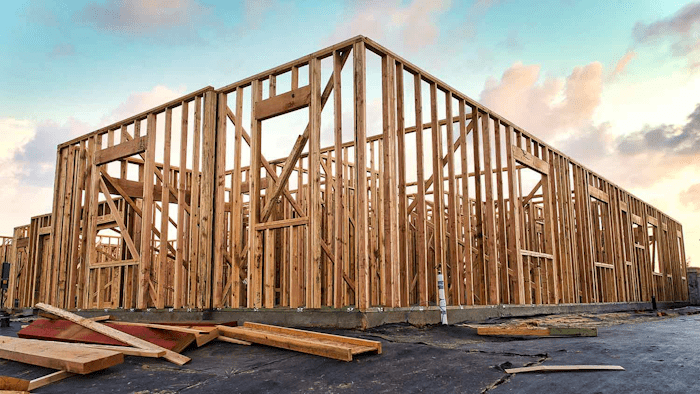
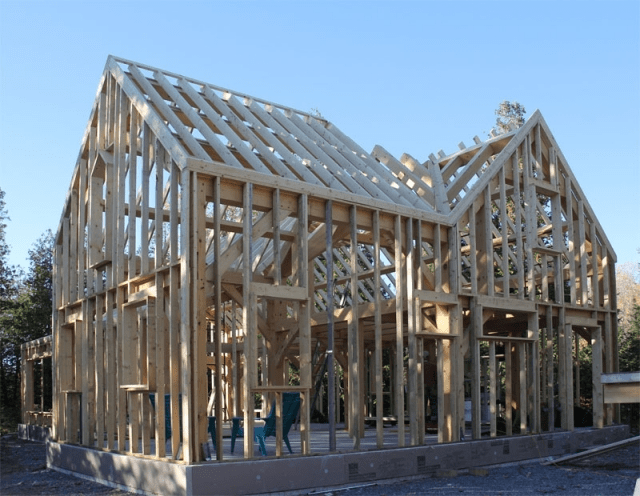
The federal government wants to build 480,000 homes a year over the next decade to restore housing affordability to pre-pandemic levels. That’s double our normal rate and a pace not seen since the Second World War.

They’ve put some money and resources behind the effort: Along with the new federal agency Build Canada Homes, Budget 2025 included other measures to ramp up activity, such as a fund only accessible to provinces that lower construction-related taxes.

Share

Affordable housing is out of reach everywhere in Canada

Sod Hut

The dream of home ownership is alive, but not well. According to a recent Abacus poll, nearly nine in 10 young Canadians, those aged 18 to 29, aspire to own a home – but a similar share worry about the current state of housing in Canada.

Of course, those worries are justified. According to our new study, in 2023 (the latest year of comparable data), typical homes on the market were unaffordable for families earning the local median income in every major Canadian city. It’s not just Vancouver and Toronto – housing affordability has eroded nationwide.


I trust our Corporate Titans to lead us out of this morass. Therefore the answer must include importing additional cheap foreign labour in their millions.

Share

Feds to reduce housing spending by half, build only 26,000 homes: Budget watchdog

Spending on housing programs will decline by more than half over the next four years with the federal government’s $13-billion signature housing initiative leading to the construction of just 26,000 new homes, a new parliamentary budget officer (PBO) report says.

The budget watchdog’s report specifically looks at Prime Minister Mark Carney’s new housing agency, Build Canada Homes, and how it and other programs will contribute to the construction of new homes between now and 2029-30.

The report concludes that the $9.8 billion the federal government is spending on housing initiatives in 2025-26 will decline to just $4.3 billion annually by 2028-29, a drop of 56 per cent.

h/t Mauser

Share

‘Barely holding on’: More than 1M Ontarians visited a food bank in last year

Ontarians continue to be using food banks at a record-breaking rate, with a new report warning the number of users grew for the ninth straight year as some families are “barely holding on.”

“What we’re seeing is really a greater depth of need in with the affordability crisis,” said Carolyn Stewart, CEO of Feed Ontario which released the report. “It’s really pushing more families from really that just getting-by area to barely holding on.”


We are being asked to support our replacement. Much pushback in the comments here.

What is rarely revealed is the number of “migrants” , “foreign students”,  “TFW’s” etc… who use the foodbanks.

From Google AI …

h/t Patti Jo

Share

Recent price declines won’t solve Toronto’s housing affordability crisis

House prices in Toronto are declining. But the city’s affordability crisis is far from over — and government policies will likely make it worse.

While most Torontonians know there’s a crisis, the numbers make it clear. According to our new study, in 2023 (the latest year of available data), a family earning the city’s median after-tax income ($60,510) had to save $216,240 (the equivalent of 42.9 months of its after-tax income) for a 20% down payment on a typical home of any type (single-detached, semi-detached, condominium). But even if that family could somehow clear this monumental hurdle, it then had to dedicate 110.2% of its after-tax income for monthly mortgage payments ($5,557) — a financial impossibility, unless the family can share housing costs (e.g. live-in tenants) or rely on financial support from elsewhere.

Share

Trump is Right About the Link Between Sex Offenders and Homelessness

A recently announced funding opportunity for homelessness programs from the U.S. Department of Housing and Urban Development would reward communities that commit to public safety—including those that comply with the Sex Offender Registry and Notification Act. At first glance, this may seem like an unusual concern for homelessness policy. But it relates directly to a growing concern among policymakers about a strong link between sex offenses and homelessness—one that activists have attempted to obscure.

Share

We have normalized delinquent, disorderly behaviour in our cities for too long

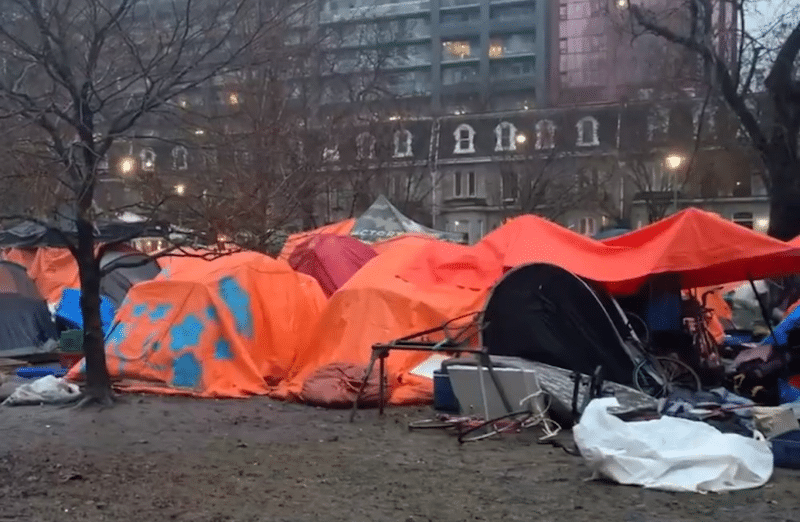
For years, a vocal minority of social activists have effectively dictated public policy in Canadian cities. Homeless encampments in parks and beside playgrounds have not simply been tolerated, but recharacterized as legitimate neighbourhoods to be protected. Indeed, drive around Toronto and you’ll see signs that read “I support my neighbours in tents” outside million-dollar homes, where the families who sleep inside ostensibly have private backyards to enjoy. (Lower-income families without backyards, by contrast, actually have to share public outdoor spaces with those “neighbours in tents.”)

Share

Trump Sets a New Direction on Homelessness Policy

Late last week, the Trump administration released revised scoring criteria for homelessness organizations seeking grant funding from the Department of Housing and Urban Development’s Continuum of Care program.

The move signals a new direction in federal homelessness policy. For more than a decade, HUD had supported “Housing First,” an approach that calls for permanent rental subsidies without behavioral expectations. Now, the agency will favor transitional work- and sobriety-oriented homelessness programs, in keeping with the administration’s July executive order.

Share

Affordability has become the only issue — everything else is just noise

Nothing corrodes political credibility faster than pretending a problem doesn’t exist. Especially when that problem is one that voters feel in their bones. And nothing angers voters more — or accelerates their distrust — than denying the reality that life is getting more expensive.

You can stall, spin, or distract from this fact. But eventually, the bills come due.

Last week offered two striking examples of just that.

Share

Surprise! Here’s Where Your Taxes to Help ‘Homeless People’ Actually

All over the country, big-hearted Americans have generously given their tax dollars to ostensibly “help the homeless.” California, swimming in tax dollars, lost track of more than $24 billion of homeless spending. Spending on homelessness is being plundered. A new study confirms that at least some of those tax dollars are being hijacked and delivered to extremist political groups.

Share

Mark Carney’s promise on housing was to build build build. What happened?

This week’s federal Budget sends a signal to Canadians that the government’s thinking on housing has evolved. Instead of trying to increase housing supply, it is placing greater emphasis on reducing housing demand.

The promises made in the Liberal platform to build more have been watered down: housing targets are being softened, and the government has adopted a hard line on immigration, making a direct linkage between population growth and housing shortages.


Immigration remains unsustainably high and while a downturn in housing demand is occurring a pronounced shortage is expected in 2 years or so.

Share

‘A literal shoe box’: Why some Toronto renters are avoiding new builds

267 square foot condo Toronto

Delphine Winton just recently moved into an apartment by Casa Loma built in 1936 — and she’s not looking back.

During her hunt for a new space, the 22-year-old student was strictly looking for older buildings, choosing to stay away from the sliding glass doors, lack of “character” and odd floor plans she’s seen in newer condos.

“God forbid you have enough room to put a dining table in,” she told CBC Toronto.

Share

Adam Zivo: Carney’s budget falls short on housing

The new federal budget makes it clear that Prime Minister Mark Carney is unprepared to tackle the national housing crisis. His proposed measures are half-hearted at best and fail to adequately address the overregulation throttling construction of new supply.

Canada has chronically built too little housing to meet burgeoning demand, which, according to the Canada Mortgage and Housing Corporation (CMHC), has led to a national shortage of approximately 2.6 million units. This is the primary reason why the inflation-adjusted price of an average Canadian home has doubled since the early 2000s — there are simply too many people bidding on scarce inventory.

Share

Newsflash to Mark Carney’s housing minister: house prices do in fact have to come down

For a faint second, it seemed as though federal Housing Minister Gregor Robertson had finally seen the light. During a House of Commons finance committee appearance recently, headlines reported that Robertson acknowledged what should be an obvious truth — that “the average home price must fall” to make housing affordable again.

This was welcome news for both the generations of Canadians locked out of home ownership and housing advocates, many of whom roundly lambasted the minister earlier this year when he insisted, multiple times, that housing prices don’t need to fall.

Share