
Canada’s housing market has frayed our social fabric. How did this happen?

If there’s one thing Canadians can reliably expect from our housing market as we approach the spring, it’s plenty of drama.

No matter which group the market ends up favouring – those in search of a home or those looking to offload one – the high costs and high stakes of Canadian real estate are guaranteed to stir up the kind of suspense typical of a bingeworthy TV show. By its very nature, our market-based housing system is adversarial. It pits buyers against sellers and renters against landlords in a battle for fairness and fortune. That our system produces winners and losers has become a perverse but accepted norm in our society; it’s just the way it works.

By virtually any other measure, however, it doesn’t work very well at all.

Share

Canada’s high housing costs are a preview of what Democrats want for America

Building houses is still affordable; it’s the layers of government that make buying a house prohibitively expensive.

I was driving last week in Toronto, Canada, with the radio on, half-listening to the usual talk‑show chatter, when a guest said something that made me turn up the volume. The host on CFRB 1010 in Toronto was interviewing Richard Lyall, the longtime president of the Residential Construction Council of Ontario. Lyall is not a politician, not an activist, not a partisan warrior. He’s a construction‑industry veteran who has spent more than three decades studying the cost of building homes in Canada. And what he said was stunning in its simplicity.

Share

CHARLEBOIS: The high cost of doing food business in Canada

With Tuesday’s release of new data from Statistics Canada, the conclusion is unequivocal: for the second consecutive month, Canada is posting the highest food inflation rate among G7 countries. Food inflation now stands at 7.3%.

Beef, nuts, pork, and even chicken are between 5% and 7% more expensive than a year ago. The only relief comes from eggs and fresh fruit, which are cheaper on a year-over-year basis.

Share

Canadians still want to own a home but they no longer believe it is possible

Here’s the truth about the housing crisis in Canada: it is no longer just a policy problem. It is becoming a political identity problem.

A new national survey conducted by Abacus Data in partnership with the Canadian Home Builders’ Association (CHBA) finds that Canadians have not given up on the dream of homeownership. In fact, it remains deeply rooted. Seven in ten non-homeowners (70%) still say they want to own a home someday, including nearly nine in ten young adults aged 18 to 29 (89%) and 80% of those aged 30 to 44.

Share

Carney’s GST credit tweaks won’t fix Canada’s affordability crisis

Prime Minister Mark Carney is embracing the politics of economic tinkering, offering a rebranded, narrowly targeted GST credit top-up when Canadians need broad, structural relief. While the government says it is responding to the affordability crisis, modest tweaks to the GST credit will not deliver the kind of meaningful, universal relief that cutting income taxes would.

Share

Randall Denley: Ford needs to lower housing prices fast and stop Ontario’s homebuilding ‘inferno’

Ontario’s home-building industry is in crisis, but there’s reason to hope that Premier Doug Ford will come to the rescue.

New home sales numbers in the GTA have never been worse than they were in 2025 and vacant inventory is stockpiling to the point where building more homes doesn’t make financial sense.

Share

This homeless man was put in a taxi to London. Here’s who paid the $241 fare

A Huron County man who often uses shelters to avoid sleeping outside says the Huron Perth Health Care Alliance paid his $241.42 taxi fare to London, Ont., to free up space in a shelter where he’d been staying in Clinton.

The man told CBC News he was sent to London on the promise there would be shelter space for him, which upon arrival turned out to not be the case.

Share

Canada can’t afford housing policy status quo any longer

According to a new report, it would take the average individual a jaw-dropping 44 years to save up enough money to afford a home in Toronto without financial help from family

Housing affordability is one of the most critical issues of our time. It is dividing generations, both economically and politically.

If you take a gander at new data from the Consumer Choice Center (CCC), it’s little wonder why housing is the top political issue for millions of young Canadians in poll after poll.

Share

As Trump Seeks to Curb Large Investors in US Housing, What’s the Situation in Canada?

The United States is experiencing a housing crunch, and one of President Donald Trump’s latest moves to address it involves banning large investment firms from purchasing single-family homes.

Canada has also been gripped by a housing affordability crisis in recent years, with soaring rents and home prices. But to what extent are institutional investors driving this trend, and how close is Canada to potentially restricting their ability to purchase homes?

Share

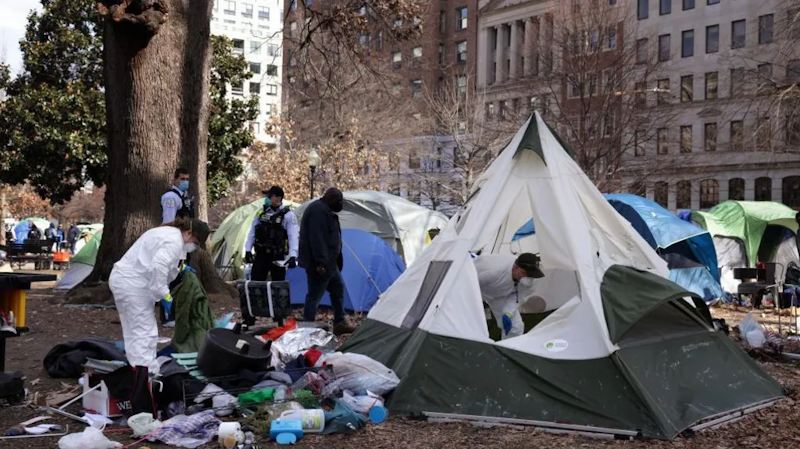
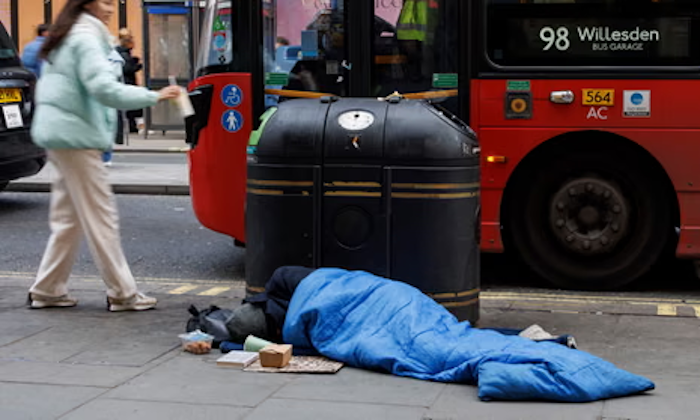
Ontario homelessness rates surge amid stagnant income assistance rates: report

More than 30,000 people using Ontario income assistance programs are finding themselves homeless anyway – a number that has dramatically increased since before the pandemic, according to a new report from a Toronto-based human rights organization.

And those surging homelessness rates are linked to stagnant income assistance as even the cheapest apartments tend to cost more than the entire monthly cheques from one major program, researchers from Maytree found.

Share

Toronto real estate: 100,000 jobs at risk as new home sales drop to lowest level in 45 years

Toronto-area new home sales just tanked to their worst year on record.

The situation is ”absolutely dire,” said the Building Industry and Land Development Association (BILD) in a Thursday report, noting the consequences are rippling through Ontario’s economy, which relies heavily on homebuilding for employment, future housing supply, and economic growth.


Just last year the Liberal Party created a pathway to citizenship for illegal aliens employed by law breaking construction companies.

The LPC literally rewarded these companies for hiring illegals.

Share

How Canada’s Housing Supply Is Falling Short of Immigration Targets, by the Numbers

Immigration policy in Canada is designed to make the rich richer.

Canada’s housing shortage is no longer a future concern—it’s already here. Despite Ottawa’s decision last October to scale back immigration targets from recent highs, population growth continues to outpace the number of homes being built.

There’s a widening gap between the number of people who need housing and the number of units actually coming online, particularly in the country’s largest cities. The data suggest affordability pressures are unlikely to ease without either a sharp rise in construction or a closer alignment between immigration levels and housing capacity.


Immigration policy in Canada is designed to make the rich richer.

Share

Poll shows Canadians lose faith in Ottawa’s housing plan

Canadians are increasingly pessimistic about housing, with most saying federal plans will not make homes more affordable or accessible, according to internal polling obtained by Housing Minister Gregor Robertson’s department.

Blacklock’s Reporter says the research found housing costs and shortages are now a dominant source of stress for households, with many believing home ownership is either unattainable or would require taking on crushing levels of debt.

Renters, the report said, are trapped in tight markets marked by low vacancy rates, rising prices and, in some cases, deteriorating living conditions.


Thank the Liberal Party.

Share

Small and remote towns across Canada are struggling with a surge in homelessness

In the small, northeastern New Brunswick city of Bathurst, homelessness was not even on the radar a few years ago. Today the city of 15,000 is working on opening a 40-bed homeless shelter.

The quaint southwestern Saskatchewan city of Yorkton recently expanded its new emergency shelter to meet growing demand.

And in the remote British Columbia community of 100 Mile House, the town council just bought a specialized firefighting bush truck, to mitigate the risk of out-of-control blazes from homeless people increasingly setting up camp in the surrounding forest.

Share

Donald Trump wants to ban institutional investors from buying single-family homes. Should Canada do the same?

U.S. President Donald Trump says he wants Congress to codify his plan to ban institutional investors like Blackrock from purchasing single-family homes as part of a push to restore affordability to the housing market.

Canada’s housing market is generally more expensive than the U.S. and ranks as one of the least affordable in the G7 when comparing income-to-price ratios.

Would a similar ban in Canada make sense?


You will own nothing and you will be happy … said some guy with a Nazi dad.

Share