Musk interviews Alice Weidel of Germany’s increasingly popular AfD for Germany party

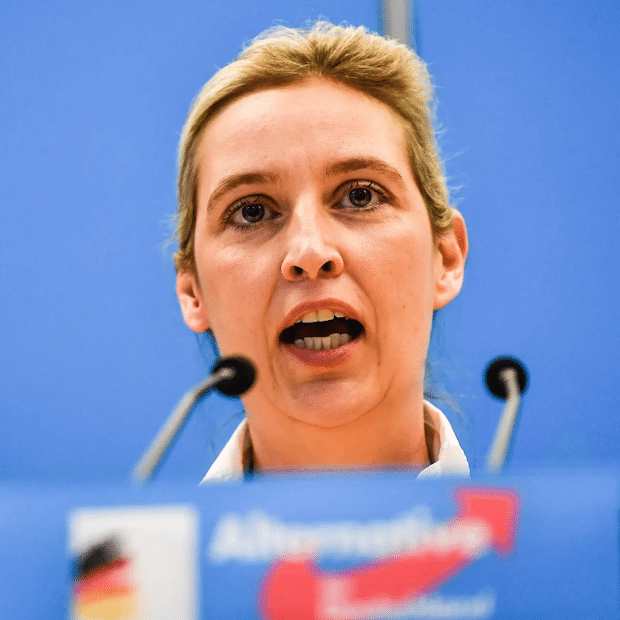
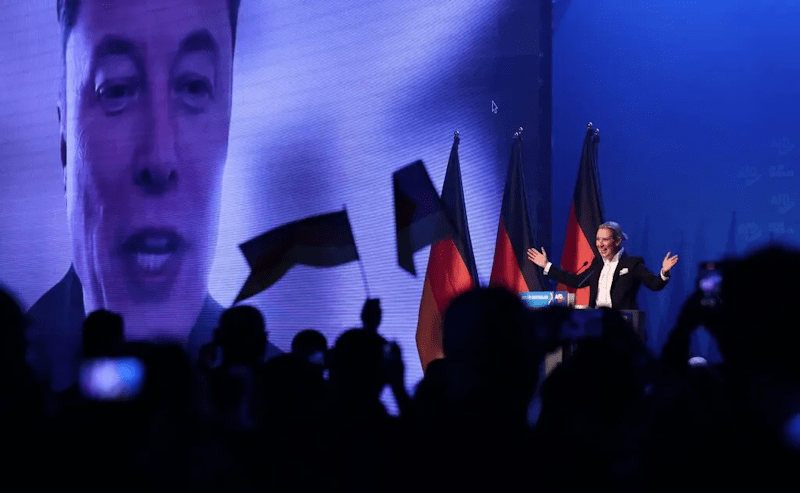
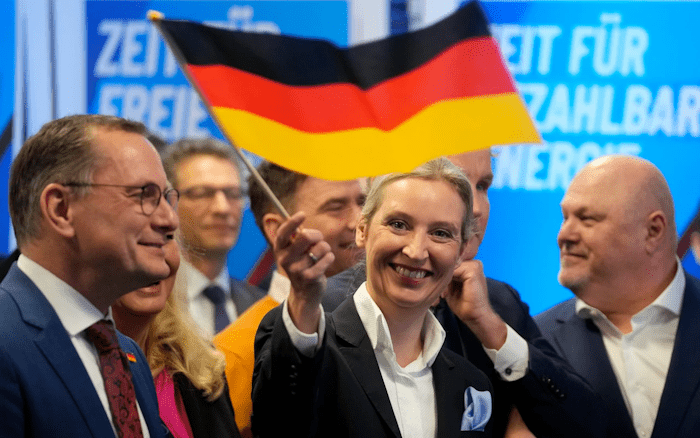
Elon Musk took his endorsement of Germany’s far-right party to the next level on Thursday, hosting a live chat with its frontwoman, Alice Weidel.

The 74-minute conversation ranged across energy policy, German bureaucracy, Adolf Hitler, Mars and the meaning of life.

The world’s richest man unequivocally urged Germans to back Alternative für Deutschland (AfD) in forthcoming elections.


This is the BBC’s headline – “Musk interviews German far-right frontwoman” – The “frontwoman” is gay, a fact that would be trumpeted in most stories but the Beeb will sink to any hypocrisy to protect their ideology.

Share

What’s Behind the AfD Party’s Rise in Germany

Critics call the populist party a threat to democracy, but many Germans aren’t buying it.

Elon Musk calls it the “last spark of hope” for Germany. European elites call it the heir to National Socialism. The debate over Germany’s reviled populist party, the Alternative for Germany (Alternativ für Deutschland, or AfD), is worth paying attention to, since it reveals modern Western society’s most fundamental belief structure. That debate is about to heat up further, when Musk holds a live conversation on X with the AfD’s leader. The elites, Musk says, “will lose their minds.”

Share

Elon Musk: Don’t liken the AfD leader to Hitler

Elon Musk has endorsed the hard-right Alternative for Germany (AfD) party in a guest opinion piece for the Welt am Sonntag newspaper, prompting its opinion editor to resign in protest.

In the article the tech billionaire explained why he had posted on the social media platform X last week that “only the AfD can save Germany”.

He wrote: “The portrayal of the AfD as right-wing extremist is clearly false, considering that Alice Weidel, the party’s leader, has a same-sex partner from Sri Lanka. Does that sound like Hitler to you? Come on!”

Share

Why the Media Spin on the German Christmas Market Attack Can’t Be Trusted

What the establishment media wants us to believe about any given event is usually more indicative of the media’s own world view than it is of the actual facts on the ground, and the vehicular attack on a Christmas market in Magdeburg, Germany on Friday is no exception. In fact, the media spin is even more pernicious than usual on this one.


By all appearances the perp was a fraud, a Muslim pretending to be an “Islamophobic” atheist to avoid deportation to Saudi Arabia where he faced prosecution for a criminal act.

Also note that the German establishment is so afraid of the AfD that they will go to great lengths to smear them and that will include massaging the narrative presented by a regime friendly press.

h/t SweetPea,AndyCanuck,Mauser,testsubjectx1,CurtisH

Share

AfD is the only party that can save Germany, Elon Musk says

Elon Musk has stirred up the German election campaign by endorsing the radical right-wing Alternative for Germany (AfD), saying that it is the only party that could “save” the country.

The world’s richest man, a sponsor and ally of Donald Trump, has already flirted with the populist right in a number of other countries, including Britain, Italy and the Netherlands.

Share

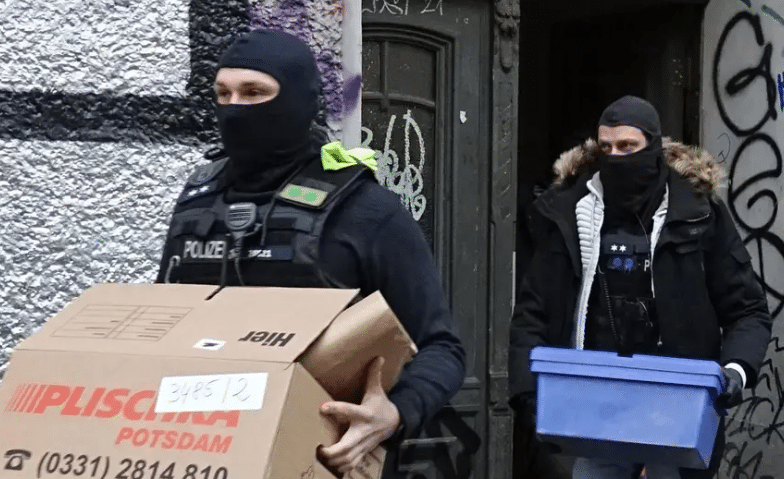
Report: German Intelligence Agency Weaponised To Crack Down on AfD

Conservative and liberal politicians in the eastern German state of Thuringia are calling for the resignation of the head of the state’s domestic intelligence agency, Stephan Kramer, who —according to a report—is abusing his public office to pursue a political rival, the anti-immigration Alternative für Deutschland (AfD) party.

An explosive article by the media outlet Apollo News revealed that Kramer has chosen to disregard legal and factual arguments while pursuing a campaign against the AfD, effectively weaponising his office for party political purposes. He has also been described as a “serious security risk” and threatened at least one of his employees with physical violence.

Share

German populists’ rise concerns EU Fat Cat

European Parliament President Roberta Metsola has voiced her anxiety about upcoming German elections and noted that a strong performance by populist parties could have significant consequences for Europe.

“What happens in Germany in the next four years has a major impact on the next four years of the European Union,” Metsola said in comments to the Funke Media Group, a major publisher of German newspapers.

The far-right Alternative for Germany and the recently founded left-wing, anti-migrant Sahra Wagenknecht Alliance (BSW) are expected to achieve historic results in the elections, which are expected to take place on February 23, 2025.

Share

Germany: AfD adds to string of successes in Brandenburg

The far-right Alternative for Germany (AfD) has once again seen strong electoral gains.

In the state election in Brandenburg, which surrounds Germany’s capital, Berlin, the AfD received 29.2% of the vote, almost 6% more than in 2019. However, it finished second to the incumbent Social Democrats (SPD), the party of German Chancellor Olaf Scholz, and has little prospect of participating in the new state government since all other parties have ruled out forming a coalition that includes the AfD.

That means they will win outright next go round.

Share

Brandenburg Elections: Another AfD Triumph on the Horizon

Right-wing anti-immigration AfD’s strong performance in last week’s German regional elections (first place in Thuringia and runners-up in Saxony) has evidently propelled the party to the top of the opinion polls in the state of Brandenburg.

The party received around a third of all votes in the elections on September 1st and, according to a recent survey, is set to do the same in another eastern state, Brandenburg, which is holding elections on September 22nd.

Share

The Germans Said “Enough!”

Anti-globalist nationalist-populist parties from the Right (AfD) and the Left (BSW) cleaned up in Germany’s regional elections in Thuringia and Saxony on Sunday, reflecting the discontent voters feel towards the current center-left governing parties. The results are a significant milestone in the ongoing struggle between Germany’s ruling elites and the people—something that is playing out in similar ways across the Continent.

While the media would like to characterize these elections along Right/Left—or East/West—lines, the truth is that these elections reflect the divide between the elites and ordinary people.

Share

How Gen Z voters are driving the rise of the AfD in Germany

Exit poll data shows not only a remarkable voting trend among under-25s but a transformation in the way general voters view the hard-right party

The resounding defeat of Germany’s ruling parties in Saxony and Thuringia has inevitably prompted a great deal of gossip-mongering about whether the chancellor might be ousted or his coalition might finally fall apart.

The conjecture is not completely futile. Even if the government is likely to hold together through sheer inertia and fear of something worse, there is certainly plenty of mischief afoot.

Share

AfD ‘ruining’ Germany, Olaf Scholz warns after hard-right victory

Olaf Scholz, the German chancellor, is struggling to hold his coalition government together after what he described as a “bitter” victory for the radical right in the eastern state of Thuringia.

The Alternative for Germany (AfD) party, after a campaign spearheaded by the unapologetically ethno-nationalist Björn Höcke, won 32.8 per cent of the vote on Sunday. AfD was more than nine points ahead of its closest rival.

It was the first time a hard-right party had come first in an election at this level since the Nazi era.

Share