
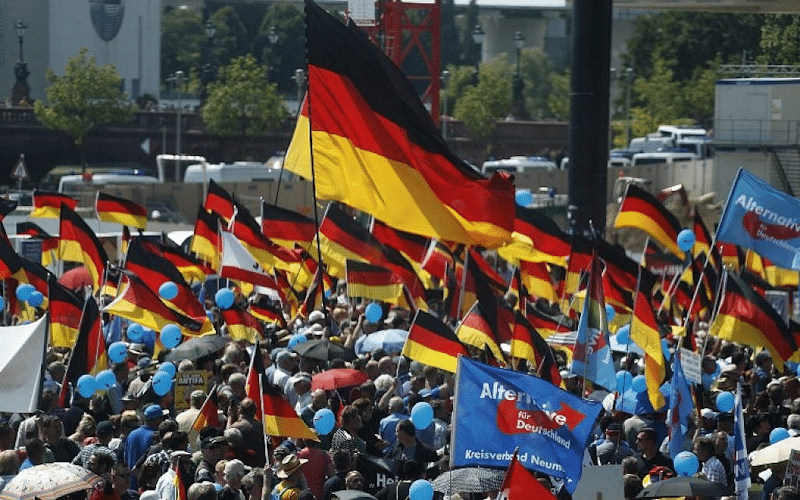
After winning the most seats in the recent Thuringia regional election and the second-most in the Saxony vote, the far-right AfD is hoping for further gains in the eastern German state of Brandenburg.
After winning the most seats in the recent Thuringia regional election and the second-most in the Saxony vote, the far-right AfD is hoping for further gains in the eastern German state of Brandenburg.

Right-wing anti-immigration AfD’s strong performance in last week’s German regional elections (first place in Thuringia and runners-up in Saxony) has evidently propelled the party to the top of the opinion polls in the state of Brandenburg.
The party received around a third of all votes in the elections on September 1st and, according to a recent survey, is set to do the same in another eastern state, Brandenburg, which is holding elections on September 22nd.
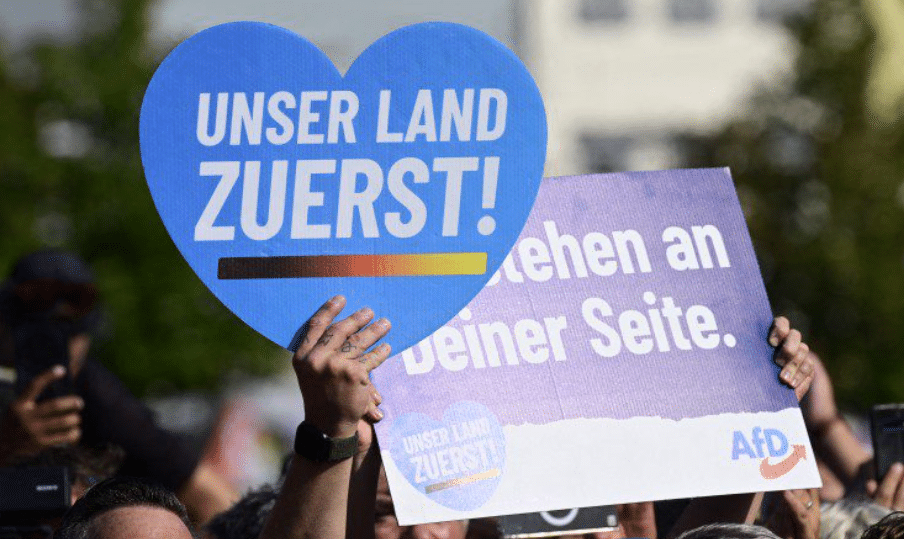
Anti-globalist nationalist-populist parties from the Right (AfD) and the Left (BSW) cleaned up in Germany’s regional elections in Thuringia and Saxony on Sunday, reflecting the discontent voters feel towards the current center-left governing parties. The results are a significant milestone in the ongoing struggle between Germany’s ruling elites and the people—something that is playing out in similar ways across the Continent.
While the media would like to characterize these elections along Right/Left—or East/West—lines, the truth is that these elections reflect the divide between the elites and ordinary people.
Exit poll data shows not only a remarkable voting trend among under-25s but a transformation in the way general voters view the hard-right party
The resounding defeat of Germany’s ruling parties in Saxony and Thuringia has inevitably prompted a great deal of gossip-mongering about whether the chancellor might be ousted or his coalition might finally fall apart.
The conjecture is not completely futile. Even if the government is likely to hold together through sheer inertia and fear of something worse, there is certainly plenty of mischief afoot.

Olaf Scholz, the German chancellor, is struggling to hold his coalition government together after what he described as a “bitter” victory for the radical right in the eastern state of Thuringia.
The Alternative for Germany (AfD) party, after a campaign spearheaded by the unapologetically ethno-nationalist Björn Höcke, won 32.8 per cent of the vote on Sunday. AfD was more than nine points ahead of its closest rival.
It was the first time a hard-right party had come first in an election at this level since the Nazi era.

Germany’s anti-immigration party Alternative for Germany (AfD) is on course for victory in the eastern state of Thuringia, according to projections.
The AfD is set to win 32.8% of the vote, says a projection for public broadcaster ARD, nine points ahead of the conservative CDU, and far in front of Germany’s three governing parties.
If confirmed, it would give the far right its first vote win in a state parliament since World War Two, although it has little hope of forming a government in Thuringia.
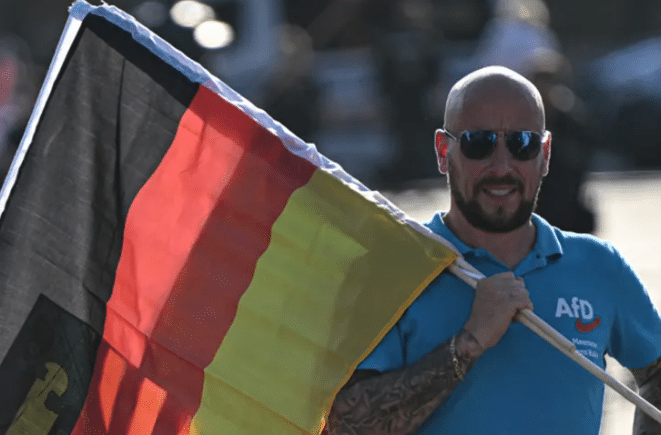
The far right is on the cusp of winning the most votes in German state elections for the first time since the Nazis.
For some in Germany, the rise of Alternative for Germany (AfD) is a literal nightmare.
But others, particularly in the east, say the AfD is a chance for change.
All year, the temperature has been rising in German politics and Sunday’s vote in Thuringia and Saxony may be the boiling point.
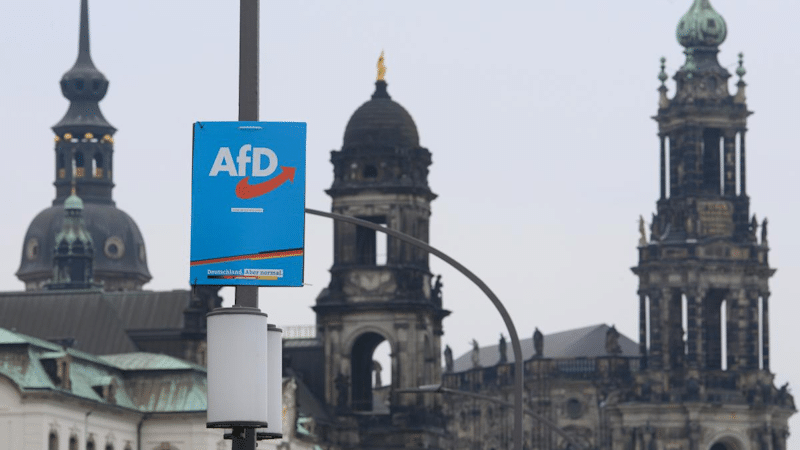
The anti-immigration, anti-globalist Alternative für Deutschland (AfD) party is set to achieve its best ever election result as it contests two regional elections in the states of Saxony and Thuringia on Sunday, September 1st.
If confirmed, such results would signal a spectacular rejection of Germany’s ruling parties and could strengthen populist voices across Europe.

Anna Wenske, 69, worked for decades at the national theater of East Germany, where she was born and still lives. “After the reunification, everything went kaput,” she said. She lost her job and her savings; it took her years of part-time work to reach a kind of equilibrium.
Now she resents what she considers the easy path offered to refugees while Germans suffer.
“Too many people exist on this planet and everyone wants to come to us,” she said in a sunny Weimar, “and we tell everyone welcome and we have nothing left for ourselves.” When it comes to Ukraine, she said, President Vladimir V. Putin of Russia lied when he said he would not invade, “but I don’t trust the United States any more than Russia.”
According to the NYTimes voting for your own best interests is a Nazi thing.
Walking through Dresden this weekend, I was bombarded with political messaging. Posters on every lamppost promise anything from “top education” to “law and order” — whatever it takes to draw voters back from the political fringes ahead of regional elections.
The three German states of Brandenburg, Saxony and Thuringia will elect new parliaments in September, and in all three polling suggests that up to half of voters might opt either for the Right-wing Alternative für Deutschland (AfD) or the Left-wing populists of the Bündnis Sahra Wagenknecht (BSW).
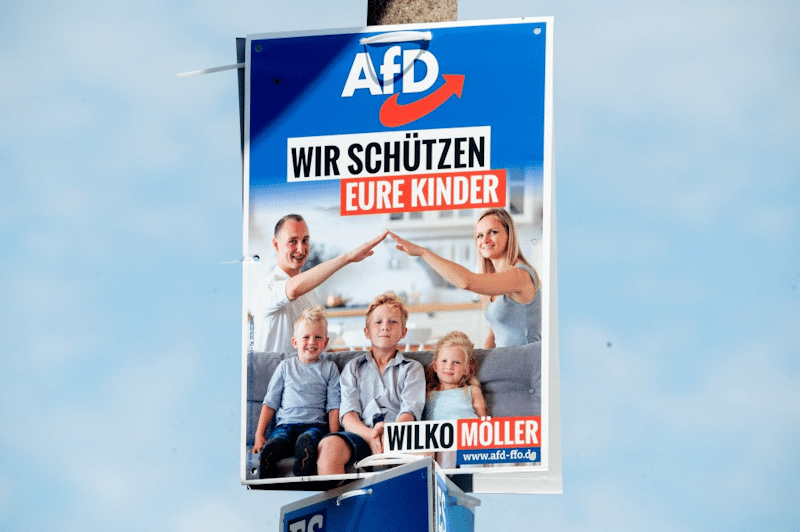
Germany’s hard-right AfD party has been accused of employing Nazi symbolism in an election campaign poster featuring a man and a woman with arms outstretched in what critics have said clearly resembles a Hitler salute.
Their fingertips meet to form a roof over three fair-haired children alongside the slogan “We’ll Protect Your Children”.
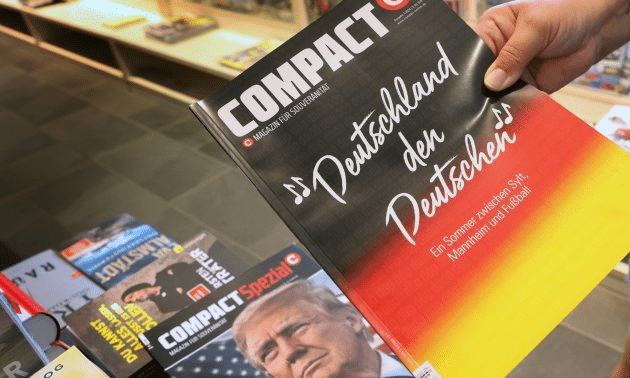
The outrage caused by the German interior ministry’s decision to ban the right-wing Compact magazine is not dying down as more and more legal experts weigh in on the subject. It is not surprising that lawmakers of the leftist-liberal government are pleased to see a government-critical media outlet silenced, but experts on constitutional law have made it clear that the ban amounts to nothing less than an attack on the freedom of the press.

I taught humanities to hundreds of students at two international schools in Germany over a period of several years. My primary subject was history and each time it came to covering World War II, British kids were excited; American kids were broadly well-informed; and the German kids dreaded it. Their heads dropped at the very mention of the unit. I vividly remember Laura, an 8th grader, say, “We’re the bad guys and everyone hates us. We did nothing—our parents weren’t even born.” That is quite a weight to carry before a single class had been taught.

The donation account for the far-right Alternative for Germany (AfD) party was shut down on Wednesday after activists gathered names on a petition in opposition to the populist group, media reported on Thursday.
The civil initiative Omas gegen Rechts, which translates as Grannies against the Far-right, collected more than 33,000 signatures in an online petition, which they then handed over to the Berliner Volksbank and called for the bank to close the party’s donation account.
The German newspaper TAZ first reported on the account closure on Wednesday, with events later being confirmed by other outlets on Thursday.
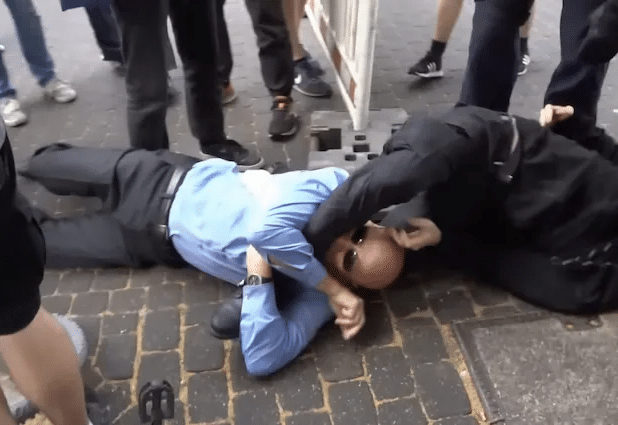
A hard-Right German politician bit a protester on the leg as tens of thousands gathered for a march against his party.
Stefan Hrdy of the Alternative for Germany (AfD) party was driving to his party’s event in the west German city of Essen when the street was blocked by some 150 protesters.
The former parliamentary candidate was filmed being told by police he should find an alternative route.
Faschisten stellen sich vor das Auto des AFD-Politiker Stefan Hrdy in Essen und er kommt nicht voran. Also will er zu Fuss weiter gehen, doch die Faschos wollen auch das verhindern. Und was passiert dann ?
…Cooler Typ so ein EX GSG 9 pic.twitter.com/ZYaWg8uCBF— Rolly aus dem Ruhrgebiet (@Ruhrpottler3005) June 30, 2024
