When Health Canada introduced its front-of-package (FOP) nutrition labelling system — marked by a simple magnifying glass icon highlighting high levels of sodium, sugar or saturated fat— it did so with a clear objective: to empower consumers to make healthier choices quickly, at a glance. But as with most public health interventions, the real question is not intent — it is impact.
“Food Insecurity”
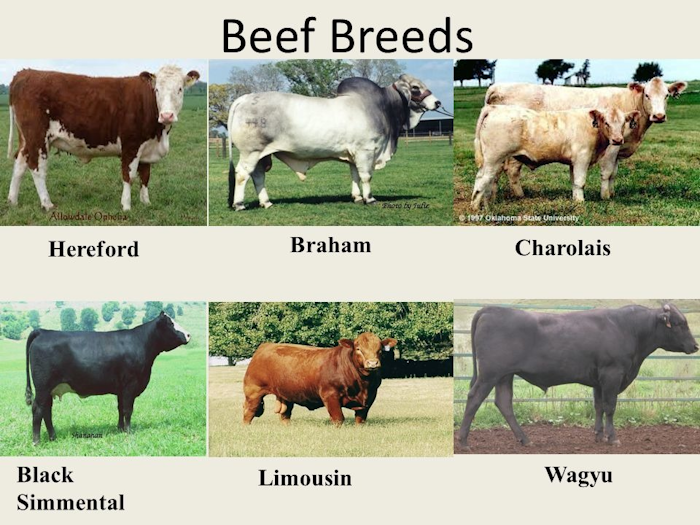
CHARLEBOIS: Cheap imports won’t fix Canada’s beef problem
The Canadian Cattle Association has launched a petition urging Ottawa to restrict beef imports as trade negotiations with Mercosur — Brazil, Argentina, Uruguay, and Paraguay — move forward. These countries are among the world’s lowest-cost beef producers, and a deal could increase the volume of cheaper beef entering Canada.
The concern from producers is understandable. Canadian ranchers are operating in a high-cost environment, facing rising input costs, regulatory pressures, and a tight cattle supply. But the reaction also reveals a deeper issue: Canada’s beef affordability problem is not primarily about imports — it is about structural constraints at home.
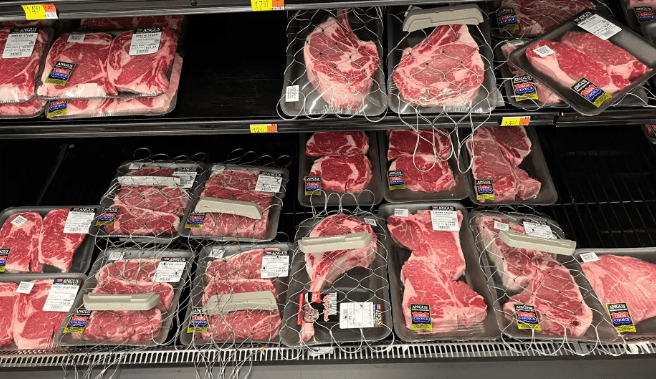
CBC investigation finds grocers Loblaw, Sobeys overcharging for underweight meat — again
A CBC News secret shopping investigation has uncovered — once again — several Loblaw-owned and Sobeys-affiliated stores overcharging for underweight meat, despite claims last year the grocery giants had taken steps to rectify the problem.
“People are getting ripped off,” said Terri Lee, a former inspector with the Canadian Food Inspection Agency (CFIA). Lee, who spent 24 years with the federal food regulator before retiring in 2021, estimates misweighed meat costs Canadian shoppers millions of dollars annually.
Charlebois: Quebec, maple syrup and the sticky truth about food fraud
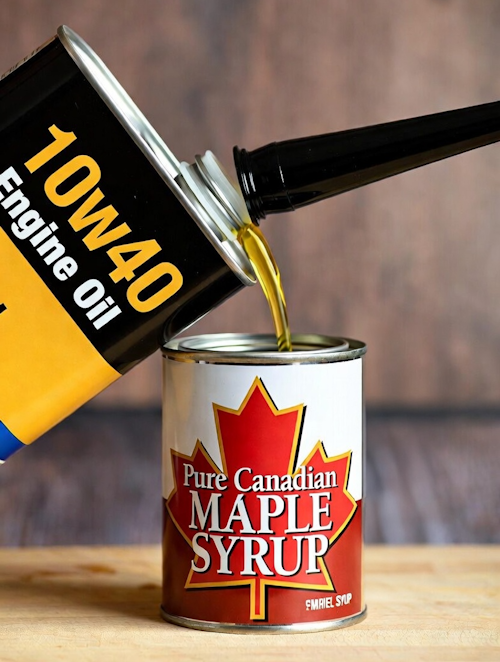
A recent investigation has shaken one of Quebec’s most iconic industries.
Authorities are examining allegations that maple syrup sold in grocery stores —linked to a Quebec producer — may have been adulterated with cheaper sugars while still being marketed as pure.
Products have been pulled, regulators are involved and Canadians are left asking a familiar question: How did this go unnoticed?
Maine’s Neighbor To The North Has A Sticky Food Scandal Pancaking Across Its Country
A Canadian radio reporter thought the “pure maple syrup” he’d just bought tasted weird so he followed his hunch.
He took it for testing to a food lab, which determined the syrup was half cane sugar.
The maple farmer who distributed the doctored syrup is now a potential target of a class-action lawsuit from consumers across Canada.
"Food fraud is a $50 billion problem in North America. We’ve all been victims at least once—through fraud, counterfeiting, mislabeling, adulteration, you name it. And without the media, we wouldn’t know about the maple syrup scandal unfolding right now."
More about this on our… pic.twitter.com/mH02duFrSv
— The Food Professor (@FoodProfessor) April 10, 2026
h/t handy n handsome
Food security expert urges Canada to invest in agriculture, not just military capabilities
An international expert in global food security is visiting Canada this week to urge officials to continue investing in agriculture, warning that the continued Iranian blockade of the Strait of Hormuz has upended supply chains in the middle of planting season in many countries.
Ismahane Elouafi, the executive managing director of the world’s largest publicly funded agricultural research network, CGIAR, said the closing of the strait is driving up the prices of oil and fertilizer, which means less productivity, higher costs for farmers and rising food prices − economic pain that will be felt a few weeks from now.
The Sticky Truth About Food Fraud
A recent investigation has shaken one of Quebec’s most iconic industries. Authorities are examining allegations that maple syrup sold in grocery stores—linked to a Quebec producer—may have been adulterated with cheaper sugars while still being marketed as “pure.” Products have been pulled, regulators are involved, and once again, Canadians are left asking a familiar question: how did this go unnoticed?
Maple syrup is not just another product. In Quebec, it is culture, identity, and economic pride. But this case isn’t really about syrup.
Cost of living hitting food banks so hard in Carney’s Canada that visits are limited to once a month

Food banks across the country are being forced to scale back services at a time when Canadians need them the most, due to limited supplies.
In southern Saskatchewan, the Moose Jaw & District Food Bank plans to limit households to just one visit a month instead of the usual two, beginning April 1. They will also reduce the amount of food handed out to each visitor.
“Our resources aren’t keeping up with the demand,” said executive director Jason Moore in an interview with CTV Newsthis week.
h/t Patti Jo
CHARLEBOIS: How Canadians are coping with food costs should be concerning

We are seeing a gradual erosion of quality, choice and dietary diversity. A quieter form of food insecurity, unfolding in real time.
Surveys after surveys tell the same story: Canadians are struggling at the grocery store. And yet, despite the mounting evidence, the situation is not improving.
Our lab has been tracking consumer sentiment on food affordability for years. The latest results, based on a national survey of more than 3,000 Canadians conducted earlier this month, in partnership with Caddle, confirm what many already feel at the checkout: The pressure is not easing.
CHARLEBOIS: Why the Iran conflict could hit Canadian grocery bills

U.S. President Donald Trump seems to prefer launching major geopolitical moves when markets are closed – for a simple reason: markets react.
The United States abducted Venezuelan President Nicolás Maduro on Jan. 3 – a Saturday. The joint U.S.-Israeli strikes on Iran began Feb. 28 – also a Saturday. It gave markets time to digest the shock. But markets eventually reopen.
Canada’s reliance on the U.S. for our food is a recipe for disaster

Last week, U.S. President Donald Trump mused about blocking the opening of the Gordie Howe Bridge – built to ease the movement of products, including food, into our country. It highlighted an existential problem: Canada is dependent on the United States for access to nutritious foods, like fruits and vegetables.
Our research team has been tracking the global flows of fresh fruits and vegetables into Canada to assess our country’s food security, and we now have the numbers that should sound the alarm, and inspire the country to take action. The United States potentially controls as much as 82.9 per cent of all fruits and vegetables that enter into Canada. Not only do we import much of our fruits and vegetables from the U.S. – a whopping 98 per cent of our imported lettuce is grown there – but even produce from other countries largely travels here via American highways and shipping ports.
I don’t know why but I get a “The Choco ration has been increased from 25 to 20 grams” vibe from the authors.
Food Wars

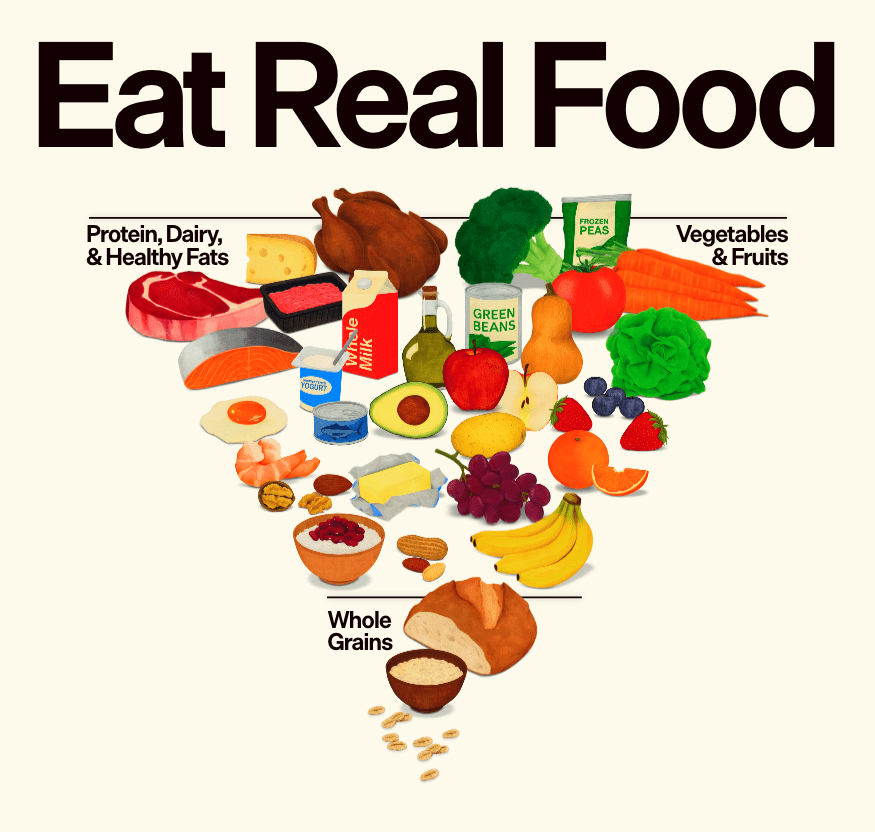
The federal government has been making recommendations on what we should eat since 1980. Since 1992, those recommendations have been visually summarized in the form of a pyramid.
The problem: Ever since the Food Pyramid was published, Americans have been getting progressively fatter. Trump administration officials think they know why: We have been getting bad advice. So, the administration has produced an “inverted pyramid,” making recommendations that in many cases are the exact opposite of the previous ones.
CHARLEBOIS: The U.S. redesigned its food guide while Canada keeps lecturing

Rather than lecture its citizens about food, the United States redesigned the system around how people actually eat
The “new” Canadian Food Guide was introduced on Jan. 22, 2019 – seven years ago.
At the time, Health Canada committed to revising it within five years. That revision was due in 2024. It never happened. The guide remains frozen in time, untouched by inflation, affordability pressures, or a rapidly evolving food system.
This is excellent. Canada needs this, too. @fancypants_s https://t.co/VzDYgJ8hhs
— Patti Jo (@TheSupeHero) January 7, 2026
h/t Patti Jo
CHARLEBOIS: Canadian milk changed on January 1. Did you know?

As of January 1, 2026, milk sold in Canada contains more vitamin D. This is neither a new product nor a marketing innovation, but rather a quiet regulatory adjustment that has largely gone unnoticed by the public.
Not only is food more expensive, it is also becoming ultraprocessed garbage

In a historic case, the city of San Francisco is suing 10 major ultraprocessed-food companies, alleging that they have saddled governments with excessive public-health costs.
… The suit accuses manufacturers of knowingly selling products that harm consumers while marketing them as being “wholesome” or “convenient” in a violation of California’s public-nuisance and unfair-competition laws.