Canada’s got a grocery competition problem. Are local food hubs the answer?

Canada’s got a grocery competition problem. Are local food hubs the answer?

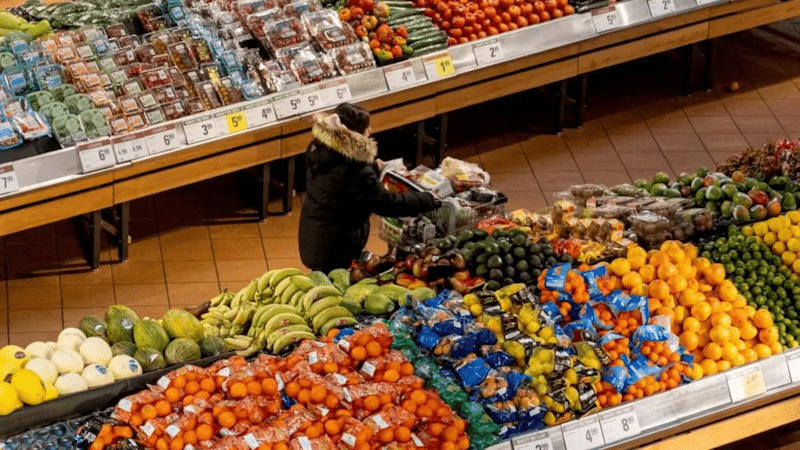
About 20 years ago, P.E.I. farmer Rose Viaene watched her husband David take their tractor out into their farm fields and destroy their garlic crop — an act of defiance born out of frustration with Canada’s large grocery chains.

Viaene said before then, their garlic was sold across Atlantic Canada, including at Sobeys and Real Canadian Superstore. But that relationship changed when grocery retailers began importing cheaper garlic from China.

The large retailers were still open to buying garlic from the farmers, but Viaene said the offer was too low — just 50 cents per pound when it cost the farm $7 per pound to produce.


Corporate concentration.

Share

CHARLEBOIS: Food safety needs an AI upgrade

CHARLEBOIS: Food safety needs an AI upgrade

Every summer, Canadians are reminded that fresh produce, while essential to a healthy diet, can also pose food safety risks. This year’s Cyclospora outbreak in the United States has already sickened more than 1,600 people, making it one of the largest in recent memory. Yet despite its scale, investigators have not identified the specific fruit, vegetable, farm or supplier responsible. Canada’s food regulators have appropriately resisted calls to suspend produce imports because there is simply no scientific evidence pointing to a particular commodity or country of origin. From a regulatory standpoint, that is the right decision. From a communications standpoint, however, we have an opportunity to do much better.

Share

The pain at the grocery store is real. Can Ottawa’s $3-billion food strategy actually help Canadians deal with food inflation

The pain at the grocery store is real. Can Ottawa’s $3-billion food strategy actually help Canadians deal with food inflation

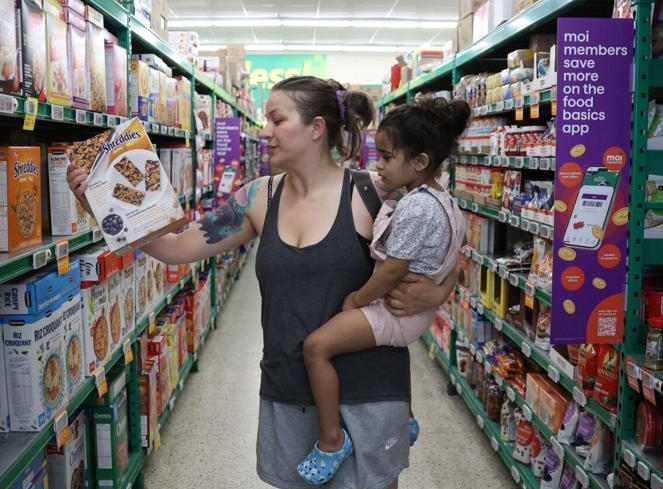
Lea Reambeault can walk to three discount supermarkets in minutes from her Toronto apartment above a Food Basics store. Still, grocery shopping is a chore she often leaves to her partner out of anxiety.

The 36-year-old mother of three has been out of work since the birth of her youngest daughter a year ago. Her family of five — squeezed into a two-bedroom unit — relies on her partner’s roughly $80,000 annual income and spends about $600 a week on groceries and household essentials. Sometimes the couple has to put off rent to keep food on the table.

Average tattoo cost by size. My guess 500 to 1500 bucks. h/t Hermes

Share

Canadian food insecurity climbs to 24% as cost-of-living pressures persist

Canadian food insecurity climbs to 24% as cost-of-living pressures persist

A new 2026 poverty report card has been released by Food Banks Canada (FBC) showing a 24% food insecurity rate — the highest the country has seen in decades, says one expert.

The expert, none other than the Food Professor, or Sylvain Charlebois, who runs an agri-food lab at Dalhousie University, expressed the severity of this statistic on X — “Nearly one in four Canadians is struggling to put food on the table.”

Share

LILLEY: Mark Carney’s grocery payment an admission Canada’s economy is failing

LILLEY: Mark Carney’s grocery payment an admission Canada’s economy is failing

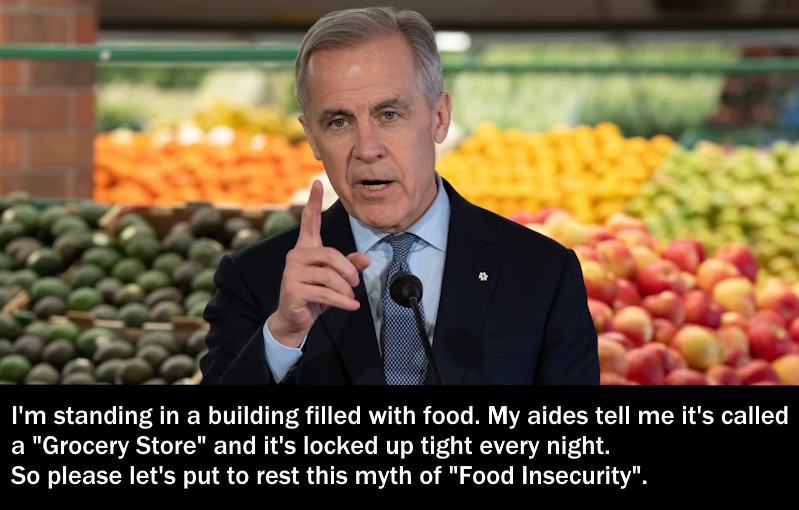
Mark Carney visited a Brampton grocery store Friday to celebrate his government’s total failure on affordability.

The Prime Minister was there to promote the first payment of the new Groceries and Essentials Benefit program, essentially, the rejigged GST rebate.

Now, Carney’s supporters may say this is a victory, it is the government helping low income Canadians.

Share

Sylvain Charlebois: Food Tax Reform Keeps Colliding With Governments’ Need for Revenue

Sylvain Charlebois: Food Tax Reform Keeps Colliding With Governments’ Need for Revenue

Quebec is poised to become the second province in Canada in recent weeks to roll back provincial sales taxes on food-related items, reinforcing a broader truth governments increasingly struggle to defend: taxing food has always been a flawed way to shape consumer behaviour.

Unlike Manitoba, however, Quebec is taking a broader and arguably more pragmatic approach by extending relief to healthier ready-to-eat products and convenience foods.

Share

CHARLEBOIS: Dispelling Canada’s grocery tax illusion

CHARLEBOIS: Dispelling Canada’s grocery tax illusion

Quebec is poised to become the second province in Canada in recent weeks to eliminate provincial sales taxes on food-related items. Unlike Manitoba, however, Quebec is taking a broader and arguably more pragmatic approach by extending relief to healthier, ready-to-eat products and convenience foods. That distinction matters. Too often, public policy assumes that only “junk food” is taxed, when in reality many prepared and nutritious options remain subject to provincial sales taxes simply because they are convenient. Quebec’s new measure, expected to cost more than $100 million annually, acknowledges an important reality of modern food consumption: Convenience is no longer a luxury. For many Canadians, it is a necessity.

Share

Scott Stinson: ‘No Tax on Food’ is a slogan that Doug Ford will have a tough time resisting

Scott Stinson: ‘No Tax on Food’ is a slogan that Doug Ford will have a tough time resisting

Short of hoping that Doug Ford would manage to buy himself another luxury vehicle before the Ontario legislature breaks for summer, Opposition Leader Marit Stiles and team have been presumably casting about for an issue that could score them some points during the final stretch of what has been a rocky few weeks for the premier.

She might have just landed on something.

Share

Hunger increasingly used as weapon of war as ‘food-related violence’ surges, analysis shows

Hunger increasingly used as weapon of war as ‘food-related violence’ surges, analysis shows

Hunger is being increasingly exploited as a weapon of war with more than 20,000 documented incidents of “food-related violence” in the past eight years, new analysis reveals.

Attacks include 1,261 strikes on markets used by families for daily groceries and 863 incidents in which food distribution systems were targeted and workers killed.

The analysis looked at the period since UN resolution 2417 unanimously condemned the deliberate starvation of civilians in 2018. It found starvation is being increasingly weaponised with the supply of food routinely targeted in Gaza, Sudan, Lebanon and Haiti among others.

Share

CHARLEBOIS: Is the era of Skimpflation over?

CHARLEBOIS: Is the era of Skimpflation over?

Most consumers have heard of shrinkflation. Less quantity, same price. It is highly visible and easy to notice, especially now that everyone carries a smartphone, takes pictures, and collectively compares products online. Consumers have become far more vigilant.

Shrinkflation has long been perceived as a legal, yet deceptive, way to protect margins while quietly reducing value.

But another phenomenon has been unfolding more discreetly, and most consumers barely notice it. It is called “skimpflation.”

Share

CHARLEBOIS: Food inflation cools, but Canada’s grocery pain is far from over

CHARLEBOIS: Food inflation cools, but Canada’s grocery pain is far from over

For the first time in months, Canadians received a small piece of encouraging news at the grocery store. Food inflation eased in April to 3.5%, down from 4.0% the previous month. Grocery prices specifically, food purchased from stores, rose 3.8% year-over-year, still significantly above Canada’s general inflation rate. More importantly, food inflation has now outpaced overall inflation every single month since March 2025. So while the pace of increase may be slowing, food affordability remains one of the country’s biggest economic frustrations, and consumers know it.

Share

Here’s why best before dates are costing Canadians billions in avoidable food waste

Here’s why best before dates are costing Canadians billions in avoidable food waste

Confusion over best before dates is causing billions of dollars-worth of safe, edible food to be wasted every year in Canada, according to a recent report.

The report from food rescue organization Second Harvest shows $12.3 billion worth of food doesn’t make it to the grocery store shelves or is pulled prematurely due to “arbitrary best before dates.”

“Nobody produces food or makes food or buys food to throw it away, so let’s stop doing that,” said Second Harvest CEO Lori Nikkel.


Does seem more scam than sense.

Share

GIGUERE: Governments should not be opening grocery stores

GIGUERE: Governments should not be opening grocery stores

If there has been an observable trend in recent decades, it is surely that of excessive intervention and a growing willingness of governments to try to replace markets. We have another fine example of this with the latest fashionable idea from the world of municipal politics, notably in Toronto and New York and taken up by the federal NDP: The creation of public grocery stores.

Share

CHARLEBOIS: The hidden food inflation tax nobody talks about

CHARLEBOIS: The hidden food inflation tax nobody talks about

Something very few people are talking about right now is how recycling policy is quietly adding pressure to food inflation in Canada.

For years, Canadians have tried to understand why food inflation has become such a persistent problem. We’ve debated carbon taxes, labour shortages, transportation costs, supply management, exchange rates, climate events, and corporate concentration. All of these factors matter. But another growing source of inflationary pressure has received remarkably little attention: recycling policy.

Share