Why your Chinese electric car could be spying on you

The car was 12 miles away – but the hackers may as well have been inside it. Over a wireless connection, the small group was able to unlock the Tesla Model S’s doors, open its boot while in motion and – most concerningly – activate the brakes.

The demonstration, from security researchers at the Chinese technology company Tencent, was no more than that. The Tesla vulnerability was not used on the road, and the company fixed the problem.

But when disclosed eight years ago, it was seen as a worrying sign: that as cars became increasingly technologically sophisticated, with critical functions controlled by centralised computer systems, they also became more vulnerable.

Share

Liberals urge support for subsidized Swedish battery maker amid job cuts

Justin & Frankie Champagne

Canadian taxpayers must “rally around” Northvolt, the Swedish electric vehicle battery manufacturer, despite significant setbacks, including confirmed job cuts at its Swedish operations, said Industry Minister François-Philippe Champagne.

Blacklock’s Reporter says his comments came following Northvolt’s announcement of 1,600 layoffs, which the company attributed to “headwinds in the automotive market.”

Share

A lithium battery fire sent toxic gas over Montreal. Are we ready for such emergencies?

Residents, chemists and firefighters are raising concerns about prevention and emergency preparedness after 15,000 kilograms of lithium batteries inside a shipping container caught fire at the Port of Montreal on Monday.

“Around 6 p.m., I started smelling something chemical in my place,” said Lia Chauvel, who lives about two kilometres from the port. “Like at 7 p.m., I get a text from the city. I thought it was spam.”

The fire started at 2:40 p.m. About two hours later, the city issued a precautionary lockdown notice through landlines to some nearby residents. A reminder alert was sent at 6:51 p.m.

Share

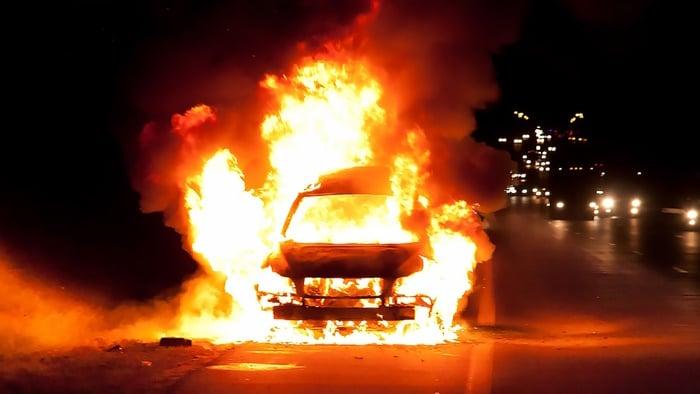
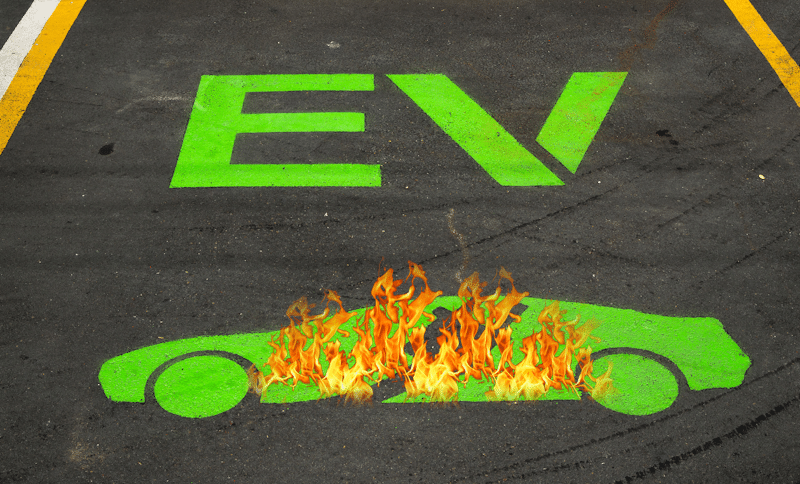
Electric Vehicle Explosions Rise 46% in a Year

Exploding with the force of a bomb blasting 2,000°C super-heated jets of flame into surrounding areas, melting and decomposing nearby structural materials including metal and concrete, and sending vast amounts of toxic fumes into any enclosed atmosphere. Thinking about putting the conflagration out – forget it – run (if you can) for your life. Welcome to a future where electric cars become common and are to be found packed like sardines into ferries and underground car parks beneath apartment buildings. A recent freedom of information request from the insurer QBE found that electric vehicle battery fires in the U.K. jumped by 46% last year. Car and bus fires were up 33% and 22% respectively and it is noted that there are now three battery fires a day compared with two in 2022.

Share

Terry Newman: Liberal embrace of lithium batteries is a toxic airborne event

Monday evening, at the Port of Montreal, a fire broke out in a container that was storing 15,000 kilograms of lithium batteries. The city issued a lockdown notice at 7:06 PM. Residents of the Mercier-Hochelaga-Maisonneuve borough were told that it was “important to stay indoors, close doors, windows and ventilation systems for (their) safety.” The notice remained in effect until 10:57 PM when they ended the lockdown, assuring the public it was issued as a “precaution,” that the fire was now “under control,” even though the “operation could still take a few more hours,” and that “tests (had) confirmed that any danger to public health and safety (had) been ruled out.”

Share

Tariffs on China’s Electric Vehicles Only a ‘Short Reprieve’ for Canada’s EV Sector, Trade Committee Hears

Ottawa’s tariffs on Chinese-made electric vehicles (EVs) offer only a “short reprieve” for Canada’s EV industry, the Commons trade committee was told at a recent meeting about a month after the tariffs were announced in late August.

“This is basically a short reprieve—a temporary reprieve for Canadian manufacturers in the EV supply chain to basically step up to the plate and build the things that they have promised to build with investments from a lot of public dollars, and to actually get it started,” said Elizabeth Kwan, a senior researcher with the Canadian Labour Congress, on Sept. 16.


This sounds like an attempt to warn of the coming blow to Trudeau’s Soviet style EV investment strategy.

Share

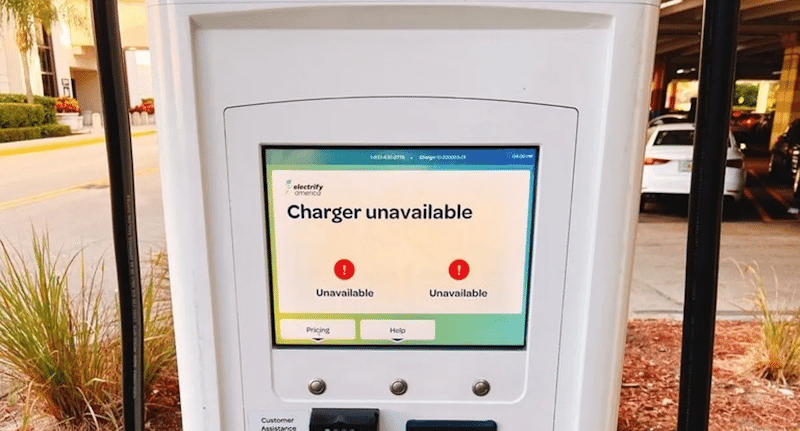
Cost of driving electric car up to twice the price of petrol or diesel

Motorists without space at home to charge their cars are facing prohibitively high costs at public facilities

Britain’s public charging network is so expensive that the cost of driving an electric car is now up to twice the price of running a petrol or diesel vehicle.

The UK has more than 12,500 rapid or ultra-rapid charging stations — a 40 per cent increase on a year ago — but data shared with The Times shows they cost an average of 80p per kilowatt hour (kWh), making the switch to electric cars prohibitively expensive for motorists who do not have access to cheaper at-home charging.

Share

Germany suffers ‘spectacular’ 70pc drop in electric car sales

Germany has suffered a “spectacular” drop in electric car sales as the European Union faces growing calls to delay ambitious carbon reduction targets.

The European Automobile Manufacturers’ Association (ACEA) said that sales for new battery-powered electric vehicles (EV) in the bloc’s largest economy plunged by nearly 70pc in August, which drove a wider 18pc decline for new car sales across the EU.

In France, the EU’s second largest market for battery electric vehicles behind Germany, fell by 33pc.

Share

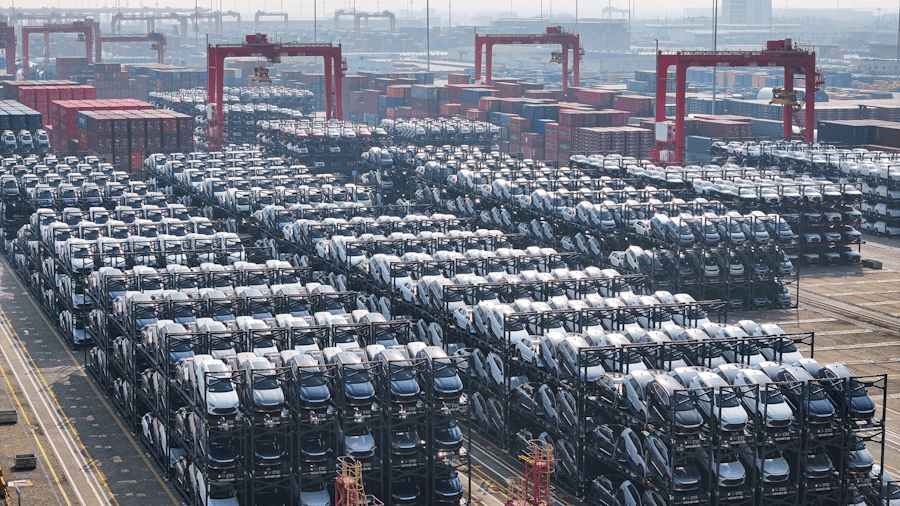
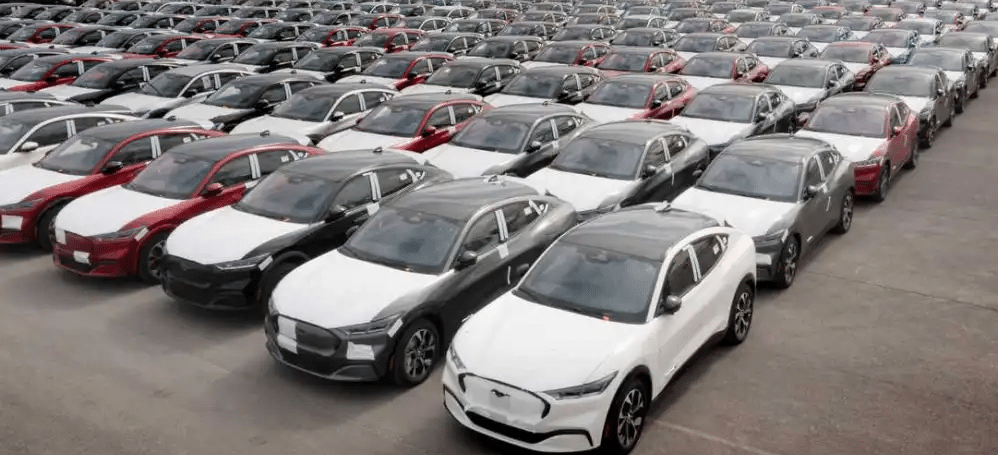
EV Blues: Unsold Electric Cars Stacking Up Like All-You-Can-Eat Pancakes

The operator of one of the world’s busiest seaports changed its entire landscape to handle its “precious cargo” of imported electric vehicles from China, including “constructing a dozen wind turbines on the quayside; on-site battery recharging options; quality control and a ruthless hunt for the slightest defect to deliver ready-to-use cars to customers.”

Share

As some Ontario plants hit the brakes, are Canada’s EV ambitions under threat?

LOYALIST TOWNSHIP, ONTARIO, CANADA – The plant was expected to produce batteries for a million electric vehicles a year. Once up and running, it was supposed to create hundreds of permanent jobs in a small southeastern Ontario municipality.

It was, Prime Minister Justin Trudeau said at the time, “big news” that Belgium-based Umicore chose Loyalist Township for its battery component production facility — evidence, the federal and provincial governments said, of success in the quest to make Canada a global electric-vehicle production hotspot.

But two years later, spending on the construction of the Umicore plant has been delayed in what the company calls a “significant worsening of the EV market context.”

Share

What Scared Ford’s CEO in China

Jim Farley had just returned from China. What the Ford Motor chief executive found during the May visit made him anxious: The local automakers were pulling away in the electric-vehicle race.

In an early-morning call with fellow board member John Thornton, an exasperated Farley unloaded.

The Chinese carmakers are moving at light speed, he told Thornton, a former Goldman Sachs executive who spent years as a senior banker in China. They are using artificial intelligence and other tech in cars that is unlike anything available in the U.S. These Chinese EV makers are using a low-cost supply base to undercut the competition on price, offering slick digital features and aggressively expanding to overseas markets.

“John, this is an existential threat,” Farley said.

He has much more than China to worry about.

Share

In Bid for Global Dominance, Beijing Builds EV Factories in Africa

JOHANNESBURG—China has started to build factories across Africa to manufacture electric vehicles, a strategy market analysts say will likely flood the world with cheap EVs and allow Chinese companies to dominate the global automobile industry far into the future.

Automakers under the communist regime are already benefiting from huge subsidies, resulting in dramatic increases in production and allowing China to severely undercut prices of EVs made elsewhere, including in the United States.

One study shows Beijing has given China’s EV manufacturers at least $231 billion in state aid over 15 years, from 2009 until the end of 2023.

Share

E.U.’s Gas Car Ban: Italy Warns Of Industry ‘Collapse’

Italy is asking the European Union to scrap its internal-combustion vehicle ban, saying it’ll trigger an industry “collapse” if it proceeds as scheduled.

The news was reported by Reuters on Sunday. The 27-nation bloc is scheduled to ban all internal-combustion car sales in 2035. By that date, cars sold within member nations must have no carbon emissions. That means no plug-in hybrids, no hybrids, no gas and no diesel. Electric and hydrogen cars will be the only immediately available options, barring some unforeseen propulsion type.

Share