British Columbia Ends Program That Aimed to Curb Arrests of Drug Users

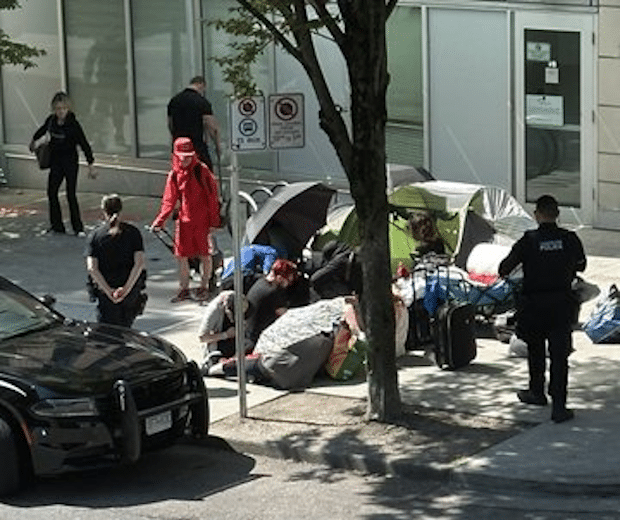
A program in British Columbia to decriminalize drug use and allow users access to public health services rather than be charged by the police with narcotics possession is ending after three years of intense political backlash.

The experimental pilot began in January 2023, after British Columbia, the center of Canada’s opioid crisis, received a legal exemption from the federal authorities that enabled drug users to carry minuscule amounts of cocaine, opioids, methamphetamines and MDMA, also known as Ecstasy.

Share

‘Hot girls on SSRIs’: Antidepressants are trending on TikTok. Not everyone is happy about that

In a TikTok video shared with her followers last year, Tiffany Kay described how the antidepressant Lexapro was, “poof,” like magic, making life much better, “which I did not think was possible.”

That cinder block of anxiety no longer weighs on her chest, Kay, 29, recently told National Post. She’s able to sleep at night, less emotional and not overthinking things the way she used to, or getting caught up in the “what-ifs.”

Share

Adam Zivo: B.C. winds down practice of sending addicts home with free drugs

British Columbia recently mandated that, starting from the end of this month, most “safer supply” drugs must be consumed under medical supervision in an effort to keep them from being diverted to the black market. While this reform is laudable and will help keep dangerous opioids off Canadian streets, it is reprehensible that the province dragged its feet for years here.

Share

A rock and a hard place

Opioids and homelessness hit this Ontario city hard. Then, it threw all it had at the crisis. The Globe returns to see what those efforts achieved

In early November, workers in pickup trucks arrived at Milligan’s Pond, a wooded oasis in Barrie, Ont., an hour north of Toronto. Their orders were clear.

After a double murder nearby left two men from a local homeless encampment dead and another charged with the crime, the city had declared a state of emergency and started clearing its biggest encampments. The last one left was at Milligan’s Pond.

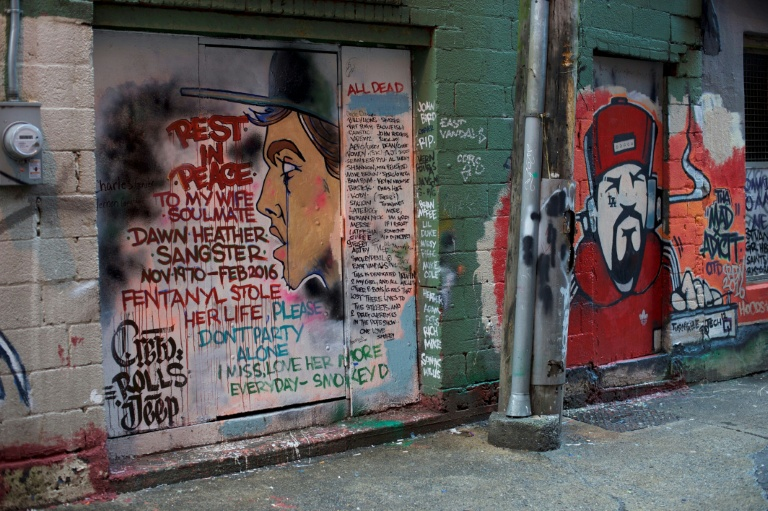
The city issued trespass notices to the men and women living there, and then the workers swept up everything: tents, sleeping bags, shopping carts, propane tanks. But if you looked closely, you could still see the remnants of a homemade memorial to those who have died on Barrie’s streets, many of them from drug overdoses. Locals call it The Rock. Its story is the story of the city’s struggle, written on stone.


Share

Saskatchewan Introduces Involuntary Drug Treatment Legislation

Saskatchewan has introduced involuntary drug treatment legislation on the final day of the fall legislature sitting.

If passed, the Compassionate Intervention Act, Bill 48, would allow those with addictions to be committed to treatment without their consent.

Premier Scott Moe said the legislation will allow the province to “put families first” by providing treatment and care to those “unable to seek help on their own because of their severe addiction.”

Share

Adam Zivo: Ontario is now the ‘wild west’ of ‘safer supply’ drugs

Canadian addiction experts say that Ontario needs to better regulate “safer supply” prescribing, because unscrupulous doctors have been cashing in by opening “electronic pill mills” — video terminals where addicts can receive enormous opioid prescriptions after only a few minutes of remote consultation.

“Safer supply” refers to the practice of prescribing addicts free recreational drugs — typically hydromorphone, a heroin-strength opioid — with minimal supervision under the assumption that this dissuades use of riskier street substances.

Share

Derek Finkle: Toronto’s South Riverdale injection site was infested with drug dealers

Dr. Ahmed Bayoumi, a prominent harm reduction researcher known as the godfather of Toronto’s injection sites, provided testimony in a court hearing early this year that asserted there is “no evidence” that such sites “lead to increased drug selling.”

Bayoumi’s testimony was contained in an affidavit he provided as an expert witness in litigation initiated by an injection site in Toronto’s Kensington neighbourhood that argued a new Ontario law prohibiting such sites within 200 meters of schools and daycares violates the Charter rights of drug users.

Share

Ontario’s legal cannabis stores are closing — because illegal shops allowed to thrive

When Canada legalized recreational cannabis in 2018, Ontario made a promise — to consumers, to communities, and to small business owners who invested their lives and savings into the new sector. That promise was simple: the government would regulate the market, enforce the law, and replace the illegal cannabis trade with a safe, transparent, and accountable system.


Ever get the feeling the whole of our “political class” is on the take.

Share

Vancouver’s Drug User Liberation Front organizers challenging Canada’s drug laws

The two organizers of an illicit-drug compassion club in Vancouver, convicted this month of trafficking for providing members with heroin, cocaine and methamphetamine, are back in court challenging Canada’s drug laws as unconstitutional for depriving users of safer options.

Jeremy Kalicum and Eris Nyx operated for more than a year as the Drug User Liberation Front, buying illicit drugs from the dark web, testing them at university labs for fentanyl and other impurities, and selling them at cost to their 43 members.

Share

Activists Claim Dealers Can Fix Canada’s Drug Problem

America should learn from its northern neighbor’s misguided experiments with activist-driven drug ideologies.

Some Canadian public-health researchers have argued that the nation’s drug dealers, far from being a public scourge, are central to the cause of “harm reduction,” and that drug criminalization makes it harder for them to provide this much-needed “mutual aid.” Incredibly, these ideas have gained traction among Canada’s policymakers, and some have even been put into practice.

Share

Derek Finkle: Even injection site workers now admit drug dealing was rampant

The province of Ontario did something last month it has never done before — it defunded a supervised injection site because the chaos and disorder it was causing had reached unacceptable levels for the surrounding neighbours.

The injection site is in Parkdale, a neighbourhood on the west side of Toronto. The community’s efforts to get the province to act were detailed in my previous column at the beginning of October. Ontario Health Minister Sylvia Jones was simply unable to ignore the mountain of photographic evidence featuring prostrate bodies next to piles of used needles as known drug dealers operated nearby.

Share

RCMP Bust Industrial-Scale Superlab Outside Toronto

TORONTO — A months-long RCMP investigation has led to the takedown of a massive synthetic-drug operation resembling the “super labs” often found in British Columbia — but this one was discovered just forty-five minutes north of Toronto. Officers uncovered an industrial-scale facility capable of producing millions of dollars’ worth of fentanyl, methamphetamine, MDMA, and GHB.

Share

Wrong, wrong, wrong! The Economist’s deluded demand to legalise cocaine

THE Economist, magazine of choice for the globalising liberal elite, has this week called for the legalising of cocaine. That’s right. Its leading article asserted: ‘The most effective single way to reduce the death, violence and corruption would be to legalise and regulate the production and consumption of cocaine. This would eliminate the price premium that motivates the world’s most violent criminals. Consumers could be sure of dosage and quality – an incentive to shun dangerous illegal concoctions. Prisons would be emptier and the criminal justice system could focus on deadlier synthetics.’

Share

FRANCIS: The deadly drug experiment BC refuses to end

The illusion finally crumbled. Premier David Eby himself has now stated that he was wrong, admitting that the Liberal-NDP experiment of “safe supply” has resulted in “really unhappy consequences.”

A grotesque understatement for a policy that has cost thousands of lives.

Share