Are the Middle East’s ‘electronic armies’ the most dangerous of all?

They’re behind online hate campaigns to intimidate activists, journalists or dissidents. There is no doubt that in some cases, those campaigns have led to murder.

There are armies in the Middle East that do not have guns and whose “soldiers” work online only — but that doesn’t mean they’re not dangerous.

The term “electronic armies” is commonly used in the Middle East for such forces. “The concept is simple,” as the internet freedom advocates from Access Now explain. “A group of people assume false identities in order to participate in internet forums and social media to send — or suppress — a specific message.”

Share

World’s largest meat processor JBS Foods hit by cyberattack

The world’s largest meat supplier, JBS Foods, has been crippled by a cyberattack, the company announced, the latest hit to an already rattled supply chain that’s sent food costs soaring at grocery stores and restaurants.

JBS said Monday evening that it shut its North American and Australian IT networks down after the company realized Sunday it had been hit by an attack.

Share

The Next Big Gasoline Shortage Is Coming

If the pandemic has taught us anything, it’s that we cannot ignore the warning signs for future catastrophes.

In North Carolina, where I live, only about one-third of gas stations are currently reporting that they have any gas, and that’s after some improvement in availability. A ransomware attack shut down a key pipeline supplying these stations, an event that could, but likely won’t, serve as a wake-up call, before we experience a true catastrophe.

Prior to the pandemic, I wrote a lot about digital security, or the lack thereof. I once compared our security status quo to “building skyscraper favelas in code—in earthquake zones.” Not much has changed since then, but we are starting to hear more rumbles.

Share

Colonial Pipeline Cyberattack Exposes Vulnerabilities in Critical Infrastructure

Colonial Pipeline Cyberattack Exposes Vulnerabilities in Critical Infrastructure

What happened in the US could well happen in Canada, professor says

The cyberattack that shut down the Colonial Pipeline in the United States made clear the consequences of such attacks in a tangible way, as it led to gas price hikes and even fuel pump closures in the American Northeast, causing disruptions to daily life.

The incident serves as a sign of things to come if cybersecurity isn’t taken more seriously, due to increased connectivity in industrial and critical infrastructure, says Thomas Keenan, a cybersecurity expert and professor at the University of Calgary.

Share

Colonial hack: How did cyber-attackers shut off pipeline?

Investigators at the largest fuel pipeline in the US are working to recover from a devastating cyber-attack that cut the flow of oil.

The hack on Colonial Pipeline is being seen as one of the most significant attacks on critical national infrastructure in history.

The pipeline transports nearly half of the east coast’s fuel supplies and prices at pumps are expected to rise if the outage is long lasting.

Share

Gas stations along Southeast coast suffer fuel shortage amid pipeline shutdown

Gas stations along the Southeast coast are being slammed by panic buying and long lines amid the shutdown of the biggest oil pipeline in the US from a crippling cyberattack believed to be orchestrated by a Russia-based criminal group.

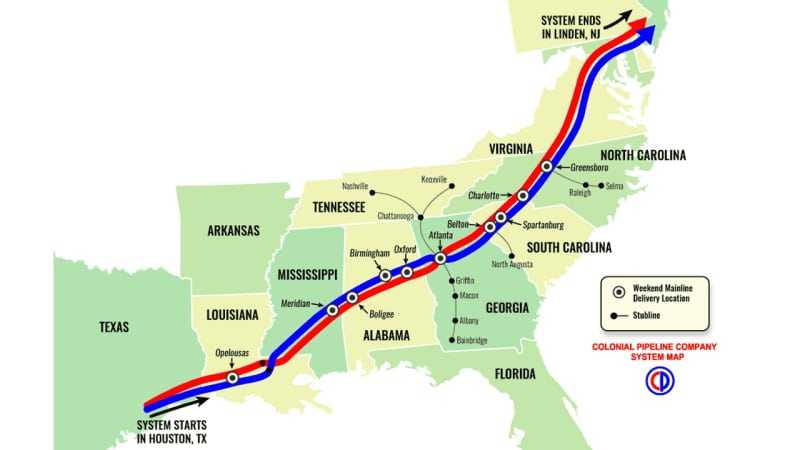
The closure of the 5,500-mile Colonial Pipeline, which carries more than 100 million gallons of fuel from Texas to New Jersey each day, has stretched into its fifth day. The Alpharetta, Georgia-based company suspended all operations after it was hit Friday by a ransomware attack that could prove to be among the most costly in US history.

Russian cybercrime or State actors?

‘Absolute garbage LIARS’! NYT BLASTED for ‘gaslighting’ like nobody’s business in desperate piece whitewashing obvious gas shortage

Share

The dark side of DarkSide

The Colonial Pipeline attack shows there is no such thing as a righteous hacker

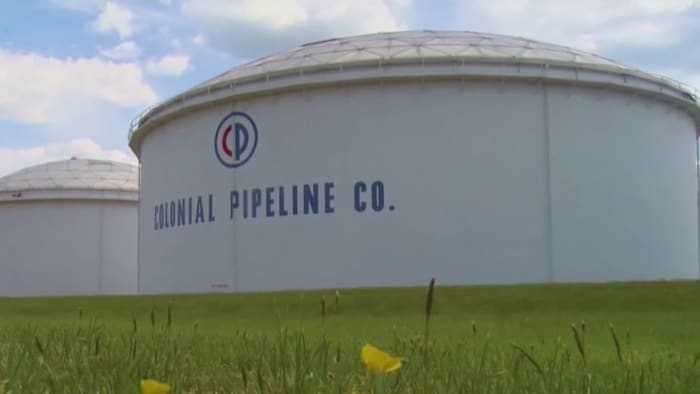
On a normal day, the Colonial Pipeline carries up to three million barrels of oil 5,500 miles from the Southern United States to New York, providing 45 percent of the East Coast’s fuel needs. On Friday, the oil stopped flowing. The pipeline was shut down after the operating company was hit by a cyberattack.

Two days later and the pipeline is still sitting idle, and companies are scrambling to try and secure supplies of oil, diesel, jet fuel and gasoline. The cyberattack raises international suspicions. Was it China? Russia? Those countries specialize in such actions. The NSA however has been briefing that the culprit was an unusual cybercrime outfit known as DarkSide.

Share

Feds declare emergency after hackers use ransomware to shut down major pipeline

What happened last Friday is the sort of thing that would be considered a major terrorist attack if the goal behind it had been political. Hackers believed to be operating in Russia shut down the largest pipeline in the United States using ransomware. The Colonial Pipeline carries gasoline, diesel and jet fuel from refineries in Houston to locations as far north as New Jersey.

Share

Cyber-attack hackers threaten to share US police informant data

Washington DC’s Metropolitan Police Department has said its computer network has been breached in a targeted cyber-attack, US media report.

A ransomware group called Babuk is reportedly threatening to release sensitive data on police informants if it is not contacted within three days.

The FBI is investigating the extent of the breach, US media reported, citing the Washington DC police department.

Ransomware is used to scramble computer networks and steal information.

Share

Data of 1.3 million Clubhouse users leaked online, with fears ‘real damage’ will be caused – media

A major data breach from a recently popular social media platform, Clubhouse, has been reported. The latest suggested leak may have compromised the personal information of 1.3 million users.

The apparent disclosure was reported by Cyber News this weekend. A Structured Query Language database containing user records such as names in connection with profile names, photo URLs, and numbers of followers, as well as related usernames on other social media accounts, including Instagram and Twitter, was “leaked for free on a popular hacker forum,” it said. Clubhouse – a social media app to tune into conversations – has not confirmed the leak so far.

This has become such a regular thing its not even scary any longer, people have grown to expect it.

Share

‘We have your porn collection’: The rise of extortionware

Cyber-security companies are warning about the rise of so-called ‘extortionware’ where hackers embarrass victims into paying a ransom.

Experts say the trend towards ransoming sensitive private information could affect companies not just operationally but through reputation damage.

It comes as hackers bragged after discovering an IT Director’s secret porn collection.

The targeted US firm has not publicly acknowledged that it was hacked.

In its darknet blog post about the hack last month, the cyber-criminal gang named the IT director whose work computer allegedly contained the files.

Share

CRA suspends about 800,000 taxpayers’ accounts after login credentials found on dark web

CRA suspends about 800,000 taxpayers’ accounts after login credentials found on dark web

OTTAWA – About 800,000 Canadians will be blocked out of their Canada Revenue Agency online account until they change their login credentials after identical information was found for sale on the dark web.

The number is a significant jump from the agency’s initial assessment that caught over 100,000 potentially compromised accounts, and the agency believes that number will continue to balloon as external data breaches remain prevalent and people re-use identical login credentials for multiple web services.

Share

CRA suspends online accounts of over 100,000 Canadians after login credentials found for sale on dark web

OTTAWA – The Canada Revenue Agency had to suspend the accounts of more than 100,000 users of its online service because it detected troves of leaked login information on the dark web that could have led to data breaches.

If you received an unexpected and cryptic email on Feb. 16 from CRA warning you that your email had been deleted from the agency’s web platform, MyCRA, do not worry: your account has not been breached.

Share

US charges three North Koreans over $1.3bn theft

Three North Koreans have been charged by US authorities over a scheme to steal and extort more than $1.3bn (£940m) from banks and businesses around the world.

They are also accused of deploying malicious cryptocurrency programs.

A Canadian-American citizen was also charged with money laundering.

The men are also accused of being part of the Wannacry cyber-attack of 2017, which crippled UK health service computer systems on a national scale.

Share