Top public servant advised Trudeau to invoke Emergencies Act, felt legal threshold was met, though ‘vulnerable’ to challenge

Canada’s top public servant provided a written recommendation to Justin Trudeau that supported the idea of invoking the Emergencies Act in response to convoy protests across the country, but also cautioned the Prime Minister that such a decision would be vulnerable to a court challenge.

The Feb. 14 recommendation from Privy Council Clerk Janice Charette was among a flurry of memos and around-the-clock meetings she discussed in detail during testimony at the Emergencies Act inquiry on Friday.

Share

Carson Jerema: Trudeau adviser decided to pretend Freedom Convoy was a security threat

Don’t worry, if a particular law, let’s say, the Emergencies Act, doesn’t say or do what a government wants it to say or do, in Justin Trudeau’s Canada you can just pretend it does. The rule of law? Constitutional norms? Parliamentary supremacy? Pfft, those are for dorks.

Almost no one — not CSIS, not the Ontario police, not even the prime minister himself up until the last minute — really believes the Freedom Convoy protests counted as a threat to the “security of Canada” as defined in legislation, or otherwise met the standard for declaring a national emergency.

Share

‘No idea too crazy’: Cabinet given suite of options before invoking Emergencies Act

OTTAWA – Cabinet ministers did not exhaust every option they had to resolve the protests blockading Ottawa streets and border crossings across the country last winter before turning to the Emergencies Act, a federal inquiry heard Friday.

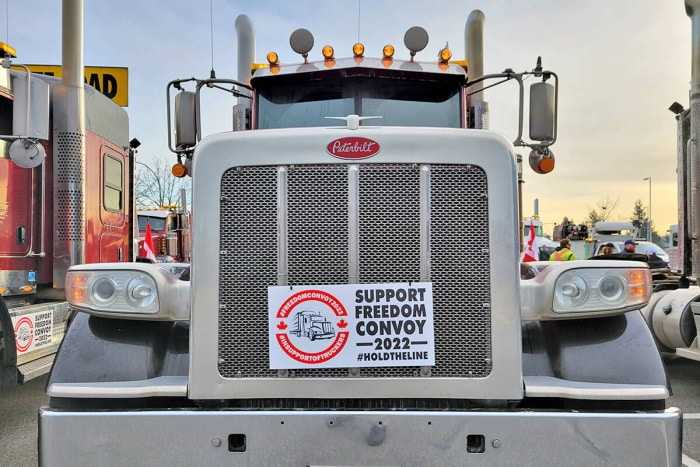
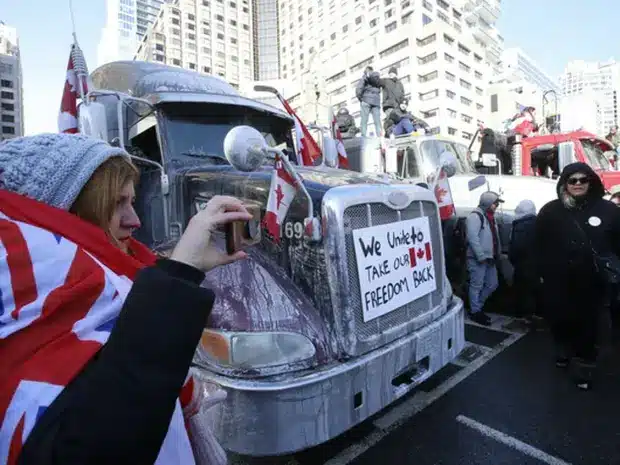
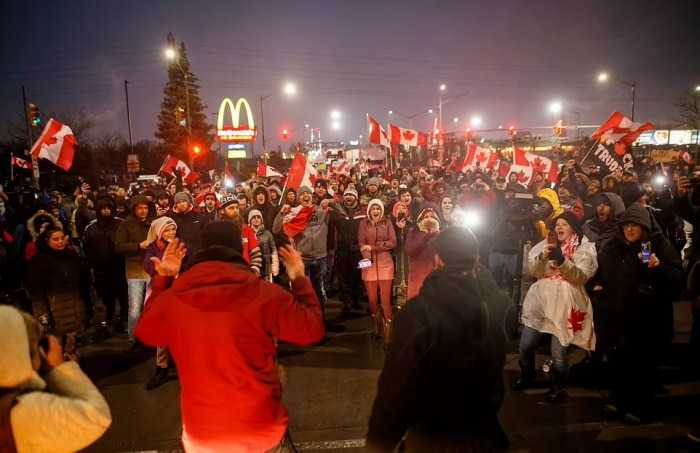
Thousands of protesters rolled into Ottawa in big rigs and other vehicles to voice their opposition to COVID-19 public health restrictions and the Liberal government.

After the first weekend, it became clear the protesters did not plan to leave downtown Ottawa, where they set up camps in the middle of city streets. That’s when cabinet convened to review what the federal government could do to end the protests, said Jacqueline Bogden, the government’s deputy secretary on emergency preparedness.

Share

Trudeau’s so called National security officials wanted CSIS threshold for Emergencies Act ‘reconsidered’

OTTAWA – Prime Minister Justin Trudeau’s national security adviser and other senior officials felt the Canadian Security Intelligence Service’s threshold to determine a national threat under the Emergencies Act “should be reconsidered,” a public inquiry has learned.

Jody Thomas told lawyers for the Public Order Emergency Commission, which is investigating the federal government’s decision to invoke the act during the “Freedom Convoy” protests last winter, that in her opinion, the “totality of circumstances” at the time constituted a threat to national security, documents say.

Share

Bureaucrats who froze bank accounts of Freedom Convoy leaders weren’t trying to ‘get at the family’

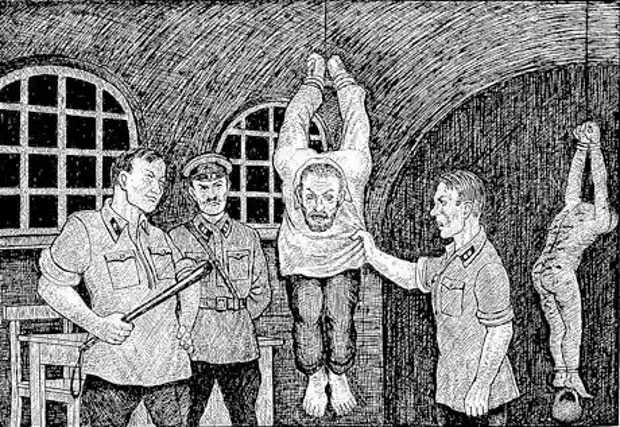
‘Third degree interrogation’ from Drawings from the Gulag by Danzig Baldaev.

OTTAWA — In freezing the bank accounts of Freedom Convoy protesters, Finance Canada bureaucrats said they did not intend to hurt protesters’ families’ ability to buy groceries or pay child support, though they admitted that may have ultimately happened, the Emergencies Act inquiry heard Thursday.


It is an unfortunate fact of human nature that there will never be a shortage of people to run Gulags.

Share

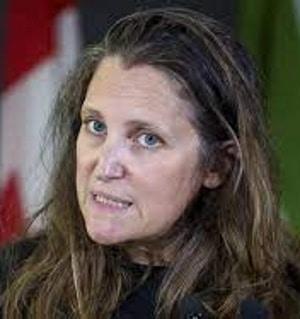
Freeland wanted Convoy supporters’ bank accounts frozen until they reported to police

Finance Minister Chrystia Freeland told a secret cabinet meeting that Canadians with bank accounts frozen under the Emergencies Act should be denied their money unless they first reported to police. “Banks were pleased,” said confidential minutes.
“Minister of finance reported on a conversation she had with chief executive officers at the major banks,” said minutes of the Monday, February 21 meeting. “Banks were pleased that the government was working on a plan that would see individuals with their bank accounts frozen report to police prior to the bank to have their accounts unfrozen.”

Share

More than half of convoy donors who haven’t received refunds are Americans

More than half of the donors to the GiveSendGo convoy protest crowdfunding campaign who have not yet received refunds are Americans, CBC News has learned.

CBC analyzed documents tabled by the commission of inquiry into the convoy protest that paralyzed downtown Ottawa for three weeks, and the donations data made public when the GiveSendGo Freedom Convoy crowdfunding website was hacked.

That analysis shows that an estimated 59 per cent of donations — accounting for 46 per cent of the GiveSendGo Freedom Convoy money that was frozen by a Canadian court order — came from donors with postal codes indicating they lived in the United States. An estimated 35 per cent of the donations and 50 per cent of the frozen funds came from donors with Canadian postal codes.

Share

‘Freedom Convoy’ had to be removed to avoid major economic damage: officials …. but Statscan said the the economic impact was negligible

The ‘Freedom Convoy’ blockades at major border crossings across the country had to be removed quickly in order to avoid serious, long-term damage to Canada’s economy, finance department officials said Thursday.

The demonstration against COVID-19 public health measures in February saw major ports of entry in Ontario and Alberta blockaded, resulting in a daily trade loss of “around $56 million per day,” finance officials told the Public Order Emergency Commission in an interview, according to a summary.


I think I’ll go with the Statscan version

The economic nightmare that wasn’t? Border blockades had little effect on trade, data reveals

Despite the highly publicized blockades at Ontario’s Ambassador Bridge and Coutts crossing in Alberta, cross-border trade in Ontario and Alberta was up 16 per cent in February, compared to the same month last year, according to data from Statistics Canada.

And while some businesses were impacted by the blockades, the trade figures also raise questions about the government’s use of the Emergencies Act – a decision, in part, justified by “threats to (Canada’s) economic security” brought about by the blockades.

Share

Extremists among ‘Freedom Convoy’ could attack the public, PM’s advisor warned

As the ‘Freedom Convoy’ demonstrations continued to snarl downtown Ottawa in February, the prime minister’s national security adviser warned of the possibility that its most extreme attendees could target the general public.

Notes from a closed-door meeting between Jody Thomas and what appeared to be senior bureaucrats on Feb. 14, cautioned that actors “espousing violent extremism” had entrenched themselves in Ottawa — and these people were “distinct” from individuals seeking to participate in “legitimate protest.”

Share

Lamest “Death Threats” Ever?”

Death threat against Trudeau sent to CBSA during convoy protests, Emergencies Act inquiry hears

The Canada Border Services Agency received a death threat against Prime Minister Justin Trudeau and inquiries about how to import bullets during last winter’s convoy protests, the Emergencies Act inquiry heard Wednesday.

CBSA said two threats from the same client were sent online through the CBSA’s “contact us” form.

One message sent to CBSA on Feb 7 reads: “We would like to come to Ottawa to support the protest and if you want a war on your people we are prepared to die to stop you. No border of yours will hold us back! Liberty or death. You Choose!”

Share

Cabinet Knew of Police Plan to Clear Ottawa Convoy Protest Day Before Invoking Emergencies Act, Says RCMP Commissioner

The Liberal cabinet was told on the eve of invoking the Emergencies Act that police had a plan to clear the Freedom Convoy protest in Ottawa, RCMP Commissioner Brenda Lucki testified at the Public Order Emergency Commission on Nov. 15.

The information was revealed after negotiations between parties at the commission, since cabinet deliberations are considered confidential.

Share

RCMP head Brenda Lucki didn’t share her plans for other options before Emergencies Act invoked

The day before the federal government invoked the Emergencies Act, RCMP Commissioner Brenda Lucki had prepared notes advising cabinet there were other tools available and that police finally had a plan in place to address the Ottawa protests but she never delivered the message.

The country’s top Mountie made the admission during hours of testimony at the Emergencies Act inquiry on Tuesday in which she couldn’t recall key meetings during the protests; said she didn’t understand the role the Emergencies Act could play or the process Ottawa police were to follow to get more resources; and was unable to explain comments from meetings and text exchanges that she participated in.

Share

Top RCMP officials doubted the Ottawa police convoy protest plans, Emergencies Act inquiry hears

The RCMP quickly became concerned that the Ottawa police did not have a plan to end the convoy protest that occupied the capital last winter, the top Mountie told the Emergencies Act inquiry.

RCMP Commissioner Brenda Lucki and Deputy Commissioner Michael Duheme, who is responsible for federal policing, testified Tuesday before the Public Order Emergency Commission.

The pair also sat for an interview with commission lawyers in September. A summary of that conversation was entered into evidence Tuesday.

Share

‘Freedom Convoy’ did not pose threat to the security of Canada: CSIS director … Trudeau advisor “protesters were “dug in” and “there’s no doubt [they] came to overthrow the government.”

They made Justin cry.

New documents released by the public inquiry investigating the government’s decision to invoke the Emergencies Act show the director of the Canadian Security Intelligence Service felt the “Freedom Convoy” did not pose a threat to the security of Canada.

Prime Minister Justin Trudeau invoked the Emergencies Act on Feb. 14, arguing its temporary and extraordinary powers were needed to end blockades in Ottawa and at border crossings.


Intelligence sharing problems plagued early days of protest, federal officials tell Emergencies Act inquiry

… In its penultimate week, the commission will also hear from Jody Thomas, Prime Minister Justin Trudeau’s national security intelligence adviser, who has publicly defended the decision to use the act.

She told a March 10 security and defence conference that protesters were “dug in” and “there’s no doubt [they] came to overthrow the government.”

Share

‘We received no help’: Texts shown at Emergencies Act inquiry show strain between Alberta, federal governments

Text messages entered into evidence at the Emergencies Act inquiry describe a testy exchange between feuding Alberta and federal ministers around the time the act was invoked.

At the time, the province was struggling with a blockade near a southern Alberta village. People protesting COVID-19 restrictions used large trucks and other vehicles to block commercial traffic to and from the U.S. at Coutts between Jan. 29 and Feb. 14.

About a week into the blockade, Alberta turned to Ottawa to ask about the possibility of using Canadian Armed Forces tow trucks to remove the blockade vehicles after local tow operators rejected RCMP requests.

Share