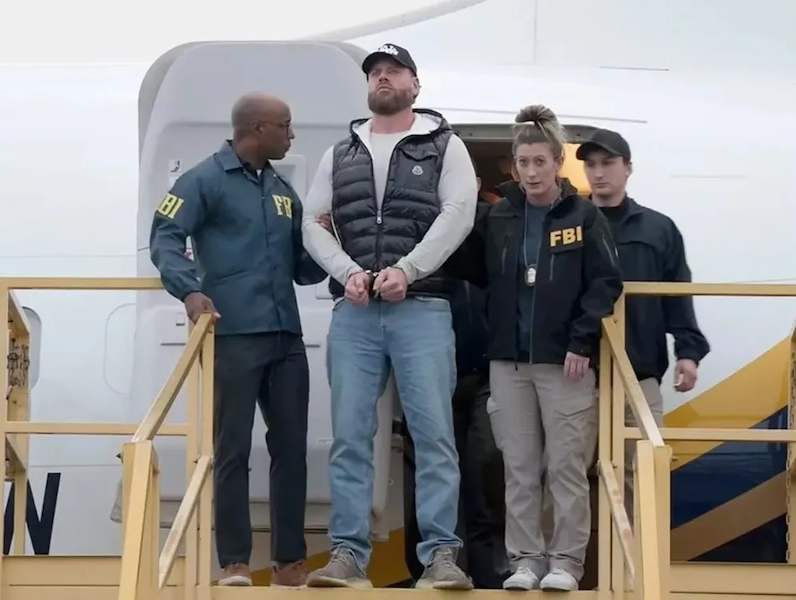
The Ryan Wedding case grows: 5 key takeaways from new U.S. evidence against the ex-Olympian and his alleged Ontario associates

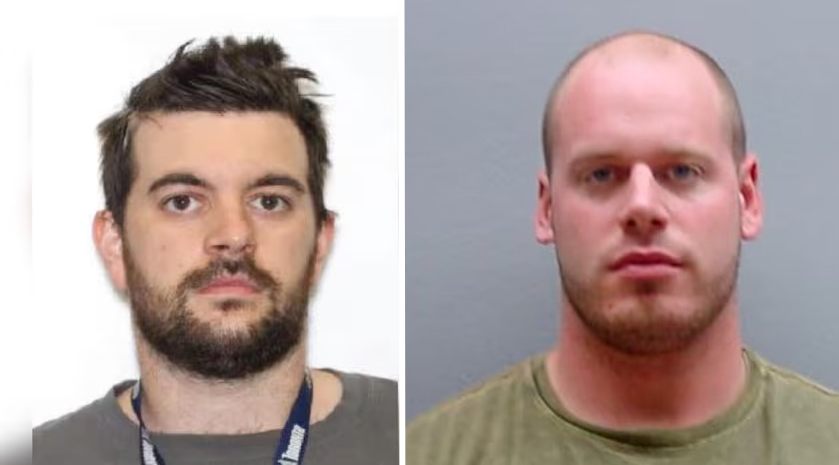
U.S. prosecutors have unveiled a new trove of evidence against alleged drug kingpin Ryan Wedding and several Canadian associates, revealing how, after the assassination of a key federal witness, authorities doubled down on dismantling his drug empire in the lead-up to his arrest last month.

The records were filed in a Canadian court this week as the United States moves to extradite several of Wedding’s co-conspirators, and as those alleged associates continue to face bail hearings.

Share

Despite compelling evidence that Canada faces a complex threat spectrum, Canadian policymakers have chosen not to act.

In February 2025, Canada listed seven transnational organized crime groups, primarily Mexican cartels, as terrorist entities, noting “their drug trafficking activities are a risk to national security and must be stopped.” In a follow-up media interview, senior RCMP officers confirmed that all listed groups were active in Canada and “very much involved in crime impacting Canada.”

The move sparked significant debate. Critics argued that terrorism is ideologically motivated, seeking political or social change through fear, whereas organized crime is driven by profit and pragmatism. While cartels use terrorist-like violence, it is typically to protect markets, eliminate rivals, or deter state interference — not to alter political structures. In this view, cartels and terrorists occupy different ends of the threat spectrum.

Share

Nancy Guthrie investigation suffers major blow as FBI says glove does NOT match DNA found in home of Savannah’s kidnapped mom

A glove found two miles from Nancy Guthrie’s home has failed to match DNA found inside her property, investigators announced.

Pima County Sheriff Chris Nanos said Tuesday that the glove offered no new leads as it also failed to match the CODIS criminal database – a national archive of all DNA from arrestees nationwide.

The glove was found on Sunday and had been briefly regarded as the best piece of evidence in the ongoing search for the 84-year-old mother of Today Show star Savannah Guthrie.

Share

Organized crime groups targeting police data across Canada, report says


The RCMP-led Criminal Intelligence Service Canada is sounding the alarm about organized crime groups across the country seeking to infiltrate police databases and corrupt civil servants.

The warning from the police group appears in a late-January report. Last week, Ontario’s top police watchdog ordered a provincewide review of the integrity of police data, prompted by the arrests of seven serving Toronto Police officers who are accused of corruption-related criminal offences.

Share

How Ryan Wedding’s ‘right-hand man’ turned on him and helped take him down

A year ago, Ryan Wedding was on the run and riding high.

According to investigators, he celebrated the January 2025 shooting of an FBI witness in Colombia by sending around a picture of the man’s lifeless body and bragging about how he killed the “rat.”

A lawyer in Ontario had allegedly assured Wedding that eliminating the informant would thwart the prosecution against him.

Share

Creep sends fourth Nancy Guthrie ransom note to TMZ — and founder Harvey Levin makes the writer an offer

A fourth note has been sent to TMZ by somebody claiming to know what happened to Nancy Guthrie and demanding confidential payment for their information — with the outlet’s founder, Harvey Levin, asking them to prove their claims are real by revealing what they know.

“If you’re worried about getting this money, and you really do have this information, send it to us,” Harvey said in a Monday X post. “We will forward it to the FBI, and that way there’s a record that we have that you supplied this information.

Share

How an armed Brink’s guard with persistent money troubles got swept up in the Toronto police corruption case

An armed guard who has publicly declared his loyalty to the head of an outlaw motorcycle club is among those charged in the sweeping anti-corruption investigation that has rocked Toronto police.

Ryan Cribbie, 33, is one of 19 civilians charged in Project South, a months-long probe into corruption and organized crime that led to the arrests of seven Toronto cops and one retired officer. Among the most serious allegations levied by York Regional Police is that Toronto officers leaked confidential information to “criminal associates,” which investigators claim was used to facilitate shootings, extortions and a conspiracy to murder a jail official.

Share

Toronto is facing its worst police corruption scandal in decades. Here are three things that need to happen soon

When news broke last week of the Toronto Police Service corruption that “facilitated shootings, extortions and a conspiracy to commit murder,” it felt like an escalation of the long and sometimes fraught relationship between the city and its police force.

A difficult time two years ago came to mind. Then, as now, it was municipal budget season and the police were asking for another substantial increase. As public debate swirled with a new mayor in power, the police mounted a bully campaign that the Star’s editorial board called ”emotional blackmail.” Chief Myron Demkiw insinuated calamity would ensue if they didn’t get what they demanded.

Share

This made-in-Canada ‘psychopath test’ doesn’t work and has no place in courts, major study finds

A made-in-Canada test to detect whether a criminal is a “psychopath” is outdated, unreliable, and a poor predictor of recidivism, says a University of Toronto researcher who is calling for an end to its use in criminal courts.

“We should probably consider a complete moratorium on these types of assessments,” says Rasmus Rosenberg Larsen, the lead author of the largest study yet of how psychopathy tests are used in legal settings.

Share

Sundeep Sekhon arrested more than 1 year after fatal hit-and-run in Mississauga

Sundeep Sekhon – Killer

More than one year after a woman was struck and killed by a vehicle while crossing a street in Mississauga, police say they have arrested the alleged driver.

On Jan. 14, 2025, Peel police responded to the area of Bristol Road West and Loonlake Avenue after a pedestrian was hit by a black SUV while crossing at the crosswalk.

Share

Who has been ordering these houses be shot up? The Toronto police corruption probe offers an answer

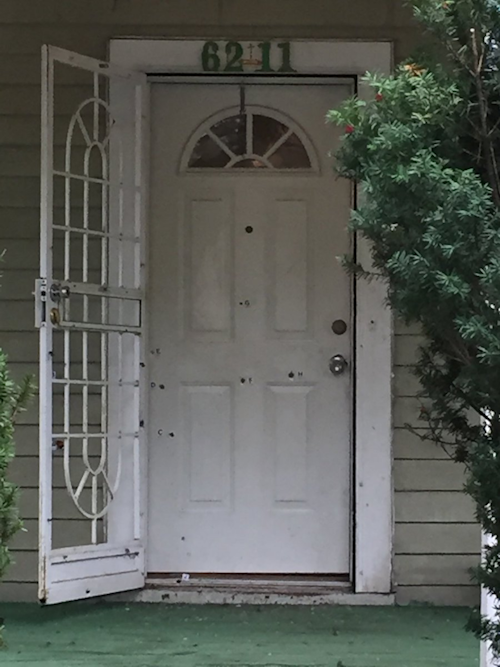
Bullet holes spattered the walls of the house on Farrell Road, joining three others that had punctured the same house just three weeks earlier.

It was September 2025, and over the course of just two weeks, four houses in Vaughan had been targeted by gunfire, some of them repeatedly.

Police announced the arrest of the alleged triggerman a few weeks later, publicly linking the incidents to the GTA’s long-standing tow-truck turf war. The house on Farrell had been home to a kingpin in the protracted battle, who had been shot dead himself more than a year earlier.

Share

Arizona sheriff denies report he blocked key Nancy Guthrie evidence from FBI

The Arizona sheriff leading the local investigation into Nancy Guthrie’s mysterious disappearance contradicted claims he withheld key evidence in the case from the FBI.

Pima County Sheriff Chris Nanos said that contrary to reports, the FBI “agreed” with him that the evidence should be sent to a Florida lab for DNA analysis, instead of handing it over to the federal agency’s crime lab. The reports suggested the FBI disagreed with the decision to send gloves and other evidence to the private lab, but Nanos said after having a conversation on the best path forward, the agency was on board with the move. The claims that the sheriff’s office is thwarting the investigation in a power struggle are “not even close to the truth,” he told KVOA.

Share

Organized crime does not operate in isolation. Canada should stop acting as if it does

The recent arrests of members of the Toronto Police Service on allegations of collusion with organized crime have sent shockwaves well beyond the city. They raise uncomfortable questions not only about individual misconduct, but about how Canada understands organized crime, and its willingness to expose and challenge the political, economic and institutional relationships that allow criminal organizations to endure.

Share

Behind Canada’s $900M auto theft crisis: Organized crime, the Hells Angels, kid thieves and crooked shipping companies

Young offenders, Hells Angels and rogue shipping company owners are all part of a highly organized auto-theft ecosystem that stole 46,999 vehicles in Canada last year and cost Canadians $900 million in insurance costs, the Équité Association insurance industry group says.

“It’s definitely organized,” said Bryan Gast, national vice-president, intelligence and investigations at Équité Association, in an interview as the association announced its annual report on auto theft in Canada.

There were 19,319 vehicles taken in Ontario, with trucks, sport utility vehicles and high-end vehicles, such as Ferraris and Lamborghinis, being the most popular with thieves, Gast said.

Share