Russia and China: The Worst Moment in History Coming Soon

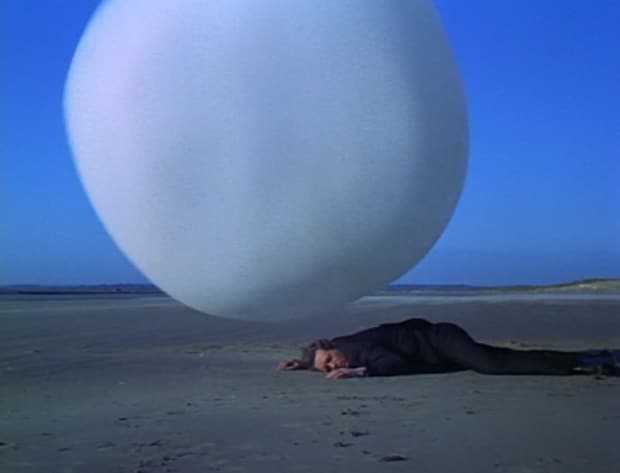
On May 1, on Russian TV, the media executive often called “Putin’s mouthpiece” urged the Russian president to launch a Poseidon underwater drone with a “warhead of up to 100 megatons.” The detonation, said Dmitry Kiselyov, would create a 1,640-foot tidal wave that would “plunge Britain to the depths of the ocean.” The wave would reach halfway up England’s tallest peak, Scafell Pike.

“This tidal wave is also a carrier of extremely high doses of radiation,” Kiselyov pointed out. “Surging over Britain, it will turn whatever is left of them into radioactive desert, unusable for anything. How do you like this prospect?”

“A single launch, Boris, and there is no England anymore,” said Kiselyov, addressing the British prime minister.

Share

How the West got China so catastrophically wrong

How the West got China so catastrophically wrong

Fifty years of encouraging closer economic links with Beijing has proved misguided

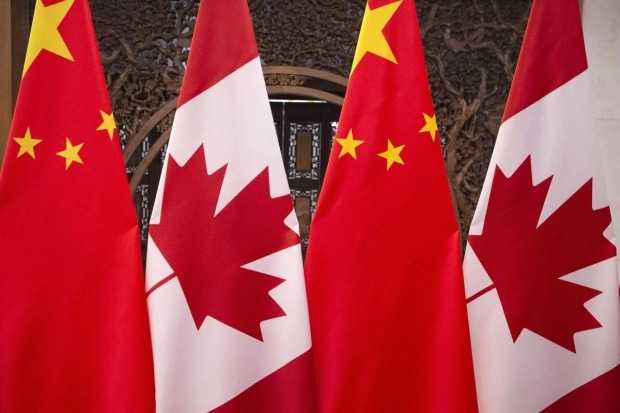
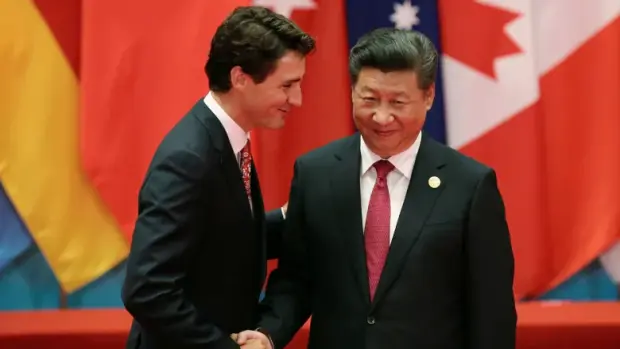
At the start of the Winter Olympics in Beijing in early February, Xi Jinping and Vladimir Putin stood shoulder to shoulder to declare the two countries’ “friendship without limits”. In a 5,000-word statement meant to highlight their unbreakable bond, the pair sought to exploit what they believed to be the terminal decline of the West. Their intent was to make the world safe for autocracy.

Since then, world affairs have not evolved as the pair expected, to say the least. Europe, the US and their allies around the world have come together in support of Ukraine. The old global system the two autocrats had been so dismissive of is fighting back. Putin’s Russia has become a pariah in the global system, and Xi’s China will have to bear the consequences of committing to support it.

Share

Chinese medicine has blighted billions

A nationalistic reliance on duff remedies has led to Covid incarcerations

The first country to experience Covid-19, and the one that invented the defence strategy known as lockdown, is the only country still practising it. But the Chinese form is so much harsher than the British version, it is almost misleading to use the same term. In Shanghai, the biggest city now enduring the experience, millions have been physically barricaded into their homes, some crying out that they are starving. Those reporting infections are forced into vast quarantine camps. Vital office workers have been confined to their skyscrapers, sleeping at their desks for over a month now.

Share

What To Do About China

Flying Tigers

All the conditions for history’s next great war are in place. Jim Holmes, the Wiley Professor at the Naval War College, actually talks about this period as being 1937.

1937 was the year in which if you were in Europe or America, you could sense the trouble. If you were in Asia in 1937, you would be even more worried, because that year saw Japan’s second invasion of China that decade.

No matter where you lived, however, you could not be sure that the worst would happen, that great armies and navies around the world would clash. There was still hope that the situation could be managed. As we now know, the worst did happen. In fact, what happened was worse than what anyone thought at the time.

We are now, thanks to China, back to 1937.

Share

The World Order Reset

China’s Ukraine Catastrophe, the Rise of Trans-Atlantis, and a New Age of Power

Act I: Catastrophe

“The art of war is of vital importance to the State. It is a matter of life and death, a road either to safety or to ruin. Hence it is a subject of inquiry which can on no account be neglected.” – The first two lines of Sun Tzu’s “The Art of War”

The Dream

What did Vladimir Putin tell Xi Jinping when they met in the cold, blustery first days of February in Beijing? In a ceremony afterwards the two leaders signed a joint-statement condemning the geopolitical audacity of the United States and NATO while declaring the China-Russia relationship to have “no limits.” This was also at this moment when, at least according to American intelligence, Putin promised Xi he would refrain from military action against Ukraine until the end of the 2022 Beijing Olympic Games, which were then about to commence. Whether this is true or not it is impossible to say, though Russia’s tanks did roll across the border into Ukraine just four days after the games concluded. But in either case the question remains: on the eve of war, what did Putin say was actually about to go down?

Share

EU-China Relations: “Downward Spiral”

A much-anticipated EU-China Summit, the first since 2020, has ended as both a failure and a success: a failure because the two sides were unable to agree on anything of bilateral importance; a success because after years of kowtowing to China, European officials finally stood their ground. EU-China relations are now on a new footing: Beijing no longer calls the shots.

EU-China relations have long been on a downward trajectory due to a panoply of disputes, including the worsening human rights situation in China, Beijing’s spreading of disinformation to cover up the origins of the coronavirus pandemic, China’s unfair trade practices, and its economic bullying of EU member states.

Share

Communist China says Nato has ‘messed up Europe’ and warns over role in Asia-Pacific

China’s ministry of foreign affairs has accused Nato of messing up Europe and stirring up conflicts in the Asia-Pacific region, after the UK’s foreign secretary told China it should “play by the rules”.

In a speech at Mansion House in London on Wednesday, Liz Truss renewed calls to boost Nato in the wake of the Ukraine war, and said the coordinated moves to isolate Russia from the world economy proved that market access to democratic countries was no longer a given. Truss also delivered a direct warning to China.

“Countries must play by the rules. And that includes China,” she said.

Share

Organs of the State – The People’s Republic of China is guilty of large-scale, Nazi-like medical experimentation on political prisoners

I spent my career as a pediatric cardiothoracic surgeon, involved for almost all of it in transplantation. Medicine should be a caring profession, seeking the best for patients, doing no harm, and dealing in truth as the basis of trust. Transplantation might be the apotheosis of human generosity, since one human consents to donate an organ to preserve the life of another, usually unknown to them. Sadly, in some settings this ethical basis has been ignored and organs have been removed forcibly and without consent from prisoners of conscience, many times resulting in their death. Clinicians acting on behalf of the state are often involved, and thus complicit in the crime.

Share

China and Russia’s ‘Space War’: Where Is The US?

Space-based threats from China and Russia have grown exponentially in recent years, according to a new report on the issue by the U.S. Defense Intelligence Agency (DIA), published April 12.

“Evidence of both nations’ intent to undercut the United States and allied leadership in the space domain can be seen in the growth of combined in-orbit assets of China and Russia, which grew approximately 70% in just two years,” noted Kevin Ryder, DIA senior analyst for space and counterspace. “This recent and continuing expansion follows a more than 200% increase between 2015 and 2018.”

Share

Female Suicide Bomber Blows Up 3 ChiComs in Karachi Pakistan

Three Chinese nationals and their Pakistani driver were killed in an explosion in the southern city of Karachi, police say.

The blast ripped through their van, injuring at least four others near the university’s Confucius Institute.

Police have yet to determine the cause of the blast – but the separatist Baloch Liberation Army said the van was attacked by a female suicide bomber.

The group opposes Chinese investment in Pakistan, saying locals do not benefit.

Share

A Churchillian Warning From Shinzo Abe on China and Taiwan

The former prime minister advises abandoning strategic ambiguity.

If there is a “gathering storm” in the Indo-Pacific, Japan’s former Prime Minister Shinzo Abe may be the Asian Winston Churchill. In an opinion piece in the Los Angeles Times on April 12, Abe called for the U.S. and Japan to end strategic ambiguity toward Taiwan. “The policy of ambiguity,” Abe wrote, “worked extremely well as long as the U.S. was strong enough to maintain it, and as long as China was far inferior to the U.S. in military power. But those days are over.” Abe wrote that the U.S. policy of strategic ambiguity “is now fostering instability in the Indo-Pacific region, by encouraging China to underestimate American resolve, while making the government in Taipei unnecessarily anxious.”

Share

China Lurks Behind Most Crises Facing America

Since the disastrous U.S. withdrawal from Afghanistan last August and Russia’s invasion of Ukraine, it has felt like the world is on fire.  But in the midst of these attention-grabbing crises, there is an even more pernicious threat facing the United States and the signs are all around us.  Behind most major foreign policy issues lies China.

Take the Iran nuclear deal. Media reports indicate that Iran’s fleet of tankers has ferried at least $22 billion worth of illicit oil to the People’s Republic of China since 2021.  This has provided the Iranian regime with a major source of revenue and raised questions about the Biden administration’s lax enforcement of sanctions.

It is as good an example of China’s duplicity as can be found today.  But it is not an isolated incident.

Share

China or the USA?

Two recent reports highlight a disturbing trend in the global power dynamic. They are not receiving much attention because of the ongoing war in Ukraine, but China is exploiting this out-of-the-spotlight moment to work smartly at increasing its influence within the Muslim world. Meanwhile, the US is squandering this moment by trying to negotiate a renewed Iran nuclear deal with Russia’s assistance.

At a recent meeting of the Organization of Islamic Cooperation’s Council of Foreign Ministers, Chinese Foreign Minister Wang Yi was a special invitee. It was the first time that a Chinese government official had ever been invited to be present at an OIC meeting. The OIC has 57 member countries, making it the world’s second-largest international organization.

Share

Biden’s Middle East: Saudi Arabia Embraces China; Will They Topple the Dollar?

Saudi Arabia is considering selling oil to China — which buys more than 25% of Saudi oil exports — in exchange for yuan (China’s currency), according to a recent report by the Wall Street Journal. The move would be unprecedented. Saudi Arabia, ever since its 1974 agreement with US President Richard Nixon, has been selling oil in exchange for US dollars.

The change, if realized, would be significant. The status of the US dollar, including as the world’s reserve currency, depends on its dominance of global markets, especially the oil market, where 80% of sales are done in US dollars. If Saudi Arabia were to break the tradition of pricing its oil in dollars, as it is contemplating doing, others could well start to price oil in yuan or other currencies — negatively affecting the US dollar’s status and potentially the entire US economy.

Share