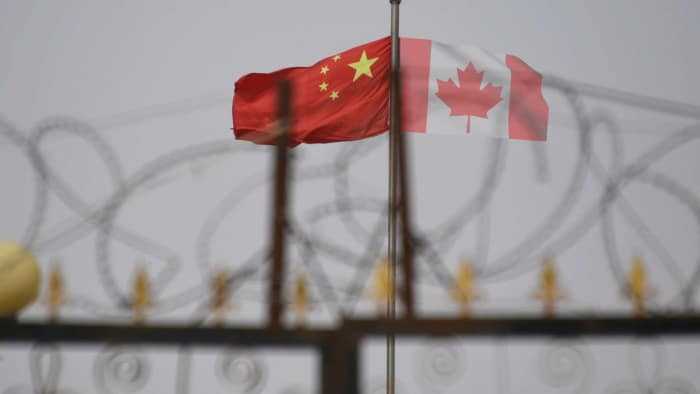
Trade with China, But Don’t Fall in Love

Canada’s recent trade advances with China—including renewed access for canola, lobster, and beef, alongside the lifting of visa restrictions—have triggered predictable reactions at home. Some see these developments as a long-overdue reset in a strained relationship. Others worry Canada is drifting into geopolitical territory that could unsettle our most important ally, the United States. As is often the case with trade, the reality is more nuanced than either camp suggests.

h/t handy n handsome

Share

Lutnick suggests Canada-China deal threatens CUSMA renegotiation

U.S. Commerce Secretary Howard Lutnick says Canada is “playing with a set of rules that they haven’t really thought through” by moving to reset relations with China ahead of trade deal renegotiations with the United States.

Lutnick made the comments in an interview with Bloomberg in Davos, Switzerland on Thursday.

h/t Mauser

Share

Michael Taube: I’m a speechwriter. Carney did better than Trudeau at Davos. But that’s a low bar

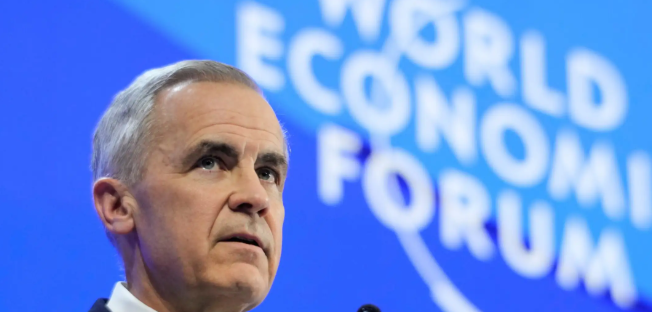
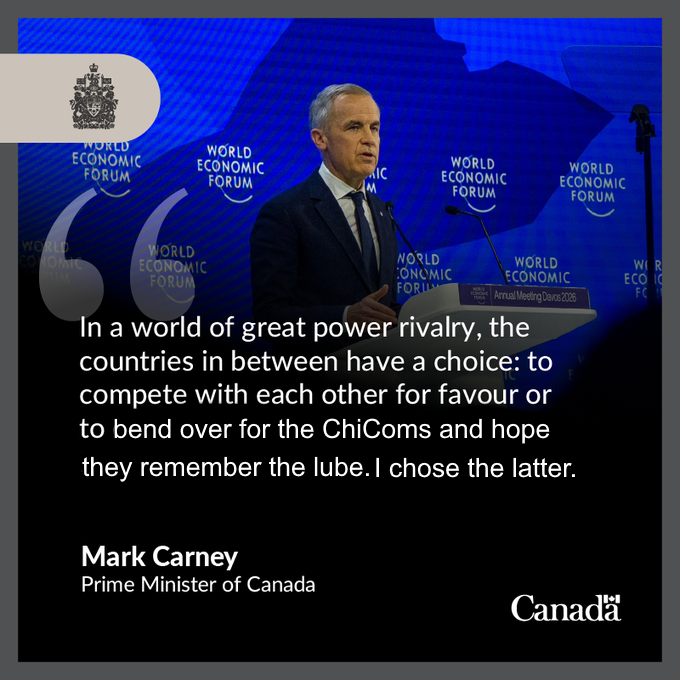
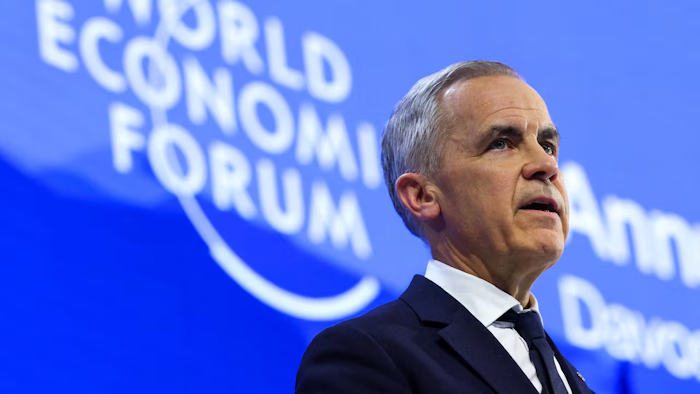
Prime Minister Mark Carney’s Jan. 20 speech at the World Economic Forum in Davos, Switzerland received significant media attention. It was critical of U.S. President Donald Trump’s political agenda without directly saying so. Canada’s progressive commentators, and some conservative commentators, couldn’t contain their enthusiasm when the PM uttered lines like, “we know the old order is not coming back … we shouldn’t mourn it” and “we shouldn’t allow the rise of hard power to blind us to the fact that the power of legitimacy, integrity and rules will remain strong, if we choose to wield them together.”

Share

How the Ottawa-Beijing Agreement Plays Into China’s Factional Struggles and Emboldens Xi

Chinese state-owned media hailed Canada’s new agreement with Beijing and pursuit of “strategic partnership,” with the regime’s China Daily saying Prime Minister Mark Carney’s visit “reflects China’s increasing global stature.”

Amid factional infighting and struggles, Carney’s visit is being portrayed as a win for Chinese leader Xi Jinping, whose side has been increasingly sidelined in recent months, says Wang He, a senior China commentator with The Epoch Times and former university lecturer.

Share

Conrad Black: As Canada Seeks to Diversify Trade, It Should Have No Illusions About the Chinese Regime

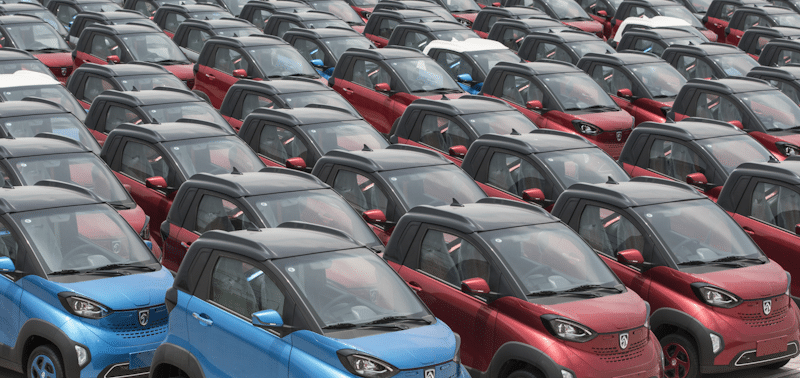
After eight months without any trade or tariff agreements, some people said that it was a relief to see that Prime Minister Carney had reached a partial free trade agreement with China. It appears to be substantially a liberalization of our sale of canola in exchange for their exportation to us of 49,000 electric vehicles.

To the extent that this begins a process of making Canada less dependent upon the United States economically, it is useful. And to the extent that it inaugurates a series of enterprising trade agreements with a wide variety of countries, it is the beginning of a welcome and long-overdue procession of events to end Canada’s status as a branch-plant country. This process began with the Canada -U.S. Free Trade Agreement of nearly 40 years ago, prior to which almost every company in Canada, except Canadian Pacific and the large banks, had the words “Canada Ltd.” after their names.

Share

Make me puke …

Praising ‘coexistence,’ Mark Carney says Canada can show the world ‘another way is possible’

QUEBEC CITY — Following the impact of his major foreign policy speech in Davos this week, Prime Minister Mark Carney spoke directly to Canadians on Thursday in a second wide-ranging address framed as a clarion call for the government’s vision, national unity, and the value of Canadian “coexistence.”
Carney also used the opportunity to respond to U.S. President Donald Trump, who warned the prime minister this week that Canada “lives” because of the United States, and that the Canadian leader should remember that.

Share

PM’s Speeches in Davos and Beijing Can’t Be Viewed in Isolation

Although Prime Minister Mark Carney’s address in Davos was polished, ambitious, and fluent, it cannot be read in isolation from his remarks in China last week, where he spoke approvingly of a coming “new world order.” Those words are not neutral. They carry a long and troubling history, particularly when invoked in Beijing, where the phrase is often used to justify the erosion of liberal norms in favour of hierarchy, managed markets, and political control.

When a Canadian prime minister echoes that language, even indirectly, it risks lending legitimacy to systems that reject the very principles Canada claims to defend. Seen in that light, the Davos speech reads less as sober realism and more as an attempt to reconcile democratic values with an emerging order that is neither benign nor aligned with Canadian interests.

Share

Jesse Kline: Carney declares world order dead, just don’t ask him about China

Prime Minister Mark Carney took to the podium at the World Economic Forum in Davos, Switzerland, on Tuesday to deliver one simple message: the world as you know it is over. But it’s not even clear that Carney knows what he thinks should take its place, or whose side he’s on.

The Prime Minister’s Office billed the trip as a means of deepening Canada’s “economic partnerships,” creating “new opportunities” and pitching our country as the “premier destination for global capital and investment.” But those talking points comprised just five per cent of his speech.

Share

Doug Ford calls for Chinese EV boycott in Canada after Carney deal

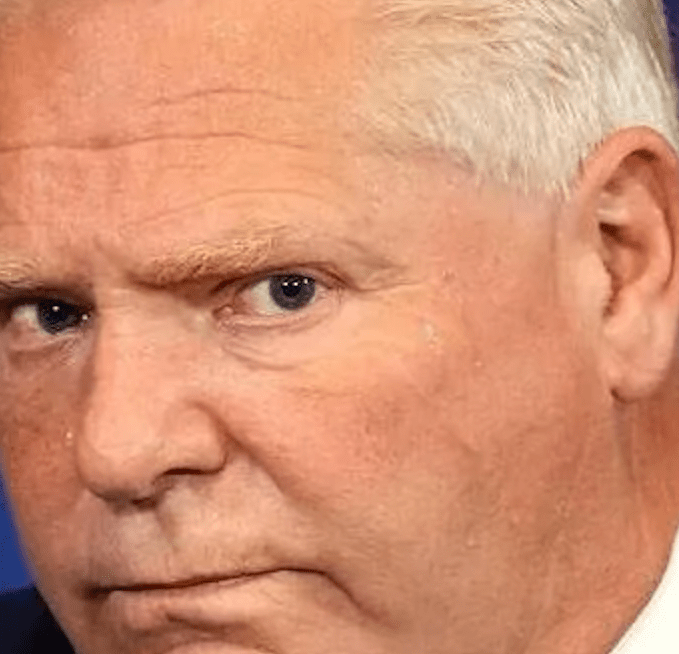
Ontario Premier Doug Ford is calling on Canadians to boycott Chinese-made electric vehicles when they are allowed back into the country under a deal recently struck by Prime Minister Mark Carney.

Ford has been critical of the deal — and the fact Carney did not speak to him about it in advance — saying it will harm Ontario’s auto sector.

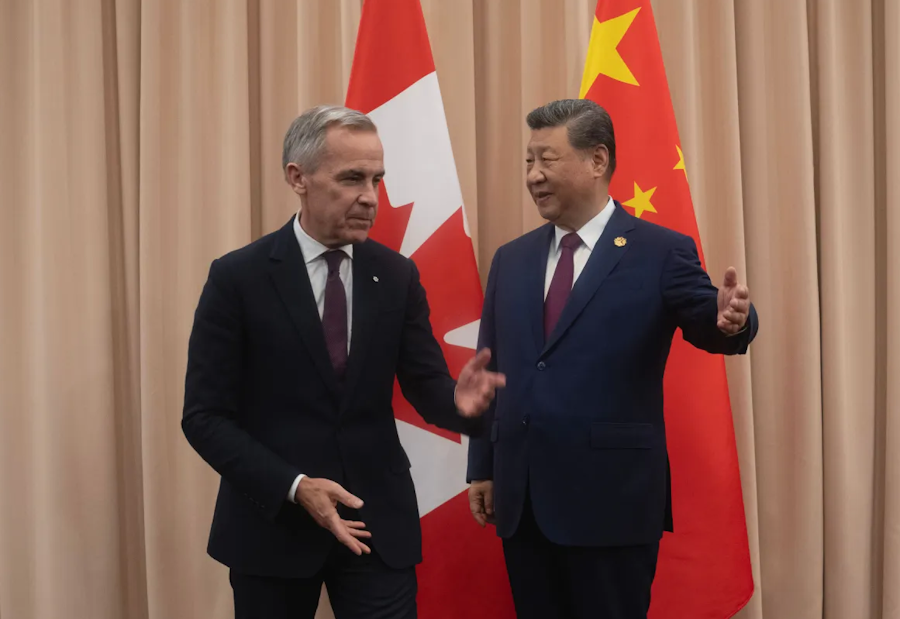
Carney and Chinese President Xi Jinping agreed while the prime minister was in China that Canada will all but drop its 100 per cent tariffs on Chinese EVs and allow an annual import quota of up to 49,000 of the vehicles in exchange for China reducing its canola tariffs.

Share

Former RCMP Director Alarmed by New Canada-China Agreement on Public Safety Cooperation

Former national director of the RCMP’s proceeds-of-crime program Garry Clement says Ottawa’s new agreement with Beijing on public safety is concerning because it potentially opens the door for the Chinese regime to “capitalize on intelligence.”

Prime Minister Mark Carney made several agreements with Beijing during his visit to China last week as part of a broader effort to establish closer ties with China and boost non-U.S. exports.

Share

‘Undeniable’: The Many Security Risks of Chinese EVs as Canada Opens Its Markets

China crappy electric cars, EV

As Canada moves to slash tariffs on Chinese electric vehicles, a growing number of reports and researchers are warning about security risks and the potential for espionage by the Chinese Communist Party through these vehicles.

When asked for evidence to support his concerns about the security risks posed by Chinese electric vehicles (EVs), Ontario Premier Doug Ford pointed to the fact that everyone who accompanied Prime Minister Mark Carney to China, including Canadian reporters, was instructed to use burner phones for security reasons.

Share

Michelle Rempel Garner: Nice speech Carney, but what are you going to do about it?

Tuesday, Canadian Prime Minister Mark Carney delivered a speech at the World Economic Forum that rightly named the hard realities of a fractured geopolitical system, and the urgent need for middle powers like Canada to step up with resolve and realism.

Words do matter, especially in moments of crisis like the one Canada presently finds itself in. But to protect our country, Canadians cannot allow themselves to believe that words alone are enough. Action is needed, too.

Share

ALBERS: Mark Carney’s WEF delusion — naming the ‘great lie’ behind the ‘New World Order’

The Prime Minister’s polished Davos speech wasn’t a call to truth — it was a sermon in deception, repackaging contradictions as a global vision.

I listened with genuine interest to Prime Minister Carney’s speech at Davos. It was, by any technical measure, one of his better performances. Polished, confident, impeccably delivered. If one were unfamiliar with the actual state of affairs, if one were blissfully ignorant of the realities beneath what he calls the “rupture” in international relations, the speech might have appeared a beacon of hope in dark times.

And therein lies the problem. One must either be ignorant of the facts or willing to live a lie.

Share

Stupid Shit Andrew Coyne Says

No, Canada is not selling out to Beijing

Well, that got their attention. Since the Prime Minister’s visit to China, the American media – and social media – have been filled with expressions of shock and amazement.

For critics of Donald Trump, it was payback for his bullying and abusive treatment of America’s nearest neighbour and historic ally. For the President’s supporters, it was a sign of Canadian perfidy, if not grounds for invasion. Canada will “surely regret” gives you the flavour of it.

Share