Rory Gilfillan: Our once brave nation now leaves the fight to others

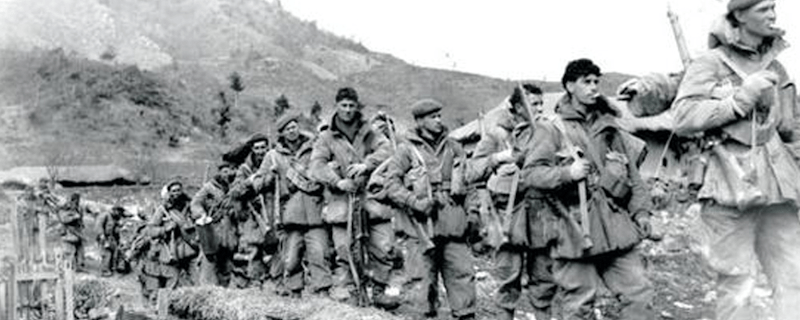
In the last gasps of the 1930s, prime minister William Lyon Mackenzie King made one last feeble attempt to keep Canada out of the Second World War. The policy would be called “limited liability.” Instead of supplying the soldiers needed to fight the coming war, Canada would instead provide grain to feed the Allies and train Commonwealth aircrews. While the policy was naïve it was at least understandable. In the First World War, Canada had lost 66,000 men and women. Out of a total population of nine million, this was no small thing. Everyone was connected. Everyone was impacted. And while we had fought valiantly, earning a seat at the peace talks in 1919, it hardly seemed worth the cost. Limited liability would be the last-ditch effort to avoid the gathering storm.

Share

Canadians think there is not enough pride in the country’s military: poll

A large majority of Canadians will be observing Remembrance Day this year, most by wearing a poppy, but Quebecers tend to be less likely to observe the national day of remembrance than Canadians in other provinces, says a new poll.

The Postmedia-Leger poll looked at Canadians’ pride in the military, treatment of veterans and Remembrance Day.

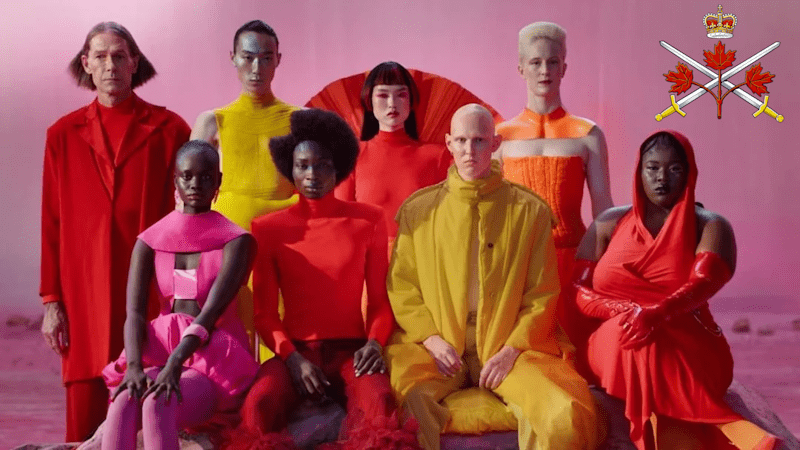
It’s pretty obvious Trudeau and his government despise Canada’s military and its history, they turned the armed forces into a haven for cross-dressers and racist DEI cranks.

Share

‘2032 is not good enough’: Kelly Craft says Canada has to spend faster on defence if Trump wins

The former U.S. ambassador to Canada, who served under former U.S. president Donald Trump, says Canada needs to spend more on defence, and do so faster than the federal government’s currently plans to.

“Canada, you can do better. I know you can do better,” Kelly Craft told CTV’s Question Period host Vassy Kapelos, in a panel interview alongside former Canadian ambassador to the U.S. David MacNaughton.

Share

‘Fundamental’ political shift required to overcome $40 billion NATO spending gap: analyst

Canada will need a profound shift in political priorities if the country is to ramp up spending to meet its international security obligations.

New projections released by the Office of the Parliamentary Budget Officer reveal the massive spending gap Canada needs to overcome in order to meet its military commitment to its NATO allies.

According to estimates by the PBO, the federal government needs to double the amount it currently spends on the military under its two-per-cent-of-GDP NATO obligation.

Share

Canada needs to double its military spending to meet NATO targets: PBO

Canada needs to double its annual military spending in order to meet its NATO requirements, new Parliamentary Budget Officer (PBO) projections show.

After facing months of pressure from allies, the prime minister announced at the NATO Summit that Canada will meet its commitment of two per cent of its GDP by 2032.

Share

Michel Maisonneuve: Meritocracy, not wokeness, badly needed in Canadian Armed Forces

We are living in one of the most complex, dangerous, and unpredictable times in human history. We are witnessing increasing global instability and a broader range of threats, now state-on-state as well as from non-state actors. The world will not become less complex or more predictable. Only a few years ago, no one could have predicted the COVID-19 pandemic, a war in Europe, or the bloody attack by Hamas on Israel and its justified response. The only way for Canada to manage these new complexities, each seemingly more challenging than the preceding one, is to be better prepared to meet them. Unfortunately, our military is woefully unprepared, even though national security and the defence of democratic values are more important than ever.

Share

DND didn’t apologize to sexually assaulted employee because Ottawa Citizen would write about it

Management of the Canadian Forces Morale and Welfare Services declined to apologize to an employee who was sexually assaulted in Latvia because they didn’t want the mea culpa reported on by the Ottawa Citizen, newly released documents reveal.

Kristen Adams, a civilian who worked for the welfare services group, was sexually assaulted by a NATO soldier during her shift at the canteen operated by Canada for troops in Latvia, according to military police records.

Share

Former special ops soldier says he was blacklisted for reporting alleged killing of Afghan civilians

A former special forces soldier is suing the federal government, alleging he was blacklisted by his unit and pushed out of the military after he denounced Canadian troops’ alleged involvement in the killing of unarmed people in Afghanistan.

The soldier is also naming one current and two former top Canadian generals who he says minimized or failed to adequately investigate Canadian Armed Forces (CAF) involvement in the alleged killings.

Share

HANNAFORD: Unfit for action, how the Trudeau Liberals broke the armed forces

“We need warriors. We seem to be hell-bent on destroying the warrior culture but if there’s one organization where you want to have warriors, would that not be your military?”

And by the way, sexual predation is nowhere near as common in the armed services, as the attention given to it by the Liberal government, would lead one to believe.

Share

Canada’s peacekeeping commitments have plunged to an all-time low

In 2015, Prime Minister Justin Trudeau declared that Canada was “back” on the international stage; not long after, his government promised to “renew Canada’s commitment to United Nations peace operations,” and pledged to send significantly more personnel. That’s important for UN peacekeeping, because it is only effective when countries from around the world contribute skilled military and police officers as part of broader political efforts to resolve the underlying causes of conflicts. And of course, many conflicts cry out for military observers and peace implementation forces around the world right now.

Our armed forces are no longer fit for purpose, lets look after Canada.

Share

Canada dithers over participation in ‘top secret’ data cloud as allies push ahead with intelligence-sharing plans

Canada ponders ‘top secret’ data cloud as allies push ahead with intelligence-sharing plans

Australia is joining the United States and the United Kingdom in developing top-secret cloud networks to exchange highly classified defence, national security and intelligence data with each other — a concept Canada has just begun to think about.

Experts say that, unless the gap is closed quickly, Canada’s lack of such digital infrastructure will have a profound impact on new military hardware the federal government has committed to purchasing, such as F-35 stealth fighters, MQ-9 Reaper drones and long-range P-8 surveillance planes.


I don’t think Canada is dithering so much as not being invited to participate.

I suspect we are considered both a piker and a genuine security risk.

Share

Thinking the ‘unthinkable’: NATO wants Canada and allies to gear up for a conventional war

CAF rearmament

NATO says it wants its members to develop national plans to bolster the capacity of their individual defence industry sectors, a concept Canada has struggled with — or avoided outright — for decades.

At the NATO leaders summit in Washington in July, alliance members agreed to come up with strategies to boost their domestic defence materiel sectors, and to share those strategies with each other. Almost entirely overshadowed at the time by debates about members’ defence spending and support for Ukraine, the new policy got little attention.

Share

Jesse Kline: The pressing need to invest in, and protect, our Arctic territories

Leaks, ineffective anchors, mechanical breakdowns among problems facing new Arctic patrol ships

As southern Ontario’s hot, sticky summer starts to wind down, the last thing on most people’s minds is the vast, frozen tundra of Canada’s Far North. But on Sept. 18, a group gathered in downtown Toronto to hear a broad range of experts discuss Arctic sovereignty and security.

Granted, the Far North has always been a very niche area of interest in Canada, which is curious for a country that prides itself on being a northern nation. But perhaps that’s to be expected when 90 per cent of our population lives within 160 kilometres of the U.S. border, many in cities such as Vancouver and Toronto that have relatively temperate climates.


Ice Breakers, Submarines, Frigates, Supply vessels, Arctic patrol vessels, Fighter Jets,  Armored vehicles, Sleeping Bags, Recruiting crisis – is there anything Canada’s armed forces aren’t lacking beyond ludicrous DEI policies?

Share