
Michael Higgins: It’s not reconciliation when law societies exaggerate anomalies as ‘graves’

Michael Higgins: It’s not reconciliation when law societies exaggerate anomalies as ‘graves’

Making criminals out of people who merely ask questions about the residential school system is not the path to reconciliation, says B.C. lawyer Jim Heller.

Goodwill and open dialogue are needed far more than trying to imprison people under a “denialism” law, according to Heller, whose defamation suit against his own law society over potential graves at the former Kamloops Indian Residential School was recently settled.

Share

Tk’emlúps te Secwépemc chief says probe into fake graves continues with no end to gravy train in sight

Tk’emlúps te Secwépemc chief says probe into fake graves continues with no end to gravy train in sight

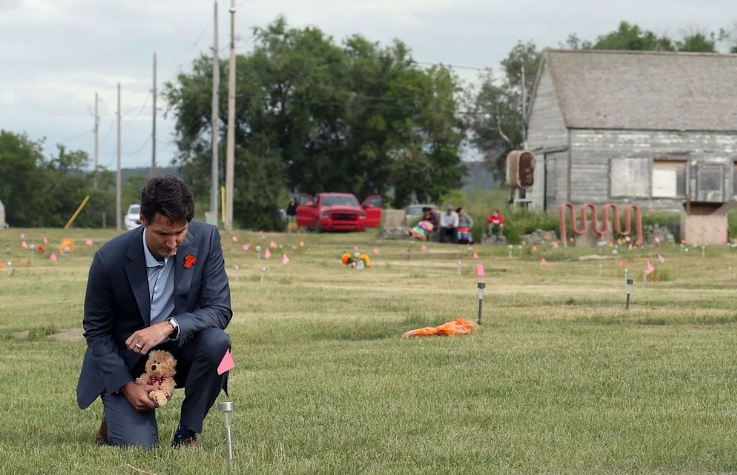
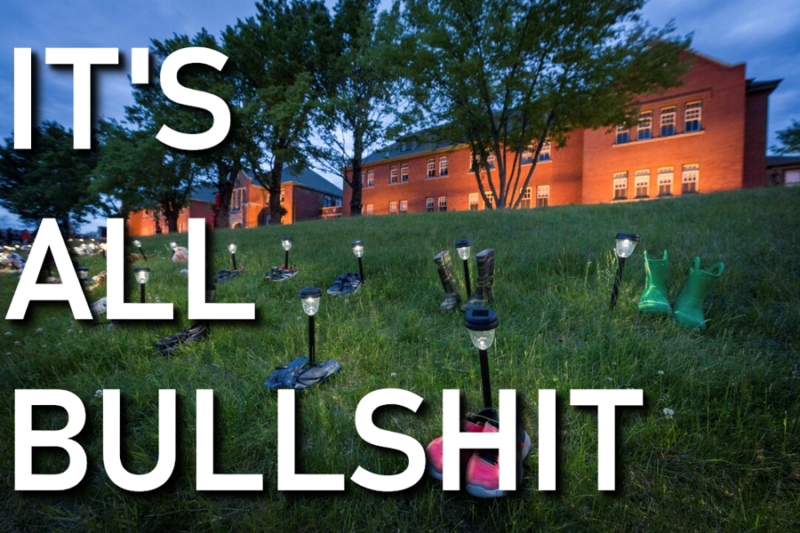
Five years after Tk’emlúps te Secwépemc sent shockwaves around the world by announcing the First Nation found more than 200 possible unmarked graves at the site of the former Kamloops Indian Residential School, the chief says the community doesn’t yet know if or when it will proceed with excavation.

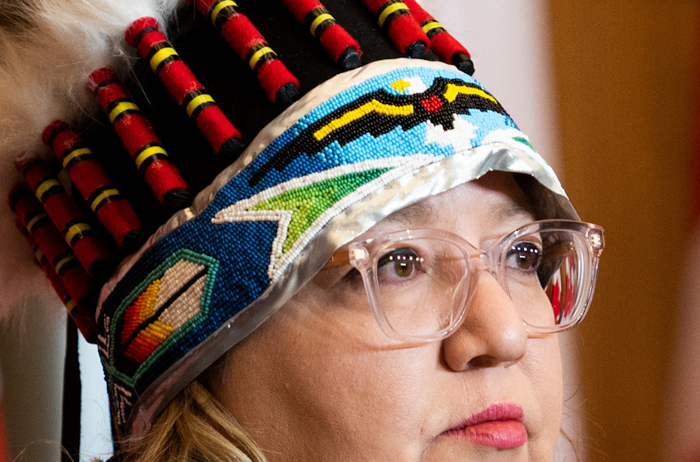
Kúkpi7 (Chief) Rosanne Casimir told CBC News the nation is still in an engagement phase with dozens of communities that sent children to the institution when it was in operation from 1890 to 1978 to try to get consensus on the path forward.

“For us, it is about truth and reconciliation and being able to work with all the different communities, our neighbouring nations, our consultants and our families,” Casimir said.

Share

‘THEY SEND US MESSAGES’: Manitoba chief rejects calls to exhume residential school burial sites because the dead speak

CALGARY — A Manitoba First Nations leader has said that indigenous communities should not have to exhume suspected residential school burial sites because those who died there “send us messages” confirming their presence.

Share

First Nations Opposition to Pipeline Proposal Puts Carney Between a Rock and Hard Place

First Nations Opposition to Pipeline Proposal Puts Carney Between a Rock and Hard Place

Much of whether Prime Minister Mark Carney’s plan to fast-track economic growth through his Major Projects Office will bear fruit or remain forever aspirational will depend on how he manages negotiations with indigenous groups. The tone from and resolutions released by the Assembly of First Nations (AFN) at its recent annual gathering in Ottawa don’t bode well for the federal government.

Always.

Share

RUBENSTEIN: Treaty 8 chiefs have no grounds to demand resource revenue sharing on ceded lands

RUBENSTEIN: Treaty 8 chiefs have no grounds to demand resource revenue sharing on ceded lands

In response to a recent Western Standard news story about indigenous grievances, Treaty 8 chiefs’ claims for resource revenue sharing on ceded Western Canadian lands lack a clear legal and historical foundation, which is essential for understanding their legitimacy and impact.

While the phrase “Treaty 8 territory” seems to refer to lands surrendered to the Crown in the 1899 agreement, understanding the temporal context of these land surrender agreements helps clarify why current claims for resource revenue sharing are legally and historically unfounded.

Share

Assembly of First Nations wants calling out fake graves bullshit criminalized to protect the grift

Assembly of First Nations wants calling out fake graves bullshit criminalized to protect the grift

The Assembly of First Nations (AFN) has passed an emergency resolution that calls on Canada to criminalize residential school denialism.

The advocacy organization, which represents chiefs countrywide, is holding its annual general assembly in Ottawa this week. The resolution was passed on Tuesday.

First Nations chiefs spoke about the importance of the resolution at a news conference Wednesday.

Share

Jamie Sarkonak: One law for First Nations, another for everyone else

Jamie Sarkonak: One law for First Nations, another for everyone else

There are two kinds of lobster trappers in St. Mary’s Bay, Nova Scotia: the non-Indigenous ones who have to abide by federal law, and the Indigenous ones who apparently don’t. The Liberal approach to governing the fishery has bred tension and violence between the two — and a recent Nova Scotia Supreme Court decision shows that we’re far from seeing it resolved.

Share

Canada can’t be governed by guilt trip regarding First Nations

Canada can’t be governed by guilt trip regarding First Nations

In the United States, they refer to their national parks as “America’s Best Idea.”

Books and documentaries have been dedicated to the notion that in 250 years of nationhood their greatest creation has been national parks, starting with the world’s first, Yellowstone, in 1872.

Not here in Canada. Parks Canada, the government agency charged with preserving, protecting and operating this country’s 37 national parks now calls them a “colonial injustice.”

Share

The road to Cowichan

The road to Cowichan

In 1878, an agent for the province of British Columbia predicted the legal battle that surrounds the declaration of Aboriginal title for the Cowichan Nation today.

Gilbert Sproat, a commissioner in charge of establishing reservations for Indigenous communities, sent a letter to his superiors urging them not to rush the business of handing out land grants to the province’s new settlers, who were eager to snatch up the best lands the province offered.

“It is extremely inconvenient to the province to have lands locked up from preemption or sale in fine districts, owing to the non-settlement of the Indian claims, but this is a necessity,” Mr. Sproat wrote in a letter that became a key part of evidence in the B.C. Supreme Court record in the Cowichan case.

Share

Some whiny Indigenous people wary of ‘colonial symbolism’ of Order of Canada: study

Some whiny Indigenous people wary of ‘colonial symbolism’ of Order of Canada: study

Indigenous community members have encouraged federal officials to reflect on how the Order of Canada can overcome its “deep colonial symbolism and associations,” says an internal government presentation on efforts to modernize the Canadian honours system.

The April presentation, prepared for the Order of Canada Advisory Council, says recent feedback indicates that accepting the honour “could bring feelings of discomfort or shame” to some Indigenous people due to its colonial associations.

Share

Canada’s citizenship study guide has glaring omissions. Neglects Slavery and Cannibalism of our 1st People’s Beheaders

Canada’s citizenship study guide has glaring omissions. Neglects Slavery and Cannibalism of our 1st People’s Beheaders

To prepare for his Canadian citizenship test, Stéphane Bazin from France read the federal study guide several times, memorizing facts about hockey players, prime ministers and historical figures.

Bazin learned far less, he said, about Indigenous Peoples and their history.

“The story in the guide is written by the winners,” said Bazin, 41, who wrote the test and became a citizen three years ago. “It’s a very settler-oriented narrative of the French and the British settling — it’s almost like they arrived in an empty country.”

1st People’s Beheaders!

(more…)

Share

Lawyer says closure of Joffre Lakes Park potentially violates Canadian Charter

Lawyer says closure of Joffre Lakes Park potentially violates Canadian Charter

A constitutional lawyer has sent a letter to the B.C. government saying that its decision to close Joffre Lakes Park to the public for two stretches potentially violates both provincial law and the Canadian Charter.

The popular park near Pemberton will be closed from June 20 to 27 and Sept. 8 to 30 so that members of the Lil’wat Nation and N’Quatqua can exercise their traditional activities on the land.

Share

Christine Van Geyn: A family found ancient remains on their property. Their nightmare was just beginning

Christine Van Geyn: A family found ancient remains on their property. Their nightmare was just beginning

The Reio family was supposed to be living the Canadian dream. After a lifetime of hard work, they had saved money to buy a small lot with a modest home on the shores of Lake Erie. It was where they planned to spend their retirement. The existing bungalow needed work, but the Reios were ready to build their dream. They planned a small renovation that would involve keeping the existing foundation but building a slightly larger home with a second story and two bedrooms for their adult children and, one day, maybe grandchildren. The work began in 2024, and that’s when the Reios’ nightmare began.

Share