Diver finds warship bell after 80 years — but not everyone approves

A piece of Canadian naval history has been recovered from the bottom of the English Channel and is now destined for a museum, but not everyone is celebrating.

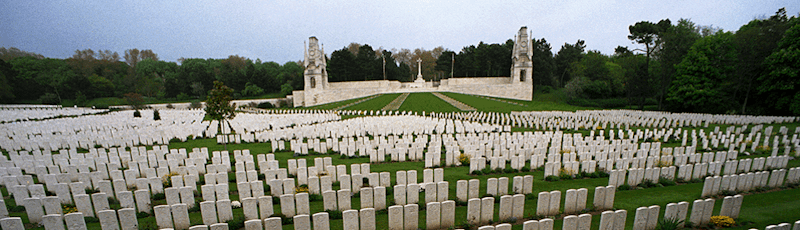
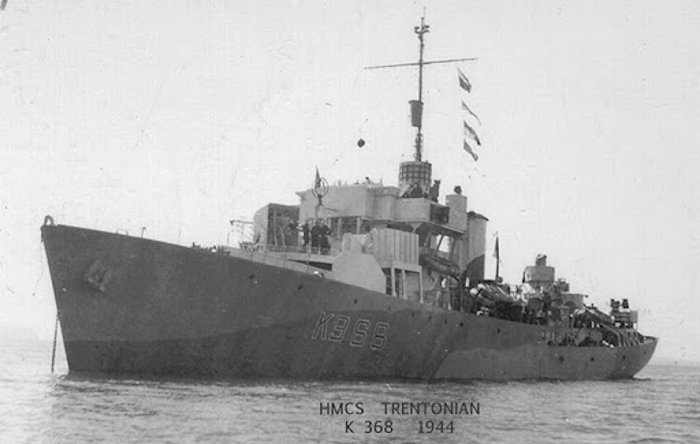
British diver and YouTuber Dom Robinson, a 53-year-old military veteran and project manager, located the bell from HMCS Trentonian, 67 metres below the surface. The ship, a Royal Canadian Navy corvette, was sunk by a German U-boat in February 1945. Six sailors were killed in the attack, and the vessel went down in just 10 minutes.

Robinson, who has been exploring shipwrecks for more than 30 years, called the discovery “emotional” and “unbelievably exciting.


War grave desecration? Understandably yes.

In Asian waters the wrecks of Allied WW II vessels lost in battle have been plundered for scrap metal by the grateful natives our forces liberated from the yoke of Imperial Japan.

Share

What’s the point of VE Day? Those who remember will soon be gone

Though the Second World War was never fought on British land, only in the skies overhead, the country’s fabric is marked by the conflict in innumerable ways. Near my home is a stretch of woodland I often run through with the dog. In 1945, an Allied plane crashed among its trees, killing several of the men on board. To this day, local legend has it that visitors to the crash site will hear voices or coughing, or smell smoke.

But for how much longer will we remember those ghosts? This week marks the 80th anniversary of VE Day — the moment the war ended in Europe. The youngest surviving veterans are now at least 98. And of the millions of British people who served in the war, only tens of thousands remain: perhaps 0.01% of Britain’s total population.

Share

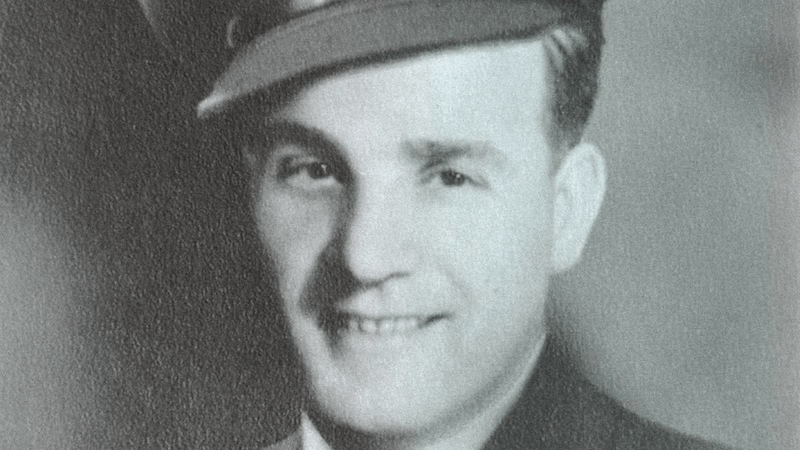
This pilot is honoured every year in a U.K. town. Will Canada recognize his bravery?

There is a street named after him in a British town.


A plaque at the local hospital tells the story of how the 29-year-old pilot saved many lives while sacrificing his own during the Second World War.

There are even talks of building a statue of Darlington’s “Gallant Airman” to honour his life and death.

But William Stuart McMullen, a Canadian pilot officer from Ontario, is little known in his own country.


Nope. Not today’s “Canada”.

Share

Inside the mystery of the ‘lost German girl’

For years, ever since the footage appeared in TV documentaries and online, the identity and fate of the so-called ‘Lost German Girl’ has proved captivating.

Dressed in a nondescript uniform and with a swollen face betraying that she had been savagely beaten, she was seen walking down a road in liberated Czechoslovakia.

The date was May 7, 1945, the very day that Nazi Germany surrendered to the Allies after the suicide of Adolf Hitler in his Berlin Bunker.

This is the closest I could find to the original footage shot by Haglund it is only available on YouTube.

The footage shows living SS men who were later filmed dead by the road side having been the subjects of reprisal.

Share

Remarkable scenes of gratitude greet Canadian war veterans in the Netherlands

Apeldoorne Netherlands Liberation Day

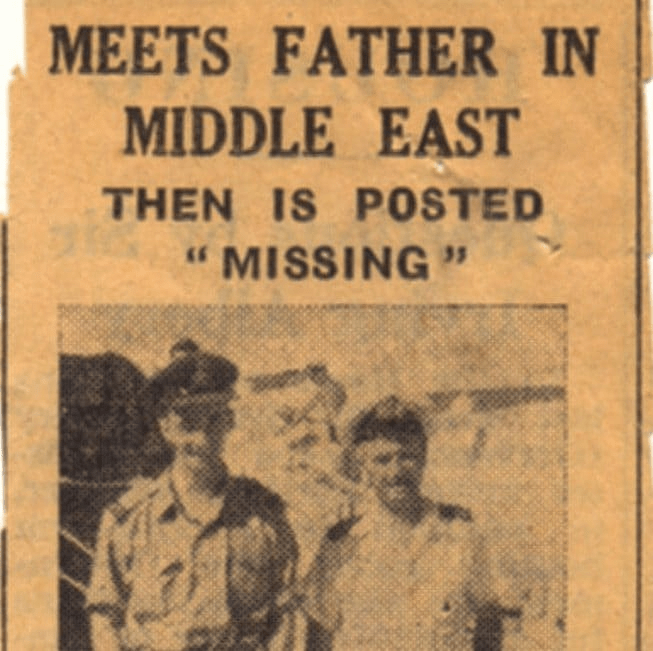
As a former Spitfire pilot who flew 60 missions over Nazi-occupied Europe during the Second World War, George Brewster is not one to be rattled easily.

But he says experiencing the warmth and gratitude of the Dutch people who have come out to cheer him and other Canadian Second World War veterans this weekend has left him speechless.

Well done.

Share

Council rejects VE Day anniversary parade because it’s ‘too elitist’

A military parade marking the eightieth anniversary of VE Day has been rejected by councillors because it is “too elitist”.

Dacorum borough council in Hertfordshire has eschewed hosting any formal event to mark the end of the Second World War in Europe on May 8.

This is despite the Lib Dem-run council holding a day-long event last year called “50 Fest” – which included a colourful parade through Hemel Hempstead – to mark its 50th birthday.

Share

Second World War bomber with British airman found 82 years after being shot down

A Second World War bomber, shot down by the Nazis with a British airman aboard, has been found after 82 years.

Leslie Norman Row, from Gravesend, Kent, was flying a mission over the Mediterranean when his Baltimore Bomber was attacked. The aircraft, part of the Royal Australian Air Force (RAAF), crashed off the Greek island of Antikythera, with Mr Row and two comrades losing their lives.

After almost 82 years of uncertainty, divers discovered the bomber 61 metres beneath the Aegean Sea.

Share

Where Do You Bury a Nazi?

When Daniel and Victoria Van Beuningen first toured their future home, a quiet villa in the Polish city Wroclaw, it had been abandoned for years, its windows sealed up with bricks. But something about its overgrown garden spoke to them. They could imagine raising chickens there, planting tomatoes and cucumbers. They could make something beautiful out of it, they thought — a place where their children could run and play.

They moved in knowing very little about what happened at the villa before World War II, when Wroclaw, formerly Breslau, was still part of Germany; or what occurred there during the war, when Soviet forces held the city under a brutal siege; or even what became of the house during the war’s aftermath, when hundreds of thousands of local Germans were forcibly resettled from what was now Polish territory. All their neighbors could tell them was that the villa had once housed a Communist newspaper.

Still, the couple wanted to know more, and their inquiries eventually led to the Meinecke family in Heidelberg, Germany, elderly siblings who said they were born in the home. Over a long afternoon, they showed the couple pictures of the place from happier times before the war, but they also offered the Van Beuningens a surprising warning: The couple might find the remains of some German soldiers buried in the garden. Maybe a few, maybe more; they couldn’t be certain.


Related

Share

‘End of an era’: Last surviving Battle of Britain pilot dies

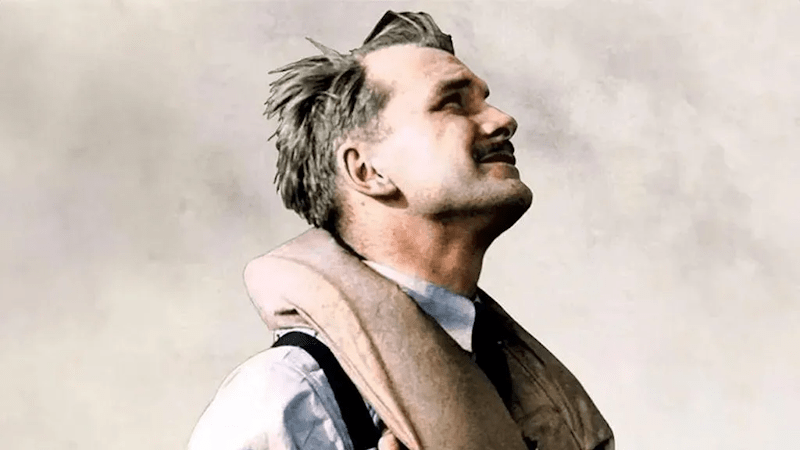
The last surviving Battle of Britain pilot, John “Paddy” Hemingway, has died at the age of 105.

Mr Hemingway, who was originally from Dublin, joined the Royal Air Force (RAF) as a teenager before World War Two.

At 21, he was a fighter pilot in the Battle of Britain, a three-month period when air force personnel defended the skies against a large-scale assault by the German air force, the Luftwaffe.

Share

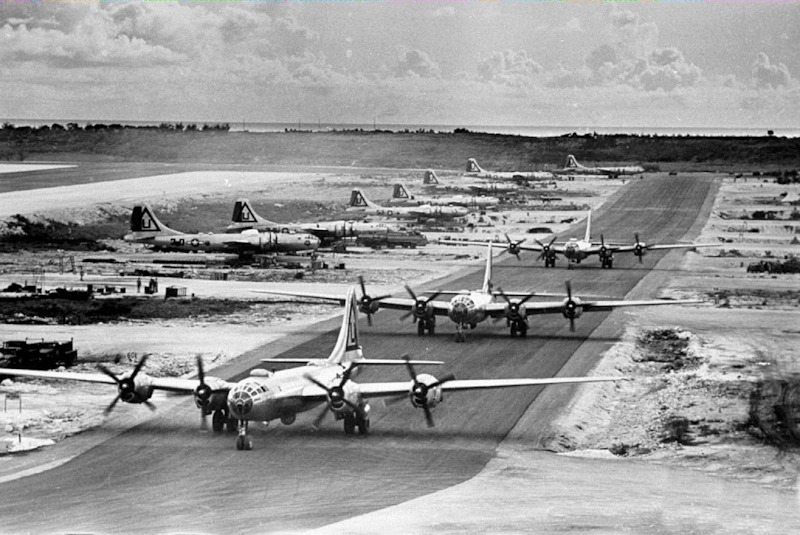
Massive WWII B-29 Bomber Base Fully Reclaimed For Future Pacific Fight

Satellite imagery shows the extent of the massive amount of work that has been done in the past year to restore more than 20 million square feet of runways and other World War II-era infrastructure at historic North Field on the U.S. island of Tinian in the Western Pacific. The airfield was originally established as a launchpad for B-29 bomber raids on Imperial Japan, including the ones that saw atomic bombs dropped on the cities of Hiroshima and Nagasaki. The facility has been refurbished to again offer a critical power projection node with its original grid-like layout presenting targeting challenges for a modern opponent, all of which could be especially valuable in a future high-end fight in the region against China.

h/t Hotair

Share

Myths about Dresden 1945 victim numbers debunked

Eighty years ago, Allied bombers destroyed huge parts of Dresden, killing thousands. Those exploiting the attacks for political ends often give casualty figures vastly higher than is historically certified. A fact check.

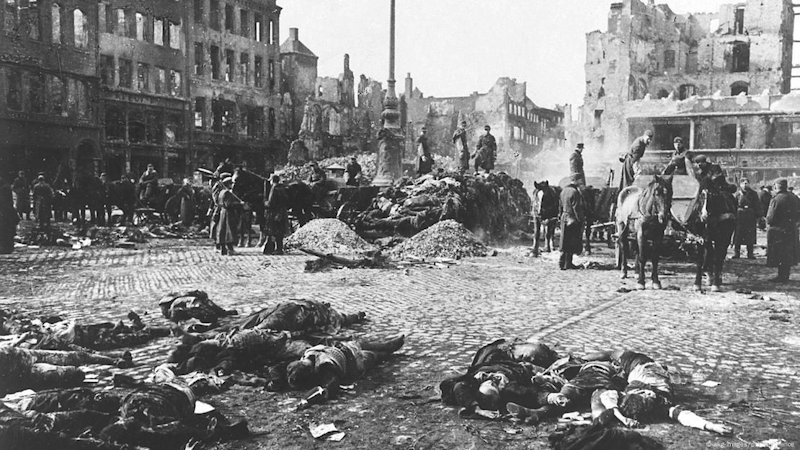
In the late evening of February 13, 1945, British and US bomber squadrons began devastating air raids on Dresden. By midday on February 15, large-scale fires had spread, killing thousands of people and almost completely reducing the historic city center to rubble.

After the air raids the survivors piled up the dead bodies, burning them to prevent the spread of disease. The pictures taken by photographer Walter Hahn are etched in the memories of many Germans.

Share

Netherlands: Names of 425,000 suspected Nazi collaborators published

SS Nederland Panzergrenadier Brigade

The names of around 425,000 people suspected of collaborating with the Nazis during the German occupation of the Netherlands have been published online for the first time.

The names represent individuals who were investigated through a special legal system established towards the end of World War 2. Of them, more than 150,000 faced some form of punishment.

The full records of these investigations were previously only accessible by visiting the Dutch National Archives in The Hague.

Share

Why Didn’t Someone Wake Up America on This Day 83 Years Ago?

How three humble privates sounded an alarm only to have it ignored by their immediate superior and America wake up in the middle of World War II.

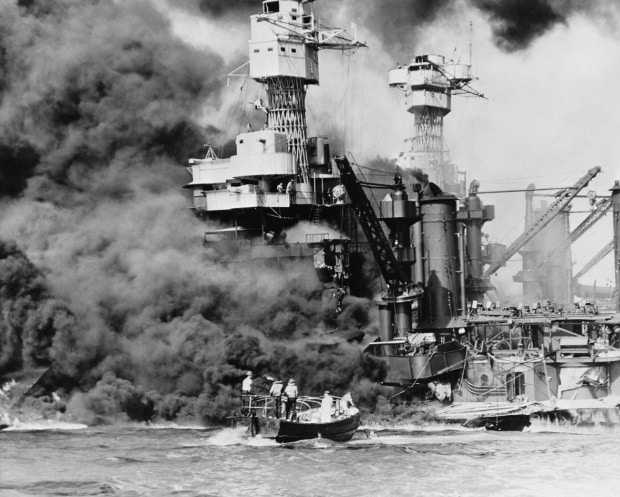
Today Americans mark 83 years since the Empire of Japan’s attack on Pearl Harbor at Oahu, Hawaii. Many will quote President Franklin Roosevelt and call it “a date that will live in infamy.” Few will remember three humble privates raising an alarm or apply their lessons today.

“Why,” asked a journalist with the AP, Harold “Hal” Boyle, in 1951, “didn’t someone blow a bugle at Pearl Harbor 10 years ago and wake up America?” It turns out that someone did, but that reveille was ignored by their immediate superior, and America woke up in the middle of World War II.

Share

The reparations war that could break the EU

Poland has been forced to let go of its history

Since its inception, the European project has always aimed to bring about the end of history on the continent, and to finally put the ceaseless cycle of war, extremism and imperialism that had torn Europe apart for a thousand years to rest.

Yet history’s severed heads have a troublesome habit of growing back. The Russian invasion of Ukraine served as a powerful reminder of this reality for the European mainstream, but other unresolved threads of the continent’s brutal and very recent past have also re-emerged in much more subtle ways.

Share

Strangers in Their Own Country

The country that the boys on the beaches of Normandy fought for no longer exists.

On June 6, 1944 — 80 years ago, to the date — some 73,000 American soldiers landed on the beaches of Normandy, stormed into the Nazi machine gun fire, scaled the cliffs beyond the sand, and began the long, grueling task of taking back a continent. 2,501 of them — many teenagers, some in their early 20s — would never see the other side. “We were all kids between the ages of 17 and 24,” recalled one American veteran. When their boat touched the beach, “it was like a movie…the horizon just erupted.” “I didn’t know what was happening,” said another. “I only knew I had to do what I had to do.”

Pick an allied nation and the same holds true.

Share