Ukraine says Mariupol children’s hospital bombed, further jeopardizing evacuations

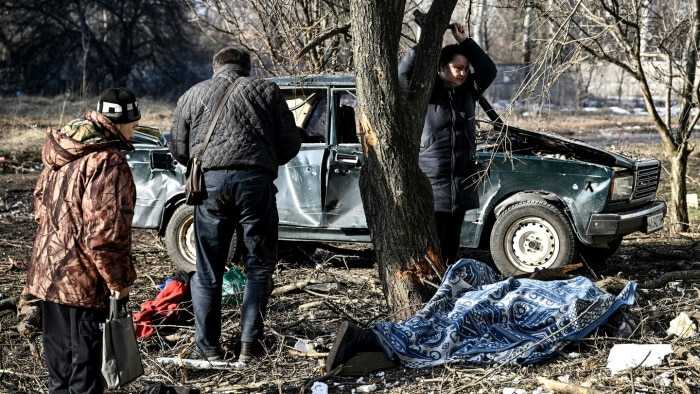
Ukraine accused Russia on Wednesday of bombing a children’s hospital in the besieged port of Mariupol during a supposed ceasefire to enable some of the hundreds of thousands of civilians trapped in the city to escape.

Russia had said it would hold fire to let civilians flee Mariupol and other besieged cities on Wednesday. But the city council said the hospital had been hit several times.

Share

War in Ukraine: Russia soon unable to pay its debts, warns agency

Russia will soon be unable to pay its debts, according to a leading credit ratings agency.

Fitch Ratings downgraded its view of the country’s government debt, warning a default is “imminent”.

The move comes amid increasing international sanctions against Russia following its invasion of Ukraine.

A credit rating is intended to help investors understand the level of risk they face in buying a country’s debt – or bonds.

Share

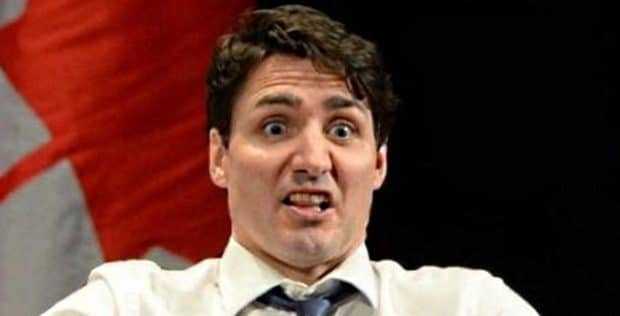
Surplus Freedom Convoy Requirement? … Trudeau promises surveillance gear to Ukraine, invites Zelensky to address Parliament

Prime Minister Justin Trudeau was given a stark reminder of wars present and past on Wednesday in Berlin.

Prior to his first bilateral meeting with Germany’s new chancellor, Trudeau spoke with Ukraine’s President Volodymyr Zelensky, telling him Canada will ship more specialized military equipment.

The federal cabinet has approved an additional $50 million in military and humanitarian aid, Trudeau said during a media availability at the German Chancellery building on Wednesday. Trudeau also invited Zelensky to address Parliament virtually — something the embattled president has agreed to do.

Share

Clash between Poland and US over MiG-29s reveals tensions in escalating war

The buck-passing between Poland and the US over the possible use of elderly MiG-29s to hit Russian forces inside Ukraine is one of the west’s few diplomatic failures of the past month. It also raises questions about how far European countries are prepared to escalate militarily before they believe they will touch a dangerous Russian tripwire.

The US and Europe have worked hard to keep their differences over sanctions and oil embargos to a public minimum, and tried to accommodate each other’s national interests. So it was striking on Tuesday when first the Pentagon described a Polish offer to send planes to the US airbase in Ramstein as “untenable”, and then the deputy US secretary of state said the US had not been consulted about the plan.

Share

Canada increasingly isolated as allies pledge more military funding in response to Ukraine invasion

When Donald Trump was making his most strident complaints about NATO allies spending too little on defence, some member nations — Canada, the Netherlands and Germany, in particular — seemed largely unmoved by the now-former U.S. president’s broadsides.

But Russia’s war on Ukraine — with all of its brutality and destruction — over the past two weeks seems to have succeeded where Trump and his predecessor, Barack Obama, failed.

Share

Trump: US should put Chinese flags on F-22 jets and ‘bomb shit out of’ Russia

In a speech to Republican donors in New Orleans, Donald Trump said the US should put the Chinese flag on F-22 jets and “bomb the shit out of Russia” in retribution for its invasion of Ukraine.

The Washington Post reported the remarks, which were made on Saturday night.

To laughter, the paper said, the former president said: “And then we say, ‘China did it, we didn’t do it, China did it,’ and then they start fighting with each other and we sit back and watch.”

According to the Post, Trump also called Nato a “paper tiger”, said the US military had won “skirmishes” against Russian troops while he was president, and claimed to have been tougher on Vladimir Putin than any other US leader.

Share

The end of the age of globalisation

How Russia’s invasion of Ukraine could hasten the demise of the US-led economic order.

The economic consequences of Russia’s bloody and despicable assault on Ukraine are very much a secondary consideration to the immediate human and geopolitical implications. And since the various national responses to the conflict are still so fluid, it is far too early to be able to identify the war’s precise longer-term economic effects. Nevertheless, it is possible to tentatively suggest what could unfold on the international economic front.

At least in the short term, the direct and indirect disruptions to economic relations arising from the invasion will almost certainly damage prospects for economic growth and boost inflation far beyond the combatant countries. In particular, the relative toughening of sanctions will generate economic difficulties in many areas beyond Russia itself.


Global banking system faces split as Russians turn to Chinese

Nissan and Levi have become the latest major brands to join the Great Cancellation of Vladimir Putin’s Russia – as Visa and Mastercard also pulled out of the country along with Netflix and TikTok.

… It comes as the global financial system looks set to split in two as Moscow turns to a Chinese payments system as a substitute for Visa and Mastercard.

Share

War and Persuasion

Vladimir Putin has unleashed a war of militaries and also of narratives

Like Thrasymachus in Plato’s Republic, Vladimir Putin clearly believes that justice is whatever serves the interest of the strongest. It’s the code of the mafia godfather—and, for a supposed master manipulator of information, Putin has wasted little effort trying to cloak with fine ideals his application of brute force against Ukraine.

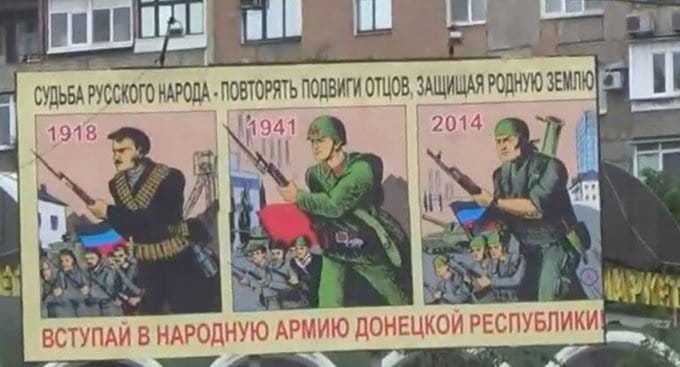
The pretext for the conflict—a “neo-Nazi” regime in Kyiv conducting “genocide” against ethnic Russians—seemed almost intentionally lame. No attempts were made to persuade or demoralize the public, either in Ukraine or in the Western democracies, ahead of what was to be the most egregious act of aggression in Europe in at least a generation. Even Russian troops at the front have often looked uncertain about the nature of their mission.

Share

Russia threatens to close main gas pipeline to Europe as the West ramps up sanctions

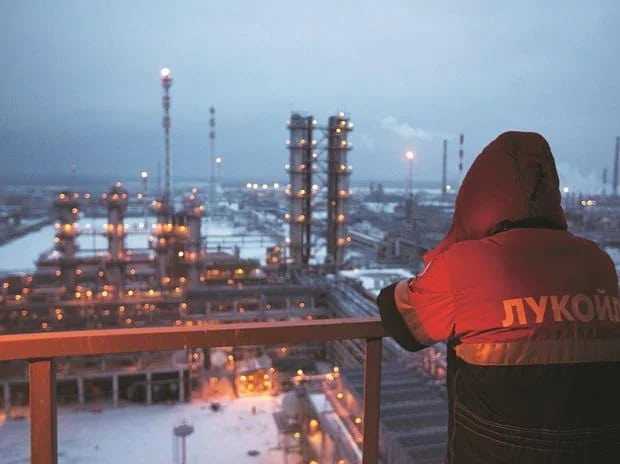
LVIV/IRPIN — Russia warned that oil prices could surge to $300 a barrel and it might close the main gas pipeline to Germany if the West halts oil imports over the invasion of Ukraine as peace talks on Monday made little progress.

The incursion, the biggest attack on a European state since World War Two, has prompted 1.7 million people to flee, a raft of sanctions on Moscow, an exodus of foreign firms, and fears of wider conflict in the West unthought-of for decades.

Sieges and the bombing of Ukrainian cities continued.

Share

Russia trying to recruit Syrians to fight in Ukraine, says Pentagon

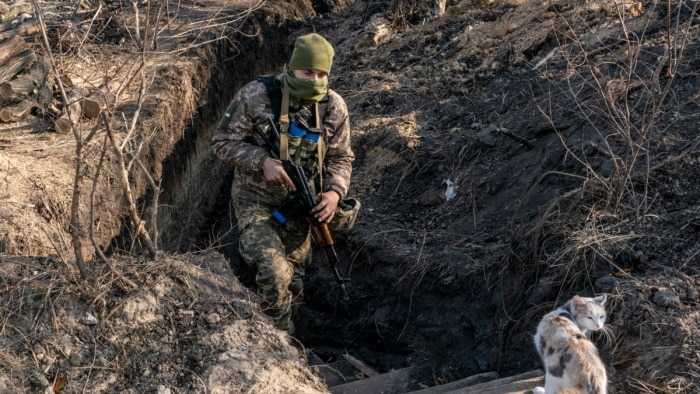
Russia has been trying to recruit Syrians to fight in Ukraine to bolster Moscow’s flagging invasion, according to the Pentagon.

A senior US defence official said it was unclear how many Syrians Vladimir Putin is seeking to recruit, but said “we find it noteworthy that he believes he needs to rely on foreign fighters”. The official added there was no evidence of Syrian fighters having arrived in Ukraine so far.

The Russian recruitment effort was first reported by a Syrian news website, DeirEzzor24, which said Moscow was seeking volunteers to act as guards on six-month contracts, for between $200 and $300 a month. The same report said the Russian mercenary firm Wagner had been equipping its Syrian operatives, who had served in the Libyan war on the side of the general, Khalifa Haftar, to transfer to Ukraine.

Share

Have We Cornered Ourselves?

When Hungarian rebels arose in 1956 to overthrow the Communist regime imposed by Joseph Stalin, President Dwight Eisenhower refused to send U.S. forces to aid the Hungarians.

Ike would not take America to war with Russia over a small country in Central Europe.

While the Hungarians were heroic and inspirational, Hungary was neither a member of NATO nor a vital U.S. interest. Moreover, it was on the Soviet side of the Yalta line dividing Europe, and agreed to by Franklin D. Roosevelt, Joseph Stalin and Winston Churchill at Yalta in 1945.

For similar reasons today, President Joe Biden has refused to send U.S. troops, ships or planes to attack Russian forces invading Ukraine.

Food for thought.

Share

Nolte: Back Domestic Drilling or Shut Up About Opposing Putin

Hey, I see you changed your profile photo to the Ukrainian flag. Yeah, that should do it.

Oh, my, yes… Be still my heart at the bravery it must have taken for you to pour out all your Russian vodka (that was made in the U.S.A.) and then directly fund Putin’s war crimes by filling your gas tank.

You know, I just don’t want to hear it from America’s Keyboard Generals, those with lives and heads so empty they’re sure they can win this war under a blanket holding an iPhone — and that includes Joe Biden.

Share

AWOL: Where Is the Russian Air Force?

These look like the Russian equivalent of the Warthog -Sukhoi Su-25 ground attack fighters

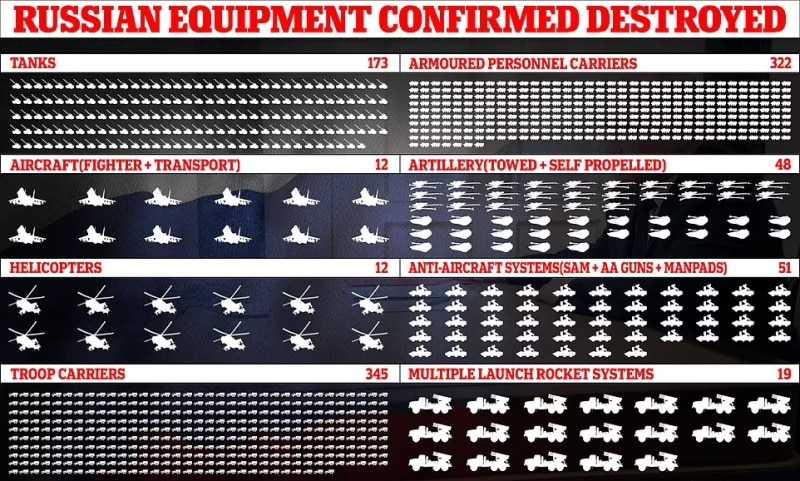
The Russian Air Force (VKS) has procured 350 modern combat aircraft in the last ten years and the question that must be on every Russian’s mind in the second week of the Ukraine War is: What did we get for our money?

Because by all accounts, the Russian Air Force is nearly AWOL from Russia’s biggest battles since 1945.

Share

Sanctions will push Russia onto the dark web

A major state actor could now legalise internet piracy and hacking

Today gas prices in Europe rose to 800p per therm — an eighteen-fold increase in just one year. Meanwhile, fertiliser prices are set to rise and with them food prices, with wheat prices basically doubling since last year. Financial markets are now openly fretting about stagflation (the combination of soaring inflation and stagnation in the economy). We have not seen it since the 1970s and it is unclear how our now overly financialised economy will respond to it, but my bet is that economies today are far more prone to stagflationary chaos than they were in the 70s.

Share

Real Refugees to Poland Set to Top Merkel‘s Migrant Influx of 2015

The number of Ukrainian refugees in Poland, mostly women and children, is on course to top the number of migrants taken by Germany during the 2015 migrant crisis.

Germany, with a population more than double Poland’s, said it had taken in 1.1 million asylum seekers in 2015, when then-Chancellor Angela Merkel opened the country’s borders to migrants to distant Syria — although only around 40 per cent of the influx actually claimed to be Syrians.

Share