Desperation: Biden woos Venezuela, Saudis for oil … while clinging to climate-change restrictions at home

If the Joe Biden administration has any strategy at all on energy, it appears to be of the rotating-despot variety. It seems Biden would desperately like any country other than his own to step up its production. That desperation has led the White House to send envoys to Nicolas Maduro, hoping to convince the Venezuelan tyrant to turn on the Russian tyrant to get more of the dirtiest oil available…

Share

Trudeau government makes sensible decision on Ukraine refugees … compliant media floats idea to make it a bad decision to further LPC mass immigration agenda

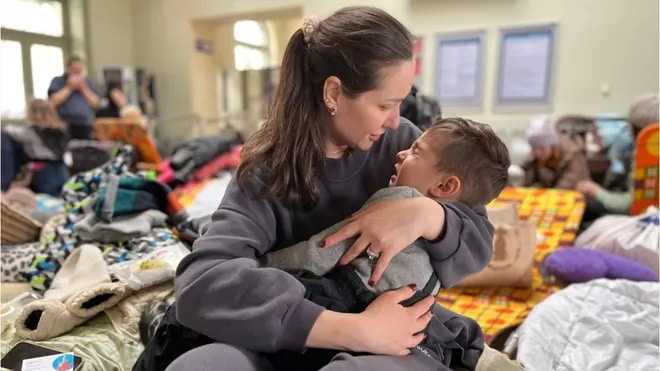
Non-citizens of Ukraine don’t qualify for temporary refuge from war in Canada

… The Canadian government is allowing Ukrainians who have fled Russian aggression to come to Canada temporarily for a period of two years “for those who need a safe haven while the war ravages their homeland,” Immigration Minister Sean Fraser announced last week.

It’s the kind of program Tajik said she hopes to see from Canada and other countries in response to the crisis in Ukraine.

“I just need legal status, I just need a pass so that I could get somewhere stable,” said the now 23-year-old data scientist in an interview.

But Canada’s program would not apply to her. The immigration minister’s office says for now, the program is only available to Ukraine citizens.


I am all for allowing refugees from the Ukraine to come to Canada. Everyone knows that the stated 2 year stay limit will not be enforced anyway.

But as always the real goal is to open the floodgates to all comers like our political and corporate class wants.

Share

‘Our sons were sent to Ukraine as cannon fodder’: Furious Russian mothers face down Kremlin

Angry Russian mothers have accused Vladimir Putin of deploying their sons as “cannon fodder” in his invasion of Ukraine, according to video footage of a confrontation with a regional governor that emerged on a day when police in Russia detained 4,500 anti-war protesters.

In the video, Sergey Tsivilev, governor of the Kuzbass region in Siberia, stood forlornly on a stage in a school gym as angry soldiers’ mothers accused the Kremlin of lying.

“We were all deceived, all deceived. They were sent there as cannon fodder, “one woman shouted. “They are young. They were unprepared.”

Share

And now comes the first faint cry for bailouts from our ever virtuous Titans of Commerce…

Analysis: Confusion, but not panic, reigns in global finance in Russia’s wake

March 7 (Reuters) – Western allies’ sanctions against Russia have started to blow back in the form of large potential losses for their own banks, companies and investors, often in unexpected ways. In the past, such fires have been precursors to financial crises.

But some market participants say they aren’t seeing panic in the market, at least not yet.

“We haven’t had any of those ‘holy shit’ phone calls,” said David Schamis, co-founder of financial services-focused private equity firm Atlas Merchant Capital, while heading out of town for his daughter’s hockey tournament over the weekend.

Oligarchs gonna Oligarch on your back.

Share

Ukraine decries ‘immoral’ Kremlin offer of civilian escape corridors only to Russia or Belarus

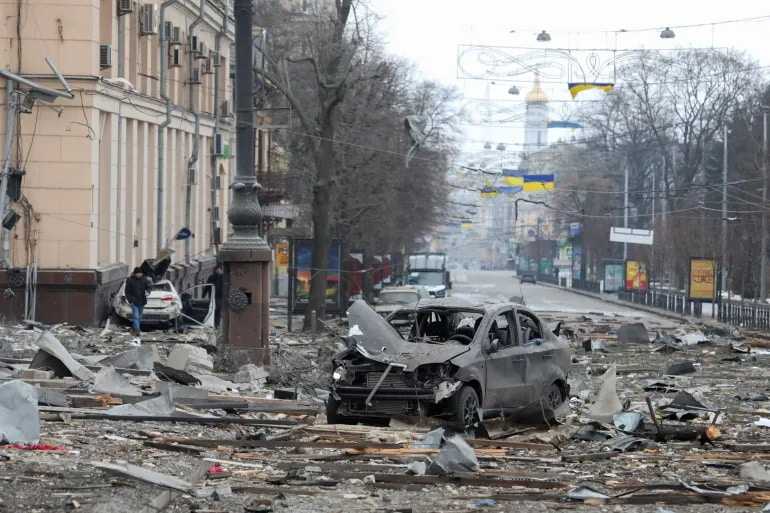
Ukraine has criticised a proposal by Moscow to open refugee corridors as “immoral” and “unacceptable” after the Russian defence ministry announced that civilians fleeing some cities would only be allowed to leave for Belarus or Russia.

Ukraine’s deputy prime minister, Iryna Vereshchuk, dismissed Russia’s six proposed corridors after it emerged that only two of them – from Sumy and Mariupol – involved evacuation routes that led to other parts of Ukraine, with all other routes leading directly to Russia or pro-Russian Belarus.

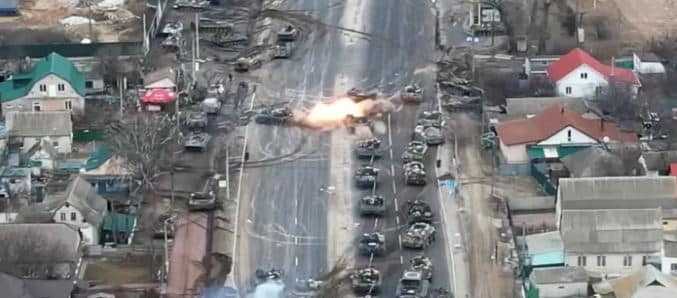
As Russian forces continued to pound Ukrainian cities, including residential areas, with missile strikes and artillery fire, a spokesperson for the Ukrainian presidency also said civilians must be allowed to flee their homes through Ukrainian territory.

Share

A War for Global Domination?

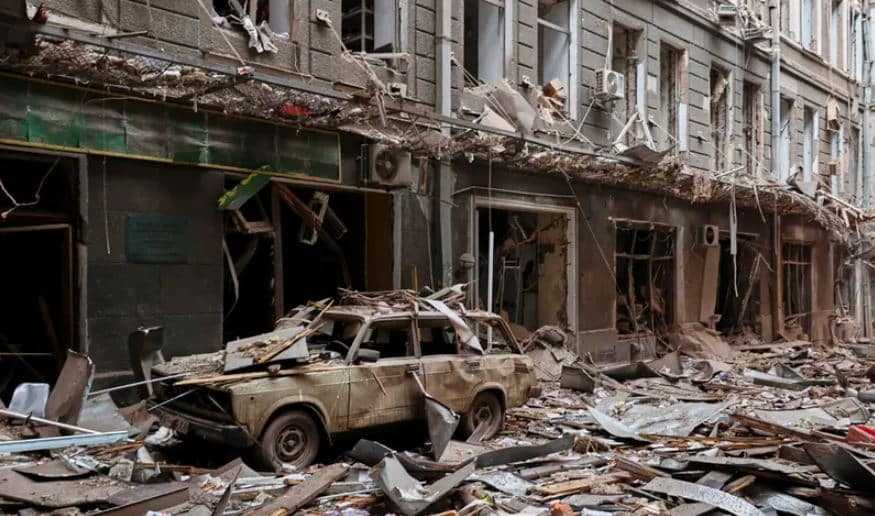
Just what is at stake in Ukraine?  Oh, maybe everything.  Besides the horrendous loss of life, the conscription of young Ukrainian boys to repel Russian soldiers’ advance, the streaming of hundreds of thousands of homeless refugees across Europe, and widespread property destruction, the war has become an immediate referendum on the West’s cherished “rules-based international order.”

Share

The Russian Elite Can’t Stand the Sanctions

The latest measures are far more effective than Western powers’ past efforts to target Russia’s elite.

The United States, United Kingdom, and European Union had barely announced sanctions on overseas Russian wealth when the oligarchs began to whine and protest. That meant the policy—enacted after Russia invaded Ukraine—was working as intended, to punish Russia’s elites for supporting President Vladimir Putin. By last weekend in Moscow, the Russian-state-television host Vladimir Solovyev raged on camera over what the sanctions would mean for him personally: loss of access to his two luxury homes in Lake Como, Italy, near the villa of George Clooney.

Share

How Biden Got Ukraine and Russia Wrong

The cries of disbelief from many in the Western foreign policy intelligentsia which met the Russian armored columns pouring into Ukraine were intense if unsurprising. While the latest act in the tragedy of great power politics is certainly devastating, the wailing and gnashing of teeth in Washington and the capitals of Europe would be comical if they were not so pathetic. Some lamented that history appeared to be returning after its hiatus, but in fact, it never left. Those who profess to analyze international affairs, and certainly those who lead nation-states, would do well to dwell in reality vice an aspirational world. Western leaders sleepwalked into this crisis. Their strategy was premised on flawed theoretical assumptions, and its failure carries important implications for U.S. policy going forward.

Share

Russia Supplied Planes to U.S. Enemies during the Cold War. We Should Not Forget

Ukrainian president Volodymyr Zelensky said last week that if NATO will not establish a no-fly zone over his country, then NATO should supply Ukraine with military aircraft to defend itself. He said in a news conference on Thursday, “If you don’t have the strength to provide a no-fly zone, then give me planes. Would that not be fair?”

Share

Douglas Todd: Will Canada crack down on property-buying oligarchs and their dirty money?

Will Russia’s savage invasion of Ukraine finally jolt Canadian politicians into taking down the world’s oligarchs and kleptocrats?

The shocked West may be realizing one of the few ways to combat rogue countries like Russia is by slapping financial sanctions on the billionaires who profit from their intimate links to corrupt strongmen like Vladimir Putin.

Much of our political class aspires to Oligarchy.

Share

Poland is showing us what solidarity looks like

Poles are doing everything possible to help their Ukrainian neighbours.

Solidarity is one of those words that no one seems to be able to define. Decades of vague posturing – disconnected from any real action – has hollowed out whatever meaning it once had. In today’s climate, solidarity seems to mean little more than a change of profile picture, sharing a graphic on social media, or adding pronouns to your email signature. But in Poland this past week, I have seen solidarity come alive.

There are, of course, symbols galore here in Warsaw. Ukrainian flags are everywhere – shops have blue and yellow displays, lapels bear two-colour pins, and every bus in Warsaw sports the wheat-and-sky mark of Ukrainian national identity.

Share

How Western elites exploit Ukraine

Reality is manipulated to strengthen their regime

The war in Ukraine poses a palpable threat to Western democracies, but this has little to do with Russia posing an inherent strategic threat to the United States or its European allies. No — more so than the Russian state, the threat to the West comes from within, a consequence of our congealing perceptions towards the conflict.

Bombs are not raining down on our cities; instead, what we are experiencing is the psychological weaponisation of war — and its exploitation as a tool of indoctrination and statecraft in the hands of the establishment.

Share

Ukraine has a ‘continuity of government’ plan if its Zelensky is assassinated, US Secretary of State Antony Blinken says

Ukraine’s government has a contingency plan in place if President Volodymyr Zelensky is killed during the Russian invasion, US Secretary of State Antony Blinken revealed on Sunday.

Zelensky survived three assassination attempts by Russian-backed groups just this week, the Times reported on Friday.

During an interview with CBS News’ Face the Nation on Sunday, Blinken was asked if Russian leader Vladimir Putin would face ‘consequences’ for Zelensky’s murder.


U.S., Brit special forces training for high-risk Zelenskyy rescue: Report

Commandos from Britain’s famed SAS and U.S. special forces are undergoing intense training for a potential high-risk rescue of Ukrainian President Volodymyr Zelenskyy, according to published reports.

Share

Protests across Russia see thousands detained

Nearly 4,000 people have been detained at anti-war protests across Russia on Sunday, rights groups and Russian authorities say.

Some 1,700 people were detained in Moscow alone, the RIA news agency reported, citing the interior ministry.

The OVD-Info rights group says detentions took place in 53 cities.

Although protests have become increasingly restricted in recent years, numerous rallies have taken place across Russia since the invasion.

Share

What an investigation into war crimes could mean for Russian aggression in Ukraine

The International Criminal Court (ICC) will investigate possible war crimes in Ukraine, but experts say it’s unclear whether the move could sway Russian President Vladimir Putin to de-escalate his government’s invasion of the country.

“Maybe, and maybe not, but I don’t think people should expect that,” said Mark Kersten, a senior researcher at the Munk School of Global Affairs and Public Policy at the University of Toronto and an expert on international criminal law.

“I don’t think anyone should rightly ever expect that just because there’s an intervention by the International Criminal Court that that will solve the war, that that will lead to peace.”

Share