Germany cybersecurity chief faces sacking over Russia ties — reports

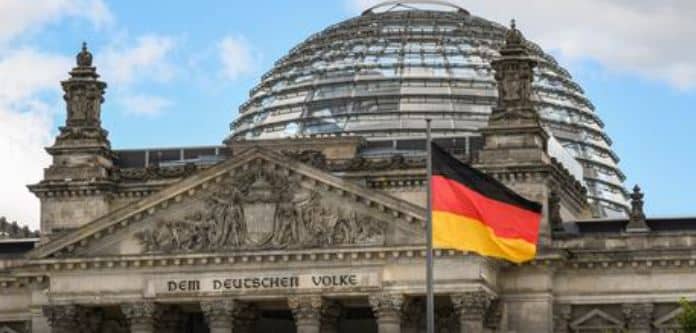
Germany’s Interior Minister Nancy Faeser is looking to fire the chief of the federal agency responsible for cybersecurity, Arne Schönbohm, over his alleged contacts with agents of Russia’s security services, Germany’s newspapers reported on Sunday, citing anonymous government sources.

Schönbohm is the president of the Federal Office for Information Security (BSI).

But a recent investigation found that he was also the member of a technology association which counts as a member a German company that is a subsidiary of a Russian cybersecurity firm founded by a former KGB employee.

Share

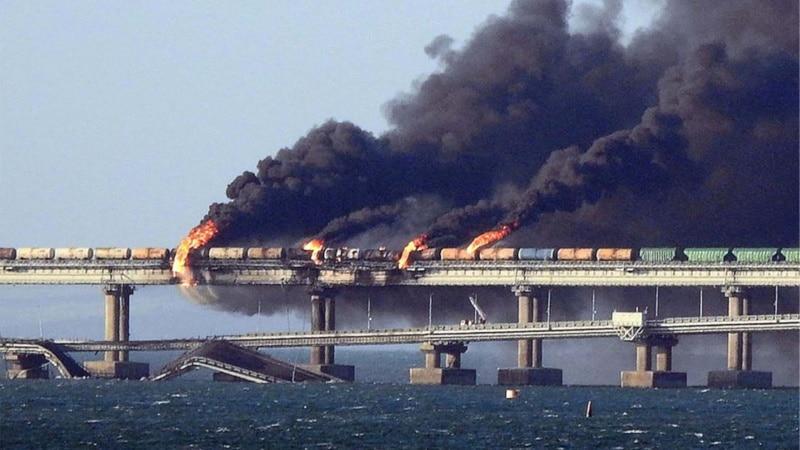
Vladimir Putin: Crimea bridge explosion was ‘terrorist act’ by Ukraine’s secret service

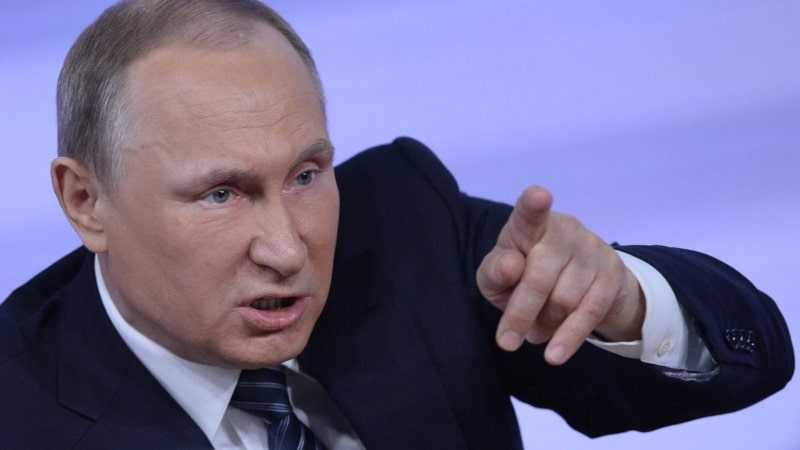
Vladimir Putin on Sunday called the attack on the Crimea bridge a “terrorist act” carried out by the Ukrainian secret service, paving the way for an escalation in the Kremlin’s response.

Putin made his first comments about Saturday’s explosion in an unscheduled 33-second video address late on Sunday night.

“There is no doubt. This is an act of terrorism aimed at destroying critically important civilian infrastructure,” the Russian president said in the broadcast, published on the Kremlin’s Telegram channel. “This was devised, carried out and ordered by the Ukrainian special services.”

Share

Russia realists are the new lockdown sceptics

Moral absolutism plagues our response to Ukraine

Less than a year after 9/11, Dick Cheney had a message for Americans: the “old doctrines of security do not apply… Containment is not possible when dictators obtain weapons of mass destruction.”

Cheney was referring to Saddam Hussein, but it is not difficult to imagine the current President saying something similar about his Russian counterpart. Just last week, Joe Biden stated that Vladimir Putin was “not joking” about the use of nuclear weapons, warning that “we have not faced the prospect of Armageddon since Kennedy and the Cuban missile crisis”. Cheney’s hawkish worldview has been reinvigorated by Putin’s invasion of Ukraine. This time, however, those advocating restraint — the “realists” — are no longer just opponents, they are now enemies too.

Share

An American in Ukraine Finds the War He’s Been Searching For

SOLEDAR, Ukraine — “Please, come with me.”

He was begging. He didn’t have much time. The Russians were blasting this town in eastern Ukraine with rockets, airstrikes and thundering artillery. The ground shook.

Andrew Milburn, a retired Marine colonel, could have been hanging out at home, 6,000 miles away in the Florida suburbs, enjoying retirement. Instead he was standing in Soledar, a town under fierce assault, black smoke filling his nostrils, staring at a Ukrainian woman he had never met, pleading with her to evacuate.

“Please,” he tried again. “You will die here.”

Share

Paris Cuts the Lights to Save Energy. Will It Help?

Famed monuments are going dark early as part of a call for ‘energy sobriety’ in France

PARIS—The City of Light is going dark.

Luxury shops across the city are turning off their nighttime lights, plunging the Avenue de Montaigne and other areas renowned for evening window shopping into relative darkness. Tourists are showing up to monuments for late-night photos, only to find somber silhouettes. Even the Eiffel Tower, symbol of France’s rise as an industrialized nation, is hitting the off switch early.

Hmmmm …

Share

Russian governors threaten missile attacks on Ukraine’s ‘big cities’ in a ‘desire to seek revenge’ for the Crimea bridge explosion as top Putin propagandist calls for total war and return to brutal Stalinist-era operations

Top pro-Kremlin propagandist Vladimir Solovyov is demanding a brutal Stalinist response to ‘plunge Ukraine into dark times’ and round up all Russians against total war in the wake of the humiliating hit on the Crimean Bridge.

Alluding to an enemy within, Solovyov called for a return of the notorious Stalin-era SMERSH counter-intelligence to crush all internal opposition to a full-scale war against Ukraine.

SMERSH, whose motto was ‘Death to Spies’, was a conglomeration of counterintelligence agencies used by Stalin to root out and obliterate those trying to subvert his regime during and after World War II.

Share

Who really blew up the Nord Stream pipeline?

The blasts which wrecked the network taking Russian gas to Germany have been blamed on various players – we assess the possible instigators

With its brooding pine woods and mist-shrouded beaches, the Danish island of Bornholm has long been a setting for Scandi-noir intrigue. In days of old, trolls were said to haunted its many caves. In Cold War times, its radar towers at the mouth of the Baltic helped the West eavesdrop on Russia and East Germany.

No mystery though, is quite on a scale with the one that began bubbling up through the waters off Bornholm’s coast two weeks ago. At around 2am on September 26, German engineers noted a dramatic drop in pressure in Nord Stream 2, the newly built pipeline that ships Russian gas to Germany. Later that day, the same problem was reported on its older sister pipeline, Nord Stream 1, which runs nearby.

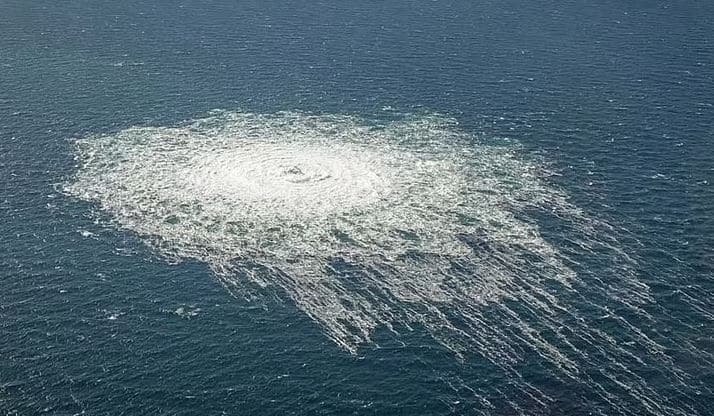
A Danish air force jet that investigated found three huge gas leaks in the sea, creating vast, bubbling cauldrons on the surface as if new volcanic islands were forming underneath. Over subsequent days, up to 350,000 tonnes of pure methane was released, some in bubbles more than half a mile wide. Bornholm residents could smell it from their island and were warned to keep away.

Share

Russian mercenaries ‘exploiting Africa to fund war in Ukraine’

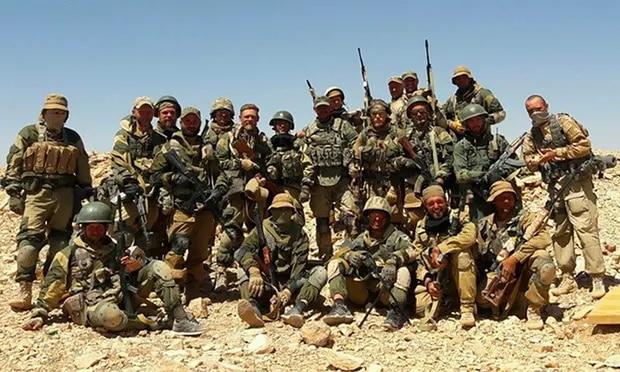
The United States has accused Russian mercenaries of exploiting natural resources in Central African Republic, Mali, Sudan and elsewhere to help fund Moscow’s war in Ukraine, a charge Russia rejected as “anti-Russian rage”.

The US ambassador to the United Nations, Linda Thomas-Greenfield, said the Wagner Group of mercenaries are exploiting natural resources and “these ill-gotten gains are used to fund Moscow’s war machine in Africa, the Middle East and Ukraine”.

Share

The Russian question

The unravelling of Russian power will shape the future of Europe.

Russia is in a bad place. The war in Ukraine is not going to plan. And its influence over the other nations in its region is starting to unravel.

Until recently, the question of how to integrate a still powerful Russia into the world order was either downplayed or ignored by the West. But no more. Western policymakers and their international allies are finally waking up to the fact that history did not come to an end with the collapse of the Soviet Union. Unresolved questions and conflicts dating back to the early part of the 20th century are coming to the fore once again. This means that, beyond the bloody war in Ukraine, there are other, potentially far more devastating, conflicts ready to erupt.

Share

‘Someone will fall victim’: insiders reveal elite anguish as Russia’s war falters

Friends, rivals and enemies took their seats in the Grand Kremlin Palace as Vladimir Putin gathered the country’s elite to formalise Russia’s illegal annexation of four occupied regions in Ukraine.

The ceremony was meant to portray strength and unity, but within 24 hours had been overshadowed by Russia’s failures on the battlefield. These losses, which continued into this week on the southern and eastern fronts in Ukraine, have led to a major, unprecedented rupture within the ruling class as the Kremlin seeks scapegoats for a series of military embarrassments.

Share

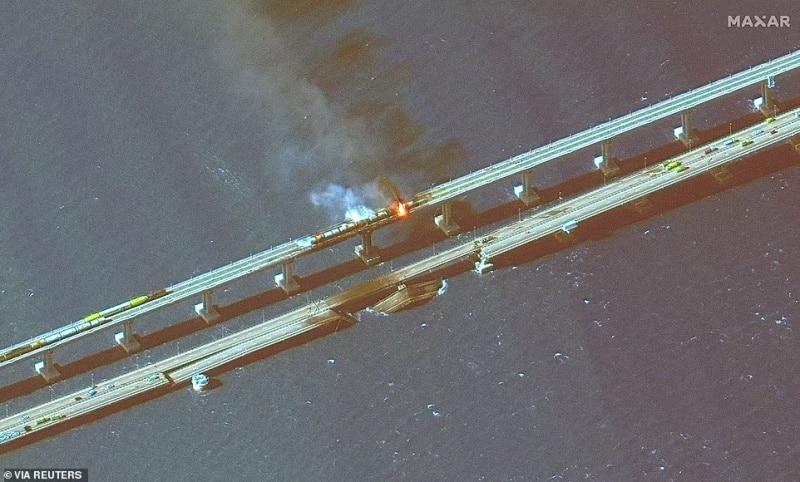
Crimea bridge: Russia says three killed by explosion

A huge blast on Russia’s bridge to Crimea, the Ukrainian peninsula it annexed in 2014, has killed three people, investigators say.

The victims were in a nearby car when a lorry blew up, the Russian investigators said, bringing down sections of the bridge’s roadway.

Russia says the railway part of the bridge – where oil tankers caught fire – will reopen on Saturday.

They also claim road traffic will begin on an undamaged lane this evening.

Self-driving vehicles will be a boon to terrorists.

Share

As Ukraine war falters, Russians ask a risky question: Could Putin fall?

When President Vladimir Putin yelled, “We will win!” at a Red Square concert to celebrate his illegal annexation of Ukrainian lands on Friday, he projected the hubris of a man who cannot accept defeat.

Putin has said Russia will not lose in Ukraine. But multiple battlefield defeats and national fury over a botched military mobilization have broken a taboo in Moscow on discussions about what would happen if Putin did lose — not just the war, but his seeming bid to be leader-for-life, according to four members of Russia’s business elite. Kremlin-watchers, in and out of the capital, are asking: Who might come next?

Share

Can Russian Hybrid Warfare Win the Day in Ukraine?

In an unpopular response to the retreat of Russian forces in the Ukraine war, President Vladimir Putin ordered the mobilization of hundreds of thousands of reservists. Putin’s order essentially doubled down on a warfighting strategy characterized by high levels of attrition and widespread damage to Ukrainian forces and infrastructure. Russian strikes, actions, and retaliations have caused over $108 billion in damage to Ukrainian infrastructure and left 3.4 million people homeless. Shortly after issuing the mobilization order, Putin signed four treaties to annex Russian-controlled regions of Ukraine following sham referendums orchestrated at gunpoint to join Russia. Kremlin spokesman Dmitry Peskov stated that “any attack by Ukraine on the territories incorporated into the Russian Federation would be viewed as an attack on Russia.” In a televised speech, Putin also hinted at his willingness to use nuclear weapons: “We will protect our lands with every means we have at our disposal.” He noted that the United States was the only nation to use nuclear weapons and claimed that the bombings of Hiroshima and Nagasaki “set a precedent.”  

This seems a tad optimistic, granted never discount an enemy.

Share

The tide of this war has shifted, and the Russians are far less brave

On the banks of the Oskil river, it is clear to Ukraine’s poised troops that the enemy is short of ammunition and struggling to respond

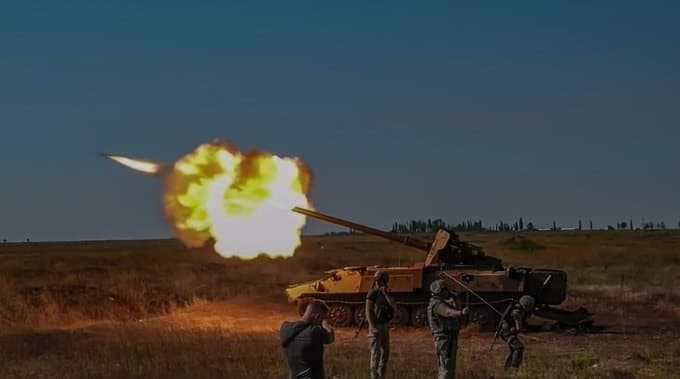
There is a strange ritual to artillery fire.

The most important is the camouflage. When properly wrapped up in foliage, the muzzles of their howitzers look like fungi. Then there are the messages to be written on shells. On Thursday, it was “for Zaporizhia”, where Russian missiles had wreaked carnage in the morning.

A battery commander scribbles calculations on a pad of paper and barks the customary countdown to fire: “Three hundred – thirty – three!”

Share

Putin threats: How many nuclear weapons does Russia have?

US President Joe Biden has warned that the risk of a nuclear “Armageddon” is at its highest level for 60 years.

Mr Biden said that Russian President Vladimir Putin was “not joking” when he warned that Moscow would use “all means we have” to defend Russian territory. Mr Putin has also said that the US created a “precedent” by using nuclear weapons in World War Two.

But analysts suggest Mr Putin’s words should probably be interpreted as a warning to other countries not to escalate their involvement in Ukraine, rather than signalling any desire to use nuclear weapons.

Share