Toronto Mayor Olivia Chow says the city is facing a nearly $40 million shortfall in money needed to host six FIFA World Cup matches next year, after a new report revealed that a substantial amount of funding pledged by the province will be used up for various services.
Chow said the city did not anticipate service costs — including “beautification” of transit stations and security — to absorb nearly one-third of the $97 million contribution pledged by the Ontario government.
“The city cannot afford to pay more than what it can pay now. We can’t go and find any more cash, we just don’t have it,” Chow told reporters at a news conference ahead of the city council meeting Wednesday.
A group known as “financial landlords” are driving up the cost of rental housing in the city, worsening affordability, according to a new study by researchers at the University of Waterloo.
Financial firms, including private equity, asset managers, and real estate investment trusts (REITs), have been snapping up rental housing stock in Toronto for decades and according to the study, these groups charge monthly rents that are 44 per cent higher than the average neighbourhood price in Canada’s largest city. This represents about $670 more on average per month, according to the researchers.
Until the Feds shut the immigration floodgates this will only get worse. And worse is what they want.
Yet another renaming will take place in Toronto, supposedly to protect the safety and feelings of minorities.
Did anyone ask the minorities if that is what they want?
The latest is the plan to rename Dundas TTC station, which follows the renaming of Yonge-Dundas Square to the slave nation-inspired word Sankofa. Get the cruel — and one would think counter-productive — irony?
The board of the Toronto Transit Commission approved a new name for Dundas Station in a meeting with more tension than the unanimous vote might suggest.
The renaming, from Dundas to TMU Station, was packaged Wednesday morning as part of a sweeping partnership with Toronto Metropolitan University, which is outside of the subway stop.
There is no better indication of a government’s true priorities than its budget and how it spends its money. Secondary to that are the issues it chooses to spend its time on.
This is why the agenda for the Toronto city council board for the Toronto Transit Commission (TTC) is so concerning.
These useless parasites need to be removed from office.
The main sense you get from reading the latest city report on homelessness is that this is an industry. As with any industry, the last thing it wants to do is go out of business which is why the “solutions” offered up are about perpetuating the problem, not solving it.
A Quebec man previously charged with the theft of police equipment from a motor vehicle is now facing nearly 150 charges in connection with a rash of violent and property-related crimes across the GTA, including multiple stabbings.
Police took the suspect into custody on Friday and charged him with three offences in the theft of police equipment from a parked motor vehicle near Queen Street East and Broadview Avenue on April 30.
However, police say that investigators were subsequently able to link the same suspect to a series of thefts from motor vehicles across the GTA that was the subject of an ongoing investigation being led by the 51 Division Major Crime Unit.
The riding-rich, voter-dense Greater Toronto Area looked like a kingmaker for the Liberal Party once again in Monday’s federal vote, delivering a push for Mark Carney while dashing Conservative hopes of an urban breakthrough.
Liberal dominance in the GTA helped Liberals win the three previous general elections under Justin Trudeau, and new Liberal leader Carney looked to the region to buttress his party in a fourth consecutive term.
Canada now leads the world in remote work among college-educated professionals, with nearly two full workdays per week spent at home, according to the latest Global Survey of Working Arrangements. That’s more than the United Kingdom, the United States, India, or Nigeria.
The Conservatives had enjoyed a lead over Liberals in the region largely because of rising housing and food costs. But President Trump’s tariffs have shifted the equation.
A year of rapidly slumping poll results for the Liberal Party that has governed Canada for nearly a decade was bad enough. But then there came the almost unthinkable: a defeat in a special election in downtown Toronto, the party’s longtime electoral fortress.
The defeat last year, many analysts believe, triggered the chain of events that led to Justin Trudeau’s resignation as prime minister and the federal election that will be held on Monday.
Voters in Toronto had been vital to keeping Mr. Trudeau and the Liberals in power through three elections. So the loss of a Toronto district — held by a prominent Liberal for 28 years — to the Conservatives was a stunning blow and an omen of worse to come in a general election.
City councillors spent thousands on podcasts, parties and popcorn – and Toronto taxpayers got the bill.
Councillors’ office expenses for 2024 were recently released, and some of the spending ranges from seemingly wasteful to weird.
Toronto’s 25 councillors each had a budget of $58,411.87, and some spent almost all of that. Lily Cheng, the biggest spender, came in at $58,404.53, barely beating out Chris Moise’s $58,383.99.
Related: Ontario takes control of London school board, launches probes at three others
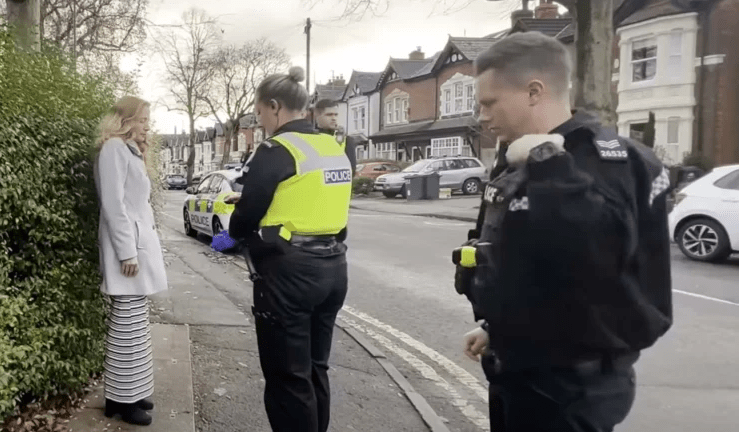
The left love Bubble Zone laws that suit their agenda – Christian woman arrested for silent prayer receives compensation from police
The trouble with Toronto’s proposed ‘bubble zone’ bylaw
Recently, we’ve seen alarming examples of rights being rolled back south of the border. These include attempts to silence those whose political views differ from the government’s — and they should serve as a cautionary tale for Canada. Indeed, now is the time for everyone in this country to protect our fundamental freedoms and resist the erosion of our democratic rights.
With that in mind, we should all be concerned that Toronto city council will next month consider adopting a new “bubble zone” bylaw. This bylaw, yet to be drafted, would limit where people are allowed to hold peaceful public demonstrations such as picket lines, vigils, protests and rallies that some may find offensive. In so doing, it would directly infringe on our freedoms of expression and of peaceful assembly, two cornerstones of Canadian democracy.
The same people arguing against Bubble Zones for Islamist protests likely support Bubble Zone protest bylaws outside abortion clinics.
From Grok – Several provinces in Canada have enacted “bubble zone” laws, also known as safe access zones, to limit demonstrations outside abortion clinics and other facilities providing abortion services. These laws create areas around clinics, hospitals, or providers’ offices where certain activities, such as protesting, picketing, or attempting to dissuade individuals from accessing abortion services, are prohibited. Based on available information, the following provinces have such laws as of April 19, 2025…

 Chow said the city did not anticipate service costs — including “beautification” of transit stations and security — to absorb nearly one-third of the $97 million contribution pledged by the Ontario government.
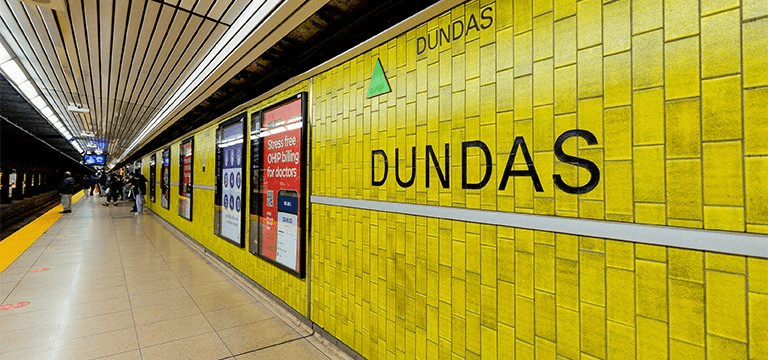
 The board of the Toronto Transit Commission approved a new name for Dundas Station in a meeting with more tension than the unanimous vote might suggest.
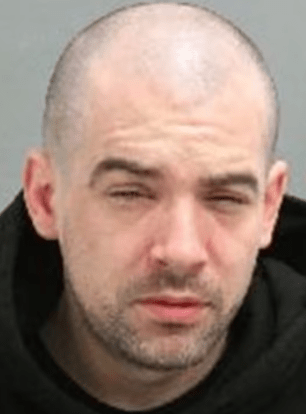 Police took the suspect into custody on Friday and charged him with three offences in the theft of police equipment from a parked motor vehicle near Queen Street East and Broadview Avenue on April 30.