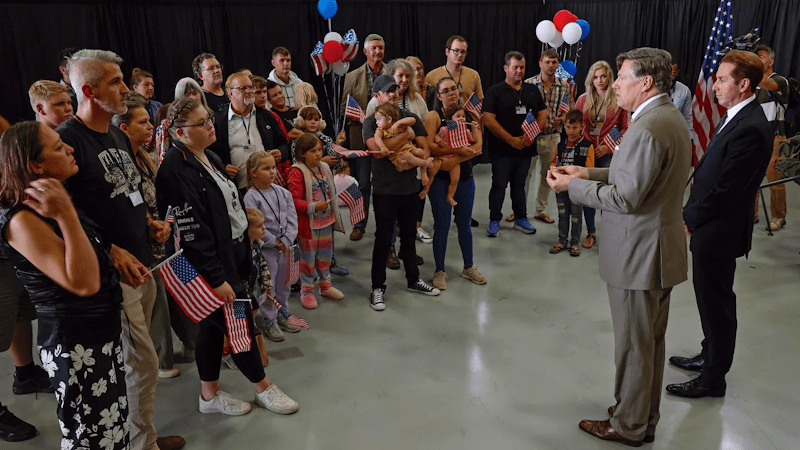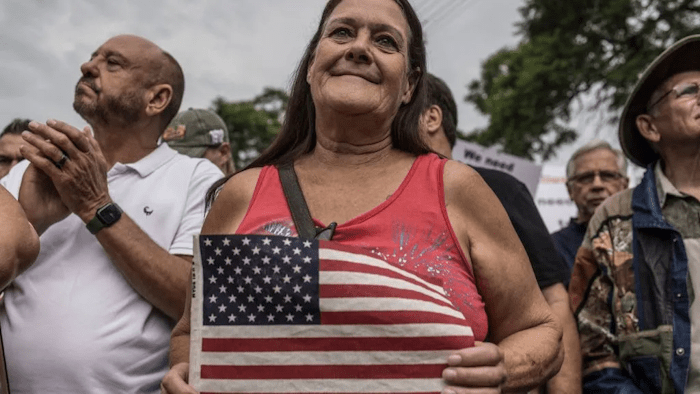
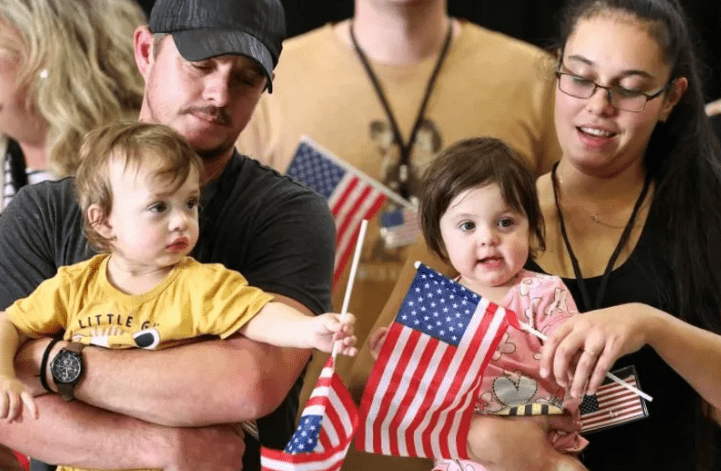
Several dozen white South African refugees were recently welcomed to Washington, D.C., most proudly waving American flags.
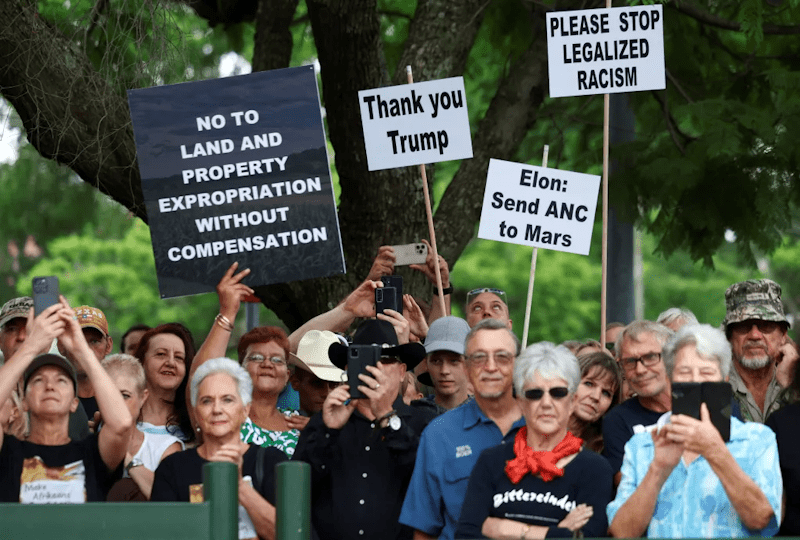
Deputy Secretary of State Christopher Landau and Department of Homeland Security Deputy Secretary Troy Edgar welcomed the refugees, who are fleeing racial discrimination, persecution, violence, and murder in their home country.
The first white South Africans to be granted refugee status by President Trump are set to arrive in the US next week.
More than 50 Afrikaners, descendants of mainly Dutch colonisers, are expected to arrive at Washington’s Dulles airport as early as Monday. The group have been granted P1 refugee status, which, according to the US State Department, is given to individual cases “by virtue of their circumstances and apparent need for resettlement”, sources said.
Kyle believed God was looking out for him when he survived a violent farm robbery in South Africa eight years ago with only a black eye and broken ribs. The robbers failed to get the kettle and iron working, so were unable to burn anyone. Then the gun trigger jammed when they tried to shoot Kyle in the spine.
“They specifically said they were coming back for this farm … [that] it was their land,” said the 43-year-old, who did not want to use his full name. “Only afterwards, we found out that the guy that stays on the plot was actually killed … the farmhand … I don’t know what his name was.”
Kyle, a divorced father of three, is one of thousands of white South Africans hoping to take up Donald Trump’s offer of refugee status, to escape crime and what they allege is discrimination against white people.
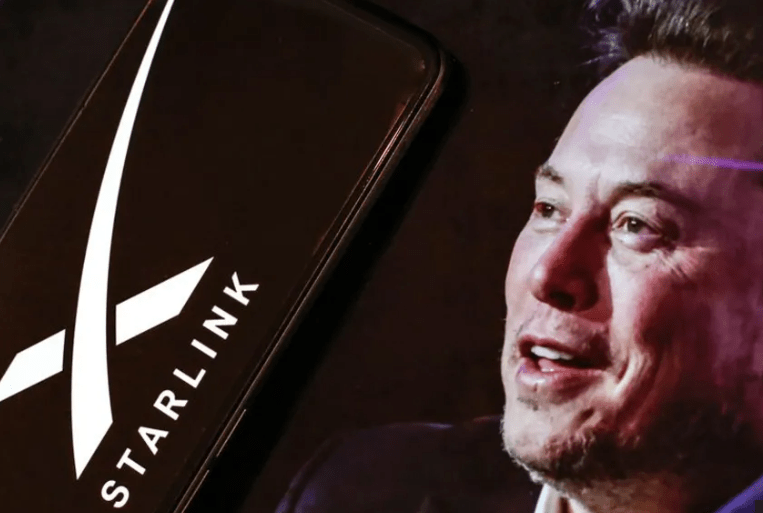
The tussle between Starlink boss Elon Musk and South Africa over the company’s failure to launch in the country stems from the nation’s black empowerment laws, and could be one factor behind the diplomatic row between the US and Africa’s most industrialised nation.
To his more than 219 million followers on his social media platform X, Mr Musk made the racially charged claim that his satellite internet service provider was “not allowed to operate in South Africa simply because I’m not black“.
But the Independent Communications Authority of South Africa (Icasa) – a regulatory body in the telecommunications and broadcasting sectors – told the BBC that Starlink had never submitted an application for a licence.
Close to 70,000 South Africans have expressed interest in moving to the US following Washington’s offer to resettle people from the country’s Afrikaner community, a business group has said.
The South African Chamber of Commerce in the USA (Saccusa) said its website received tens of thousands of registrations from those seeking more information.
In a February executive order, President Donald Trump said Afrikaners – descendants of mainly Dutch settlers who arrived in the 17th Century – could be admitted as refugees as they were “victims of unjust racial discrimination”.
US Secretary of State Marco Rubio said South Africa’s ambassador to Washington is “no longer welcome” in the United States.
Rubio, in a post to X, also accused diplomat Ebrahim Rasool of being a “race-baiting politician” who hated US President Donald Trump.
In his post, Rubio linked to an article from the conservative US media outlet Breitbart, which commented on remarks Rasool made Friday during a South African think tank’s webinar.
According to Breitbart, Rasool said that white supremacism was motivating Trump’s “disrespect” for the “current hegemonic order” of the world.
South Africa's Ambassador to the United States is no longer welcome in our great country.
Ebrahim Rasool is a race-baiting politician who hates America and hates @POTUS.
We have nothing to discuss with him and so he is considered PERSONA NON GRATA.https://t.co/mnUnwGOQdx
“Nearly 3,000 people have been killed in Goma in recent days” reported Vivian van de Perre, Deputy Head of the UN mission in the Democratic Republic of Congo (DRC), in central Africa. Goma is the capital and largest city of the DRC’s North Kivu Province.
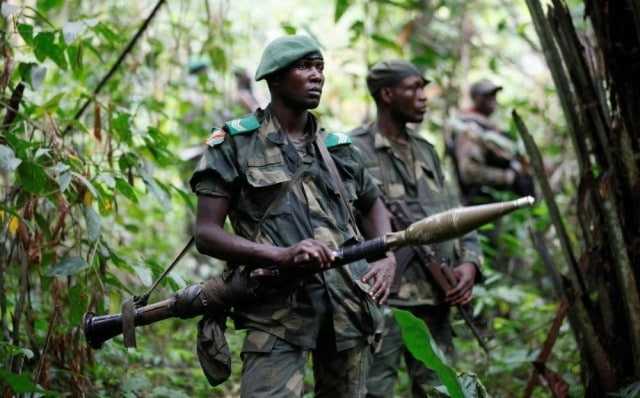
In the final week of January, 17 South African National Defence Force (SANDF) soldiers in the Congo were killed, and many more wounded, in battle with the rebel group M23 (which is backed by Rwanda), when the M23 captured Goma from DRC government’s forces. It is believed that “M23 seeks to set up an administration to govern Goma as it has in other areas under its control in the eastern DRC.”
In October 2016, heavily pregnant Mariandra Heunis was putting her youngest to bed in their remote South African farmhouse when she heard the chilling sound of a gun cocking. Turning around, she saw two intruders standing before her.
“They started shouting aggressively; my husband woke up. They demanded money, to which we, in turn, responded that we don’t have money and do not have money in the house, but they could take whatever they want if they just leave us unharmed,” Ms. Heunis, who, like the rest of her family, is white, told me when I interviewed her in 2018. “But he just started shooting. I was terrified. I couldn’t stop the bullets.”
Rhodesia was known as being “more British than Britain” and was a thriving state amidst a continent of failed nations; it had a highly developed economy, and citizens enjoyed a very high standard of living. But, that all changed when the black majority wrested political control from the white minority, seized white-owned property (specifically the farms), and Rhodesia became Zimbabwe—it’s been a third world hell-hole with “severe food insecurity” and high levels of violence ever since.
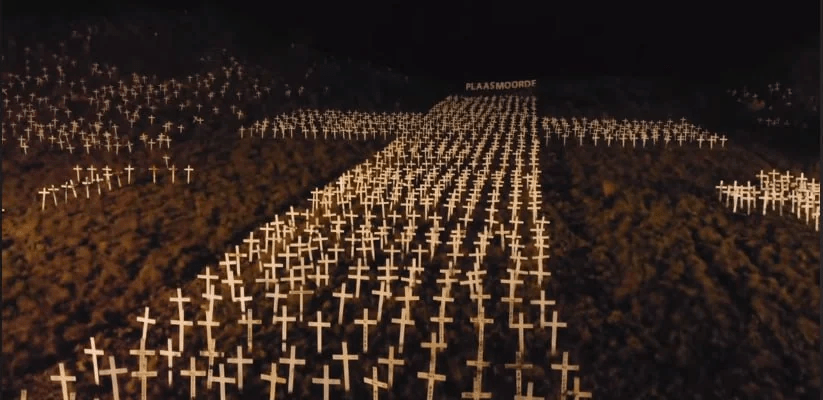
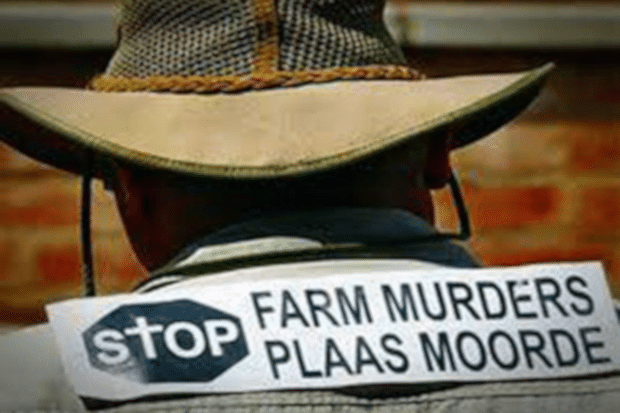
Witkruis or Plaasmoorde Monument South Africa, each cross a murdered farmer
President Donald Trump signed an executive order Friday formalizing his announcement earlier this week that he’ll freeze assistance to South Africa for a law aiming to address some of the wrongs of South Africa’s racist apartheid era — a law the White House says amounts to discrimination against the country’s white minority.
“As long as South Africa continues to support bad actors on the world stage and allows violent attacks on innocent disfavored minority farmers, the United States will stop aid and assistance to the country,” the White House said in a summary of the order.
Why are Canadian tax dollars given to a racist “middle income” country?
South Africa is an upper middle income country. In 2022-2023, Canada provided $88.6 million in international assistance to South Africa, with approximately $5.0 million of this amount channelled to Canada’s dedicated bilateral assistance program focused on two Feminist International Assistance Policy action areas: inclusive governance and empowerment of women and girls.
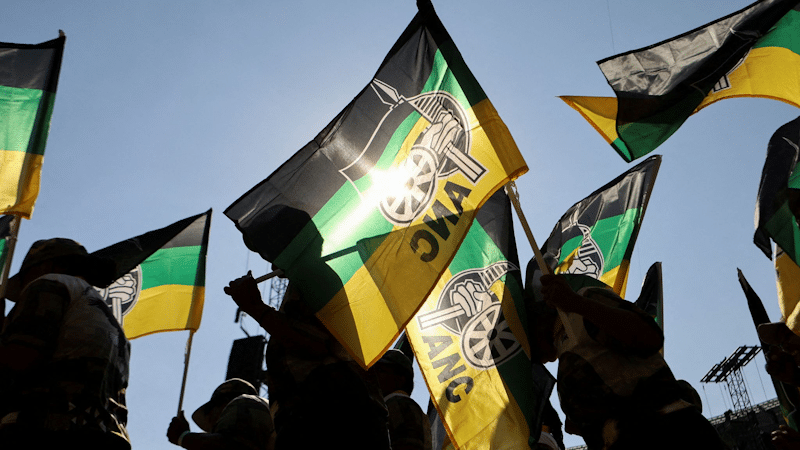
The ANC’s policy of trapping and starving ‘illegal’ miners betrays a contempt for human life.
‘Their breath grew shallow, their bodies still. They didn’t die with any great commotion, just a quiet surrender, as if their bodies had finally given up. The hollow, lifeless look in their eyes was a constant reminder of what awaited the rest of us. It was not an illness that killed them. It was starvation. A cruel, drawn-out death that consumed them piece by piece.’
These harrowing words are not from a witness to the conflict in Gaza. Nor are they an account of the Nazi death camps during the Holocaust. No, they are from an affidavit to the South African Constitutional Court by a miner called Clement Moeletsi. Moeletsi was one of hundreds of black miners who were trapped by police in abandoned shafts at Buffelsfontein Gold Mine for two months. Earlier this month, he was rescued by members of the Stilfontein community. Then, he was arrested for mining illegally.
This I began writing two weeks ago as an overnight guest in a cosy cabin on a farm beside an endless dirt road in the most remote part of the north-western Cape Province in the country of my birth, South Africa. To many eyes this might seem a landscape of utter desolation: hot, dry and windswept scrubland plateau, flat as far as the eye can see but cut by deep, rocky canyons tight with the most intense and diverse profusion of succulents on the planet: flowering aloes, spiky aloes, furry aloes, ground-creeping aloes and the strange giant palm-like aloe, the Quiver Tree.
Seizing white-owned farms and nationalising all mines are among the demands of minority parties jostling for position in an unprecedented coalition after South Africa’s elections.
Frantic coalition talks began on Monday after the ruling African National Congress lost its majority in a humbling election.
Two of the political parties vying for power – former president Jacob Zuma’s uMkhonto weSizwe party (MK), and the Leftist Economic Freedom Fighters (EFF) led by Julius Malema – have staked out radical demands in return for seats in a coalition government.
The African National Congress, which came to power in 1994 after the end of Apartheid in South Africa, lost its parliamentary for the first time, partial results from the general election showed on Saturday.
With 99% of the votes from Wednesday’s election counted, the party, once led by Nelson Mandela, secured just over 40%, a far cry from the 57.5% it won in 2019.
The party also lost its majority in two of the nine provinces, while the opposition pro-business Democratic Alliance (DA) retained control of a third.